Postseason Postmortem: Florida Panthers

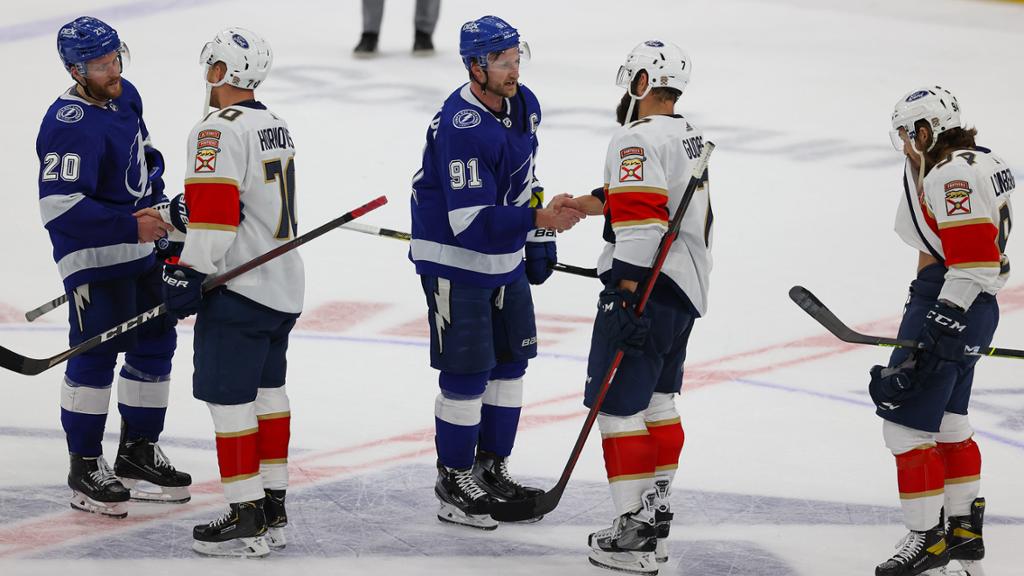
Credit: NHL.com

The coroner is in. Let us lament the end of the Florida Panthers.

The skinny: All of that promise, and this is the reward. The Panthers were coming into the playoffs white-hot, winning eleven of their last fourteen and surviving a huge loss to their top defenseman in Aaron Ekblad. Mackenzie Weegar was stepping up in a big way, Spencer Knight was as advertised in his first NHL action fresh out of Boston College, and trade deadline acquisitions like Sam Bennett and Nikita Gusev following the lead of the pieces added in the offseason. Their success was met with a first-round matchup against their in-state rival and defending Stanley Cup champion Tampa Bay Lightning.

It was always going to be a tough series, but optimism made many (myself being one) believe this was the year that the Panthers wouldn’t just win their playoff series since 1996, but repeat the magic of that season with a deep playoff run. Alas, it was not to be, as the defending champions showed just how powerful they are when healthy. So what ultimately ended the Panthers’ best season in five years? Let’s break it down…

Goaltending: The Panthers used a revolving door of goaltenders against the Lightning, with three different netminders suiting up in the first round. Knight stepped up, stealing Game 5 for the Panthers and putting up some quality numbers (2.06 GAA and .933 save percentage) to cement his place in the NHL. Unfortunately, he and the rest of the team were let down by the two veterans that also manned the crease. Chris Driedger had a rough go with a .871 save percentage and 3.7 GAA, but the real culprit? $10 million man Sergei Bobrovsky, who put up an abysmal .841 save percentage and 5.33 GAA (both marks by far the worst among goaltenders in the playoffs). With Driedger having the better regular season numbers and Knight shining in limited action, Bobrovsky’s starting job security has never been lower, and his contract can safely be considered one of, if not, the worst contract in the NHL today.

Missed opportunities: Whether he wins the Vezina or not this season, it’s hard to debate Andrei Vasilevskiy’s spot as the best goaltender in the world with performances like his in this series. In Game 2, the Panthers pushed within a goal, but Vasilevskiy held strong and the Lightning killed three straight penalties to keep their lead intact. In Game 4, the Panthers held a 15-7 lead in shots on goal after the first period, but somehow headed back to the locker room with a 3-1 deficit. They also got five consecutive power play opportunities and landed 17 shots with the man advantage, but could only score once. In Game 5, the Panthers landed 15 shots (seven on the power play) in a fast and furious first period, but failed to score. Had one of these situations gone differently and the Panthers solved Vasilevskiy with more regularity during these sequences, it could have shifted one or more of these games in the Panthers’ favor. Instead, it gave the Lightning the momentum necessary to hold their leads.

Penalty kill: There are two telling stats that determine just how porous the Florida Panthers’ penalty kill was this series. First, out of the 24 goals that the Lightning scored across the six games, eight of them came on the power play (if you’re not interested in doing the math, that’s one in every three Lightning goals coming on the man advantage). Secondly, and even more damaging for the Panthers, is that they put up a 60% penalty kill percentage, good for second-worst in the playoffs behind St. Louis. Once again, when you put that math in perspective, every five penalties the Panthers committed resulted in two Lightning goals. For a series that got dirty and physical quickly (including Ryan Lomberg picking up 30 penalty minutes), such poor numbers spelled disaster for the Panthers.

The crystal ball: For the first time in a while, the Panthers seem to have a stable vision of the future, as well as key players looking like long-term fixtures. Aleksander Barkov, Jonathan Huberdeau, and Mackenzie Weegar are all still on reasonable contracts, at least for the next season before Barkov signs his first long-term contract. Carter Verhaeghe was the NHL’s biggest bargain last season, and he’ll spend on another year making $1 million in the hopes of a lucrative deal. Impact players like Sam Bennett and Anthony Duclair will be restricted free agents, while the likes of Nikita Gusev likely won’t command a large deal. Driedger is likely being circled as an option for Seattle in the Expansion Draft, but Knight’s arrival softens the blow on that. They could perform some minor housecleaning like buying out the final year of Anton Stralman’s contract, but the Panthers can largely focus on making improvements for next season.

So the question with GM Bill Zito is how can he repeat last year. The gamble on taking Patric Hornqvist’s contract in exchange for Mike Matheson’s worked well, low-risk moves for Verhaeghe and Duclair paid off in spades, and the trade deadline worked well with Bennett, Gusev, and Brandon Montour all performing well after coming to Sunrise. This offseason could establish Zito as a shrewd GM who knows what players fit his vision and how to implement them in the lineup. Could we see Stralman be replaced by a cheaper option like Mike Reilly, Jamie Oleksiak, or Derek Forbort? Steal another ex-Lightning player in Blake Coleman? Pick up a reliable two-way option such as Mattias Janmark or Joel Armia? The possibilities are endless but, for the first time in a while, reasonable faith can be placed in the Panthers’ decisions.

Postseason Postmortem: Edmonton Oilers

Credit: Getty Images

The coroner is in. Let us commemorate the tragic fall of the Edmonton Oilers.

The skinny: In this series, Edmonton received another grim reminder: this is not the NBA where two superstars is enough to guarantee a deep playoff run. Despite a likely Hart Trophy winner in Connor McDavid putting up one of the best offensive seasons in recent memory and Leon Draisaitl also putting up great numbers, the Oilers once again failed where it mattered most in the postseason.

Despite facing a Winnipeg Jets team that was limping into the postseason and saw its offense dry up in the final few weeks of the season, they were able to pull out an impressive victory over Edmonton and its two superstars. It leaves the Oilers with serious questions, but where did it all go so wrong? Let’s break that part down first…

Offensive struggles: Normally, this is where pundits would begin their seemingly annual roasting of Edmonton’s depth, but that would discount how well Winnipeg did defensively. McDavid and Draisaitl weren’t without their struggles, as both players were held off the scoresheet in the first two games. Their final numbers weren’t too bad, but the depth once again couldn’t keep up when the defense focused on the superstars. All of two goals came from players not playing with McDavid or Draisaitl, and the defensive corps failed to score a goal. It was a bad showing all around for the Oilers in the opposing zone.

Failure to close: Game 3 was the moment Edmonton’s fate was sealed. It seemed like Edmonton was on its way to scoring their first victory in the series with a 4-1 lead with nine minutes remaining, only for disaster to strike. In a little over three minutes, Winnipeg would fire off three unanswered goals to tie the game up, then see Nikolaj Ehlers score the overtime winner. Edmonton did try to fight back in Game 4, but costly turnovers from Ethan Bear and McDavid ended up leading to Winnipeg goals that completed the sweep.

Special teams: Special teams battles can decide how a series goes down, and that’s exactly the case here. What is shocking is how much of a far cry Edmonton’s special teams went from regular season to postseason. From first in power play percentage and ninth in penalty kill percentage in the regular season, Edmonton struggled in both, putting up 18.2% on the power play and a tepid 70% penalty kill. Again, give credit to Winnipeg for adjusting to Edmonton’s style and wearing them down, but the impetus has to be on the Oilers to produce in some capacity.

The crystal ball: The good news about Edmonton’s situation is that their cap situation should improve this offseason. Ryan Nugent-Hopkins will likely be heading out, and it appears that the Oilers are favoring an extension for Adam Larsson over Tyson Barrie. Kailer Yamamoto and Dominik Kahun may warrant extensions as restricted free agents, but they likely won’t cost much. It also appears the Oilers will work to extend Mike Smith and buyout Mikko Koskinen. Regardless, it should give the Oilers a chance to figure out their situation and hopefully make some meaningful moves this offseason.

That said, the real question about the future lies with McDavid. How long can the Oilers reasonably expect their captain’s patience to hold out? It won’t be this offseason, or even next offseason, but at some point, the trade rumors will become more than just rumors. What happens when McDavid nears 30 if the Oilers continue to struggle in the postseason? The personal accolades and tremendous output are all fine, but they ultimately mean nothing if they come without an opportunity at the Stanley Cup. The frustration can’t keep building up, and GM Ken Holland will have to keep that in mind when it comes to building this team for next season and beyond.

Postseason Postmortem: Washington Capitals

Credit: Getty Images

The coroner is in. Let’s dissect what downed the Washington Capitals.

The skinny: The dark magic that helped Braden Holtby channel prime Dominik Hasek and help get the Caps their first Stanley Cup in 2018 came with a price. Three years later, the championship window seems to have slammed shut. This elimination marks Washington’s third straight first-round exit since the Cup win, with each performance looking more lifeless than the last.

This year, the Capitals fell victim to the Boston Bruins, a team that seemed to solve its own standard issues and stabilized their goaltending. After a Game 1 OT victory, the Capitals fell apart and lost four straight to be sent packing. But what caused this group to endure such a cruel fate? I can think of three good reasons.

Mistakes: This is the big one. Teams can’t afford to make careless errors in the playoffs, but the Capitals did it three times in this series. Let’s run through the big mistake in three particular games, with each one turning the tide in Boston’s favor.

Game 2: After allowing a Taylor Hall goal late in the third period to force overtime, Brenden Dillon’s clearing attempt was intercepted by David Krejci. Two passes later, and the puck come from Brad Marchand’s stick past Craig Anderson to give the Bruins the overtime win.

Game 3: The mistake to end all mistakes. A miscommunication between Ilya Samsonov and Justin Schultz left the puck behind the Capitals’ net. The puck ended up being intercepted by Craig Smith, whose wraparound shot slipped under Samsonov to give the Bruins a double-overtime win (and give Samsonov and/or Schultz a tongue-lashing at the hands of Alex Ovechkin).

Game 4: In the second period of a scoreless game, Dmitry Orlov makes a bad hit on Kevan Miller that takes Miller out of the series and puts the Bruins on the power play. Brad Marchand takes full advantage and gets the Bruins on the board, giving the Bruins a lead they would never give up.

Even one of these mental lapses would be difficult to justify, but having all three happen in the span of three pivotal games is inexcusable. Series can be lost due to self-inflicted wounds, and that’s exactly what happened in Washington’s case.

Scoring: This one’s a strange one, as the Capitals made their money with offensive talent only to see it dry up here. Both of Alex Ovechkin’s goals came on the power play. Tom Wilson was the only one of Washington’s top-six forwards to score a goal at even strength. John Carlson and trade deadline acquisition Anthony Mantha each got two assists, Nicklas Backstrom only mustered one assist, and Evgeny Kuznetsov didn’t even show up on the scoresheet throughout the series. Depth pieces like Garnet Hathaway and Nic Dowd tried their best to pick up the slack with two goals apiece, but it ultimately wasn’t enough to balance out the struggles of Washington’s stars.

Age: Look through the Capitals’ roster, if you want. You would find a very telling stat about the makeup of this team. In the regular lineup for the Capitals in this series, there were only five players who were 26 or younger (Wilson, Mantha, Daniel Sprong, Samsonov, and Vitek Vanecek, who was injured in Game 1 and never returned). By comparison, 12 of the Capitals’ regular players were 30 or older. In an already-compacted season, it was apparent that the Capitals ran out of gas. Players were missing time late in the season due to injuries, and several of the Capitals’ older players never quite reached 100 percent in time.

The crystal ball: The primary point of focus will obviously be on Ovechkin. After signing a 13-year deal in 2008, Ovechkin has a chance to hit the open market. That appears doubtful, however, as reports have shown that Ovechkin wants to retire as a Washington Capital, or at least end his career in North America there. Expect a short-team deal, although we’ll see if it comes with a small discount to give the Capitals some financial flexibility.

With the lack of cap space and big contracts the Capitals have on their roster, it appears on the surface like the Capitals are stuck with their current roster. If the Capitals want to at least try to keep the window open, however, that cannot be the case. The Capitals should see if they can pursue a trade for Kuznetsov, who is coming off the worst offensive season of his career and is stuck behind Backstrom as Washington’s second-line center. A team looking for center depth could do far worse, as Kuznetsov just hit 29 and endured a couple stints on the NHL’s COVID-19 protocol list. I’m willing to give him the benefit of the doubt.

Another key fixture of the Capitals that could be playing elsewhere is T.J. Oshie, and one potential suitor is at the forefront: Seattle. With Oshie hitting 35 this season and on a contract that keeps him locked in for four years, he might require a sweetener for Ron Francis to take him off Washington’s hands. That said, he’s proven that he still has some touch and leadership ability, making him a decent choice to be Seattle’s first-ever captain. If taking Oshie’s contract is too much to ask, Orlov could make for a good second option to keep Seattle off of the likely-to-be exposed Vanecek and give Seattle one half of their top defensive pairing for their first year.

Postseason Postmortem: The Collection

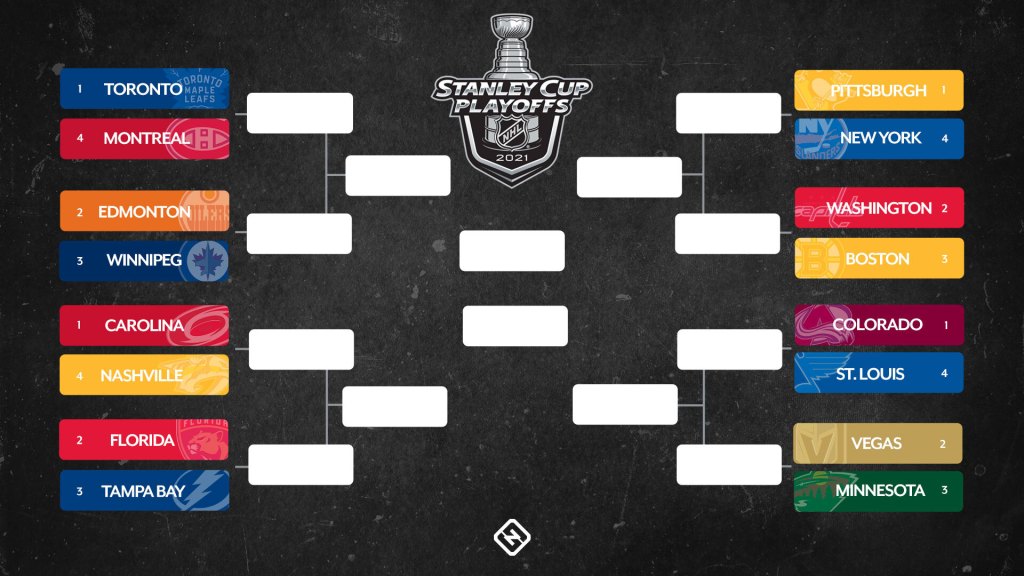
Credit: Sporting News

The First Round of the NHL playoff is nearing an end. From this point on, the eliminations will be coming in fast and furious. With no power rankings to do and future hockey-based projects needing a bit of time to develop insight, what is a sports blogger to do?

Do the equivalent of an autopsy for the eliminated teams? Sounds like fun.

While it will be the first time this series is done here, the Postseason Postmortem is not an entirely new idea. Those who have seen my work prior to The Sports Nerd Speaks may be aware of “What Went Wrong?”, where I delved into the major points that pushed a team out of Stanley Cup contention. The postmortem will be that with added depth, as well as where this might take the team and what decisions they will have to ponder as they trade their hockey sticks for golf clubs.

The first of the postmortems (the St. Louis Blues, who were swept shortly prior to this post) will be released soon, and they will continue to be provided until we finally have a champion. While they will all be separate articles, this post is designed to be the one-stop shop to find all of them. Links to the postmortems will be added as they go active.

Good luck to your team (unless they’re facing my team) and I hope you enjoy!

Boston Bruins

Carolina Hurricanes

Colorado Avalanche

Edmonton Oilers

Florida Panthers

Minnesota Wild

Montreal Canadiens

Nashville Predators

New York Islanders

Pittsburgh Penguins

St. Louis Blues

Tampa Bay Lightning

Toronto Maple Leafs

Vegas Golden Knights

Washington Capitals

Winnipeg Jets