Your hockey team just scored a goal and got a power play. They are working their way back into a game against their biggest rival that they have no business being close in. Another goal, and the momentum will completely shift in their favor. Then, for some inexplicable reason, their goaltender comes out of the crease to get the puck, completely whiffs on the play, and ends up being closer to the blue line than the net as the opponent picks up as easy a shorthanded goal as you can imagine.
In a single boneheaded moment, Vitek Vanecek summed up the 2024-25 season for the San Jose Sharks.
You may remember that I talked about the Sharks around this time last season. When that article was made, that rendition of the Sharks had just given up ten goals in back-to back games and looked dead set on flirting with the status of being the worst team in NHL history. While this year’s version has done nothing quite that egregious yet, they have succeeded in completing a piece of dubious history themselves. After Saturday’s loss to the Vegas Golden Knights, the Sharks have become the first team in NHL history to lose nine straight games to start back-to-back years.
While last year’s Sharks team ultimately avoided breaking the wrong type of records (hi, Chicago White Sox), they were still horrifically overmatched by almost every team in the league. They predictably finished dead last and placed at or near the bottom of the league in every possible metric. When analytics, basic statistics, and even the eye test unanimously condemn a team’s performance, that’s a telling sign things could potentially get worse before they get better.
The lost season resulted in the Sharks once again having to sell at the deadline. For the most part, it was basic fare: Anthony Duclair going as a mid-season rental to Tampa Bay, Kaapo Kahkonen moving to goalie-starved New Jersey, Radim Simek getting swapped for Klim Kostin. Solid, if unspectacular. Then came the eleventh hour of deadline day, where the Sharks pulled arguably the most shocking deal in recent memory: Tomas Hertl was sent off to Vegas. Outside of the obvious issue of sending one of their best players to their nemesis, the trade came with a litany of issues for the Sharks. The Sharks used their final salary retention spot on Hertl (the others were used on Brent Burns and Erik Karlsson), meaning the Sharks can no longer retain salary in a deal until the end of this season. Even after retaining salary, the Sharks still had to add in a pair of third-round picks as sweeteners. They could have prevented all of it by trading Hertl when he was a pending free agent a couple of years ago, and the fact they pulled the trigger after they signed him to a deal is a damning indictment of the Sharks’ front office.
In the offseason, the Sharks were realistic about where they were as a team. David Quinn was proven for the second time that his tactics simply do not work at the NHL level and was replaced in-house by rising assistant Ryan Warsofsky. They made a few moves like signing Tyler Toffoli and Alexander Wennberg to bolster a young core. They accepted cap dumps from other teams like Jake Walman, Cody Ceci, and the return of Barclay Goodrow. The real prizes, however, came during the draft, when the Sharks drafted Boston University forward and Hobey Baker Award winner Macklin Celebrini first overall. This man was going to be the face of their franchise, the cornerstone of their rebuilding effort. They also got top defensive prospect Sam Dickinson in the first round as well, adding to an impressive farm system. Finally, the Sharks pulled the trigger on a trade for Yaroslav Askarov, a top goaltending prospect whose path to the NHL was blocked when the Nashville Predators locked Juuse Saros into a long-term extension. The future was in place, and the expectations were that the Sharks would not be an easy out for anyone this time around.
Even those low expectations lasted all of one game. The Sharks coughed up a 4-1 lead to the St. Louis Blues and lost Celebrini to injury. Since then, it’s been similar to what last year’s Blackhawks looked like when Connor Bedard went down: lifeless, unwatchable, devoid of hope. Warsofsky has reportedly called out the team, saying their start was “embarrassing.” Askarov remains in the AHL, likely to protect him from a Swiss cheese defense that allows opposing teams to pepper the goaltenders with shots. Offensively, the only reliable sources have been Toffoli, Mikael Granlund, and William Eklund. Celebrini’s injury has put his season on pause, while fellow top prospect Will Smith has been terrible to start, failing to put up a point in seven games. The only defenseman who has been consistent is 22-year-old Jack Thompson. Sure, Sharks fans can point out that pieces of a future core are emerging, but the old adage takes precedence: you are what your record says you are.
I understand that it might be unfair ripping into a team clearly in the deep throes of a rebuild. The Sharks had no expectations for the postseason and their play so far has only cemented that. That said, the important part of the word ‘rebuild’ is build for a reason. The point of a rebuild is to identify core pieces and reinforce them with talent gradually in the hopes of yearly improvement. Progress is not going to come overnight, but it at least has to be visible in some aspects. With a similar start to the season to last year’s disastrous campaign and the same problems flaring up once again, the Sharks are once again forced to take a deep look at their roster and figure out what’s going wrong. Their postseason drought is likely going to hit six years, and it is fair to assume fans are growing restless.
At some point, something has to give. The Sharks can not expect to keep the status quo when similar problems are yielding similar results. It’s one thing to have top talent, but it’s another to hope they develop and find a spot in an optimal lineup. Throwing everything and anything at the wall and hoping it sticks is not going to cut it anymore. The Sharks need to figure something out and find anything at all that makes this season worthwhile. Otherwise, ’embarassing’ might be an understatement by the end of the season.
After a brief hiatus from doing these rankings, it’s time to get back in the saddle and let the speculation commence. The first week of the regular season took the preseason expectations and jumbled them around. Sure, some expected contenders and bottom-feeders looked the part, but the Calgary Flames and Edmonton Oilers look like they have their records flipped around. Meanwhile, the Utah Hockey Club is proving that your team doesn’t need a name to be arguably the most fun to watch in the early going, while someone may want to wake up the Colorado Avalanche and Nashville Predators to tell them the season’s under way.
Now, it’s important to acknowledge these rankings are done with a small sample size. The real hierarchy likely won’t make itself apparent until next month. That said, some teams are building a strong foundation for success, and we have seen teams ride strong starts out to the postseason plenty of times before. Also, there can be signs of sustainability or lack thereof that emerge from the first few games, giving the casual fan a peek into whether a team can be trusted this early or not.
So how does the league shake out in the early going? Let’s find out.
1. Dallas Stars: Three straight wins and back-to-back shutouts at home to start the year? Whatever concerns there are about the underlying numbers balanced themselves out right and quick, and I would imagine those stabilize later on. After two straight Conference Finals exits, the Stars are hungry to finally get over the hump.
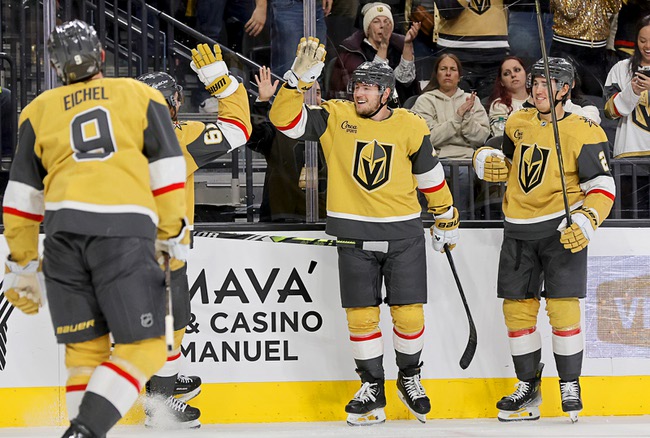
2. Vegas Golden Knights: The Knights certainly understood the assignment going into the year, sweeping a three-game homestand to start. That top line of Jack Eichel, Mark Stone, and Ivan Barbashev could be terrifying if they can keep the early momentum going.
3. New York Rangers: The overtime loss to Utah could look better (or worse) with time, but the Rangers continue to look the part of an early contender. There is a sign of concern in the future with Igor Shesterkin’s increasing contract demands, but that’s a worry for another time.
4. New Jersey Devils: Jacob Markstrom has fortunately been as advertised for the Devils, who parlayed a strong showing in Prague against the Sabres into a 3-1 record to start the year. Barring another injury wave, the Devils should be dueling the Rangers for the top spot in the Metropolitan Division all season long.
5. Toronto Maple Leafs: Craig Berube’s hire has paid immediate dividends, with the blueline looking much improved and the depth starting to emerge. If the Core Four start to get rolling, the Leafs could start to look even more dangerous than they do now.
6. Winnipeg Jets: While the Jets have seen hot starts only to taper off later on before, they can enjoy Connor Hellebuyck regaining Vezina form and Mark Scheifele playing up to his contract. If the Jets are continuing to play the right way as the season wears on, then maybe they will get some more consideration as a legitimate threat.
7. Florida Panthers: The record does not look particularly promising, but they are playing without Aleksander Barkov and with a less than 100 percent Matthew Tkachuk. I’m willing to chalk this up as a Stanley Cup hangover and let it slide, even if that excuse becomes a little less valid if the Panthers continue to struggle.
8. Utah Hockey Club: Utah was actually one of my favorite surprise picks to make the playoffs, and they have looked the part so far. Clayton Keller and Dylan Guenther have led the charge so far, and there is no question that they have been exciting to watch thus far. All of Arizona is seething with rage right about now.
9. Tampa Bay Lightning: The effects of Hurricane Milton leave the Lightning with only one game played this week, but they looked impressive in that particular game against Carolina. If Nikita Kucherov and Jake Guentzel have the type of instant chemistry they showed in their opener all season long, the Lightning’s window might be open for a bit longer than anticipated.
10. Boston Bruins: The Bruins certainly made their fans sweat it out, but Jeremy Swayman is signed and holding it down in net for the foreseeable future. It’s probably a good thing they got the deal done when they did; with how rough Joonas Korpisalo looked in the opener against Florida, Swayman could have held out for an even larger payday.
11. Carolina Hurricanes: On the opposite side of the Lightning, the Hurricanes looked just a bit off in their season opener. With an interesting clash against the Devils headlining a somewhat more pleasant week, Carolina will know where it stands in the Metro relatively quick.
12. Calgary Flames: The spirit of Johnny Gaudreau is hard at work, as his former team has been one of the great surprises of this early part of the season. Unsustainable? Probably. Fun to watch? Absolutely.
13. Vancouver Canucks: Blowing a three goal lead to Calgary and losing to Philadelphia in regulation is not a good look for the Canucks to start the year. They should be fine, but they will need to be more consistent and put together sixty-minute efforts to be more than just playoff fodder.
14. Edmonton Oilers: The Oilers lost 15-3 in their three games this week (including an embarrassing loss to their provincial rival at home), Connor McDavid and Leon Draisaitl have yet to really get it going, and goaltending and defense look like sore spots once again. Still, the last time the Oilers got off to a slow start, they were one win away from hoisting the Stanley Cup. No need to break the glass on the emergency button just yet.
15. Montreal Canadiens: Martin St. Louis needed some positive results to really cement his job security, and the Canadiens have delivered thus far. Sam Montembeault has been the clear MVP early, shutting out Toronto and letting only one get past him against Pittsburgh. If he can continue to steal some wins, the Canadiens could stay in the thick of the playoff race all season long.
16. Nashville Predators: The Predators hype train has yet to be completely derailed, but a losing effort against Dallas and being shut out by Detroit is certainly going to stall it for a bit. A four-game homestand should get them trending in the right direction, but the chemistry is going to have to develop quickly with the fast start some of their Central Division rivals have enjoyed.
17. St. Louis Blues: Maybe I’m a bit more bullish on the Blues than most people, but they put together three strong efforts this week, coming from behind against Seattle and San Jose before being stonewalled by Vegas. Is this the sign of a confident group that should improve as the season wears on, or an indication that their style of play won’t cut it against the NHL’s elite?
18. Colorado Avalanche: Sure, a core of Nathan MacKinnon, Mikko Rantanen, and Cale Makar means the Avalanche will likely never be completely out of the picture. That said, the concerns surrounding them (terrible goaltending, unreliable penalty kill, an impending cap crunch when Gabriel Landeskog and Valeri Nichushkin return) are much more impactful than other slow starters. Will these issues prevent Colorado from playing up to their potential?
19. Minnesota Wild: Matt Boldy’s emergence has been nice to see, but everyone else is still waiting for a reason to consider Minnesota anything more than a minor nuisance. The injury to Joel Eriksson Ek is hopefully not long-term, but the Wild cannot just rely on a few players.
20. Los Angeles Kings: Anze Kopitar and Quinton Byfield look good to start, but the Kings simply need more out of their depth. The void left by Drew Doughty’s injury has yet to be filled, which is far from ideal for a team that needs to get out of first-round purgatory.
21. Ottawa Senators: There are still some issues that needed to be sorted out with the Senators, but Linus Ullmark and Tim Stutzle were impressive against Florida in their opener. Good goaltending and strong play from star players tend to mask quite a few faults, after all.
22. New York Islanders: The start is not the reason I have concerns about the Islanders so far, more than it is on their decisions in net. Is Ilya Sorokin hurt, or does Patrick Roy have some favoritism towards Semyon Varlamov from their days in Colorado? There’s no way Lou Lamoriello gave an eight-year deal to someone their coach considers a backup…right?
23. Chicago Blackhawks: Beating the Oilers was nice, but it has been the only bright spot for the Blackhawks thus far. It looks like Connor Bedard’s in for another year of heavy lifting, folks. Be very afraid.
24. Detroit Red Wings: Cam Talbot may have wrestled the starting goaltender spot for Detroit, which is good. For a team that hasn’t looked good otherwise, Steve Yzerman might be sweating it out a little more than in past seasons.
25. Seattle Kraken: The Kraken have looked a bit sluggish out of the gates, but maybe that’s just the new additions needing time to jell together and the NHL mainstays getting to figure out Dan Bylsma’s system. Congratulations to Jessica Campbell for becoming the first woman to land a coaching job in the NHL, though.
26. Columbus Blue Jackets: The post-game donkey hat being handed out to honor Johnny Gaudreau is a nice touch, and longtime teammate Sean Monahan being the first to receive it was nothing short of heartwarming. It will likely be another long season in Columbus, but any positive development will be a relief from the nightmare the past couple of months have been.
27. Washington Capitals: It’s only one game (granted, they didn’t look particularly convincing), and having to play a streaking Vegas team next is not going to make life any easier. Still, the start doesn’t erase the good work done this offseason, and the Capitals stand as the team most likely to rise out of this low spot and push for respectability.
28. Philadelphia Flyers: Matvei Michkov getting his first NHL point was nice, but the rest of the Flyers have been relatively nondescript so far. No one’s going to have high expectations as the team is still in the throes of a rebuild, but the Flyers are going to need to figure out if this core is going to get them anywhere.
29. Buffalo Sabres: Beating a shorthanded Florida team was a positive touch, but two straight stompings in Europe and being single-handedly bested by Anze Kopitar is not. The yearly pessimism towards the Sabres is back like it never left, and that postseason drought already looks like it will increase by one.
30. Pittsburgh Penguins: The likes of Sidney Crosby, Evgeni Malkin, Kris Letang, and Erik Karlsson are really going to have to go through this in the twilight of their careers? That is sound enough rationale to put this team this low and possibly even lower.
31. Anaheim Ducks: A win against the Sharks is the only reason the Ducks are not languishing at the bottom of these rankings. They did not look good against either the Sharks or Knights, and that will likely be the case all season barring a drastic turnaround.
32. San Jose Sharks: Macklin Celebrini looked good in the Sharks’ first game, and then promptly landed on injured reserve. Even when they might look somewhat watchable, the team just can’t have nice things.
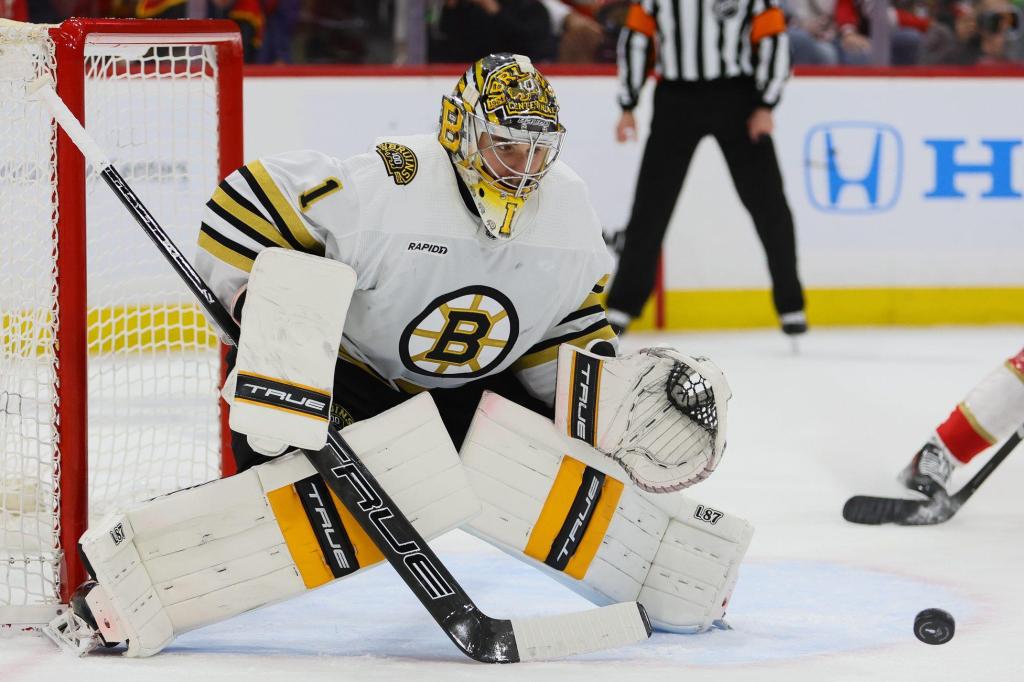
When Linus Ullmark was traded from the Boston Bruins to the Ottawa Senators in late June, it was with the expectation that Boston was ready to hand the full-time starting netminder role to Jeremy Swayman. Fast forward to three months later, and Swayman is still without a contract to play.
Of course, questions were bound to circulate over Swayman’s future in Boston the longer the impasse between player and team went on. However, an ill-timed quip from team president Cam Neely during a press conference suggesting Swayman had a $64 million contract offer on the table may have changed the entire equation. Now, the question has evolved from whether Swayman will get his contract to whether he will suit up for the Bruins ever again.
The situation has become far more delicate now, and another high-profile mishandling of personnel (Bruce Cassidy’s firing, the signing of Mitch Miller, etc.) could lead to Neely and GM Don Sweeney’s dismissals if the season doesn’t go as expected. Where the problem is significant for the Bruins is that their leverage is all but gone; the front office showed their cards when they traded Ullmark before locking Swayman down to a deal, and they have only themselves to blame that he and his camp caught on. Going from arguably the best goalie tandem in the NHL in Swayman and Ullmark to trying to convince Bruins fans on a Joonas Korpisalo career renaissance is not expected to go well at all.
If the Bruins were to put Swayman on the trade market, however, things will get interesting in a hurry. Young, potentially elite goaltenders don’t just grow on trees, so when one hits the market, any team desiring an upgrade will take notice. While Swayman has yet to play more than 44 games in a season (a blessing and curse of the goalie rotation with Ullmark), his sample size of strong play is large enough to indicate that his performance is legitimate. Combine that with his best playoff run to date, and it becomes much easier to see how teams will rush to the phones the second a trade looks likely.
So which teams have the best shot at landing the former William Jennings Trophy winner? Let’s find out.
Framework
First, it is important to establish a clear framework for this trade in order to point out what the Bruins will likely want in return for Swayman.
Obviously, an NHL goaltender will have to come to Boston. No disrespect to new waiver pickup Jiri Patera or Providence Bruins goaltender Brandon Bussi, but I don’t think the Bruins feel particularly comfortable having to rely on them for too long. Whether the new addition will be the outright starter or firmly in a rotation with Korpisalo is irrelevant in terms of getting a deal done.
To go along with the goaltender, the Bruins will likely seek an NHL-caliber forward to go along in the deal. Boston has had some concerns over center depth since Patrice Bergeron and David Krejci’s retirements, and moving on from Swayman does mean that the Bruins will have more cap space to work with.
With an eye towards the future, the Bruins will also likely seek a goaltender prospect and a first-round pick. The prospect will ensure that the Bruins have a long-term plan in net to build around, and the first-rounder will boost a farm system that has been depleted in recent years.
Any extra pieces a team might wish to add to make their offer more enticing, as well as any adjustments to value they’d like to make, is at their discretion.
With that in mind, let’s meet the potential suitors.
Chicago Blackhawks
The Blackhawks are still deep in the throes of their current rebuild, but the core they are building has Stanley Cup potential. They have drafted Connor Bedard and Artyom Levshunov in back-to-back years, young talent like Kevin Korchinski and Alex Vlasic are emerging as key contributors, and the Blackhawks have as deep a prospect pool as any team in the NHL.
The only thing missing for them is the goaltender of the future, and Swayman can provide exactly that.
With Swayman turning 26 in November, he’s still young enough to fit in the Blackhawks’ long-term plans. Securing a maximum eight-year deal would mean the Blackhawks have stability in net, allowing them to attack other positions and continue to add talent around Bedard.
The trade: Swayman for Laurent Brossoit, Ryan Donato, Adam Gajan, 2025 1st Round Pick (top 10-protected), Dallas’s 2025 2nd Round Pick
While Brossoit was one of the mid-tier free agent signings by Chicago this offseason, his contract is easier to move than Petr Mrazek’s, so he would be the goaltender headed to Boston. The Bruins won’t mind, as Brossoit has put together back-to-back years of strong play in a backup role for Vegas and Winnipeg. Also going to Boston would be Donato, a Harvard product who started his career with the Bruins during the 2017-18 season. With double-digit goals in four of his last five seasons, Donato should be able to chip in offensively in a depth role.
While neither Gajan or Drew Commesso are high-end prospects, Gajan has more developmental runway and the draft pedigree to justify his addition. Gajan had a rough post-draft year, but he will be hoping to rebound at the University of Minnesota-Duluth this season. Dangling a first-round pick could be risky, but adding the top-ten protection means the pick would kick over to 2026 if the Blackhawks fall in that range, as they are expected to. Dallas’s second-round pick, which the Blackhawks got in a deadline deal in exchange for Max Domi, would be added to ensure the Bruins get a pick for this upcoming draft.
The deal might not stand out at first glance, but a first-round pick from Chicago would be enticing, especially if the team is still a few years away from competing. Should the Blackhawks continue to struggle, that pick could ultimately end up being quite valuable for the Bruins in the event of a retool. For that reason (and the potential of Gajan hitting his stride), the Bruins will have to consider this deal.
Colorado Avalanche
Unlike the Blackhawks, the Avalanche are in search of a goaltender who can help them right now.
There’s no denying that the Avalanche have a core capable of taking them to the Stanley Cup, led by Nathan MacKinnon, Cale Makar, and Mikko Rantanen. That said, where the Avalanche fall well behind their Central Division contemporaries is in net. Where as Dallas, Nashville, and Winnipeg can rely on Jake Oettinger, Juuse Saros, and Connor Hellebuyck, respectively, Colorado has Alexandar Georgiev, who posted a sub-.900 save percentage last season and is forced to put in a heavy workload due to lack of depth.
Sure, the Avalanche could hope that Justus Annunen continues his emergence and ascends to the starting role, but the team is not in the position where they can afford to be patient. With Rantanen’s contract expiring after this season and the team facing a possible cap crunch, any move that can help them improve on top of alleviating those concerns would be welcome.
The trade: Swayman for Alexandar Georgiev, Ross Colton, Ilya Nabokov, 2026 1st Round Pick
There’s a bit more NHL talent involved in this deal, largely in order for Colorado to make the financial numbers work. Georgiev would be the obvious choice to head to Boston and, while he didn’t have the best of seasons last year, he’s as good of a goalie as Boston can expect to get from this deal. Colton has been a potential option to move in the event of Gabriel Landeskog and Valeri Nichushkin returning to the lineup, and Boston would be alright to land a middle-six forward with center versatility. Miles Wood also came to mind for the NHL forward, but Colton’s versatility is more appealing to Boston, while the extra cap space with Colton moving will be more beneficial to Colorado.
Colorado fans might give me the stink-eye for putting this year’s second round pick Nabokov in this deal, but what path to the NHL would he realistically have behind a Swayman-Annunen tandem? Nabokov has continued to perform at a high level in the KHL this season, and his expiring contract means he would be eligible to sign in the NHL for next season. With Georgiev on an expiring contract and Korpisalo being far from a guarantee to produce, expect Nabokov to be a target for Boston in any Swayman trade. With Colorado likely hoping to keep the one second round pick it has for 2025, they will likely choose to offer their 2026 first round pick to keep their package as enticing as possible.
Sure, there’s some hurdles to clear when it comes to this deal. Colorado would be having to overpay just a bit in terms of assets, and they will need to ensure that their cap situation won’t be further exacerbated by this move. That said, if Swayman can provide the key saves that have been missing in Colorado the past two years, it will all be worth it. Vegas and Florida made bold trades that got them Stanley Cups in the end, and it might be time for Joe Sakic and Chris McFarland to do the same.
Detroit Red Wings
In a vacuum, moving Swayman to Detroit would make zero sense for Boston. Moving Ullmark in-division made at least a little sense, but why send a possible franchise goaltender to a potential rival?
The answer is surprisingly simple: Steve Yzerman might be under just as much pressure as Sweeney right now.
There’s no denying Yzerman is a Detroit sports legend, but he will be in his fifth season as general manager this season, and the Red Wings haves to make the playoffs during his tenure. He’s been given plenty of leeway to get the ball rolling, but at what point does the patience in the Yzerplan wear thin? With the team coming close to the postseason last year, the clamps have to be put on to ensure the Red Wings take the next step.
The issue there is the Red Wings don’t have a true starting goaltender. They signed Cam Talbot and Jack Campbell for organizational depth to go with Ville Husso and Alex Lyon, but none of those options inspire much confidence. Swayman would put an immediate end to the speculation in net, making him a desirable trade option. It might take a lot to convince Boston to pull it off, but Detroit may have an answer…
The trade: Swayman for Cam Talbot, Andrew Copp, Dmitri Buchelnikov, Sebastian Cossa, 2025 1st Round Pick, 2026 2nd Round Pick
While moving Ville Husso’s expiring deal and Justin Holl’s contract were considered, this package made more sense. Talbot performed better than expected in Los Angeles last season, and is contract is certainly affordable for the Bruins to manage. Copp’s deal (three years at $5.625 million AAV) is a hard one to swallow, but J.T. Compher’s arrival makes him obsolete in Detroit and Boston’s forward group could give him an extended role that allows him a greater chance to live up to that contract. Plus, taking that deal on would make it easier to justify Detroit handing over what they are.
The real prize here would be Cossa, a former first-round pick and elite goaltending prospect who would instantly give Boston a long-term solution in net. With Cossa hitting his stride in his second professional season last year, there’s no question he would be the top target for Boston in a deal. Buchelnikov also gets added due to the unlikelihood that he signs in Detroit, but a core in Boston that’s somewhat lacking in pure offensive talent could convince him to change his stance. The picks added are spaced out to ensure Detroit does not sacrifice a full year of its future on this deal.
This deal is obviously the biggest of all six due to it being in-division, but would either side truly be comfortable saying no here? Detroit gets the goaltender they need to truly threaten the hierarchy of the Atlantic Division. Meanwhile, Boston gets a couple of decent assets now to pair with great ones for the future. If Sweeney and Yzerman are ultimately as desperate for solutions as I think they are, this deal would be much more agreeable on both ends.
Utah Hockey Club
The NHL’s “newest” franchise is certainly doing its part to make waves this offseason.
With a core beginning to emerge and ownership now stabilized, the artists formerly known as the Arizona Coyotes have made a fair share of moves already. The additions of Mikhail Sergachev and John Marino should bolster the defense, and young forwards are emerging on a consistent basis. It may seem somewhat odd to say, but the possibility of Utah experiencing playoff hockey in its first season is not that far-fetched.
Adding Swayman would go a long way towards fulfilling that goal, as Utah still has plenty of prospects and draft capital to use as trade chips. They’re also the only team on this list that doesn’t have to shed salary to give Swayman a long-term extension, so being able to exercise free reign over who can be sent the other way is a boost.
The trade: Swayman for Connor Ingram, Alexander Kerfoot, Carsen Musser, 2025 1st Round Pick, Ottawa’s 2026 2nd Round Pick
The key for this deal would be financial flexibility. Ingram was relatively solid last season, and his contract at just less than $2 million for this and next season would help Boston attack other parts of their roster. Kerfoot would be on an expiring deal, but he provides versatility and leadership that is sorely needed in Boston’s bottom-six forward group.
Musser does not possess the same name value as the other prospects on this list, but it doesn’t make him any less interesting of a prospect. He’s quite athletic for a six-foot-four goaltender, he performed well with Madison in the USHL last season, and he will be allowed to develop at Colorado College for the next few years. The first will be valuable, especially if Utah continues to struggle, and a second round pick acquired from the Jakob Chychrun trade will sweeten the deal a bit.
Similar to Chicago, this deal feels better than the sum of its parts. Ingram and Kerfoot may not be spectacular, but they fill spots that Boston needs in the wake of a Swayman deal. Musser is an interesting enough prospect to monitor, and the picks could bring in some high-end talent that Boston could use to replenish the farm system. Boston could see if Utah’s willing to give them Karel Vejmelka and Lawson Crouse instead of Ingram and Kerfoot, but this would be a good package for the Bruins to take.
Philadelphia Flyers
When your coach openly says that the goaltending situation scares him, they have to be included here.
No team may have had worse luck in terms of goaltending than the Flyers have recently. Carter Hart never seemed to regain his confidence, and his NHL career has likely ended in disgrace due to the Team Canada World Juniors sexual assault scandal. Then there was Ivan Fedotov being called away from the Flyers back to Russia. Then Alexei Kolosov was a threat to defect back to Russia instead of reporting to the team. Needless to say, Philadelphia is far from set in terms of their netminders.
Still, there is at least some reason to be optimistic. Matvei Michkov is making his NHL debut a year earlier than anticipated, and some are calling him the early favorite to win the Calder Trophy. He headlines a group of young, exciting talent that can certainly climb up the ranks quickly with proper development. Similar to Chicago, Swayman fits the timeline in Philadelphia, and they don’t have any pressing cap questions at the moment. It could be a good fit, assuming Boston wants to deal Swayman in the East.
The trade: Swayman for Ivan Fedotov, Morgan Frost, Carson Bjarnason, Edmonton’s 2025 1st Round Pick, 2025 2nd Round Pick
Fedotov was locked down to a two-year extension worth $3.275 million AAV, but he would still be the likely choice to ship to Boston. Samuel Ersson and Kolosov are both under team control for longer, and Swayman’s contract would likely make a tandem with Fedotov too costly. Boston won’t mind, though, as Fedotov was one of the top goaltenders in the KHL prior to coming to America, so the hope would be that he finds his rhythm quickly. While Frost has played well for stretches, he’s never really seemed to gain the full trust of John Tortorella. He would be an excellent fit for Boston’s middle-six group, sporting good playmaking instincts to pair with an underrated physical game.
Bjarnason would go to Boston to fulfill the goaltending prospect requirement. A second round pick last year (similar to Gajan from Chicago), Bjarnason did actually show improvement last season, so he might be more palatable at this moment. Philadelphia also boasts six picks in the first two rounds of the 2025 draft, so they have no problem using that stockpile to bring Swayman over.
This deal is more based on possibility than anything concrete. Will Fedotov regain his KHL form and turn into a franchise goaltender? Can Frost find his footing on a new team? Wil Bjarnason or the draft picks lead to a franchise talent? If the answer is yes to any of these questions, Boston should have no concerns with this deal. That said, I will concede this is the least likely of the five to occur, if only due to Boston maybe not wanting to deal Swayman in-conference and Philadelphia maybe lacking the available assets of Detroit and others.
Even a month or so after their loss in the Stanley Cup Final, it’s easy to still live in the afterglow if you’re an Edmonton Oilers fan.
The Oilers were just one win away from completing arguably the greatest comeback in sports history against the Florida Panthers. Connor McDavid became the first player since Jean-Sebastien Giguere in 2003 to lose the Final and still win the Conn Smythe Trophy. Leon Draisaitl is, along with McDavid, firmly in the conversation of the top five players in the world. Evan Bouchard has become a Norris Trophy candidate. Zach Hyman has given the Oilers a lethal “Big Three” at forward. Stuart Skinner overcame an awful postseason last year to become the new face of Canadian goaltending. Defense is still questionable, but the emergence of Philip Broberg during the playoffs certainly eases some concerns. All of the pieces were in place for Edmonton to do what the Panthers did last year and return to the Final with a different result.
The off-season only caused the hype train in Edmonton to go into overdrive. Postseason heroes Adam Henrique and Mattias Janmark were both re-signed. Depth options like Corey Perry, Connor Brown, and Calvin Pickard were also extended. Outside the organization, the Oilers brought in Jeff Skinner on a fantastic deal after he was bought out from Buffalo. Viktor Arvidsson embraced the “if you can’t beat them, join them” mentality and fled Los Angeles to join the Edmonton war machine. Josh Brown was brought in on the back end to make sure toughness remained on the defensive corps. The front office also made a savvy move to pick up Matt Savoie from Buffalo to potentially pair with one of Edmonton’s elite centers. There are still questions to answer in terms of cap casualties, but it was looking like a fantastic summer for the Oilers.
There was just one small problem that needed to be sorted out: Ken Holland had stepped down as general manager shortly after the Final. Jeff Jackson was doing a good job in the interim, but he already turned down requests to accept the job full-time. Given how crucial the next couple of years are going to be for the franchise, this was a hire the Oilers needed to get right. There were plenty of suitable candidates for Edmonton to choose from, some familiar with the organization and some not.
When the Oilers finally put their hand in the mystery box, however, they pulled out the greatest enigma of all.
Prior to the hire, Stan Bowman’s legacy in the NHL was as complicated as it was controversial. While it’s true that he did win three Stanley Cups as general manager of the Chicago Blackhawks, most of the core that won those Cups was in place before Bowman took the helm. His draft record in Chicago was hit or miss, and even some of the hits (Brandon Saad, Teuvo Teravainen, Ryan Hartman, Philip Danault, Nick Schmaltz) were traded under Bowman’s watch. There was also the trade of Artemi Panarin to Columbus for nothing, struggling to find a capable defenseman to replace Niklas Hjalmarsson (including one attempt for Calvin de Haan costing the Blackhawks Gustav Forsling), and the trade and extension for Seth Jones that has looked questionable. By the time Bowman was fired in 2021, the Blackhawks roster was a far cry from the Cup-winning teams of the last decade and a rebuild was desperately needed after the damage done over the last few years.
Of course, no one can discuss Bowman’s tenure as Chicago GM without discussing its ultimate black mark. Much has already been written about the sexual abuse scandal committed by former video coach Brad Aldrich on Kyle Beach, but the main point in this context is Bowman was among a group of Blackhawks executives who became aware of the incident and failed to immediately resolve the issue. Aldrich’s antics would continue and he was forced to resign from his position, but he still was paid by the organization, had his name engraved on the Stanley Cup, and continued to take roles for high school and college hockey until another incident in 2013 put him under arrest.
When an investigation on the Beach incident occurred and its findings were reported, the hockey world imploded. Aldrich became persona non grata and removed from NHL history, and the seedy underbelly of hockey culture at the time became exposed for all the world to see. Bowman, then-head coach Joel Quenneville, and then-team executive Al MacIsaac were all ruled ineligible to continue working for the league, but the ruling was overturned at the beginning of July.
Obviously, Bowman’s return to the league was met with immediate pushback, even amongst Oilers fans. Even during the press conference that made the move official, it felt more like the Oilers doing damage control than anything else. They cited Bowman’s genuine remorse and work with the Respect Group, an advocacy group for abuse and harassment started by former NHL player and sexual abuse survivor Sheldon Kennedy. Jackson mentioned that they had even discussed Bowman’s hiring with Beach and said that he had given the Oilers the green light.
So why, even after a week later to process this, do I still have issues with the hire?
While I would have preferred Beach’s approval of the Bowman hire to come from the man himself, Kennedy’s statement also mentions that the two had a positive meeting together, so I’m willing to at least believe that part. Where the problem begins is that the NHL is currently in a rough patch with sexual abuse scandals and “changed men” returning to the league. The NHL is still reeling from the 2018 Canada World Juniors team scandal, which has seen five of its players removed from the league and facing charges of sexual assault in Canada. In terms of changed men, the Columbus Blue Jackets brought in Mike Babcock as head coach last year, despite knowledge of multiple incidents with players during his tenures in Detroit and Toronto regarding verbal abuse and invasion of privacy. Babcock didn’t even make it to training camp before another incident flared up and he was swiftly removed from his position. It’s easy to say that people have changed; to prove it is a different and more difficult matter entirely.
Any move the Oilers have made to this point have been completely overshadowed. News about the team will be dominated not by how the team looks on the ice or what changes are being implemented, but how the players feel about Bowman being in charge. One would think that the team would also discuss this with its players, especially with their stars. While it can be debated whether discussing a coach or GM hire with players is a good idea or not, the Oilers have a tenuous situation to justify it. Draisaitl’s contract expires after this season and McDavid’s the year after, with both becoming unrestricted free agents. One, if not both, should undisputedly be in Edmonton’s long-term plans, so why make a controversial hire now that casts a shadow over potential negotiations? It’s fair to assume that some in the NHL will never truly forgive Bowman for his role in the Aldrich scandal, and there’s a real chance that Edmonton’s best players want no part in any sort of controversy. If that’s the case and both choose to go elsewhere when their contracts expire, the Bowman hire will have a much greater negative impact than it already does.
Even worse, such an incident would have been completely avoidable had the Oilers just gone a different route with the hire. Even without discussing Jackson, there are two people in particular who should have been given at least a look: Keith Gretzky and Shawn Horcoff.
Keith Gretzky, brother of Wayne, has worked in the Oilers organization for almost a decade now, so he would have the most experience with the team out of any eligible candidate. While he’s mostly served as GM of Edmonton’s AHL affiliate Bakersfield Condors, it’s been noted that he has served as an advisor to Holland and Jackson during the off-seasons. Given the success this summer has been for the Oilers and that he already had a foot in the door with the organization, promoting Gretzky to the GM position would have made sense to people. Meanwhile, Horcoff is a former Oilers captain and longtime player who has seen the organization at both high and low points, so he would know what bringing a Cup would mean to Edmonton. He is currently working his way through the Detroit Red Wings front office, now serving as assistant GM and GM to the AHL’s Grand Rapids Griffins. Throughout his time, Horcoff has been able to develop younger players and get them ready for the NHL, which is something Edmonton would certainly value. With their connections to the organization, they would have a great chance to sell McDavid and Draisaitl on the idea to stay in Edmonton and become national heroes if they bring the Cup back to Canada for the first time in over 30 years.
The search doesn’t even have to end there. Mathieu Darche’s diverse skillset and expertise in negotiations would have made him an asset. Mark Hunter has a great track record of developing talent as part-owner of the London Knights in the Ontario Hockey League, and his chances of landing an NHL job have improved due to another CHL owner in Kelly McCrimmon exceeding expectations in Vegas. Perhaps Jason Botteril could have provided ideas that he was previously unable to in Buffalo? Does Edmonton coach Kris Knoblauch tap into his connections to bring Hartford Wolf Pack GM Ryan Martin along? All of this sheds light on my ultimate problem with the Bowman hire: there were so many other qualified options that would not have come with Bowman’s baggage, especially given that Edmonton’s long-term future isn’t quite set in stone.
For what it’s worth, I genuinely hope Bowman has changed. It appears on the surface that he has learned the error of his ways and is doing what he can to correct them. That said, all of this feels like too much, too fast. Bowman will not only be tasked with running a team with legitimate Cup aspirations, but also to ensure complete transparency on the organization’s inner workings. Bowman’s second chance, given the circumstances, feels like a blessing; there will not be a third should issues arise again.
The 2024 NHL Draft has concluded, and the offseason has officially kicked into high gear.
The past two days at Sphere in Las Vegas saw a flurry of activity. Players and picks were moved around throughout, causing the landscape of the NHL to change dramatically within the last 48 hours. Above all else, however, 225 young men got the chance to see their dreams become reality and their hard work be rewarded with a draft selection. Now, it’s time to give immediate reactions to all 32 draft classes.
Let’s start with the obvious: yes, these, and really any, immediate draft grades are an exercise in futility. Most of the prospects drafted won’t see the NHL for at least the next two or three years, and the true impact of the class won’t be made clear until the next five. So, what’s the point of doing something like this? The answer is mostly to analyze which scouting departments are doing their due diligence. General managers could get some great value on certain prospects, or filled certain needs in their organizational depth chart. While it’s impossible to say with certainty that a class will succeed or fail, these grades provide a look at what each class offers their respective organization.
Which NHL teams came out of Vegas with brighter futures? And whose gambles are looking shaky? Let’s find out.
1. San Jose Sharks (A+): Mike Grier’s tenure as Sharks GM has seen some lows, but this draft was a masterclass at first glance. Macklin Celebrini was the no-brainer first pick, but trading up and having arguably the best defenseman not named Levshunov in Sam Dickinson fall into their laps at 11? The Sharks could have stopped there and won the draft already, but they landed serious contributors with just about every pick. Igor Chernyshov and Leo Sahlin Wallenius were excellent values as second-round picks, Carson Wetsch projects as a fourth-line monster, and later picks like goalie Christian Kirsch and defensemen Colton Roberts and Nate Misskey have NHL tools at their disposal. If the Sharks find themselves back amongst the league’s elite in the next few years, this draft class will almost certainly serve as the catalyst.
2. Chicago Blackhawks (A): Artyom Levshunov effectively gives the Blackhawks their top defensive pair of the future alongside Kevin Korchinski, which should take the pressure off Connor Bedard. Moving up twice in the first round netted Chicago two strong forwards in Sacha Boisvert and Marek Vanacker, and it wouldn’t surprise me at all if they serve as two-thirds of the Blackhawks’ future third line. Kyle Davidson then proceeded to emphasize speed in the third round, taking three of the class’s best skaters in John Mustard, A.J. Spellacy, and Jack Pridham; Spellacy, in particular, has the makings of an excellent fourth-liner in the NHL. Similar to San Jose, the Blackhawks got several potential contributors in a single class, and their rebuild is coming together nicely.
3. Montreal Canadiens (A-): The craziness in the early goings led Ivan Demidov to fall directly into Montreal’s laps, and his addition feels like a “final piece” to their top six. The dynamic Russian forward has game-breaking offensive ability, which the Canadiens have sorely needed for a while now. Michael Hage was an excellent value in the first round, and he will likely have a spot in the middle six within the next few years. Montreal’s Day 2 may not have had the projectable contributors of the classes above them, but there’s still excellent value to be found here. Aatos Koivu, son of longtime Canadiens captain Saku Koivu, is a legitimate prospect in his own right, and Logan Sawyer showed promise in the lower leagues this season. Even later picks like fourth-rounder Owen Protz and fifth-rounder Tyler Thorpe have some qualities that could get them some games. The Canadiens deserved a high grade on the back of an excellent first day alone, but give them some credit for continuing to stock the cupboards the right way.
4. Columbus Blue Jackets (A-): Thought the Columbus lineup was lacking snarl last year? New GM Don Waddell apparently agreed. Cayden Lindstrom has serious top-six potential, regardless of if his future position is center or wing. I somehow ended up liking the Charlie Elick pick in the second round more, though, due to his skillset. The Blue Jackets didn’t have anybody with Elick’s physicality in their defensive corps, and pairing him with a prospect like Denton Mateychuk could be devastating for teams to deal with. Evan Gardner had an excellent first year in the WHL, and the Blue Jackets must feel comfortable tabbing him as a potential goaltender of the future by slightly overpaying for him. Luca Marelli, Tanner Henricks, and Luke Ashton are all big defensemen with some good tools to go along with it. For the first time in a while, the Blue Jackets felt like they were trying to establish a clear identity with their moves, which is a victory in and of itself.
5. Calgary Flames (A-): The Flames drafted easily the smartest player in the class in Zayne Parekh, and he is a near-lock to quarterback Calgary’s power play in the next year or two. I’m not one hundred percent sure he would have been my first choice (Dickinson’s comparison to Noah Hanifin made me think he would go to Calgary), but that’s more nitpicking than an actual complaint. Matvei Gridin, Andrew Basha, and Jacob Battaglia are all talented wing players with NHL futures, but Calgary might not have room for them all with the players currently in their system. The same can be said for third-round defenseman Henry Mews, who will have to compete with prospects of similar styles. Keep tabs on centers Luke Misa (fifth round) and Hunter Laing (sixth round), who won over some draft pundits with their skillsets during the process. While I do question if the Flames got a bit redundant at times, it’s better than having to reach for needs, so an A- is a fair grade.
6. Anaheim Ducks (B+): It was no wonder why Beckett Sennecke had the best reaction of anyone who was drafted; his rise to third overall shocked just about everybody. The Ducks definitely needed a right wing of the future, so the fast-rising Sennecke slots in that role well. Stian Solberg is going to be a fan favorite in Anaheim with his physical, hard-hitting style. He can be safely penciled into a top-four role beside either Pavel Mintyukov or Olen Zellweger. After securing two high-end talents in the first, Anaheim focused on the worker-bee type of players in the next three rounds (Lucas Pettersson, Maxim Masse, Ethan Procyszyn, Alexandre Blais). Tarin Smith was also a nice third-round development option, and he has an opportunity to secure a third-pairing role if all turns out well. The Ducks left Vegas with a Trevor Zegras-sized question left to answer, but they’ve been building well enough to prepare for when the other shoe finally drops.
7. Minnesota Wild (B+): Trading up one pick with Philadelphia may have seemed a bit confusing at first, but Zeev Buium was the perfect player for them. Minnesota lacks dynamic players on the back end outside of Brock Faber, so why not draft an electric playmaker who just broke the NCAA scoring record for draft-eligible defensemen? What the Wild’s draft will ultimately hinge on, however, is their next two selections: second-rounder Ryder Ritchie and fourth-rounder Aron Kiviharju. Both have been on scouting radars for a while, and their ability to put points up in bunches was something Minnesota sorely needs. That said, both saw their draft years wrecked by injury, and red flags popped up in the times they were on the ice. Minnesota fans are already crossing their fingers that last year’s first round selection Charlie Stramel can get it together, and they now have two more instances of praying for luck. Buium alone should make the class a good one, but it has the potential to be great if at least one of Ritchie or Kiviharju cleans up their game.
8. Utah Hockey Club (B+): Arizona fans got an extra twist of the knife here, seeing the new Utah Hockey Club finally making moves to get them to competitive status. They had to give up some key assets to land Mikhail Sergachev from Tampa Bay, but he and John Marino from New Jersey instantly made Utah a more difficult team to play against. The first round saw them stay true to their identity of getting tougher and more competitive, with Tij Iginla and Cole Beaudoin being great selections. Will Skahan and Tomas Lavoie continue GM Bill Armstrong’s desire to get bigger on the back end, while Veeti Vaisanen’s well-rounded game can see him paired with just about anybody. The rest of their picks weren’t particularly fantastic, but fifth-rounder Owen Allard’s skating and compete level could net him a fourth-line spot down the line. Utah is willing to build off the excitement of the team they have, and they got better both next season and long-term in the two days of the draft.
9. New York Islanders (B+): I’ve raised some questions about Lou Lamoriello’s decisions as of late, but it’s hard to criticize what the Islanders did in the draft. Cole Eiserman was a surprise to see slip down to 20, but he’s a perfect fit for the Isles. His defensive game is definitely a work in progress, but a defensive-minded team in desperate need of goal-scoring just got arguably the best shot in the draft. Jesse Pulkkinen and Kamil Bednarik strike me as prospects in the Islanders’ mold: good at just about everything with some traits being better than average. Marcus Gidlof is a towering goalie with good traits to find in the fifth round, while sixth-round defenseman and Harvard commit Xavier Veilleux earned some love in the scouting community throughout the year. For a team that was in desperate need of new blood in the farm system, the Islanders came away with plenty of good prospects worth keeping an eye on.
10. Carolina Hurricanes (B): Even with Don Waddell now in Columbus, Eric Tulsky is keeping the Hurricanes’ drafting tradition of swinging for the fences alive. Dominik Badinka had first-round value on him, so the Hurricanes’ decision to trade down still landed them a quality prospect early in the second. Nikita Artamonov lacks the dynamic ability of some of his countrymen drafted before him, but he played well against grown men in the KHL this past year, and Carolina is arguably the team most undeterred by the Russian factor. Noel Fransen, Oskar Vuollet, Justin Poirier, and Timur Kol all had profiles that screamed Hurricanes prospects, and the team didn’t have to reach for any of them. Waddell has tried to build a sustainable contender throughout his time in Raleigh, and it’s good seeing Tulsky aiming to continue that work now.
11. Seattle Kraken (B): I disagreed a bit with the Kraken’s first pick; don’t get me wrong, Berkly Catton was a good choice at 8, but they had plenty of great defensemen like Dickinson, Parekh, and Buium all still on the board for a system that lacks an elite prospect on the back end. Julius Miettinen and Nathan Villenueve may have been slight reaches, but they play hard enough to comfortably slot in to Seattle’s bottom six in a few years. Alexis Bernier was my favorite pick the Kraken made this draft, due to his size-athleticism package and strong finish to the QMJHL campaign. I could see him landing a spot on Seattle’s third pairing within three years. Ollie Josephson, Clarke Caswell, and Jakub Fibigr were also worthy mid to late-round fliers with some NHL-level tools to their games. The Kraken could have gotten a little better value out of their selections, but it’s hard to knock them too much for sticking with their gameplan.
12. Washington Capitals (B): The Capitals are the classic case of a team where a confusing first day of the draft gave way to a more positive Day Two. 17 was too high for Terik Parascak for me. He was a strong two-way player in the WHL this past season, but his heavy skating and below-average foot speed would get exposed instantly at the NHL level. There’s plenty of hit potential, but there’s just as much of a chance Parascak doesn’t develop further. Cole Hutson was a bit more reasonable as a second-round choice due to his offensive skill level, but he’ll need to earn a coaching staff’s trust defensively if he wants to land a full-time role in the NHL. After that, however, I had no real issues with what Washington did. Leon Muggli held his own against grown men in Switzerland’s top league and could emerge as a solid third-pairing option. Ilya Protas and Eriks Mateiko also have skating issues, but they play the heavy game that Washington typically likes to play on the bottom-six, so the stylistic fit is there. Nicholas Kempf, Petr Sikora, and Miroslav Satan are all long-term projects, but the upside is there for them to get some games. Washington was also active in the trade department, getting the Hutson choice out of Buffalo for Beck Malenstyn and flipping a pair of third-rounders to Vegas for a potential starting goaltender in Logan Thompson. While maybe not to the same degree as Utah, it was good of Washington to not rest on their laurels and continue building for both the present and future.
13. Nashville Predators (B): Barry Trotz has traditionally loved two-way players who can make an impact on both ends of the ice, and his first two selections in Yegor Surin and Teddy Stiga exemplify that. Surin is a nice blend of skill and physicality, and Stiga would have likely been a surefire first-round selection if he was three inches taller. The Predators also added a pair of high-end skill players in the middle rounds with Miguel Marques and Hiroki Gojsic, the latter of whom quickly became a favorite of mine during the process. Jakub Milota will be the next to enter Nashville’s solid goaltending development program, while Erik Pahlsson transitioned nicely to the North American game after coming over from Sweden this past season. This draft class is similar to the Predators as a team: greater than the sum of its parts.
14. New Jersey Devils (B): In hindsight, the decision of the Devils to hang on to their top selection proved fruitful with Anton Silayev falling into their laps at 10. The Devils lacked a true shutdown defenseman to pair with more dynamic option like Luke Hughes and Simon Nemec, but Silayev is a monstrous presence who should slot in nicely beside either one. The John Marino trade to Utah gave New Jersey a potential goaltender of the future in Mikhail Yegorov. Yegorov’s stats certainly aren’t pretty, but he played on a bad team in the USHL and he earned a lot of starts, so the hope is that he’ll continue to improve and land on his feet at Boston University after next season. After securing their two top needs, the Devils emphasized size with the rest of their selections. Kasper Pikkarainen, Herman Traff, and Matyas Melosky, in particular, have plenty of skills that go beyond their large frames, so bottom six spots could be theirs to earn. The Devils made plenty of interesting moves to suggest that there’s a clear plan going forward, which is admirable. They even got Paul Cotter and a third next year out of Vegas…and overpaid massively for it.
15. New York Rangers (B-): The next two teams on this list didn’t have a lot of picks coming in to the draft, but they still came away with value. Starting with the Rangers, they selected a rearguard in EJ Emery with their first-round selection. Emery won’t light the world on fire offensively, but the Rangers have had success with athletic stay-at-home defenders like K’Andre Miller and Braden Schneider before. Emery feels like an ideal fit to keep the Rangers’ defensive identity intact. I also liked their fourth-round pick in Raoul Boilard, who put together a nice campaign in the QMJHL. I have questions on if the offense can translate to the higher levels, but he provides a safe floor as a bottom-six center. Nathan Aspinall’s size should give him a shot, but there will be some aspects to clean up for him to make it further. Emery and possibly Boilard look to have NHL futures, and that’s enough for a team with current Cup aspirations.
16. Vegas Golden Knights (B-): Vegas belongs firmly in the middle of the pack because their draft was arguably the biggest mixed bag of all. Trevor Connelly has all the makings of an excellent middle-six wing for Vegas, but the character issues that have followed him around could threaten to derail his NHL chances. Pavel Moysevich’s KHL contracts runs until 2027, but his continued development could give Vegas a top goalie in a few years. Even seventh-rounder Lucas Van Vliet has potential as a fourth-line center. Where Vegas won was in the trade department. Losing Logan Thompson to Washington stung a little, but swapping Paul Cotter and a third to New Jersey for former top-10 pick Alexander Holtz and 2023 playoff hero Akira Schmid was a massive win for Kelly McCrimmon at first blush. While Vegas hasn’t held on to a lot of young talent, moves like these lead me to believe that there could be a minor shift in that philosophy.
17, St. Louis Blues (B-): The Blues seem on the verge of a defensive turnover, as their top three picks were all defensemen. Adam Jiricek endured a lost draft year due to injury, but he is a prototypical NHL defenseman in terms of physical makeup and playstyle who already has pro experience in the Czech leagues. Colin Ralph is more of a work in progress at this point of his development, but he has the size and physicality necessary to be a shutdown presence in the NHL. Lukas Fischer rounds out the trio, and he combines Jiricek’s well-rounded play with Ralph’s size. All three could very well take spots in St. Louis’s defense in a few years. The rest of their draft was okay; Adam Jecho and Tomas Mrsic are both mid-round swings on tools, and even seventh-round Matvei Korotky had a nice run in the MHL playoffs in Russia. The defenders will be what this class is focused on, but any of the forwards emerging as solid contributors would be a nice bonus.
18. Boston Bruins (C+): The Bruins did relatively well with a limited number of picks, but they get a lower grade than the likes of the Rangers and Golden Knights due to the risk factor of their first rounder. Dean Letourneau offers a rare package of size, skating, and skill, but he also played at a lower level than most of the other early-round prospects. There’s risk that his domination was more a reflection of his competition than his own skillset, but the Bruins could have also landed an excellent middle-six component if all checks out. Elliot Groenewold wasn’t bad in the fourth round, but he lacks a given trait that jumps off the page. I preferred their selection of Jonathan Morello, whose speed and aggression are great traits to build off of. Similar to other contenders, Boston came out of this class with at least one possible contributor, even if it’s no guarantee who it ends up being.
19. Los Angeles Kings (C+): Similar to the Bruins, I have some questions about the Kings’ class. Liam Greentree possesses an intriguing size/skill combination, but there are times where that size could be used better. His skating is also below NHL-level, and he was not at noticeable at the World Junior Championships as some people would have liked him to be. There’s obvious things to like, but the risk potential may be a bit higher than initially expected. Carter George has had great success in the OHL and internationally for Canada, but 6-foot-1 is definitely on the smaller side for a modern NHL goaltender. I am intrigued by Jared Woolley, however, who came up from the lower leagues to join the powerhouse London Knights in the OHL this past season. His development curve is certainly on the ascent right now, and the Kings made a good bet on upside late. Similar to the Bruins, I have questions about the early picks, but a good late-round dart throw could make a difference.
20. Detroit Red Wings (C+): The Red Wings didn’t come out of this draft with a game-changing prospect, but they focused on building the middle and lower parts of their future lineup. Michael Brandsegg-Nygard, Max Plante, and Ondrej Becher are all players with middle-six potential going forward, with MBN and Becher being my personal favorites out of the group. Their other picks all have some question marks, though. Landon Miller has the size of an NHL goalie, but he was rough at time for the Soo Greyhounds this season. John Whipple and Austin Baker both come from the U.S. NTDP, but I question if both have the skill to make it beyond organizational depth. Even if just the top three picks emerge as NHL contributors, Steve Yzerman would be alright with that.
21. Winnipeg Jets (C+): The Jets spent their first pick on Alfons Freij, who may be the most polarizing prospect in the class. Depending on which scout you ask, they either believe Winnipeg got a good deal on a potential power-play quarterback, or swung too early on a defenseman who struggles in his own zone. Freij’s ceiling would be in a sheltered role until proven otherwise. I did like later selections of Kevin He in the fourth round and Kieron Walton in the sixth. He came alive in the second half of the season, showcasing a wicked shot to go with some great skating. He’s got a chance to emerge as a secondary scorer. Meanwhile, Walton has some great size to go with improved skating and deceptive puck handling ability. A bottom-six fixture in the sixth round would be a good deal. Freij’s variance as a prospect leaves some room for concern, but that can quickly be erased if He and/or Walton continue their trajectories.
22. Ottawa Senators (C+): I was fine with Carter Yakemchuk as a high first-round selection, but at 7? That was a little rich for my blood and, even if they coveted a right-shot defenseman, Parekh would have been my selection there. Their second round choice in Gabriel Eliasson has two outcomes: he either becomes a fan favorite for his all gas, no brakes approach and propensity to deliver bone-crushing hits, or his alarming lack of discipline makes him a constant source of frustration for coaches and fans alike. Lucas Ellinas only popped up on radars recently, but he has good speed and is still early on his development. Javon Moore and Blake Montgomery are also intriguing projects, with both having good size-speed combinations that Ottawa has seemed to covet recently. What worries me about Ottawa’s draft is that the floor is as low as the ceiling; Yakemchuk, Eliasson, and the trio of forwards all have good potential attached to them, but there’s the risk that Yakemchuk is outperformed by the defensemen taken below him and the others don’t take the next step up in their development. The epitome of a “wait-and-see” class.
23. Edmonton Oilers (C): The Oilers finally broke through to the Stanley Cup Final and are officially pushing their chips to the center of the table. They traded to get the final pick of Round 1 and used it on Sam O’Reilly, which might have been a bit of a reach to me. That said, O’Reilly’s a smart two-way forward developing with a top program in the London Knights, so it’s something I would be able to live with. Eemil Vinni was another slight reach, but he’s also one of the best European goalies in the class, and Edmonton was looking at a goalie run going on in the draft. Once again, context makes the pick look a lot better. Their later picks did little to move the needle, but I did like their pick of Dalyn Wakely in the sixth round. While he isn’t the most dynamic player, Wakely has the defensive capabilities and penalty-killing ability that could make him a fourth-line fixture if he makes it to the NHL. Edmonton likely didn’t land a star with their draft class, but two or three solid contributors should help the cause.
24. Colorado Avalanche (C): The Avalanche used their first selection on goaltender Ilya Nabokov, and it’s certainly an intriguing fit. Nabokov’s 6-foot-1 frame and advanced age (21 years old) were slight knocks, but his athleticism makes up for his lack of height. More importantly, he dominated the KHL and the postseason, winning the Gagarin Cup and being named MVP of the playoffs. Should that continue, Colorado may have a long-term option to answer their goaltending woes as early as next season. Will Zellers was arguably the top high school prospect in the class, and it’s not difficult to see why after watching him play. A North Dakota commit, Zellers plays with a good combination of skill, skating, and toughness. A few years in the college ranks will do Zellers good before he aims at a middle-six role. Jake Fisher, Maximilian Curran, and Christian Humphreys are an interesting trio of centers to keep tabs on, Louka Cloutier is an interesting development goalie option at Nebraska-Omaha, and defenseman Tory Pitner has the defensive chops to be a steal. Similar to Edmonton, I’m not one hundred percent sure if Colorado got a superstar, but they likely ended up with some solid contributors (don’t be surprised if Nabokov shoots this class much higher up, though).
25. Pittsburgh Penguins (C): The Penguins didn’t start their draft until the middle of the second round, but their two selections in that round in Harrison Brunicke and Tanner Howe are both at least somewhat interesting. Both prospects are more jack-of-all-trades players with high compete levels, so there’s NHL potential with both. Brunicke could slide into Pittsburgh’s third pairing, while Howe strikes me as a third-line option. Their later picks were a bit more questionable, but the C grade comes from Joona Vaisanen and Mac Swanson. Sixth-round pick Vaisanen was one of the best defenseman at the USHL level last season, while Swanson is a small forward whose skill set is reminiscent of Jonathan Marchessault. If their development continues positively, Pittsburgh may have found two steals late. The Penguins follow the pattern of teams this late in the ranking: not a stellar class, but they still came away with things to like.
26. Florida Panthers (C): The defending Stanley Cup champions didn’t have to light the world on fire during the draft, but they did alright with the limited capital they had. They traded up in the second round to grab Swedish center Linus Eriksson, who performed well in the second-tier Allsvenskan. A modern playmaking center, Eriksson emerged as a leader internationally for Sweden, which can help his chances of carving out a role. A third-line spot is certainly a possibility. Matvei Shuravin lacks a signature skill, but the defenseman also performed well against men this past season. He has prototypical NHL size and does well enough on both ends of the ice to warrant at least some NHL games. I could see him on a third pairing in a few years. Simon Zether is another big center with surprising puck skills, but his below-average skating might have exposed some issues in his game last season. It’s something that will have to improve, but his compete level and ability to get points could net him a bottom-six role if all breaks right. There’s definitely no game-breaking prospect here, but Florida’s barren farm system will gladly accept any NHL potential that it can be given right now.
27. Buffalo Sabres (C-): Similar to some other selections in the early-to-middle part of the first round, Buffalo’s first pick may not have been the best fit. Konsta Helenius is a good choice in a vacuum, but Buffalo’s system is loaded with young, smaller forwards already. Helenius’s defensive chops should ensure he’s fine, however, even if he’s looking at a third-line role. I preferred their next two selections of Adam Kleber in the second round and Brodie Ziemer in the third. Kleber is a huge presence that should bolster Buffalo’s third pairing behind a potentially elite top-four group, while Ziemer is a hard-nosed player whose skillset is tailor-made for an NHL bottom six. I wasn’t crazy about the rest of Buffalo’s draft, but they took some interesting fliers on Michigan State defenseman Patrick Geary and OHL goaltender Ryerson Leenders. At some point, things have to start turning around in Buffalo, but this class might not have anybody who helps push the timeline along.
28. Vancouver Canucks (C-): With a limited number of picks and not selecting until the end of the third round, the Canucks were always going to be up against it to come up with a good class. Their top three picks of Melvin Fernstrom, Riley Patterson, and Anthony Romani are the main choices with NHL potential, and all have roughly the same scouting reports attached to them. All three performed exceptionally this season in showcasing their offensive creativity, but all of them are also questionable skaters, at best. This lack of speed in their games draws some questions about how translatable their success at their current levels will be later on, and that has to be a concern. Odds are at least one of them gets a chance at a few NHL games, but there’s plenty of work to be done before that even becomes a consideration. Consider this the turning point of the classes, where the criticisms become a bit more apparent and the chances of meaningful contributions start to dwindle.
29. Dallas Stars (C-): With an NHL-low three selections, the Stars didn’t have much of a presence in this draft. Continuing with their tradition of Finnish players, the Stars used their first-round pick on Emil Hemming. Granted, that was a good selection for them, as Hemming’s offensive skillset suggests a future middle-six role as a secondary scorer. The only other two picks were nothing to write home about, although fifth-round Niilopekka Muhonen has some nice size and defensive chops that could make him worthwhile. Other than that, Dallas did nothing except hand Chris Tanev’s signing rights off to Toronto for table scraps. All in all, it was an expectedly dull period for Dallas. Speaking of Toronto…
30. Toronto Maple Leafs (D+): The Leafs are in a precarious position right now, and this draft did virtually nothing to quell those fears. Moving back in the first was fine, but Ben Danford may have been a reach at 31. He is a defensively stout player on the back end, though, and his offensive game showed positive development this past season. He should be a third pairing guy at some point. Outside of that, though, there was little from the Leafs class that really stood out. The one pick I did like was fifth-rounder Miroslav Holinka, who played well above his age level in the Czech leagues and has the potential at a bottom-six role. Getting Chris Tanev’s rights was fine, but there’s still a lot left to be answered for Toronto’s offseason; specifically, are they trading Mitch Marner, or do they plan to go the Last Dance route with the Core Four?
31. Philadelphia Flyers (D+): Flyers fans will be forced to question yet another rebuilding effort if they had Zeev Buium in their hands only to let him go elsewhere. Meanwhile, their own first-round pick in Jett Luchanko wasn’t a bad choice due to his rising stock, but the next selection in Konsta Helenius felt like the higher-upside play. Luchanko’s high compete level and playmaking ability should make him a favorite of John Tortorella, but he needs to get on the scoresheet more often to live up to his draft slot. A middle-six role is likely, but I can’t help but feel he’s more likely going to get pushed to the wing. Second-round picks Jack Berglund and Spencer Gill are both big bodies, but neither are great skaters. Berglund stands out as a bottom-six forward, while the defenseman Gill is a bit more confusing due to his wiry 6-foot-4 frame and contributing more offensively than at his own end. Heikki Ruohonen has some nice defensive chops, and Noah Powell looked great at the USHL at points (not to mention he’d be only the second deaf player in league history if he made it), but they both have long odds to reach the NHL level. Between leaving upside on the board and potentially not getting a lot out of their later choices, the Flyers run the risk of not getting much out of a draft class at a pivotal time. At least Matvei Michkov arriving earlier than expected can cushion a possible blow?
32. Tampa Bay Lightning (D): The Lightning didn’t start their draft until the fourth round, so it’s hard to criticize them too much for how things turned out. Still, trading away Sergachev to Utah and Tanner Jeannot to Los Angeles while also likely leading Steven Stamkos to the open market was not a good pretext. Jan Golicic is big, but his size really is the only thing I’ve seen most people point to to justify his selection. The better choice ended up being Hagen Burrows, who has some NHL traits to his game that could be amplified with better skating. After that, I have questions about just about everyone the Lightning drafted. Seventh-round choices in forward Joe Connor and goaltender Harrison Meneghin both enjoyed good seasons, but what are their ceilings exactly? The Lightning seem like a team bound to hit a wall sooner than later, and this class does little to change that opinion. At least they likely got Jake Guentzel?



 The Sports Nerd Speaks