After a brief hiatus from doing these rankings, it’s time to get back in the saddle and let the speculation commence. The first week of the regular season took the preseason expectations and jumbled them around. Sure, some expected contenders and bottom-feeders looked the part, but the Calgary Flames and Edmonton Oilers look like they have their records flipped around. Meanwhile, the Utah Hockey Club is proving that your team doesn’t need a name to be arguably the most fun to watch in the early going, while someone may want to wake up the Colorado Avalanche and Nashville Predators to tell them the season’s under way.
Now, it’s important to acknowledge these rankings are done with a small sample size. The real hierarchy likely won’t make itself apparent until next month. That said, some teams are building a strong foundation for success, and we have seen teams ride strong starts out to the postseason plenty of times before. Also, there can be signs of sustainability or lack thereof that emerge from the first few games, giving the casual fan a peek into whether a team can be trusted this early or not.
So how does the league shake out in the early going? Let’s find out.
1. Dallas Stars: Three straight wins and back-to-back shutouts at home to start the year? Whatever concerns there are about the underlying numbers balanced themselves out right and quick, and I would imagine those stabilize later on. After two straight Conference Finals exits, the Stars are hungry to finally get over the hump.
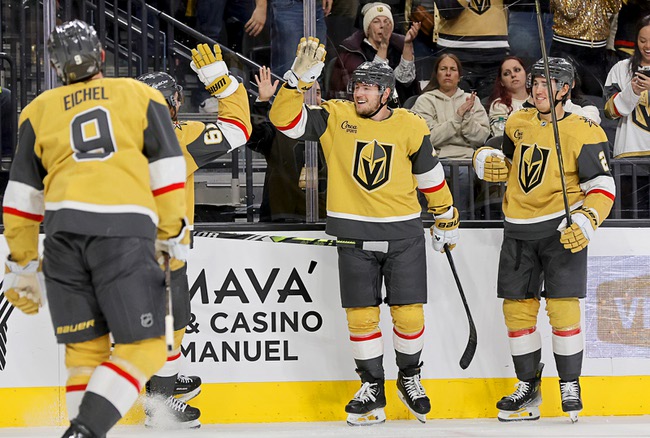
2. Vegas Golden Knights: The Knights certainly understood the assignment going into the year, sweeping a three-game homestand to start. That top line of Jack Eichel, Mark Stone, and Ivan Barbashev could be terrifying if they can keep the early momentum going.
3. New York Rangers: The overtime loss to Utah could look better (or worse) with time, but the Rangers continue to look the part of an early contender. There is a sign of concern in the future with Igor Shesterkin’s increasing contract demands, but that’s a worry for another time.
4. New Jersey Devils: Jacob Markstrom has fortunately been as advertised for the Devils, who parlayed a strong showing in Prague against the Sabres into a 3-1 record to start the year. Barring another injury wave, the Devils should be dueling the Rangers for the top spot in the Metropolitan Division all season long.
5. Toronto Maple Leafs: Craig Berube’s hire has paid immediate dividends, with the blueline looking much improved and the depth starting to emerge. If the Core Four start to get rolling, the Leafs could start to look even more dangerous than they do now.
6. Winnipeg Jets: While the Jets have seen hot starts only to taper off later on before, they can enjoy Connor Hellebuyck regaining Vezina form and Mark Scheifele playing up to his contract. If the Jets are continuing to play the right way as the season wears on, then maybe they will get some more consideration as a legitimate threat.
7. Florida Panthers: The record does not look particularly promising, but they are playing without Aleksander Barkov and with a less than 100 percent Matthew Tkachuk. I’m willing to chalk this up as a Stanley Cup hangover and let it slide, even if that excuse becomes a little less valid if the Panthers continue to struggle.
8. Utah Hockey Club: Utah was actually one of my favorite surprise picks to make the playoffs, and they have looked the part so far. Clayton Keller and Dylan Guenther have led the charge so far, and there is no question that they have been exciting to watch thus far. All of Arizona is seething with rage right about now.
9. Tampa Bay Lightning: The effects of Hurricane Milton leave the Lightning with only one game played this week, but they looked impressive in that particular game against Carolina. If Nikita Kucherov and Jake Guentzel have the type of instant chemistry they showed in their opener all season long, the Lightning’s window might be open for a bit longer than anticipated.
10. Boston Bruins: The Bruins certainly made their fans sweat it out, but Jeremy Swayman is signed and holding it down in net for the foreseeable future. It’s probably a good thing they got the deal done when they did; with how rough Joonas Korpisalo looked in the opener against Florida, Swayman could have held out for an even larger payday.
11. Carolina Hurricanes: On the opposite side of the Lightning, the Hurricanes looked just a bit off in their season opener. With an interesting clash against the Devils headlining a somewhat more pleasant week, Carolina will know where it stands in the Metro relatively quick.
12. Calgary Flames: The spirit of Johnny Gaudreau is hard at work, as his former team has been one of the great surprises of this early part of the season. Unsustainable? Probably. Fun to watch? Absolutely.
13. Vancouver Canucks: Blowing a three goal lead to Calgary and losing to Philadelphia in regulation is not a good look for the Canucks to start the year. They should be fine, but they will need to be more consistent and put together sixty-minute efforts to be more than just playoff fodder.
14. Edmonton Oilers: The Oilers lost 15-3 in their three games this week (including an embarrassing loss to their provincial rival at home), Connor McDavid and Leon Draisaitl have yet to really get it going, and goaltending and defense look like sore spots once again. Still, the last time the Oilers got off to a slow start, they were one win away from hoisting the Stanley Cup. No need to break the glass on the emergency button just yet.
15. Montreal Canadiens: Martin St. Louis needed some positive results to really cement his job security, and the Canadiens have delivered thus far. Sam Montembeault has been the clear MVP early, shutting out Toronto and letting only one get past him against Pittsburgh. If he can continue to steal some wins, the Canadiens could stay in the thick of the playoff race all season long.
16. Nashville Predators: The Predators hype train has yet to be completely derailed, but a losing effort against Dallas and being shut out by Detroit is certainly going to stall it for a bit. A four-game homestand should get them trending in the right direction, but the chemistry is going to have to develop quickly with the fast start some of their Central Division rivals have enjoyed.
17. St. Louis Blues: Maybe I’m a bit more bullish on the Blues than most people, but they put together three strong efforts this week, coming from behind against Seattle and San Jose before being stonewalled by Vegas. Is this the sign of a confident group that should improve as the season wears on, or an indication that their style of play won’t cut it against the NHL’s elite?
18. Colorado Avalanche: Sure, a core of Nathan MacKinnon, Mikko Rantanen, and Cale Makar means the Avalanche will likely never be completely out of the picture. That said, the concerns surrounding them (terrible goaltending, unreliable penalty kill, an impending cap crunch when Gabriel Landeskog and Valeri Nichushkin return) are much more impactful than other slow starters. Will these issues prevent Colorado from playing up to their potential?
19. Minnesota Wild: Matt Boldy’s emergence has been nice to see, but everyone else is still waiting for a reason to consider Minnesota anything more than a minor nuisance. The injury to Joel Eriksson Ek is hopefully not long-term, but the Wild cannot just rely on a few players.
20. Los Angeles Kings: Anze Kopitar and Quinton Byfield look good to start, but the Kings simply need more out of their depth. The void left by Drew Doughty’s injury has yet to be filled, which is far from ideal for a team that needs to get out of first-round purgatory.
21. Ottawa Senators: There are still some issues that needed to be sorted out with the Senators, but Linus Ullmark and Tim Stutzle were impressive against Florida in their opener. Good goaltending and strong play from star players tend to mask quite a few faults, after all.
22. New York Islanders: The start is not the reason I have concerns about the Islanders so far, more than it is on their decisions in net. Is Ilya Sorokin hurt, or does Patrick Roy have some favoritism towards Semyon Varlamov from their days in Colorado? There’s no way Lou Lamoriello gave an eight-year deal to someone their coach considers a backup…right?
23. Chicago Blackhawks: Beating the Oilers was nice, but it has been the only bright spot for the Blackhawks thus far. It looks like Connor Bedard’s in for another year of heavy lifting, folks. Be very afraid.
24. Detroit Red Wings: Cam Talbot may have wrestled the starting goaltender spot for Detroit, which is good. For a team that hasn’t looked good otherwise, Steve Yzerman might be sweating it out a little more than in past seasons.
25. Seattle Kraken: The Kraken have looked a bit sluggish out of the gates, but maybe that’s just the new additions needing time to jell together and the NHL mainstays getting to figure out Dan Bylsma’s system. Congratulations to Jessica Campbell for becoming the first woman to land a coaching job in the NHL, though.
26. Columbus Blue Jackets: The post-game donkey hat being handed out to honor Johnny Gaudreau is a nice touch, and longtime teammate Sean Monahan being the first to receive it was nothing short of heartwarming. It will likely be another long season in Columbus, but any positive development will be a relief from the nightmare the past couple of months have been.
27. Washington Capitals: It’s only one game (granted, they didn’t look particularly convincing), and having to play a streaking Vegas team next is not going to make life any easier. Still, the start doesn’t erase the good work done this offseason, and the Capitals stand as the team most likely to rise out of this low spot and push for respectability.
28. Philadelphia Flyers: Matvei Michkov getting his first NHL point was nice, but the rest of the Flyers have been relatively nondescript so far. No one’s going to have high expectations as the team is still in the throes of a rebuild, but the Flyers are going to need to figure out if this core is going to get them anywhere.
29. Buffalo Sabres: Beating a shorthanded Florida team was a positive touch, but two straight stompings in Europe and being single-handedly bested by Anze Kopitar is not. The yearly pessimism towards the Sabres is back like it never left, and that postseason drought already looks like it will increase by one.
30. Pittsburgh Penguins: The likes of Sidney Crosby, Evgeni Malkin, Kris Letang, and Erik Karlsson are really going to have to go through this in the twilight of their careers? That is sound enough rationale to put this team this low and possibly even lower.
31. Anaheim Ducks: A win against the Sharks is the only reason the Ducks are not languishing at the bottom of these rankings. They did not look good against either the Sharks or Knights, and that will likely be the case all season barring a drastic turnaround.
32. San Jose Sharks: Macklin Celebrini looked good in the Sharks’ first game, and then promptly landed on injured reserve. Even when they might look somewhat watchable, the team just can’t have nice things.
Even a month or so after their loss in the Stanley Cup Final, it’s easy to still live in the afterglow if you’re an Edmonton Oilers fan.
The Oilers were just one win away from completing arguably the greatest comeback in sports history against the Florida Panthers. Connor McDavid became the first player since Jean-Sebastien Giguere in 2003 to lose the Final and still win the Conn Smythe Trophy. Leon Draisaitl is, along with McDavid, firmly in the conversation of the top five players in the world. Evan Bouchard has become a Norris Trophy candidate. Zach Hyman has given the Oilers a lethal “Big Three” at forward. Stuart Skinner overcame an awful postseason last year to become the new face of Canadian goaltending. Defense is still questionable, but the emergence of Philip Broberg during the playoffs certainly eases some concerns. All of the pieces were in place for Edmonton to do what the Panthers did last year and return to the Final with a different result.
The off-season only caused the hype train in Edmonton to go into overdrive. Postseason heroes Adam Henrique and Mattias Janmark were both re-signed. Depth options like Corey Perry, Connor Brown, and Calvin Pickard were also extended. Outside the organization, the Oilers brought in Jeff Skinner on a fantastic deal after he was bought out from Buffalo. Viktor Arvidsson embraced the “if you can’t beat them, join them” mentality and fled Los Angeles to join the Edmonton war machine. Josh Brown was brought in on the back end to make sure toughness remained on the defensive corps. The front office also made a savvy move to pick up Matt Savoie from Buffalo to potentially pair with one of Edmonton’s elite centers. There are still questions to answer in terms of cap casualties, but it was looking like a fantastic summer for the Oilers.
There was just one small problem that needed to be sorted out: Ken Holland had stepped down as general manager shortly after the Final. Jeff Jackson was doing a good job in the interim, but he already turned down requests to accept the job full-time. Given how crucial the next couple of years are going to be for the franchise, this was a hire the Oilers needed to get right. There were plenty of suitable candidates for Edmonton to choose from, some familiar with the organization and some not.
When the Oilers finally put their hand in the mystery box, however, they pulled out the greatest enigma of all.
Prior to the hire, Stan Bowman’s legacy in the NHL was as complicated as it was controversial. While it’s true that he did win three Stanley Cups as general manager of the Chicago Blackhawks, most of the core that won those Cups was in place before Bowman took the helm. His draft record in Chicago was hit or miss, and even some of the hits (Brandon Saad, Teuvo Teravainen, Ryan Hartman, Philip Danault, Nick Schmaltz) were traded under Bowman’s watch. There was also the trade of Artemi Panarin to Columbus for nothing, struggling to find a capable defenseman to replace Niklas Hjalmarsson (including one attempt for Calvin de Haan costing the Blackhawks Gustav Forsling), and the trade and extension for Seth Jones that has looked questionable. By the time Bowman was fired in 2021, the Blackhawks roster was a far cry from the Cup-winning teams of the last decade and a rebuild was desperately needed after the damage done over the last few years.
Of course, no one can discuss Bowman’s tenure as Chicago GM without discussing its ultimate black mark. Much has already been written about the sexual abuse scandal committed by former video coach Brad Aldrich on Kyle Beach, but the main point in this context is Bowman was among a group of Blackhawks executives who became aware of the incident and failed to immediately resolve the issue. Aldrich’s antics would continue and he was forced to resign from his position, but he still was paid by the organization, had his name engraved on the Stanley Cup, and continued to take roles for high school and college hockey until another incident in 2013 put him under arrest.
When an investigation on the Beach incident occurred and its findings were reported, the hockey world imploded. Aldrich became persona non grata and removed from NHL history, and the seedy underbelly of hockey culture at the time became exposed for all the world to see. Bowman, then-head coach Joel Quenneville, and then-team executive Al MacIsaac were all ruled ineligible to continue working for the league, but the ruling was overturned at the beginning of July.
Obviously, Bowman’s return to the league was met with immediate pushback, even amongst Oilers fans. Even during the press conference that made the move official, it felt more like the Oilers doing damage control than anything else. They cited Bowman’s genuine remorse and work with the Respect Group, an advocacy group for abuse and harassment started by former NHL player and sexual abuse survivor Sheldon Kennedy. Jackson mentioned that they had even discussed Bowman’s hiring with Beach and said that he had given the Oilers the green light.
So why, even after a week later to process this, do I still have issues with the hire?
While I would have preferred Beach’s approval of the Bowman hire to come from the man himself, Kennedy’s statement also mentions that the two had a positive meeting together, so I’m willing to at least believe that part. Where the problem begins is that the NHL is currently in a rough patch with sexual abuse scandals and “changed men” returning to the league. The NHL is still reeling from the 2018 Canada World Juniors team scandal, which has seen five of its players removed from the league and facing charges of sexual assault in Canada. In terms of changed men, the Columbus Blue Jackets brought in Mike Babcock as head coach last year, despite knowledge of multiple incidents with players during his tenures in Detroit and Toronto regarding verbal abuse and invasion of privacy. Babcock didn’t even make it to training camp before another incident flared up and he was swiftly removed from his position. It’s easy to say that people have changed; to prove it is a different and more difficult matter entirely.
Any move the Oilers have made to this point have been completely overshadowed. News about the team will be dominated not by how the team looks on the ice or what changes are being implemented, but how the players feel about Bowman being in charge. One would think that the team would also discuss this with its players, especially with their stars. While it can be debated whether discussing a coach or GM hire with players is a good idea or not, the Oilers have a tenuous situation to justify it. Draisaitl’s contract expires after this season and McDavid’s the year after, with both becoming unrestricted free agents. One, if not both, should undisputedly be in Edmonton’s long-term plans, so why make a controversial hire now that casts a shadow over potential negotiations? It’s fair to assume that some in the NHL will never truly forgive Bowman for his role in the Aldrich scandal, and there’s a real chance that Edmonton’s best players want no part in any sort of controversy. If that’s the case and both choose to go elsewhere when their contracts expire, the Bowman hire will have a much greater negative impact than it already does.
Even worse, such an incident would have been completely avoidable had the Oilers just gone a different route with the hire. Even without discussing Jackson, there are two people in particular who should have been given at least a look: Keith Gretzky and Shawn Horcoff.
Keith Gretzky, brother of Wayne, has worked in the Oilers organization for almost a decade now, so he would have the most experience with the team out of any eligible candidate. While he’s mostly served as GM of Edmonton’s AHL affiliate Bakersfield Condors, it’s been noted that he has served as an advisor to Holland and Jackson during the off-seasons. Given the success this summer has been for the Oilers and that he already had a foot in the door with the organization, promoting Gretzky to the GM position would have made sense to people. Meanwhile, Horcoff is a former Oilers captain and longtime player who has seen the organization at both high and low points, so he would know what bringing a Cup would mean to Edmonton. He is currently working his way through the Detroit Red Wings front office, now serving as assistant GM and GM to the AHL’s Grand Rapids Griffins. Throughout his time, Horcoff has been able to develop younger players and get them ready for the NHL, which is something Edmonton would certainly value. With their connections to the organization, they would have a great chance to sell McDavid and Draisaitl on the idea to stay in Edmonton and become national heroes if they bring the Cup back to Canada for the first time in over 30 years.
The search doesn’t even have to end there. Mathieu Darche’s diverse skillset and expertise in negotiations would have made him an asset. Mark Hunter has a great track record of developing talent as part-owner of the London Knights in the Ontario Hockey League, and his chances of landing an NHL job have improved due to another CHL owner in Kelly McCrimmon exceeding expectations in Vegas. Perhaps Jason Botteril could have provided ideas that he was previously unable to in Buffalo? Does Edmonton coach Kris Knoblauch tap into his connections to bring Hartford Wolf Pack GM Ryan Martin along? All of this sheds light on my ultimate problem with the Bowman hire: there were so many other qualified options that would not have come with Bowman’s baggage, especially given that Edmonton’s long-term future isn’t quite set in stone.
For what it’s worth, I genuinely hope Bowman has changed. It appears on the surface that he has learned the error of his ways and is doing what he can to correct them. That said, all of this feels like too much, too fast. Bowman will not only be tasked with running a team with legitimate Cup aspirations, but also to ensure complete transparency on the organization’s inner workings. Bowman’s second chance, given the circumstances, feels like a blessing; there will not be a third should issues arise again.
It’s insane to believe that we’re only a couple months away from the upcoming NHL season, but here we are.
The Seattle Expansion Draft, which felt like a Seattle tourism ad/ham-fisted spectacle hybrid, is over and done. The Entry Draft is all finished up. The initial wave of free agency has passed, and several trade chips have officially gone off the table. While there are a few high-profile signings remaining and the big fish of the offseason in Jack Eichel is still in play, it feels safe to say that much of the heavy lifting of this offseason has been done already.
With this in mind, we can observe the new lay of the land and see which teams improved or devolved. If you’ve followed my blog, you know the format of these winners and losers posts by now: there will be five teams on each side, and each team will be given a rundown as to why their spot on either side is justified. However, due to the sheer insanity of this offseason, I feel it’s also appropriate to briefly mention teams that also made waves during the offseason, for better or worse. I wouldn’t go so far as to call them honorable mentions, but their trajectories as far as this offseason is concerned are worth discussing.
Let the discussion begin!
Loser #5: Vancouver Canucks
Oh, what life must be like as a fly in Jim Benning’s office.
Let’s observe some of the optics of the Canucks’ moves this offseason, shall we? A year ago, Benning extended Jake Virtanen in the hopes that he would take the next step up, signed Braden Holtby to serve as a veteran mentor and 1A goaltender to Thatcher Demko, and traded a third-round pick to Vegas for Nate Schmidt in the hopes of solidifying their top four defensemen. This offseason, however? Virtanen and Holtby were both bought out of their contracts, while Schmidt was flipped to Winnipeg for a third-round pick after a mediocre season. It wasn’t entirely unjustified, but it doesn’t speak well to the organization when it has to change directions so soon after making moves.
Where the Canucks failed most this offseason, however, was creating cap space. They were buried under several bad contracts due to Benning’s whiffs in free agency, and needed to work out a few deals. The good news is they did work out a deal with Arizona that saw Loui Eriksson, Antoine Roussel, and Jay Beagle all come off the books; the bad news is they were instantly replaced by two longer contracts of nearly-equal value in Oliver Ekman-Larsson and Conor Garland. They also used up more of their cap to bring back Travis Hamonic and sign Tucker Poolman, neither of whom is a real impact signing on the defense. While the players Vancouver received should do more to contribute than who they had to give up, it doesn’t help them with their key problems: Elias Pettersson and Quinn Hughes. Both are restricted free agents and will be demanding large extensions, which is all but guaranteed to consume Vancouver’s $14 million in cap space (this is before factoring in other RFAs like Olli Juolevi and Jason Dickinson, the latter of which having recently filed for salary arbitration). Brock Boeser will also be hitting restricted free agency after this season, so the Canucks will now likely be forced to trade a key player to balance out the books (they’d prefer to lose Tyler Myers, but my guess is teams will be more focused on J.T. Miller).
The moves the Canucks made this offseason aren’t bad in a vacuum, hence their low placement on the losers side. However, with added context, it paints a picture of an organization that still isn’t quite sure about the direction it wants to go in.
Winner #5: Dallas Stars
Sometimes, you don’t need to be a major player to win the offseason.
Missing the postseason just one season after being in the Stanley Cup Final, the Stars didn’t panic and elected to reload the team. Given the going rate of young defensemen, the Stars may have gotten a relative bargain on Miro Heiskanen’s extension. The team also assisted their young defenseman by giving him an upgrade on his opposite side and a key mentor in Ryan Suter. The length of contract is a concern, as it does mean Suter will be locked up in Dallas until he’s 40, but he still has some tread left on the tires and will only assist in building Heiskanen’s game up.
Smaller pieces like Jani Hakanpaa, Luke Glendening, and Michael Raffl were brought in as well to stabilize the end of the lineup. It was intriguing to see the Stars sign Braden Holtby however, as it indicates Ben Bishop’s injury is more serious than anticipated, as well as the team potentially shopping Anton Khudobin (Arizona and Buffalo would be in the market for a starting goaltender, while St. Louis, Winnipeg, and even Calgary would like a stable backup). It would put Holtby back in the role of mentor (this time to Jake Oettinger), but it’s a fine low-risk signing. It also gives the Stars some cap flexibility, as Joe Pavelski and Alexander Radulov’s expiring deals would make way for extensions to John Klingberg, Jason Robertson, and Denis Gurianov.
Give credit to the Stars for staying calm and sticking to their guns, when lesser front offices would have panicked and changed direction. The Cup run may have been an aberration, but this is still a playoff-caliber team.
Loser #4: New York Rangers
What the heck did Tom Wilson do to you, Rangers?
Whether it was Wilson’s hit in a late-season game against the Rangers that saw Artemi Panarin miss the remainder of the year, or his sort-of T-pose in the penalty box, or the slap of the wrist given to the Capitals wing by the Department of Player Safety, something triggered the Blueshirts just enough to focus this offseason on a single trait: grit. Such became obvious when they traded for Barclay Goodrow, which was understandable in and of itself…before chucking a six-year extension at him with a $3.64 million AAV and a 15-team no trade clause to boot. Given how poorly power forwards like Goodrow age at the NHL level and Goodrow being 28, it’s very likely the Rangers will be paying him for his declining years.
Other signings like Patrik Nemeth, Greg McKegg, Dryden Hunt, and Jarred Tinordi also add little but veteran depth and grit to the roster. Trading a third-round pick to Vegas for Ryan Reaves and extending him for a year also shows what New York was really focused on this offseason (convince me all you want it’s because of his familiarity with Gallant, we all know what James Dolan and crew really got him for.) Extra points for trading away Pavel Buchnevich and Alexandar Georgiev requesting a trade as well, while still needing to provide an extension to Igor Shesterkin. While there is still time for the Rangers to fix this and come up with a way to land Jack Eichel, look at who will be notable free agents next season: Mika Zibanejad, Ryan Strome, Norris Trophy winner Adam Fox, Georgiev, Kaapo Kakko, Vitali Kravtsov, and Sammy Blais. Unless the Rangers are willing to part with a chunk of these expiring contracts (my guess would be Strome, Georgiev, and Kakko would go back), Eichel is off the table by their own doing.
It’s a combination of banking on younger talent to step up, and trying too desperately to fill out a part of the lineup that only realistically needs a couple options. The excitement on Broadway might be dimming a bit.
Winner #4: Los Angeles Kings
Don’t look now, but Rob Blake and Luc Robitaille are building a contender once again in LA.
They were one of the big winners of the Expansion Draft, with the Seattle Kraken (more on them later) choosing to select Kurtis MacDermid over higher-upside options like Carl Grundstrom and Kale Clague. Before the Draft, they traded for Viktor Arvidsson from Nashville, who gives Los Angeles another reliable scoring option in their top-six forward group.
Free agency was also a success for the Kings, who landed one of the bigger prizes of the class in Phillip Danault. Coming off of a Cup Final run with Montreal, Danault’s strong two-way play will make him a fixture in Los Angeles’ middle six. Alexander Edler also comes to stabilize the defensive corps, letting the Kings further develop their younger options and provide leadership from the back end. The best part about these signings is that it gives LA options on what to do about its strong prospect core; younger prospects like Quinton Byfield, Alex Turcotte, and Tobias Bjornfot are NHL-ready, but Danault and Edler give the Kings an avenue to give them more development time.
The Kings might not be back to the Cup-winning days of the early 2010s, but there’s no reason to think they can’t get there. For now, it’s time to focus on this current phase of the rebuild and push for a playoff spot in a weak Pacific Division.
Loser #3: Buffalo Sabres
Forget the head-scratching moves that the Pegula family are currently making with the Bills for a second; the hockey team is still in quite the mess.
After last year’s complete disaster, the Sabres seem content to blow up their core. A fine strategy with all things considered, but they seem to be struggling with being even remotely competitive. Will Butcher fell out of favor in New Jersey, so moving to a rebuilding team made sense for him. They also got a fine haul out of Rasmus Ristolainen from a Flyers team that was desperate for defense. Sam Reinhart is also off to Florida after basically saying he would only take a year-long contract in Buffalo to hit unrestricted free agency and bail.
The only real questions now are this: where’s the Eichel drama going, and what’s Buffalo’s plan in net this season? Jack Eichel’s saga is feeling more like Deshaun Watson’s by the day: it’s painfully obvious to anyone watching that he’s played his final game in Buffalo, and the team is only hurting themselves the longer they delay the inevitable. Many suitors are at their door (New York Rangers, Minnesota, Anaheim, etc.) bearing gifts of first-round picks and top prospects, and the Sabres will have to answer the door sooner rather than later. Also…is anyone sold on what the Sabres are doing for goaltending? After Linus Ullmark defected and signed with Boston, the Sabres signed Craig Anderson and Aaron Dell to veteran-minimum deals. While both are penciled in as the Sabres’ goaltenders this season, there’s no chance that will end well for either player or team. An Eichel trade could net either Georgiev from New York or Kaapo Kahkonen from Minnesota, or the Sabres can pull out another deal for someone like Anton Khudobin or even Mikko Koskinen from Edmonton. If they fail in that regard, it looks like top prospect Ukko-Pekka Luukkonen may endure a trial by fire by midseason.
With Owen Power likely remaining in Michigan to continue his development, there’s little reason to be confident in the Sabres. It’s likely that, when Power comes over to Buffalo, there will be another number 1 pick to play alongside.
Winner #3: Boston Bruins
The Bruins knew what their gameplan was, and they deserve credit for sticking with it.
The Bruins got their top order of business finished early, signing Taylor Hall to a reasonable four-year extension worth $6 million per year. Hall was one of the best players on the ice since arriving from Buffalo, and it appears he’s finally landed on the contender he sought when he hit free agency last season. While losing longtime players like Tuukka Rask and David Krejci hurt, the Bruins did a good job of patching the holes there, as well.
To replace the Rask-Halak tandem in net, the Bruins swiped Linus Ullmark from Buffalo in free agency. Ullmark was one of the rare bright spots on a Buffalo team, so there’s reason to believe his play should look better under a much more defensively-responsible structure. Joining him would be rookie Jeremy Swayman, who looked strong in his late-season call-up with the Bruins. To replace Krejci and other middle-tier free agents like Nick Ritchie and Ondrej Kase, the Bruins made some quality signings with Nick Foligno, Erik Haula, Tomas Nosek, and Derek Forbort. All four should play key roles for the Bruins this season, and gives Boston options in multiple situations. Even if the Bruins do choose to trade Jake DeBrusk, the Bruins could easily fill in his spot with in-house options like Trent Frederic or Jack Studnicka.
The Atlantic Division will be a battle this season, but at least the Bruins worked on keeping their Cup window open for longer. That alone is worthy of some praise.
Loser #2: Edmonton Oilers
With the three losers before now, I could at least understand a little bit of the rationale behind their moves and/or there is a way to still come out decent in their situation. For the Oilers and the team below them, not so much.
It feels bad to speak ill about Ken Holland, but the final years of his tenure in Detroit and his current run in Edmonton can only make me think one thing: the hockey world has passed him by. Let’s start with his big move in acquiring Zach Hyman as free agency started. Hyman is a good player, but being on Toronto’s top line with Auston Matthews and Mitch Marner is bound to inflate statistical output for any player. It didn’t scare Holland away from signing him to a seven-year deal at $5.5 million AAV. It’s also unlikely that Hyman even sees first-line minutes, as the extension of Ryan Nugent-Hopkins will likely put Hyman on a second line with natural goal-scorers such as Leon Draisaitl and Jesse Puljujarvi. It’s a fit that could cause trouble quickly, and the term is banking on Hyman gelling with his new team quickly.
Even scarier than Hyman’s deal is what’s going on with the defense. While Darnell Nurse is emerging as a great number one defenseman and Evan Bouchard comes it with a lot of hype, the rest of the Oilers’ blueline has me mildly concerned. To counter Oscar Klefbom going on LTIR this season, the Oilers paid the Blackhawks their asking price on 38-year-old Duncan Keith, who just went through his worst season as a professional player. To replace Adam Larsson after he was selected by Seattle in the Expansion Draft, the Oilers grossly overpaid Cody Ceci for four years at $3.25 million AAV. That’s a lot of term and money for a player coming off his first good season in five years. Tyson Barrie also returns as a power-play specialist to pair with Connor McDavid and Draisaitl, but would it have been more sound to let another team overpay, especially with Nurse hitting unrestricted free agency next season? And was it worth trading another top-four defenseman in Ethan Bear for another grinding forward in Warren Foegele?
It’s unlikely the Oilers miss out on a playoff spot in the Pacific due to the lack of depth within the division. However, the common formula is still in place: McDavid and Draisaitl carrying this team as far as it will go.
Winner #2: Seattle Kraken
Talk about the surprise of the free agency period.
After a relatively mediocre Expansion Draft and a so-so entry draft, I was starting to get incredibly concerned about the Kraken in their maiden season. I had a lot of questions about whether they had done enough to even be competitive, or if they would go the way of many expansion teams and struggle early on in their existence. Instead, it appears Ron Francis and company decided to try and pull off the inverse of the Golden Knights’ formula. They won through side deals during the Expansion Draft? The Kraken would win in free agency.
Ticked off about Carey Price not being selected? Here’s a Vezina finalist in Philipp Grubauer at half of Price’s AAV (yes, the NHL did reject Seattle’s contract with Grubauer, but the issue isn’t something that a simple restructure won’t fix.) Worried that the Kraken don’t have enough players who can score goals? Take one of the league’s more underrated forwards in Jaden Schwartz. Concerned about center depth with number two pick Matt Beniers staying in Michigan and Yanni Gourde needing shoulder surgery that will cause him to miss the start of the season? Alexander Wennberg on a reasonable deal makes perfect sense. Not a bad free agent haul for the team’s first go-around.
Before free agency, the Kraken were seen as a team that would be fortunate to finish out of the Pacific’s basement. Now, there’s actually an outside shot of being a playoff team right out of the gate.
Loser #1: Carolina Hurricanes
What. Is. Going. On?
That’s all I can say about the Hurricanes and…whatever their offseason was supposed to be. They finally had a solution in net with Alex Nedeljkovic and Petr Mrazek, but the Hurricanes now have neither. They let Nedeljkovic, someone who was emerging as the Hurricanes’ first potential franchise netminder since Cam Ward, leave for Detroit for the signing rights of Jonathan Bernier and a mid-round pick. They didn’t even manage to secure Bernier, who joined New Jersey in free agency. Now, the Hurricanes are counting on Frederik Andersen, who had regressed every year in his tenure with Toronto, and an injury-prone Antti Raanta. Not a good look.
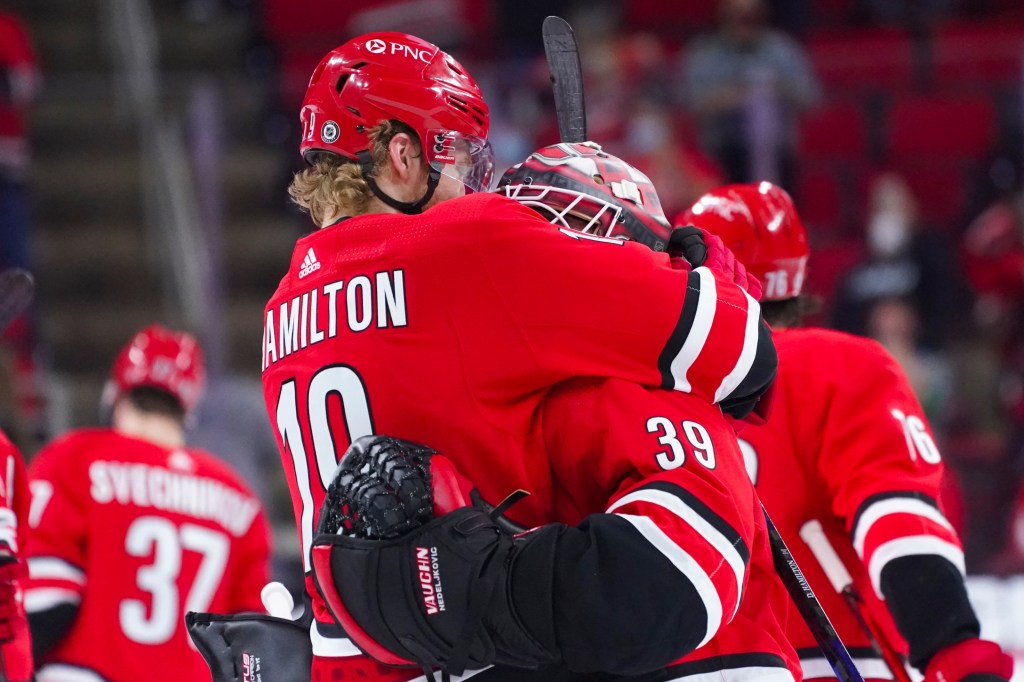
Losing Dougie Hamilton was also a blow, so the Hurricanes needed to match his production on defense. Jake Bean was traded to Columbus, so the problem required an entirely new solution. Picking up Ethan Bear from Edmonton was a good idea…and then Carolina destroyed all goodwill by signing Tony DeAngelo. For those who don’t know (or tried to forget) about DeAngelo, take a look at this. A history of using racial and homophobic slurs in junior hockey? Being one of the few athletes who not only holds strong pro-Trump views, but openly flaunts them on social media? A physical altercation with multiple players that saw his tenure with the Rangers end in disgrace? At what point do you just call it a lost cause? This is a move that only works if DeAngelo plays well enough to justify his presence…and his time in New York did little to convince me of that.
The Hurricanes are, bar none, the biggest loser of the offseason. I wish I could say it was strictly for DeAngelo, but that’s just the sour icing on top of the moldy cake. And it was all going so well…
Winner #1: New Jersey Devils
The Devils may be stuck in the toughest division in hockey in the Metropolitan, but they sure are trying to make a push.
After years of struggle on the defense, it appears the Devils may be getting their act together. Trading for Ryan Graves was already a good start, but then they pulled the big fish: they won the Dougie Hamilton sweepstakes. The deal is a big commitment, but it’s well worth it to acquire one of the best two-way defensemen in the NHL in his prime. With Ty Smith, Damon Severson, and a sheltered P.K. Subban still on the roster, the Devils’ defensive corps could be one of the best at providing offense from the back end in the league. With reinforcements like Kevin Bahl, Reilly Walsh, and Shakir Mukhamadullin also in the system, the Devils have set themselves up nicely on defense for the short and long term.
Jonathan Bernier was also a very sound pickup, providing Mackenzie Blackwood with a mentor and a true 1B goaltender that can give him some well-needed rest. The best part is that the Devils might not even be done yet. With only Janne Kuokkanen and Yegor Sharangovich needing extensions, they will still have plenty of cap space to play around with. With the free agent market calming down, the quiet could give Tom Fitzgerald an opportunity to snag talent on short-term deals in order to better the team now and give the prospects more development.
For a rebuilding team, where the Devils are right now is a good position to be in. They might not be a playoff contender quite yet, but they look poised to take advantage when juggernauts like Washington and Pittsburgh begin to slow down.
Honorable Mentions
Arizona Coyotes: Hard reset here. With most of the core either traded or soon to be traded, the Coyotes have gone back to taking bad contracts (Shayne Gostisbehere, Anton Stralman, the Vancouver triple threat) in exchange for significant future assets. Their deals did get them a few intriguing pieces, however; Conor Timmins should have an impact early, number nine overall pick Dylan Guenther could arrive as soon as this season, and they now have seven picks in the first two rounds of a loaded 2022 Draft. Oh, and taking a flier on reigning KHL MVP Dmitrij Jaskin is a smart bit of business.
Chicago Blackhawks: This is an all-in push if I’ve ever seen one. Seth Jones was acquired for significant assets, while Marc-Andre Fleury and Tyler Johnson were practically given to them as salary dumps. It’s fine, but Jones’s extension is a bit troubling, and the Hawks would be hoping Fleury and Johnson can either keep or regain their forms. Otherwise, the cap situation might look worse than it already is, and Stan Bowman might be fired before he gets a chance to clean up his own mess.
Colorado Avalanche: On one hand, the Avalanche were successful at locking up Gabriel Landeskog and Cale Makar long term. On the other, Philipp Grubauer was swiped by Seattle, and the Avalanche had to cover by sending Conor Timmins and a first-round pick to Arizona for former punching bag Darcy Kuemper. You win some, you lose some.
Detroit Red Wings: Knowing the pain of the Oilers all too well, the Red Wings have to be more than okay with Steve Yzerman running the ship steady. Landing Alex Nedeljkovic as a bargain was one of the moves of the offseason, and they also brought in Pius Suter to a good deal. Other than that, it’s looking like the youth are about to invade Hockeytown; Lucas Raymond and Moritz Seider could both be in the lineup on Opening Night, while the likes of Joe Veleno, Jonatan Berggren, and Wyatt Newpower could all make appearances at some point this season.
Montreal Canadiens/Vegas Golden Knights: Ironically, these two playoff foes endured similar offseasons. For the most part, they’ve done alright; Montreal made two good signings in David Savard and Mike Hoffman, while Vegas retained key pieces like Alec Martinez and landed an intriguing buy-low candidate in Evgenii Dadonov. Unfortunately, it’s been a loss from a PR standpoint. Montreal made headlines for all the wrong reasons by drafting convicted sex offender Logan Mailloux with their first-round pick, while Vegas traded Vezina-winning goaltender and face of the franchise Marc-Andre Fleury for a player who won’t even play in their system this season. Both look like villains at this point, but nothing smooths relationships over quite like winning does (Marc Bergevin would be the first to tell you that.)
Philadelphia Flyers: After being let down tremendously by their defense this past season, the Flyers committed to a full-scale overhaul. Gone are Shayne Gostisbehere, Philippe Myers, and Robert Hagg; in are Ryan Ellis, Rasmus Ristolainen, and Keith Yandle. The only people who are praying for the success of this new-look defense more than Flyers fans are Carter Hart and free-agent acquisition Martin Jones: no two goalies in the NHL may need a larger boost in confidence than them.
Tampa Bay Lightning: The receipt for back-to-back Stanley Cup victories is finally coming around for the Lightning. Their entire third line of Blake Coleman (Calgary), Yanni Gourde (Seattle), and Barclay Goodrow (New York Rangers) have all gone elsewhere, and Tyler Johnson became another cap casualty. They did lock up Brayden Point long term, but with Stanley Cup Final hero Ross Colton needing a deal and filing arbitration, could the payroll shedding still be going on in Tampa?
The coroner is in. Let us commemorate the tragic fall of the Edmonton Oilers.
The skinny: In this series, Edmonton received another grim reminder: this is not the NBA where two superstars is enough to guarantee a deep playoff run. Despite a likely Hart Trophy winner in Connor McDavid putting up one of the best offensive seasons in recent memory and Leon Draisaitl also putting up great numbers, the Oilers once again failed where it mattered most in the postseason.
Despite facing a Winnipeg Jets team that was limping into the postseason and saw its offense dry up in the final few weeks of the season, they were able to pull out an impressive victory over Edmonton and its two superstars. It leaves the Oilers with serious questions, but where did it all go so wrong? Let’s break that part down first…
Offensive struggles: Normally, this is where pundits would begin their seemingly annual roasting of Edmonton’s depth, but that would discount how well Winnipeg did defensively. McDavid and Draisaitl weren’t without their struggles, as both players were held off the scoresheet in the first two games. Their final numbers weren’t too bad, but the depth once again couldn’t keep up when the defense focused on the superstars. All of two goals came from players not playing with McDavid or Draisaitl, and the defensive corps failed to score a goal. It was a bad showing all around for the Oilers in the opposing zone.
Failure to close: Game 3 was the moment Edmonton’s fate was sealed. It seemed like Edmonton was on its way to scoring their first victory in the series with a 4-1 lead with nine minutes remaining, only for disaster to strike. In a little over three minutes, Winnipeg would fire off three unanswered goals to tie the game up, then see Nikolaj Ehlers score the overtime winner. Edmonton did try to fight back in Game 4, but costly turnovers from Ethan Bear and McDavid ended up leading to Winnipeg goals that completed the sweep.
Special teams: Special teams battles can decide how a series goes down, and that’s exactly the case here. What is shocking is how much of a far cry Edmonton’s special teams went from regular season to postseason. From first in power play percentage and ninth in penalty kill percentage in the regular season, Edmonton struggled in both, putting up 18.2% on the power play and a tepid 70% penalty kill. Again, give credit to Winnipeg for adjusting to Edmonton’s style and wearing them down, but the impetus has to be on the Oilers to produce in some capacity.
The crystal ball: The good news about Edmonton’s situation is that their cap situation should improve this offseason. Ryan Nugent-Hopkins will likely be heading out, and it appears that the Oilers are favoring an extension for Adam Larsson over Tyson Barrie. Kailer Yamamoto and Dominik Kahun may warrant extensions as restricted free agents, but they likely won’t cost much. It also appears the Oilers will work to extend Mike Smith and buyout Mikko Koskinen. Regardless, it should give the Oilers a chance to figure out their situation and hopefully make some meaningful moves this offseason.
That said, the real question about the future lies with McDavid. How long can the Oilers reasonably expect their captain’s patience to hold out? It won’t be this offseason, or even next offseason, but at some point, the trade rumors will become more than just rumors. What happens when McDavid nears 30 if the Oilers continue to struggle in the postseason? The personal accolades and tremendous output are all fine, but they ultimately mean nothing if they come without an opportunity at the Stanley Cup. The frustration can’t keep building up, and GM Ken Holland will have to keep that in mind when it comes to building this team for next season and beyond.


 The Sports Nerd Speaks