The coroner has returned. And who else would be in the office than an all-too-familiar face?
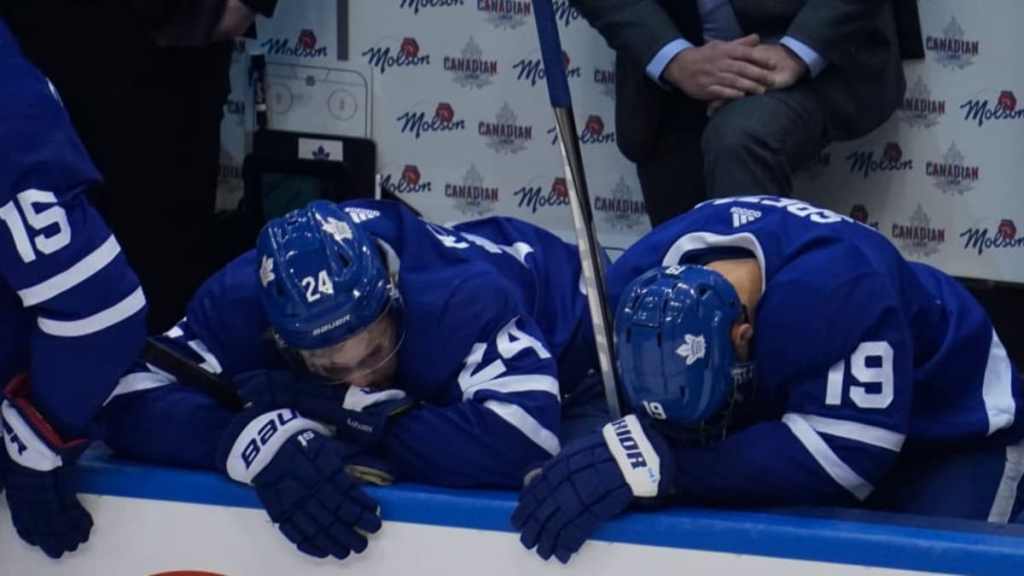
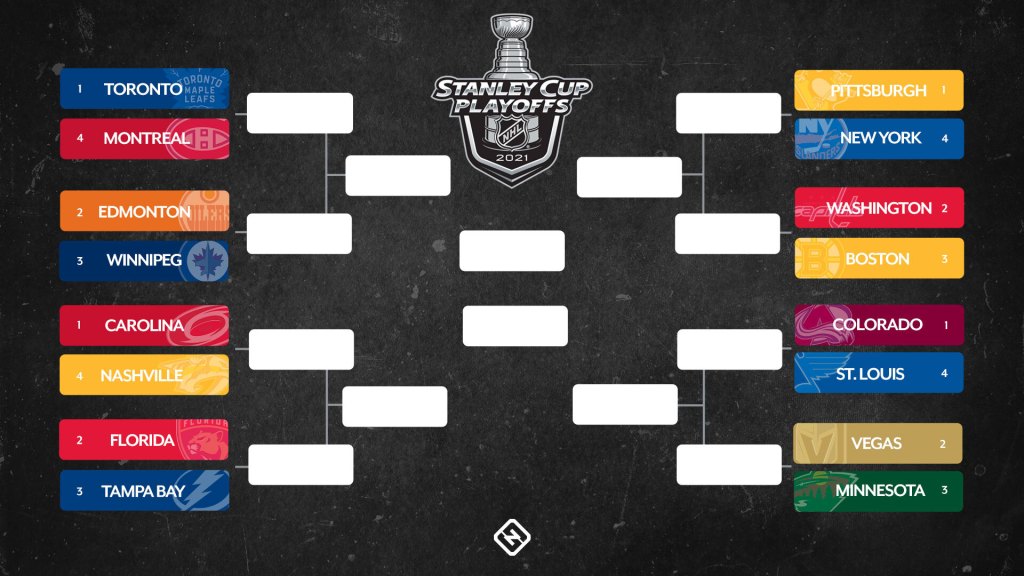
The skinny: It happened again. All of Toronto sensed it was coming after they failed to close the series against Montreal out in Game 5, but it didn’t make the seemingly inevitable outcome any easier to swallow. As if reprising a common theme, the Canadiens roared back from a 3-1 series deficit to eliminate the heavily-favored Maple Leafs.
Toronto fans can be forgiven for feeling like this franchise has been cursed, as if the hockey gods are still punishing them for the miserly reign of Harold Ballard decades ago. This was the year, of all years, that things were supposed to be different. The Leafs had run through the North Division like a hot knife through butter, were finally decent on the back end and in net, and had a devastating powerplay led by their big four forwards. How did it all end up in yet another first-round exit? There’s a few reasons to point to…
Matthews and Marner: Auston Matthews won the Rocket Richard Trophy this season for scoring the most goals during the regular season, playing a major role in Toronto’s overall success. His linemate Mitch Marner finished fourth in the entire NHL in total points. Unfortunately, the big duo struggled to get anything going this series, combining to score only one goal in all seven games. Their struggles were only compounded by the injury to John Tavares in Game 1, leaving an inconsistency for Toronto to produce anything offensively. William Nylander and even Jason Spezza tried to pick up the slack with eight goals between them, but it was far from enough.
Failure to close: The Leafs had three straight opportunities to get that fourth win this series, and failed every single time. They didn’t hold a lead at any point in the final three games and, while they did manage to push Games 5 and 6 to overtime, they lost both. The worst part about all of this is that this has become a habitual instance for the Leafs. It’s the second time in the last four years the Leafs have blown a series lead (3-2 against Boston in 2019). They have gone 0-7 in series-clinching games in that span. A nice segue for the final reason…
Reputation: This may be a cop-out to some people, but can anyone deny the possibility of the Leafs cracking under the pressure yet again? It seems the team is caught in a vicious cycle: they’re considered one of the top teams in the league at the start of the season, play relatively well during the regular season, and then collapse at key moments in the postseason. This is the fifth straight year the Leafs have made the playoffs, and the fifth straight year they’ve fallen in the first round (if you count last year’s qualifying round, at least). Toronto hasn’t even made it beyond the first round since 2004. It’s one of the most disastrous playoff performances from any team in any sport, and the label of ‘playoff underachievers’ only received yet another underline this postseason.
The crystal ball: With the best opportunity for the Leafs to advance in the postseason squandered, it’s time to ask very serious questions about this core. It feels like the Sheldon Keefe-Kyle Dubas-Brendan Shanahan regime will receive at least one more try to make things right, but results have to be shown at some point. All three came into their respective positions of coach, general manager, and team president with promise and an approach that appeared to promise success in the short and long term. A third year of little to no change, however, could lead to a further sense of desperation and send at least one, and likely multiple, of the three out the door.
As far as changes to the roster go, that’s going to be a little tricky to figure out. Toronto’s rentals like Nick Foligno and David Rittich will likely find work elsewhere, and unrestricted free agents Zach Hyman and Frederik Andersen might not be asked back due to Toronto’s cap crunch. Their cap situation might get a little better if Seattle selects Alexander Kerfoot in the Expansion Draft and removing his $3.5 million cap hit from the books, but that’s still only temporary relief. The Leafs will also be tied to a good chunk of the trade targets this offseason, with some reports already connecting them to San Jose’s Evander Kane for grit and scoring depth. The only problem is that Toronto only has three picks each in this and next year’s drafts, so any trade will ensure Toronto has to deplete its farm system to some degree. Changes are coming, but will they lead to more problems than the Leafs already have?
The coroner had a lunch break, but he’s back in. Let us dive into the defanging of the Minnesota Wild.
The skinny: So close, and yet so far away. If you were to describe the Minnesota Wild’s recent history in a single sentence, that’s the one that fits the best. A decade after the major signings of Zach Parise and Ryan Suter, the Wild have been stuck in a no man’s land between fringe playoff contender and barely missing the postseason. But this year was meant to be different. With likely Calder Trophy winner Kirill Kaprizov being as exactly as advertised in his first season from Russia, young players like Joel Eriksson Ek and Jordan Greenway breaking out, and a deep defensive corps, this was the season for the Wild to finally break through.
Unfortunately, their first taste of success put them on a collision course with the Vegas Golden Knights, a team that was so close to winning the division and President’s Trophy. While the Wild deserved to be considered a sexy upset pick (and they came very close to pulling it off), their lack of playoff experience came back to haunt them in the end, coming up just short in Game 7. So what led to the final downfall of the Wild? Let’s take a look…
Zach Parise: The issue here isn’t necessarily Parise, who played very well in this series and tied for the team lead with two goals and three points; the issue is coach Dean Evason’s usage of Parise. Parise was a healthy scratch for the first three games of the series, only seeing action when Marcus Johansson suffered a broken arm in Game 3. When Parise did enter the lineup, he had a slight return to form for the rest of the series. It leads to further uncertainty about where Parise stands with the Wild. While it’s likely his contract will keep him in Minnesota for the foreseeable future, a season where Parise was up and down the lineup might lead him to be a little frustrated.
Inconsistent offense: It wasn’t just Parise’s lack of usage that weakened the Wild offense; their top stars couldn’t keep any momentum throughout the series. Kaprizov was held to just one assist in the first four games of the series, scoring his only two goals in Games 5 and 7. Kevin Fiala was near nonexistent, scoring his only two points in Game 6 (he also finished with a -6 for the series). Mats Zuccarello and Marcus Foligno were held without a goal, as were three of their top four defensemen. Eriksson Ek (two goals and three points), Greenway (one goal and three points), and Ryan Hartman (two goals) did their best, but Minnesota’s top stars failed to show up when it mattered most.
Injuries: It wasn’t just Johansson that was injured in this series. Third-pairing defenseman Carson Soucy also went out with an injury, but it wasn’t until Game 7 that the injury bug really bit Minnesota hard. Early in the game, Jonas Brodin took a hit from Vegas forward Nic Roy that took him out of the game. Ryan Suter and Eriksson Ek also had nasty collisions with the goal posts and, while both players did come back into the game, neither seemed particularly effective for the rest of the game. It’s not necessarily a valid excuse, but there’s no denying how important a clean bill of health is for the postseason.
The crystal ball: This season may have ended in bitter disappointment, but the Wild are on the verge of something they haven’t had for a while: legitimacy. With Kaprizov looking like a franchise star, a young core emerging, and prospects like Matt Boldy and Calen Addison on the way, the Wild look to be in great shape for years to come. While Kaprizov, Eriksson Ek, and Fiala will all be in line for hefty extensions, the Wild should also have the cap space to add at least one more major piece to help push them over the top (perhaps a top-line center to pair with Kaprizov and Zuccarello).
The big question for the Wild, however, will be the Expansion Draft. They are the one team where it’s an uncertainty of what protection format they will choose: do they protect Matt Dumba and go the eight skaters route, or do they protect the likes of Fiala and Hartman with the traditional 7-3-1 scheme? Regardless of their choice, the Wild might have to part with a prospect or draft pick in order to keep the player(s) they would prefer not to lose. The good news is they have a relatively deep farm system and a couple extra draft picks this year from the Jason Zucker trade to Pittsburgh, so they should be alright. Well, so long as Wild fans are fine with losing Hartman or Soucy to keep Dumba or Fiala.
The coroner is in. Let us discuss the demise of the reanimated Nashville Predators.
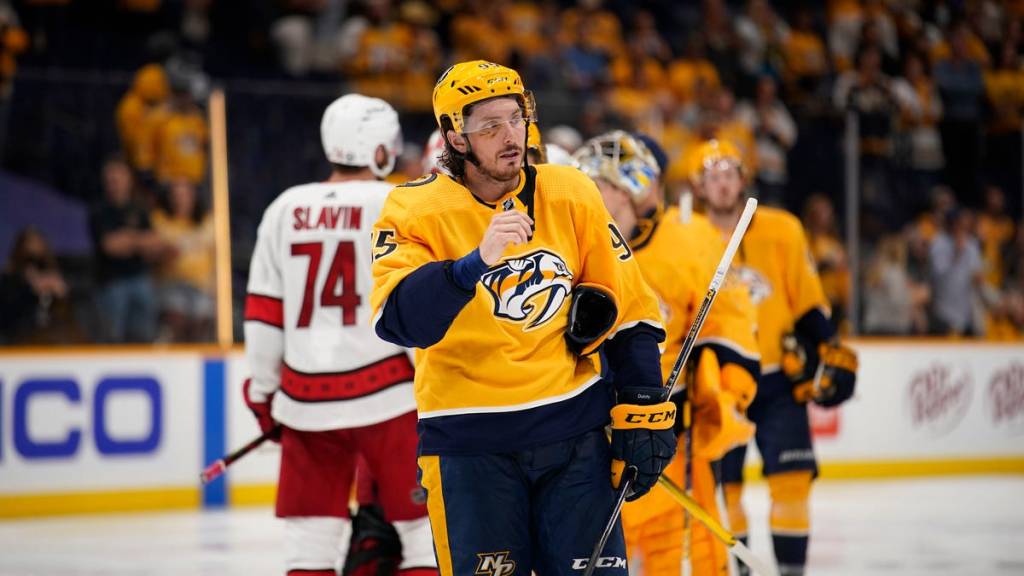
The skinny: Give the Predators some credit; they should not have even made it this far. In mid-March, the Predators were one of the most troubled teams in the league, failing to get production from their top stars while the special teams continued to be among the league’s worst units. It felt like the trade deadline and offseason would provide wholesale changes and see the definitive end to this era of Predators hockey. But then, the Predators rebounded, rampaging through their division in the weeks prior to the deadline and working their way to securing the fourth seed.
Unfortunately, that effort put them in the path of a Hurricanes team who had solved its goaltending issue and was loaded with depth. It was a spirited effort from a Predators squad that looked outmatched on paper, with all of the final four games needing overtime to decide a winner. It wasn’t enough, though, as the Hurricanes eventually broke through. So what finally finished the Predators off? Let’s take a look…
Power play: Tell me where this sounds familiar: the Predators were let down by their power play. Feels like a common theme over the last three years, and it proved true once again. Despite having seven power play opportunities in Game 2, Nashville failed to capitalize on all of them. For context, Carolina held a 1-0 lead until the final minute of the game. It was the most egregious example of the Predators’ power play providing momentum in the wrong direction. It wouldn’t get much better for the Predators with the man advantage, operating at an 11.5% clip (only Montreal has a worse power play percentage). Part of playoff success comes from taking advantage of the opposing team’s mistakes, which is something the Predators can’t seem to do consistently.
Uneven production: It wasn’t that the Predators failed to get production from their stars; it’s just that they weren’t able to stay consistent. Ryan Johansen came on late in the series with three goals in the last four games, Mikael Granlund paced the team with five points, and center Erik Haula and defensemen Roman Josi and Ryan Ellis each picked up four points. Then we get the negatives. Whereas Johansen lit up the Hurricanes in the final four games, Filip Forsberg and Matt Duchene ran cold with only one point between them in the final three games. Viktor Arvidsson, a usual source of offensive production, missed the final four games with injury. Power play goal leader Eeli Tolvanen was held off the scoresheet in the four games he played. Calle Jarnkrok managed only one assist. It was simply a case of the negative outweighing the positives with Nashville.
Coaching: The John Hynes hire to replace Peter Laviolette raised more than a few eyebrows, and it’s fair to wonder if this series did anything to quell the unrest. Sure, give Hynes and his squad credit for pulling out two gutsy double-overtime victories in Games 3 and 4, but they deserve some heat for not matching up with the Hurricanes adjusting to overcome the newfound adversity. In Games 5 and 6, the Predators were holding the lead late, but let the Hurricanes back in to give them life. It’s momentum that the Hurricanes pounced on in overtime, eventually sending the Predators home. It falls on Hynes to at least some degree, as he couldn’t put it all together as Carolina attacked with near-reckless abandon.
The crystal ball: It’s clear from this series and the four years since their Cup Final appearance that the contention window has closed on the Predators. Like any team having to adjust from a closed window, it leaves serious questions for the Predators to answer? Is the Hynes-David Poile regime viable in the long term? How do the Predators approach soon-expiring deals like Forsberg, Jarnkrok, and Mattias Ekholm? What will Juuse Saros’s extension look like? Will a big contract be moved to allow the Predators to pivot towards the future? It’s an offseason that is crucial towards determining where this team for at least the next few years.
The biggest stage for the Predators this offseason will unquestionably be the Expansion Draft? Despite Dante Fabbro’s slower-than-expected development, the emergence of Alexandre Carrier likely pushes the Predators to protect eight skaters instead of the more common seven forwards and three defensemen. If there is a goal for the Predators here, it would be convincing Seattle to take either one of Duchene or Johansen’s contracts off their books. It would undoubtedly take a package of prospects and picks for Seattle to even remotely consider the idea, but it would give the Kraken a legitimate top-line center to start their team with and the Predators much-needed cap flexibility in the flat cap era. They could use those cap savings to try and swing a deal for Ryan Nugent-Hopkins or Mike Hoffman, both of whom could help the Predators out on the power play, but would the fans really be keen on taking a swing at another big-ticket free agent so soon after Duchene?
The coroner is in. Let us lament the end of the Florida Panthers.
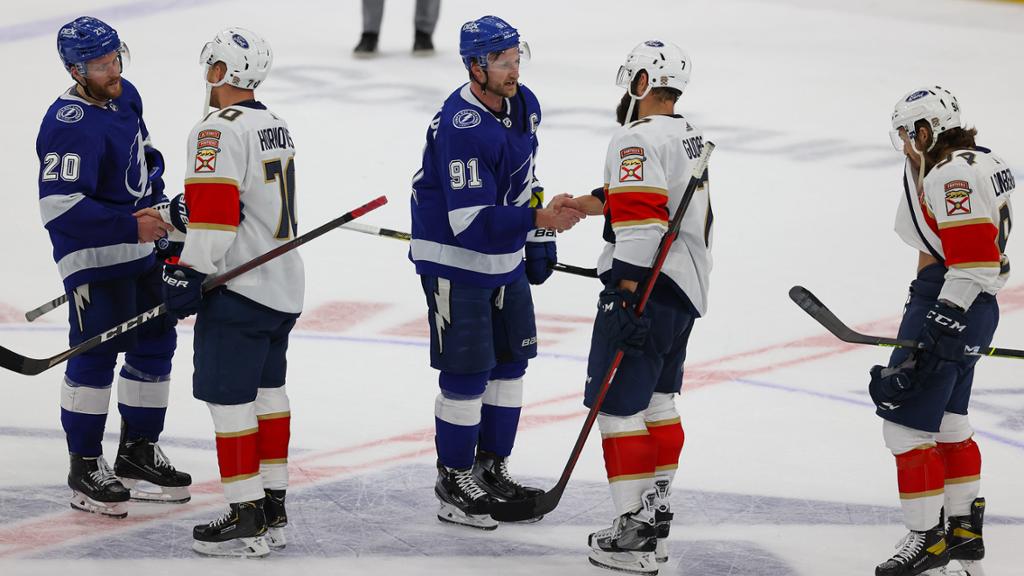
The skinny: All of that promise, and this is the reward. The Panthers were coming into the playoffs white-hot, winning eleven of their last fourteen and surviving a huge loss to their top defenseman in Aaron Ekblad. Mackenzie Weegar was stepping up in a big way, Spencer Knight was as advertised in his first NHL action fresh out of Boston College, and trade deadline acquisitions like Sam Bennett and Nikita Gusev following the lead of the pieces added in the offseason. Their success was met with a first-round matchup against their in-state rival and defending Stanley Cup champion Tampa Bay Lightning.
It was always going to be a tough series, but optimism made many (myself being one) believe this was the year that the Panthers wouldn’t just win their playoff series since 1996, but repeat the magic of that season with a deep playoff run. Alas, it was not to be, as the defending champions showed just how powerful they are when healthy. So what ultimately ended the Panthers’ best season in five years? Let’s break it down…
Goaltending: The Panthers used a revolving door of goaltenders against the Lightning, with three different netminders suiting up in the first round. Knight stepped up, stealing Game 5 for the Panthers and putting up some quality numbers (2.06 GAA and .933 save percentage) to cement his place in the NHL. Unfortunately, he and the rest of the team were let down by the two veterans that also manned the crease. Chris Driedger had a rough go with a .871 save percentage and 3.7 GAA, but the real culprit? $10 million man Sergei Bobrovsky, who put up an abysmal .841 save percentage and 5.33 GAA (both marks by far the worst among goaltenders in the playoffs). With Driedger having the better regular season numbers and Knight shining in limited action, Bobrovsky’s starting job security has never been lower, and his contract can safely be considered one of, if not, the worst contract in the NHL today.
Missed opportunities: Whether he wins the Vezina or not this season, it’s hard to debate Andrei Vasilevskiy’s spot as the best goaltender in the world with performances like his in this series. In Game 2, the Panthers pushed within a goal, but Vasilevskiy held strong and the Lightning killed three straight penalties to keep their lead intact. In Game 4, the Panthers held a 15-7 lead in shots on goal after the first period, but somehow headed back to the locker room with a 3-1 deficit. They also got five consecutive power play opportunities and landed 17 shots with the man advantage, but could only score once. In Game 5, the Panthers landed 15 shots (seven on the power play) in a fast and furious first period, but failed to score. Had one of these situations gone differently and the Panthers solved Vasilevskiy with more regularity during these sequences, it could have shifted one or more of these games in the Panthers’ favor. Instead, it gave the Lightning the momentum necessary to hold their leads.
Penalty kill: There are two telling stats that determine just how porous the Florida Panthers’ penalty kill was this series. First, out of the 24 goals that the Lightning scored across the six games, eight of them came on the power play (if you’re not interested in doing the math, that’s one in every three Lightning goals coming on the man advantage). Secondly, and even more damaging for the Panthers, is that they put up a 60% penalty kill percentage, good for second-worst in the playoffs behind St. Louis. Once again, when you put that math in perspective, every five penalties the Panthers committed resulted in two Lightning goals. For a series that got dirty and physical quickly (including Ryan Lomberg picking up 30 penalty minutes), such poor numbers spelled disaster for the Panthers.
The crystal ball: For the first time in a while, the Panthers seem to have a stable vision of the future, as well as key players looking like long-term fixtures. Aleksander Barkov, Jonathan Huberdeau, and Mackenzie Weegar are all still on reasonable contracts, at least for the next season before Barkov signs his first long-term contract. Carter Verhaeghe was the NHL’s biggest bargain last season, and he’ll spend on another year making $1 million in the hopes of a lucrative deal. Impact players like Sam Bennett and Anthony Duclair will be restricted free agents, while the likes of Nikita Gusev likely won’t command a large deal. Driedger is likely being circled as an option for Seattle in the Expansion Draft, but Knight’s arrival softens the blow on that. They could perform some minor housecleaning like buying out the final year of Anton Stralman’s contract, but the Panthers can largely focus on making improvements for next season.
So the question with GM Bill Zito is how can he repeat last year. The gamble on taking Patric Hornqvist’s contract in exchange for Mike Matheson’s worked well, low-risk moves for Verhaeghe and Duclair paid off in spades, and the trade deadline worked well with Bennett, Gusev, and Brandon Montour all performing well after coming to Sunrise. This offseason could establish Zito as a shrewd GM who knows what players fit his vision and how to implement them in the lineup. Could we see Stralman be replaced by a cheaper option like Mike Reilly, Jamie Oleksiak, or Derek Forbort? Steal another ex-Lightning player in Blake Coleman? Pick up a reliable two-way option such as Mattias Janmark or Joel Armia? The possibilities are endless but, for the first time in a while, reasonable faith can be placed in the Panthers’ decisions.
The coroner is in. Wheel in the first champion to fall: the Pittsburgh Penguins.
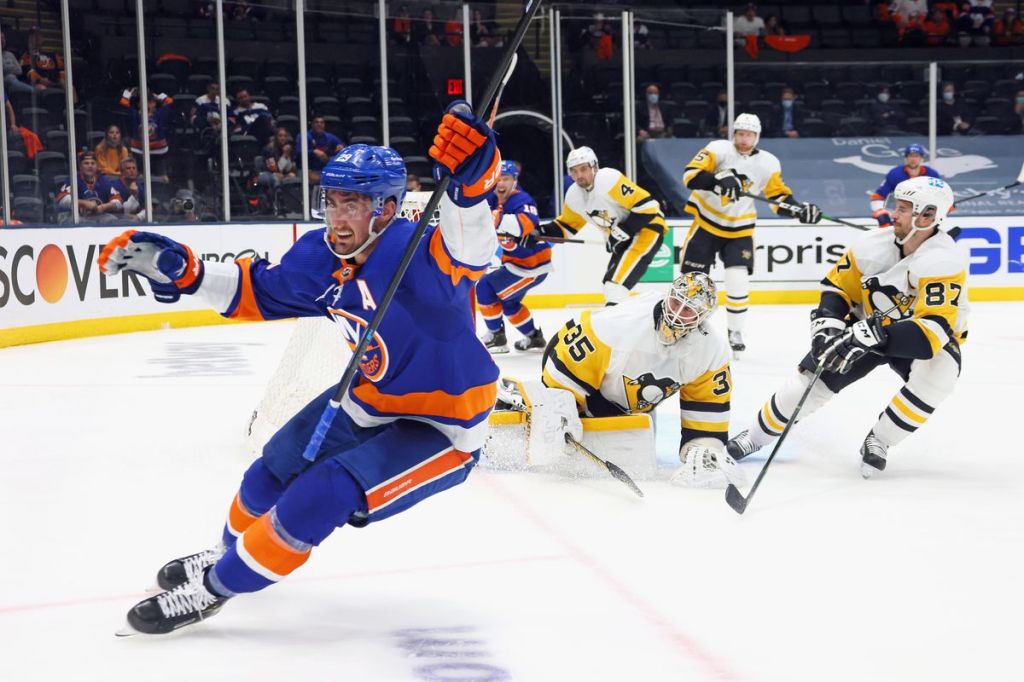
The skinny: In hindsight, we should have all known this was a trap series. Yes, the Penguins were rolling after an inconsistent first month and seemed to find another gear when Jeff Carter returned to his old form after Pittsburgh acquiring him from Los Angeles. Then again, the Islanders were a defensively-responsible team with great goaltending and arguably the best coach in the NHL in Barry Trotz; a team basically tailor-made for the postseason.
While it was nowhere near as embarrassing as their 2019 sweep at the hands of the Islanders, the Penguins still did little as their offense was repeatedly stifled by the Islanders. They got some good bounces in their two victories, but it did little to turn the momentum in their favor. So what caused the first champion to fall so early? Let’s examine the causes for a bit…
Goaltending: The obvious reason and, in the eyes of many Pittsburgh fans, the sole reason the Penguins lost this series. While Tristan Jarry had his moments, his .888 save percentage ranks third-last among goaltenders who started at least three games this postseason. Three games, in particular, stand out to highlight how rough Jarry’s playoffs were. Game 1, Jarry let go of all four Islander goals from the glove side, indicating a massive hole for the Islanders to exploit. Game 5, Jarry single-handedly cost the Penguins the game with a risky clearing attempt that landed on the stick of Josh Bailey, who proceeded to end the game early in double overtime. Jarry would respond to that miscue by letting go of five goals on 19 shots in Game 6. Jarry was getting his first extended postseason look, and the results reflected very poorly on him.
First-line struggles: While Jarry deserves some blame, it’s hard not to look at Sidney Crosby’s performance and say he should carry some blame for the Penguins’ early exit. This was arguably Crosby’s weakest playoff series to date, mustering only one goal and one assist against the Islanders, as well as getting burned badly on a few Islanders goals. His linemates didn’t perform much better. Jake Guentzel managed the same offensive totals as Crosby while finishing with a -6. Bryan Rust did somewhat better by scoring twice, but it wasn’t enough. In a series where the stars had to perform, the Penguins fell silent in that regard.
The Islanders’ second line: Compare the struggles of the Penguins’ first line to the success of the Islanders’ second line. While no member of the Penguins’ first line managed more than three points, all three of Anthony Beauvillier, Brock Nelson, and Josh Bailey scored three goals apiece and picked up at least six points. Keep in mind that the Islanders are typically an inconsistent offensive team, with their 2.71 goals per game mark finishing 21st in the league during the regular season. In this series, however, the Penguins saw themselves repeatedly victimized by the same line. It’s a common thread in these series where the winner sees their offensive stars outperform the losing side, and that’s exactly what happened here.
The crystal ball: If you were to look at Penguins social media after their third straight early elimination, you would be hearing cries for Tristan Jarry to be traded. Granted, the panic regarding Pittsburgh’s goaltending situation is justified, given they haven’t had consistently strong goaltending since the duo of Matt Murray and Marc-Andre Fleury were patrolling the net. However, moving Jarry sounds like a panic move, and would be an open sign that the Penguins will overpay a goalie in free agency or on the trade market. There’s no need to change the course of this team just yet, especially with the core of Crosby, Evgeni Malkin, and Kris Letang making a full rebuild nearly impossible to pull off. An Expansion Draft trade to take a complementary piece wouldn’t be a bad idea (Jason Zucker and Marcus Pettersson immediately come to mind), but that should be as far as Pittsburgh’s salary cap casualties should go.
There is one man’s future I’m not entirely certain on, though: coach Mike Sullivan. Jim Rutherford bowed out mid-season from Pittsburgh’s GM role, and the new regime of Ron Hextall and Brian Burke might be looking at options to find their own man at the helm. Sullivan did win two Cups with the Penguins, but his lack of adjustments in recent years has likely reduced the goodwill to near-insignificance. It wouldn’t be unprecedented for the Penguins to move on from a coach after a new regime took over, as it happened in 2013 with Dan Bylsma following Ray Shero out of Pittsburgh. It would be a surprise firing, but one that wouldn’t be wholly unexpected. As far as who would replace him, might I suggest former Penguins assistant and former Arizona Coyotes coach Rick Tocchet, who might be intrigued by Hextall’s vision?
The coroner is in. Let us commemorate the tragic fall of the Edmonton Oilers.
The skinny: In this series, Edmonton received another grim reminder: this is not the NBA where two superstars is enough to guarantee a deep playoff run. Despite a likely Hart Trophy winner in Connor McDavid putting up one of the best offensive seasons in recent memory and Leon Draisaitl also putting up great numbers, the Oilers once again failed where it mattered most in the postseason.
Despite facing a Winnipeg Jets team that was limping into the postseason and saw its offense dry up in the final few weeks of the season, they were able to pull out an impressive victory over Edmonton and its two superstars. It leaves the Oilers with serious questions, but where did it all go so wrong? Let’s break that part down first…
Offensive struggles: Normally, this is where pundits would begin their seemingly annual roasting of Edmonton’s depth, but that would discount how well Winnipeg did defensively. McDavid and Draisaitl weren’t without their struggles, as both players were held off the scoresheet in the first two games. Their final numbers weren’t too bad, but the depth once again couldn’t keep up when the defense focused on the superstars. All of two goals came from players not playing with McDavid or Draisaitl, and the defensive corps failed to score a goal. It was a bad showing all around for the Oilers in the opposing zone.
Failure to close: Game 3 was the moment Edmonton’s fate was sealed. It seemed like Edmonton was on its way to scoring their first victory in the series with a 4-1 lead with nine minutes remaining, only for disaster to strike. In a little over three minutes, Winnipeg would fire off three unanswered goals to tie the game up, then see Nikolaj Ehlers score the overtime winner. Edmonton did try to fight back in Game 4, but costly turnovers from Ethan Bear and McDavid ended up leading to Winnipeg goals that completed the sweep.
Special teams: Special teams battles can decide how a series goes down, and that’s exactly the case here. What is shocking is how much of a far cry Edmonton’s special teams went from regular season to postseason. From first in power play percentage and ninth in penalty kill percentage in the regular season, Edmonton struggled in both, putting up 18.2% on the power play and a tepid 70% penalty kill. Again, give credit to Winnipeg for adjusting to Edmonton’s style and wearing them down, but the impetus has to be on the Oilers to produce in some capacity.
The crystal ball: The good news about Edmonton’s situation is that their cap situation should improve this offseason. Ryan Nugent-Hopkins will likely be heading out, and it appears that the Oilers are favoring an extension for Adam Larsson over Tyson Barrie. Kailer Yamamoto and Dominik Kahun may warrant extensions as restricted free agents, but they likely won’t cost much. It also appears the Oilers will work to extend Mike Smith and buyout Mikko Koskinen. Regardless, it should give the Oilers a chance to figure out their situation and hopefully make some meaningful moves this offseason.
That said, the real question about the future lies with McDavid. How long can the Oilers reasonably expect their captain’s patience to hold out? It won’t be this offseason, or even next offseason, but at some point, the trade rumors will become more than just rumors. What happens when McDavid nears 30 if the Oilers continue to struggle in the postseason? The personal accolades and tremendous output are all fine, but they ultimately mean nothing if they come without an opportunity at the Stanley Cup. The frustration can’t keep building up, and GM Ken Holland will have to keep that in mind when it comes to building this team for next season and beyond.
The coroner is in. Let’s dissect what downed the Washington Capitals.
The skinny: The dark magic that helped Braden Holtby channel prime Dominik Hasek and help get the Caps their first Stanley Cup in 2018 came with a price. Three years later, the championship window seems to have slammed shut. This elimination marks Washington’s third straight first-round exit since the Cup win, with each performance looking more lifeless than the last.
This year, the Capitals fell victim to the Boston Bruins, a team that seemed to solve its own standard issues and stabilized their goaltending. After a Game 1 OT victory, the Capitals fell apart and lost four straight to be sent packing. But what caused this group to endure such a cruel fate? I can think of three good reasons.
Mistakes: This is the big one. Teams can’t afford to make careless errors in the playoffs, but the Capitals did it three times in this series. Let’s run through the big mistake in three particular games, with each one turning the tide in Boston’s favor.
Game 2: After allowing a Taylor Hall goal late in the third period to force overtime, Brenden Dillon’s clearing attempt was intercepted by David Krejci. Two passes later, and the puck come from Brad Marchand’s stick past Craig Anderson to give the Bruins the overtime win.
Game 3: The mistake to end all mistakes. A miscommunication between Ilya Samsonov and Justin Schultz left the puck behind the Capitals’ net. The puck ended up being intercepted by Craig Smith, whose wraparound shot slipped under Samsonov to give the Bruins a double-overtime win (and give Samsonov and/or Schultz a tongue-lashing at the hands of Alex Ovechkin).
Game 4: In the second period of a scoreless game, Dmitry Orlov makes a bad hit on Kevan Miller that takes Miller out of the series and puts the Bruins on the power play. Brad Marchand takes full advantage and gets the Bruins on the board, giving the Bruins a lead they would never give up.
Even one of these mental lapses would be difficult to justify, but having all three happen in the span of three pivotal games is inexcusable. Series can be lost due to self-inflicted wounds, and that’s exactly what happened in Washington’s case.
Scoring: This one’s a strange one, as the Capitals made their money with offensive talent only to see it dry up here. Both of Alex Ovechkin’s goals came on the power play. Tom Wilson was the only one of Washington’s top-six forwards to score a goal at even strength. John Carlson and trade deadline acquisition Anthony Mantha each got two assists, Nicklas Backstrom only mustered one assist, and Evgeny Kuznetsov didn’t even show up on the scoresheet throughout the series. Depth pieces like Garnet Hathaway and Nic Dowd tried their best to pick up the slack with two goals apiece, but it ultimately wasn’t enough to balance out the struggles of Washington’s stars.
Age: Look through the Capitals’ roster, if you want. You would find a very telling stat about the makeup of this team. In the regular lineup for the Capitals in this series, there were only five players who were 26 or younger (Wilson, Mantha, Daniel Sprong, Samsonov, and Vitek Vanecek, who was injured in Game 1 and never returned). By comparison, 12 of the Capitals’ regular players were 30 or older. In an already-compacted season, it was apparent that the Capitals ran out of gas. Players were missing time late in the season due to injuries, and several of the Capitals’ older players never quite reached 100 percent in time.
The crystal ball: The primary point of focus will obviously be on Ovechkin. After signing a 13-year deal in 2008, Ovechkin has a chance to hit the open market. That appears doubtful, however, as reports have shown that Ovechkin wants to retire as a Washington Capital, or at least end his career in North America there. Expect a short-team deal, although we’ll see if it comes with a small discount to give the Capitals some financial flexibility.
With the lack of cap space and big contracts the Capitals have on their roster, it appears on the surface like the Capitals are stuck with their current roster. If the Capitals want to at least try to keep the window open, however, that cannot be the case. The Capitals should see if they can pursue a trade for Kuznetsov, who is coming off the worst offensive season of his career and is stuck behind Backstrom as Washington’s second-line center. A team looking for center depth could do far worse, as Kuznetsov just hit 29 and endured a couple stints on the NHL’s COVID-19 protocol list. I’m willing to give him the benefit of the doubt.
Another key fixture of the Capitals that could be playing elsewhere is T.J. Oshie, and one potential suitor is at the forefront: Seattle. With Oshie hitting 35 this season and on a contract that keeps him locked in for four years, he might require a sweetener for Ron Francis to take him off Washington’s hands. That said, he’s proven that he still has some touch and leadership ability, making him a decent choice to be Seattle’s first-ever captain. If taking Oshie’s contract is too much to ask, Orlov could make for a good second option to keep Seattle off of the likely-to-be exposed Vanecek and give Seattle one half of their top defensive pairing for their first year.
The coroner is in. Let us regale the tragic tale of the St. Louis Blues.
The skinny: Let’s not kid ourselves here: this series ended the only way it could. St. Louis had a fine team, but they were the clear fourth team in a division that held a three-headed monster at the top of the mountain. Whether they drew Colorado or Vegas, it felt like a matter of time until the inevitable happened.
Sure enough, the deed was done quickly. The Avalanche war machine dominated the series, giving the Blues their first sweep since 2012 and pushing the miracle Stanley Cup run in 2019 further into the distance. So how did this all happen? Let’s go through the three primary factors.
Injuries: It feels like a cheap excuse, but there’s no question injuries played a key part in the Blues’ demise. Chief among them was leading scorer David Perron, who missed the entire series due to being on the NHL’s COVID-19 protocol list. Justin Faulk missed the rest of the series from Game 2 on after a nasty hit from known playoff headhunter Nazem Kadri (Kadri was suspended eight games for the hit, but he is currently in the appealing process). Defensive corps mainstays Vince Dunn, Robert Bortuzzo, and Jake Walman also missed games during the series. Injuries can decimate a team and, against a quality opponent in Colorado, that’s exactly what happened to the Blues.
Stars going silent: It wasn’t much better for the players that were on the ice, either. Captain Ryan O’Reilly, who publicly stated that the Blues would win the series, would end up lambasting his own performance after failing to score in the series. Offensive stalwarts like Brayden Schenn, Jordan Kyrou, and Mike Hoffman would each find the back of the net, but only once apiece. To put the offensive output into perspective, the Blues scored 20 points as a team; the Avalanche’s top line of Gabriel Landeskog, Nathan MacKinnon, and Mikko Rantanen combined for 23. When a single line is dominating the series and running circles around your own stars, you can’t expect to win.
Jordan Binnington: Binnington might not be nervous, but Blues fans might be starting to get that way about their new franchise netminder. Ever since being one of the main catalysts of the Blues’ magical 2019 season and Cup win, he hasn’t won a single playoff game since. After a miserable series where he mustered a 3.59 GAA and .899 save percentage, Binnington has gone 0-9-0 with a .875 save percentage. The most fight he showed against Avs goaltender Philipp Grubauer was trying to start a fight with him after Game 1 (a moment Grubauer would poke fun at after the sweep). Blues fans need to hope he can rebound within the next six seasons of his new contract, or this will be familiar territory for them.
The crystal ball: You can’t expect a humiliating defeat like this to pass by without some changes, and the Blues are in the mix to do just that. Mike Hoffman will parlay his season into a contract with a Cup contender. Jaden Schwartz and Tyler Bozak have likely played their final games in Blues uniforms as well. Dunn could be an attractive candidate to be selected by Seattle in the expansion draft, with the hopes of him becoming their version of Nate Schmidt. It wouldn’t be much, but it would give the Blues a chance to get their roster in order and bring in some new blood (ahem, Scott Perunovich, ahem).
However, there is a massive question that can be asked: what will the Blues do about Vladimir Tarasenko? Sure, the Russian winger still has his offensive chops (he got both of the Blues’ goals in Game 4), but he’s only played 34 games over the last two seasons. The best ability is availability, and Tarasenko hasn’t been successful in that department recently. They could conceivably put him up in the Expansion Draft, or open him up to trade to see if someone will take a shot. It would be a massive shakeup to the Blues roster, but maybe that’s what they need.
The First Round of the NHL playoff is nearing an end. From this point on, the eliminations will be coming in fast and furious. With no power rankings to do and future hockey-based projects needing a bit of time to develop insight, what is a sports blogger to do?
Do the equivalent of an autopsy for the eliminated teams? Sounds like fun.
While it will be the first time this series is done here, the Postseason Postmortem is not an entirely new idea. Those who have seen my work prior to The Sports Nerd Speaks may be aware of “What Went Wrong?”, where I delved into the major points that pushed a team out of Stanley Cup contention. The postmortem will be that with added depth, as well as where this might take the team and what decisions they will have to ponder as they trade their hockey sticks for golf clubs.
The first of the postmortems (the St. Louis Blues, who were swept shortly prior to this post) will be released soon, and they will continue to be provided until we finally have a champion. While they will all be separate articles, this post is designed to be the one-stop shop to find all of them. Links to the postmortems will be added as they go active.
Good luck to your team (unless they’re facing my team) and I hope you enjoy!
The end is near. The playoffs are approaching. And the speculation for the next few months can finally begin.
First of all, a happy Mother’s Day to my mother, the mothers in the Sports Nerd Speaks community, and mothers all across the world. Your hard work and dedication will never go unnoticed.
The NHL picture is finally starting to come into focus. All but two Canadian teams as of this writing are left to be eliminated, and the seeding is being locked up with three of eight possible first-round matchups already decided. Divisions are being won, the Presidents Trophy race will come down to the wire, and the West Division focuses on a matchup between its top two teams that is, in my opinion, the most important regular season game of the year.
So where does that leave the rankings this week, with so little left at stake and teams settling in for the long haul of the playoffs? The answer is simple: look towards the future. The Expansion Draft and Entry Draft will each get their moments in due time, but what about the prospects that teams already have? I don’t need to regale you of how good the likes of Quinton Byfield and Trevor Zegras are (plenty of outlets do that already), but what about the prospects that go unnoticed? The ones that are just as impressive but slide under the radar, or the underrated prospect that is quietly producing big elsewhere? The NHL is always introducing new talent around this time, and this season has been no different, despite the pandemic.
So which prospect should your team be paying attention to? And how do the rankings look as the season finishes up? Let’s find out.
Disclaimer: These rankings are based on games played and statistics recorded as of May 8.
1. Vegas Golden Knights (Even): Plenty of prospects are cutting their teeth with the Knights or their AHL affiliate in Henderson, but the name Ivan Morozov won’t jump off the page immediately. It will soon, though, as his breakout season in the KHL (a league notorious for limiting the minutes of younger players) indicates the Knights made another good drafting decision in their young history.
2. Carolina Hurricanes (+1): Not willing to take a chance on losing a season of development, Jack Drury left Harvard in order to play professionally in Sweden’s top league. His gamble paid off nicely, as Drury didn’t look out of place playing against grown men.
3. Colorado Avalanche (-1): Finishing second in the NCAA goal-scoring race for the University of Minnesota, Sampo Ranta cashed in and signed his entry-level contract with the Avalanche after the Gophers were knocked out of the NCAA tournament. His professional career is off to a good start, providing some offense to an uneven Colorado Eagles team in the AHL.
4. Tampa Bay Lightning (+1): Cup-winning teams require contributions from young players in order to stay dominant, and the Lightning have gotten that from an unexpected source in Alex Barre-Boulet. An undrafted player who has split time between Tampa Bay and Syracuse this season, the Expansion Draft and ABB’s own production could open the door for a full-time role with the Lightning next season.
5. Florida Panthers (-1): Talking about Spencer Knight may feel a little redundant, but it’s impossible to ignore his lightning-fast start to his NHL career. The top goaltending prospect in the NHL, Knight went from another great year at Boston College to beginning his NHL career with four consecutive victories.
6. Toronto Maple Leafs (+5): It feels like a matter of time before Timothy Liljegren gains a full-time NHL roster spot, but I’m not sure if he’ll get that in Toronto. Always thrown around in trade rumors, a team would jump at the chance to land a 22-year-old defenseman with first-round pedigree and showing nice adjustment to the North American game (an add-on for an Expansion Draft trade with Seattle, perhaps?)
7. Pittsburgh Penguins (+3): The Penguins’ farm system is considered barren compared to the rest of the league, but diamonds like Samuel Poulin still exist. Lighting it up in the QMJHL this season, the big winger will get another opportunity to crack the Penguins lineup next season (potentially playing alongside friend and current linemate Nathan Legare is an added bonus).
8. Minnesota Wild (-1): Another top prospect to make the jump from the NCAA, Matt Boldy has put together a point-per-game pace in the AHL since making his arrival. He likely won’t make the same impact Kirill Kaprizov did this season, but he’ll provide more youth and excitement to a team that was in desperate need of both.
9. Washington Capitals (-3): After dropping in the 2020 Draft due to serious concussion issues, Hendrix Lapierre entered this season with something to prove. He ran with the chance, staying healthy and producing at a nice pace for Chicoutimi in the QMJHL.
10. Boston Bruins (-2): With the Bruins facing heavy criticism for their 2020 class, seeing positive development from top pick Mason Lohrei has to feel good. Initially seen as a reach in the second round, Lohrei made strong strides this season and will continue his development at Ohio State next year.
11. Edmonton Oilers (+1): While big names like Evan Bouchard, Philip Broberg, and Dylan Holloway steal the spotlight, lesser-known prospects like Carter Savoie are silently having strong seasons. A local product for the Oilers, Savoie led the University of Denver in goals as a freshman this season.
12. New York Islanders (-3): The Islanders have prided themselves on their defensive corps in the Barry Trotz era, and Robin Salo is making a case of joining that group in the near future. A solid two-way defenseman, Salo has put together his best professional season so far in Sweden this year, and he will likely make his North American debut next season.
13. St. Louis Blues (+5): I was one of the minority that actually liked St. Louis drafting Jake Neighbours last year, believing he could be the David Backes/Patrick Maroon type of player that could guide the Blues to another Cup. His scoring touch is also of note, finishing fourth in point per game in the WHL (for context, the players ahead of him are future top-10 picks Dylan Guenther and Connor Bedard, as well as top Vegas prospect Peyton Krebs).
14. Nashville Predators (+1): After a surprise bout with inconsistency at last year’s World Junior Championship, Yaroslav Askarov needed a bounce-back season. Despite only playing 9 KHL games this season, he finished with a 1.21 GAA and .951 save percentage to cement himself as the best goaltending prospect outside of North America.
15. Dallas Stars (+1): Rookies like Jason Robertson and Jake Oettinger are making Stars fans excited about the future, and Thomas Harley will hope to place himself as Dallas’ next big rookie sensation. He is still a work in progress in his own zone, but his offensive skills from the back end have not gone unnoticed.
16. Montreal Canadiens (+1): Cayden Primeau has been given time to marinate in the AHL for a while, but his time may be coming soon in Montreal. With Carey Price experiencing inconsistency, Jake Allen looking like a good bet to head to Seattle in a couple months, and Laval Rocket coach Joel Bouchard a strong candidate to be promoted, the Canadiens could be in position to lean on their goaltender of the future.
17. Winnipeg Jets (-4): The Jets still desperately need improved play in their own zone, making a stay-at-home defenseman like Dylan Samberg a perfect fit. His puck movement skills definitely need work, but he should project as next season’s version of Logan Stanley and make his NHL debut at some point.
18. New York Rangers (-4): The Rangers are becoming flush with young defenseman (Adam Fox, K’Andre Miller, Zac Jones, etc.), and the next one to make their appearance will likely be Nils Lundkvist. His season this year in the SHL might not have been as strong as last year, but it should be good enough to warrant signing his entry-level contract and some AHL time next season to adjust to the North American game.
19. Philadelphia Flyers (Even): If you’re going to make a list of potential breakout players for next season, you’d be remiss not to include Wade Allison in that conversation. A late debut for the Flyers, Allison has scored four goals in thirteen games and is looking like he’ll be a fixture in Philadelphia’s middle-six for the foreseeable future.
20. Chicago Blackhawks (+1): A former first-round pick of the Florida Panthers who fell out of favor in the organization, Henrik Borgstrom was handed to the Blackhawks in exchange for taking Brett Connolly’s contract. Regaining his confidence in Finland this season, the Hawks are hoping that a fresh start is what Borgstrom needs to succeed at the NHL level.
21. Arizona Coyotes (+1): After losing half of last season due to a knee injury, Jan Jenik had to reestablish himself as the top prospect in the organization with Victor Soderstrom’s graduation. There is still work needed to be done, but scoring two goals in as many NHL games in his brief call-up is a promising sign.
22. Los Angeles Kings (+3): I’ll spare you the Quinton Byfield/Alex Turcotte cop-outs and instead point to someone who may benefit from their presence: Arthur Kaliyev. A natural goal-scorer, Kaliyev got his first NHL goal in his first game and has produced well for their AHL affiliate in Ontario (California, not Canada).
23. Calgary Flames (Even): Put me on the list of Dustin Wolf truthers. Despite being undersized, he was the second-best goaltender in the NHL behind potential first-round pick Sebastian Cossa this season, along with landing an 18-3 record and four shutouts.
24. Ottawa Senators (+3): The Senators seem to have found a nice talent pipeline in the University of North Dakota, with players like Shane Pinto being part of the future in Canada’s capital city. After a breakout performance at the World Junior Championships, Pinto has carried that momentum through a strong sophomore season and a hot start to his NHL career (six points in his first 10 games).
25. Vancouver Canucks (-5): Jim Benning balances his poor free agency decisions with strong drafting, and it looks like Jack Rathbone will be yet another example. A former standout at Harvard, Rathbone used a strong stint for the Utica Comets to land a call-up with the Canucks, scoring his first NHL goal in the process.
26. San Jose Sharks (-2): It’s telling that, despite all the talented freshmen the University of Michigan boasted this season, Thomas Bordeleau managed to lead the Wolverines in points. He’s definitely on the smaller side, but there’s no denying his playmaking abilities.
27. Detroit Red Wings (-1): The NHL has seen an influx of talented Germans enter the league, and Moritz Seider will likely be joining their ranks next season. Impressing in both North America last season and Sweden this season, Seider will hopefully help the Wings forget about the failed development of Dennis Cholowski.
28. Columbus Blue Jackets (Even): If the Kirill Marchenko hype train starts getting out of control, you heard it here first. Breaking out in the KHL this season, Marchenko will spend one more year in Russia before bringing his talents over to North America, where he could potentially make it straight to the NHL.
29. New Jersey Devils (+2): The Devils seem to have fully embraced the youth movement, which is good news for prospects like Dawson Mercer to see NHL time sooner rather than later. Breaking out with a strong performance at the World Junior Championships this season, Mercer has shown consistency and versatility in a number of roles.
30. Anaheim Ducks (-1): Lukas Dostal might not get the same level of attention as Trevor Zegras and Jamie Drysdale, but he could reach that level. Taking over as the top goaltender for a quality AHL team in the San Diego Gulls, Dostal could compete for Ryan Miller’s soon-to-be vacated spot as John Gibson’s backup.
31. Buffalo Sabres (-1): John-Jason Peterka has had a wild season, appearing in Germany, Austria, and the World Junior Championships in the span of a year. He appears to have taken some positive strides in his development, however, and his remaining two seasons in Germany will hopefully be used to turn him into a more complete player.



 The Sports Nerd Speaks