Building the Kraken: Lists Are In

Credit: Douglas DeFelice-USA Today Sports

Well, after watching my two previous posts about the Expansion Draft get blown up in a single weekend, I can safely relax in making this article. The protection lists are in, the rosters are frozen, and we now know who has a chance of making the venture to the Pacific Northwest.

As was expected, there are some big names that were exposed by their teams for the Seattle Kraken to take, but they’re are a couple that I don’t think anyone was expecting to see even a month ago. With the talent that the Kraken have the opportunity to take, as well as having the number 2 overall pick in the draft, it wouldn’t surprise me to see the Kraken in the playoffs in their first year. Thank you, flat cap.

For this article, I will still put the protected players up (if you want to see them and the players exposed to Seattle, go here.) Then, I will put up my choice for who the Kraken should take, as well as one alternate route that could be taken for each team.

Release the Kraken…expansion picks.

Anaheim Ducks

Protected: (F): Nicolas Deslauriers, Max Jones, Isac Lundestrom, Rickard Rakell, Jakob Silfverberg, Sam Steel, Troy Terry (D): Cam Fowler, Hampus Lindholm, Josh Manson (G): John Gibson

Selection: D Haydn Fleury

Alternate: D Josh Mahura

The Ducks confused me a bit with their logic. Was protecting Deslauriers, a disappointing prospect in Jones, and Silfverberg coming off an injury-riddled season worth exposing another young defenseman? The answer might be no, as Fleury’s exposure likely guarantees he’ll be picked up. The first-ever draft pick of Ron Francis in his days as GM for the Carolina Hurricanes, Fleury will likely get a spot in Seattle’s third pairing and see some penalty-killing time. If Francis wants to go off the beaten path, however, Mahura would still be a strong choice, and Alexander Volkov did well enough in his stint with Anaheim to warrant mentioning.

Arizona Coyotes

Protected: (F): Lawson Crouse, Christian Dvorak, Conor Garland, Clayton Keller, Phil Kessel, Johan Larsson, Nick Schmaltz (D): Kyle Capobianco, Jakob Chychrun, Oliver Ekman-Larsson (G): Darcy Kuemper

Selection: F Michael Bunting (Seattle signs him to a two-year deal worth $1.25 million AAV)

Alternate: F Tyler Pitlick

I’m a little surprised Arizona is taking this approach with Bunting, indicating that there’s either a handshake agreement in place or he’s headed onto the open market. Despite playing half the season, Bunting managed to score 10 goals in the 21 games he played (that’s good enough to tie him for sixth amongst all Coyotes). Seattle would love to have Bunting on their team, and his limited NHL experience suggests that he will come at a cheaper rate. If the Coyotes do have a contract in place with him, however, the production of Pitlick would outweigh the upside of Christian Fischer.

Boston Bruins

Protected: (F): Patrice Bergeron, Charlie Coyle, Jake DeBrusk, Trent Frederic, Brad Marchand, David Pastrnak, Craig Smith (D): Brandon Carlo, Matt Grzelcyk, Charlie McAvoy (G): Daniel Vladar

Selection: D Jeremy Lauzon

Alternate: F Nick Ritchie

There is a bit of interesting young talent from the Bruins, but Lauzon stands out. In his first extended stay at the NHL level, Lauzon carved out a role as a reliable stay-at-home defenseman with a bit of offensive touch, including averaging 19 minutes during the playoffs on a Bruins roster loaded with veterans. His versatility, ability to kill penalties, and general upside will all be appealing to the Kraken. There are a couple of other interesting defensemen like Connor Clifton and Jakub Zboril who could get picked up, but Ritchie is coming off a season where he scored a career-high fifteen goals, not to mention he would bring an element of physicality to the Kraken lineup.

Buffalo Sabres

Protected: (F): Rasmus Asplund, Anders Bjork, Jack Eichel, Casey Mittelstadt, Victor Olofsson, Sam Reinhart, Tage Thompson (D): Rasmus Dahlin, Henri Jokiharju, Rasmus Ristolainen (G): Linus Ullmark

Selection: D Colin Miller (Seattle also receives Buffalo’s 2021 4th Round Pick)

Alternate: D Will Borgen

Jeff Skinner waiving his no-move clause removed much of the intrigue surrounding Buffalo’s choices. It really comes down to two choices at this point: right-handed defensemen Miller or Borgen. Borgen does come with a little more upside, but Miller gets the nod if Buffalo is willing to throw in a mid-round pick as a sweetener. Miller would be one of the first names to be brought up in trades for cap compliance but, if he stays, he can be a locker room leader for his fellow selections, and he’s shown he can be an asset in a sheltered role.

Calgary Flames

Protected: (F): Mikael Backlund, Dillon Dube, Johnny Gaudreau, Elias Lindholm, Andrew Mangiapane, Sean Monahan, Matthew Tkachuk (D): Rasmus Andersson, Noah Hanifin, Christopher Tanev (G): Jakob Markstrom

Selection: D Mark Giordano (Seattle also receives Florida’s 2022 2nd Round pick)

Alternate: F Glenn Gawdin

Giordano will likely be given the Marc-Andre Fleury treatment in the expansion draft: a franchise legend on an expiring contract that no longer fits with the team’s current course. An extra pick gets thrown in as goodwill by the Flames, as well as security for Seattle if Giordano is a one-year proposition. The other options include Gawdin and young defenseman Oliver Kylington, but neither player has done nearly enough to justify drafting them over Giordano.

Carolina Hurricanes

Protected: (F): Sebastian Aho, Jesper Fast, Warren Foegele, Jordan Staal, Andrei Svechnikov, Teuvo Teravainen, Vincent Trocheck (D): Brett Pesce, Brady Skjei, Jaccob Slavin (G): Alex Nedeljkovic

Selection: D Jake Bean

Alternate: F Morgan Geekie + future asset

Another Francis first-round pick rejoins him in Seattle. Bean’s first extended NHL season saw him start out strong, but cool off significantly towards the end of the season. While there is a chance Bean is protected with a draft pick, especially with the offensive production of Dougie Hamilton likely needing to be replaced, it’s more likely Carolina decides to continue building its farm system and allows Bean to go west. He may need a little more time in the AHL (he won the Calder Cup with Charlotte in 2018-19 and won the Eddie Shore award for best defenseman in 2019-20), but he will be the first name to get called if trouble arises.

Chicago Blackhawks

Protected: (F): Henrik Borgstrom, Alex DeBrincat, Brandon Hagel, David Kampf, Patrick Kane, Dylan Strome, Jonathan Toews (D): Caleb Jones, Connor Murphy, Riley Stillman (G): Kevin Lankinen

Selection: F Adam Gaudette

Alternate: D Nikita Zadorov

Gaudette’s exposure was one of the more surprising reveals of the day, as the Blackhawks acquired him at the Trade Deadline from Vancouver in a minor deal. He responded well to the change in scenery, putting up four points in seven games for Chicago, but it must not have been enough to warrant a protection spot. It’s likely Gaudette is headed back to the Pacific Northwest to join what should be a talented group of centers for the Kraken. If defense is still being sought after, the Kraken could go with Calvin de Haan, but Zadorov’s physicality, versatility, and likely lower cap value get him the nod.

Colorado Avalanche

Protected: (F): Andre Burakovsky, Tyson Jost, Nazem Kadri, Nathan MacKinnon, Valeri Nichushkin, Logan O’Connor, Mikko Rantanen (D): Samuel Girard, Cale Makar, Devon Toews (G): Philipp Grubauer

Selection: F J.T. Compher

Alternate: F Joonas Donskoi

While I applaud Colorado for using a protection on underrated fourth-liner O’Connor, I’m surprised Compher and Donskoi got left out in favor of Kadri, a player I would expect to be on the trade market. Regardless, both players would be solid choices for the Kraken. It would all depend on what Seattle is in the market for. If they want a right wing who can score goals and drive the offense, Donskoi will be the pick; if they are looking more for versatility, two-way play, and penalty-killing ability, Compher is the choice. It’s hard to imagine the Kraken make a wrong choice here.

Columbus Blue Jackets

Protected: (F): Cam Atkinson, Oliver Bjorkstrand, Boone Jenner, Patrik Laine, Gustav Nyquist, Eric Robinson, Jack Roslovic (D): Vladislav Gavrikov, Seth Jones, Zach Werenski (G): Joonas Korpisalo

Selection: F Max Domi (Seattle also receives Columbus’s 2022 2nd Round pick)

Alternate: D Gabriel Carlsson

Similar to Giordano, Columbus throws in a second round pick for Domi to not only have Seattle take him, but give them some much-needed security. Domi’s first season in Columbus was the worst of his career, and Seattle would be his third team in four seasons. It would be interesting what Seattle does with Domi, and there’s a chance that a bounce-back campaign is used for the Kraken to flip him for more assets. If Seattle can’t justify Domi’s price tag, both Kevin Stenlund and Dean Kukan can fill in roles, but Carlsson comes with a defensive-minded skillset that some of my picks on defense don’t really have.

Dallas Stars

Protected: (F): Jamie Benn, Radek Faksa, Denis Gurianov, Roope Hintz, Joe Pavelski, Alexander Radulov, Tyler Segin (D): Miro Heiskanen, John Klingberg, Esa Lindell (G): Anton Khudobin

Selection: F Adam Mascherin

Alternate: G Ben Bishop

Trading away Jason Dickinson to Vancouver and having the injury-prone Bishop waive his no-movement clause leaves Dallas with one of the least intriguing groups to choose from. There is some upside with Mascherin, who paced Dallas’ AHL affiliate with 18 goals and finished second in points with 34. He’s yet to play an NHL game but, with arguably his best professional season to date, he’s on an upwards trajectory that should intrigue Seattle. Seattle could do a lot worse than Bishop to start out in net, but it’s safe to say he contains a massive health risk; a backup plan is imperative if the Kraken want to make that arrangement work.

Detroit Red Wings

Protected: (F): Tyler Bertuzzi, Adam Erne, Robby Fabbri, Dylan Larkin, Michael Rasmussen, Givani Smith, Jakub Vrana (D): Filip Hronek, Nick Leddy, Gustav Lindstrom (G): Thomas Greiss

Selection: D Dennis Cholowski

Alternate: F Evgeny Svechnikov

I’m not quite sure what happened year, but something about this season caused the Red Wings to completely sour on Cholowski. Someone who seemed like a safe bet to be protected, Cholowski saw his place apparently get taken over by trade acquisition Nick Leddy. While Cholowski will never be known for his defense, his offensive skillset can be developed nicely, with the possibility of becoming a power-play quarterback for the Kraken. If Ron Francis sees the same things in Cholowski that the Red Wings saw, however, they can choose to stay the course and grab Svechnikov for forward depth.

Edmonton Oilers

Protected: (F): Josh Archibald, Leon Draisaitl, Zack Kassian, Connor McDavid, Ryan Nugent-Hopkins, Jesse Puljujarvi, Kailer Yamamoto (D): Ethan Bear, Duncan Keith, Darnell Nurse (G): Stuart Skinner

Selection: F Tyler Benson (Seattle also receives D Oscar Klefbom)

Alternate: F Dominik Kahun

Kassian and Archibald were slight surprises to see get protected, especially with a talented prospect like Benson now in danger of being picked up by the Kraken. Being 23 with only seven career NHL games to his credit is a mild concern, but what Benson does have is 138 points in 151 AHL games, including leading the Bakersfield Condors to the Pacific Division title this season. Edmonton’s exposure of him indicates they don’t value him as much, so he’d be a great pickup. The Oilers could try to package him with Klefbom to try and get out of his deal in case the defenseman doesn’t reach the same level of production that he used to, but he can be put on LTIR for cap relief by the Kraken with the chance that he could come back to play out the final year of his contract. If none of that sounds appealing, Kahun is carving out a decent reputation for himself as a reliable bottom-six center in the NHL.

Florida Panthers

Protected: (F): Aleksander Barkov, Sam Bennett, Anthony Duclair, Patric Hornqvist, Jonathan Huberdeau, Mason Marchment, Carter Verhaeghe (D): Aaron Ekblad, Gustav Forsling, MacKenzie Weegar (G): Sergei Bobrovsky

Selection: G Chris Driedger (Seattle signs Driedger to a three-year deal worth $3.5 million AAV)

Alternate: D Radko Gudas

This is quite possibly the only pick I feel safe in saying that it’s going to happen. With reputable insiders like Pierre LeBrun mentioning that the Kraken have already circled Driedger’s name for selection, it’s hard to see the Kraken suddenly change course. Driedger has proven to be more than just a good underdog story; he’s emerged as one of the more reliable backups and spot starters in the NHL. There may be potential for more, but…well, more on that later. If a deal for Driedger falls through, Gudas is a solid choice for a veteran blueliner that values physicality and penalty-killing.

Los Angeles Kings

Protected: (F): Lias Andersson, Viktor Arvidsson, Dustin Brown, Alex Iafallo, Adrian Kempe, Anze Kopitar, Trevor Moore (D): Drew Doughty, Matt Roy, Sean Walker (G): Cal Petersen

Selection: F Carl Grundstrom

Alternate: D Kale Clague

It was a bit surprising to see Andersson get protected, and I do have some minor disagreements about Brown and Walker, but that’s besides the point. Grundstrom’s another selection who got his first extended stay in the NHL this season, managing to score six goals and 11 points despite averaging only twelve and a half minutes of ice time per game. There’s some potential here, so Ron Francis would be smart to jump at the chance to grab him. If the Kraken want more defense with this pick, Clague split time between the NHL and AHL, doing well in both leagues.

Minnesota Wild

Protected: (F): Joel Eriksson Ek, Kevin Fiala, Marcus Foligno, Jordan Greenway, Ryan Hartman, Nico Sturm, Mats Zuccarello (D): Jonas Brodin, Matt Dumba, Jared Spurgeon (G): Cam Talbot

Selection: G Kaapo Kahkonen

Alternate: D Carson Soucy + future asset

While the future implications of Zach Parise and Ryan Suter’s buyouts, as well as Kirill Kaprizov’s potential mega-extension, could prove costly, they at least made the Wild’s expansion draft strategy easier. At least it did, and then they just had to expose Kahkonen. Making the leap to the NHL after nabbing the award for the AHL’s best goaltender in 2018-19, Kahkonen had an up-and-down rookie season as Cam Talbot’s understudy. That said, he’s easily the option with the most upside, and it would surprise me to see him not be at least considered by the Kraken. If the Wild want to keep Kahkonen, they could throw in a mid-round pick or a B+ prospect along with Soucy, a defenseman who has shown strong two-way potential in limited minutes for Minnesota.

Montreal Canadiens

Protected: (F): Josh Anderson, Joel Armia, Jake Evans, Brendan Gallagher, Jesperi Kotkaniemi, Artturi Lehkonen, Tyler Toffoli (D): Ben Chiarot, Joel Edmundson, Jeff Petry (G): Jake Allen

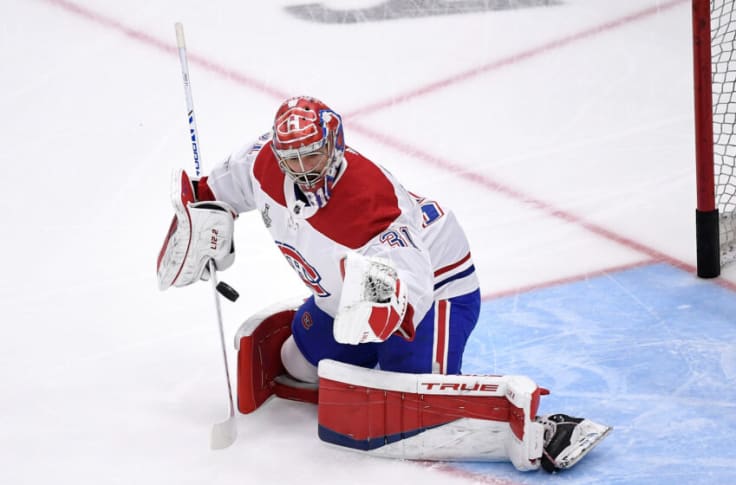
Selection: G Carey Price

Alternate: F Jonathan Drouin + future assets

Wow. The Kraken already had a leg up on the Golden Knights in terms of draft picks, and now they start out with a legitimate top-5 goaltender. Price’s potential hip issues might be concerning, but it must not concern ownership too much, given that they gave Francis the green light to select him. Price does come from the British Columbia region as well, making him the ideal choice for a homegrown face of the franchise. The production he provides, including a magical run to the Stanley Cup Final this past season, makes the contract worth it. If the Kraken have legitimate concerns, however, they could come up with a deal that sees Drouin get picked up for the change of scenery he needs. Prospects and picks would definitely come to Seattle with Drouin (an ideal choice would be a right-handed defenseman like Cale Fleury or Josh Brook, but Francis would be wise to see what he can get Montreal counterpart Marc Bergevin to protect Price with.)

Nashville Predators

Protected: (F): Filip Forsberg, Tanner Jeannot, Luke Kunin (D): Alexandre Carrier, Mattias Ekholm, Dante Fabbro, Roman Josi, Philippe Myers (G): Juuse Saros

Selection: F Ryan Johansen (Seattle also receives Los Angeles’s 2021 2nd Round Pick, Nashville’s 2021 4th Round Pick, and G Connor Ingram)

Alternate: F Calle Jarnkrok

Nashville should be coming into the Expansion Draft with one purpose: get one of their big contracts off the books. One of Johansen or Matt Duchene has to head to Seattle for the Predators to come out strong and, with one less year on his deal and two years younger, Johansen comes off as the better asset. While he will likely never reach the dizzying heights of 2013-15 when he scored 59 goals in two seasons, Johansen is coming off a solid postseason and is better than his last two down years would indicate. For security purposes, however, Seattle should push Nashville for a few extra pieces. Ingram is a young goaltender with no clear role in the organization, and Nashville has extra picks in the rounds Seattle would be claiming from them. If Nashville doesn’t want to give up a few extra pieces, Seattle shouldn’t feel obligated to take salary; they could just take solid and versatile middle-six forward Jarnkrok and leave Nashville to foot the bill on Johansen.

New Jersey Devils

Protected: (F): Jesper Bratt, Nico Hischier, Janne Kuokkanen, Michael McLeod, Yegor Sharangovich, Miles Wood, Pavel Zacha (D): Ryan Graves, Damon Severson, Jonas Siegenthaler (G): Mackenzie Blackwood

Selection: F Andreas Johnsson (Seattle also receives New Jersey’s 2022 3rd Round pick)

Alternate: D Will Butcher + future asset

New Jersey would have loved to get the final year of P.K. Subban’s deal off of their books, but that feels like a pipe dream now. The Kraken will likely get their choice of two players: a wing in Johnsson or a left-handed defenseman in Butcher. Both were seen as emerging young stars at one point, but their times in New Jersey haven’t gone as planned. There’s a reason to be attracted to both, but the edge goes to Johnsson, who scored 20 goals in 2018-19 and could reach similar numbers with a legitimate playmaker at center to feed him the puck. Either way, both player’s struggles and salaries would likely warrant a mid-round pick to convince Seattle, but neither player’s contract is particularly unmanageable.

New York Islanders

Protected: (F): Mathew Barzal, Anthony Beauvillier, Cal Clutterbuck, Anders Lee, Matt Martin, Brock Nelson, Jean-Gabriel Pageau (D): Scott Mayfield, Adam Pelech, Ryan Pulock (G): Semyon Varlamov

Selection: F Kieffer Bellows

Alternate: F Josh Bailey + future assets

The Islanders must really like their fourth line, as proven by the decision to protect Clutterbuck and Martin over Bailey and Jordan Eberle. Despite two proven wings being on the board, I would think Seattle goes young here and drafts Bellows. He hasn’t quite gotten the trust of the Islanders’ coaching staff yet, but the Kraken could use a player with his size and skill on the roster. He’d be a true power forward type for Seattle to develop. If the Kraken were to prefer experience, it’s likely the Islanders will prefer they take Bailey, who would at least be good for double-digit goals and special teams minutes. A pick and a prospect would be enough to make the deal work (could the Kraken pounce on Bode Wilde, a solid prospect coming off his second inconsistent stint in the AHL?)

New York Rangers

Protected: (F): Pavel Buchnevich, Filip Chytil, Chris Kreider, Artemi Panarin, Kevin Rooney, Ryan Strome (D): Libor Hajek, Ryan Lindgren, Jacob Trouba (G): Alexandar Georgiev

Selection: F Julien Gauthier

Alternate: F Colin Blackwell

The Rangers trading Brett Howden to Vegas should have made the decision easier, but their decision to protect Rooney changes things a bit. That said, Gauthier is another former first-round pick of Ron Francis, so it wouldn’t be a shock to see his former GM complete the trifecta. Gauthier did alright in his first extended look in the NHL, but the real prize is his AHL production, where he scored 69 goals and 103 points in 184 AHL games. There’s serious potential here, and Francis should know how it can be maximized. The late-blooming Blackwell was a surprise to see exposed, especially coming off his best professional season. Call it an 80/20 split favoring Gauthier right now.

Ottawa Senators

Protected: (F): Drake Batherson, Connor Brown, Logan Brown, Nick Paul, Brady Tkachuk, Austin Watson (D): Thomas Chabot, Victor Mete, Nikita Zaitsev (G): Filip Gustavsson

Selection: F Chris Tierney (Seattle also receives Ottawa’s 2022 4th Round Pick)

Alternate: G Joey Daccord

Ottawa comes with a couple of contractual landmines (hi, Evgenii Dadonov and Matt Murray), but there’s actually some decent talent that can be taken here. Tierney stands out as the most NHL-caliber pick right now, despite coming off his worst season as a pro. Tierney has earned a reputation as a double-digit goal scorer, penalty killer, and faceoff specialist, with all three being good qualities for a center to have. It’s possible Tierney can be flipped for cap relief, but his expiring contract and prior history should make it a nice sell. Daccord had a rough season this year, but the former Arizona State product is worth a flier as a developmental goaltender. Keep an eye on Vitaly Abramov as well, as the talented wing will have two seasons to develop in Russia before potentially coming back to the NHL.

Philadelphia Flyers

Protected: (F): Nicolas Aube-Kubel, Sean Couturier, Claude Giroux, Kevin Hayes, Travis Konecny, Scott Laughton, Oskar Lindblom (D): Ryan Ellis, Ivan Provorov, Travis Sanheim (G): Carter Hart

Selection: F Jakub Voracek (Seattle also receives Philadelphia’s 2021 1st Round Pick and F Connor McClennon)

Alternate: D Robert Hagg (part of a three-way trade with St. Louis)

Rumors are swirling about Vladimir Tarasenko joining recent trade acquisition Ellis in Philadelphia, and that they could use the Kraken as a middleman for the deal. Hagg would be selected from the Flyers in that event, but I can’t help but think Seattle can look for a bigger impact between the two teams. Voracek’s massive contract would make it tough for the Flyers to sell him without a pick in the first two rounds. A less impactful draft class might make it easier for the Flyers to hand their first-rounder this year to the Kraken, allowing them to use next year’s to dangle for Tarasenko. A prospect forward in McClennon also returns to Western North America, as his game likely is more in line with the Kraken than the typical grind-it-out style of the Flyers.

Pittsburgh Penguins

Protected: (F): Teddy Blueger, Jeff Carter, Sidney Crosby, Jake Guentzel, Kasperi Kapanen, Evgeni Malkin, Bryan Rust (D): Brian Dumoulin, Kris Letang, Mike Matheson (G): Tristan Jarry

Selection: D Mark Friedman

Alternate: F Jason Zucker + future assets

The Penguins will have a few contracts they wouldn’t mind seeing Seattle go after (Zucker, Brandon Tanev, Marcus Pettersson). However, an interesting sleeper pick that I wouldn’t mind seeing Seattle go after is Friedman. After being claimed from Philadelphia by the GM that drafted him in Ron Hextall, Friedman responded by scoring twice and recording a +3 in only five games. A rare hot stretch, or a player who responded well to a change in scenery? With Friedman having a very friendly contract, it’s not too much of a risk to find out. Zucker could also certainly use a change, as the former consistent 20+-goal scorer had a rough first full season in Pittsburgh. With no attachments to Zucker, Hextall could dangle him to Seattle, but they will have to use a prospect to compensate for their lack of draft capital (a mid-tier prospect like Valtteri Puustinen could work).

San Jose Sharks

Protected: (F): Rudolfs Balcers, Logan Couture, Jonathan Dahlen, Tomas Hertl, Evander Kane, Kevin LaBanc, Timo Meier (D): Brent Burns, Erik Karlsson, Marc-Edouard Vlasic (G): Adin Hill

Selection: F Dylan Gambrell

Alternate: F Ryan Donato

There’s a few options the Kraken can pick up from the Sharks, but let’s go for a sentimental choice and bring a home-state kid along. A native of hour-away Bonney Lake, Gambrell has shown promise by tearing up the NCAA and AHL ranks. He hasn’t quite put it together at the NHL level yet, but it’s still too early to give up on him. Donato is in the same boat, as he had a good year in Minnesota in 2019-20 before taking a step back on an inferior San Jose team. Either player brings value to the Kraken, so they do have that.

St. Louis Blues

Protected: (F): Ivan Barbashev, Jordan Kyrou, Ryan O’Reilly, David Perron, Brayden Schenn, Oskar Sundqvist, Robert Thomas (D): Justin Faulk, Torey Krug, Colton Parayko (G): Jordan Binnington

Selection: D Vince Dunn

Alternate: F Vladimir Tarasenko (three-way trade with Philadelphia)

Should the deal between Philly, Seattle, and St. Louis come to pass, Seattle would take Tarasenko (possibly with an extra asset or two to make up for the move), before passing him off to Philly for Voracek. However, with Voracek drafted anyway in this scenario, there’s no need for that deal. Besides, why do that when we get both Voracek and a good young defenseman in Dunn? Already emerging as a talented offensive-minded rearguard, Dunn could be Seattle’s answer to Shea Theodore. Giving him minutes with a more sound defensive partner, as well as power play time, should help put him on the road to success. It’s a much more appealing option than whatever St. Louis and/or Philadelphia would likely be providing.

Tampa Bay Lightning

Protected: (F): Anthony Cirelli, Nikita Kucherov, Brayden Point, Steven Stamkos (D): Erik Cernak, Victor Hedman, Ryan McDonagh, Mikhail Sergachev (G): Andrei Vasilevskiy

Selection: F Tyler Johnson (Seattle also receives F Mathieu Joseph, D Nick Perbix, and Tampa Bay’s 2023 1st Round Pick)

Alternate: F Yanni Gourde + future assets

If there was ever a hometown favorite that can be used for a pick, this is it. A native of Spokane, Johnson was putting up a good reputation as a 20-goal scoring threat before seeing his numbers drop. Even in limited time, he still did alright for himself, playing a role in the Lightning repeating as champions. However, with the Lightning facing a cap crunch, Johnson becomes the immediate favorite to move. Coming with him is an extra first-round pick and a couple intriguing young players. Joseph would be a good fit for the Kraken both on and off the ice, while Perbix is coming off his best college season yet as a junior at St. Cloud State. Gourde likely would not garner such a package, but an extra asset or two would be good enough incentive to take one of the league’s better penalty killers.

Toronto Maple Leafs

Protected: (F): Mitchell Marner, Auston Matthews, William Nylander, John Tavares (D): TJ Brodie, Justin Holl, Jake Muzzin, Morgan Rielly (G): Jack Campbell

Selection: F Jared McCann

Alternate: F Alexander Kerfoot + future assets

One of the stranger decision with these lists came when McCann was exposed, despite the Leafs picking him up from Pittsburgh on Saturday. A player that was likely already on the radar for Seattle, McCann has put together two straight 14-goal campaigns in Pittsburgh. On a team like Seattle, players emerging as proven goal-scorers will likely be favored. However, Toronto might stop it by dangling a couple pieces over in exchange for the Kraken taking Kerfoot, who was shaping up to be the Kraken’s original pick for McCann entered the equation. To avoid McCann getting picked up by Seattle, however, Toronto will have to come up with an interesting package (Nick Robertson or Rasmus Sandin don’t have to be put up, but could someone like Tim Liljegren be a start?)

Vancouver Canucks

Protected: (F): Brock Boeser, Jason Dickinson, Bo Horvat, J.T. Miller, Tyler Motte, Tanner Pearson, Elias Pettersson (D): Olli Juolevi, Tyler Myers, Nate Schmidt (G): Thatcher Demko

Selection: F Kole Lind

Alternate: F Jonah Gadjovich

There are plenty of terrible contracts the Canucks would love their new rival to claim (Loui Eriksson, Antoine Roussel, Jay Beagle, Braden Holtby, etc.). However, with young talent already up for exposure, it’s going to take a lot for the Canucks to convince Seattle to take a mistake off of their hands. Lind and Gadjovich both have intriguing upside attached to them. Lind parlayed a strong start in the AHL to a seven-game stint with the Canucks. Gadjovich, meanwhile, stayed in the AHL and doubled the second-highest goal scorer for the Utica Comets. With both establishing themselves as emerging NHL-caliber wings, Seattle has a choice with no wrong answer in front of them.

Washington Capitals

Protected: (F): Nicklas Backstrom, Lars Eller, Evgeny Kuznetsov, Anthony Mantha, T.J. Oshie, Daniel Sprong, Tom Wilson (D): John Carlson, Dmitry Orlov, Trevor van Riemsdyk (G): Ilya Samsonov

Selection: D Justin Schultz (Seattle also receives Washington’s 2022 1st Round pick)

Alternate: G Vitek Vanecek

Vanecek’s emergence as a viable NHL goaltender may have come at the wrong time, as the Capitals were forced to expose either him or Samsonov. While Vanecek is exposed, I doubt the Capitals will be interested in losing him for nothing. Protecting van Riemsdyk tells me that the Capitals would prefer to lose one of their more pricey defensemen: Schultz or Brenden Dillon. While Dillon does come from the Pacific Northwest region, Schultz’s larger cap hit and ability to play on the right side will likely make him the ideal choice for both sides. A first-round pick or a second and a prospect (Martin Fehervary or Aliaksei Protas stand out as reasonable options).

Winnipeg Jets

Protected: (F): Kyle Connor, Andrew Copp, Pierre-Luc Dubois, Nikolaj Ehlers, Adam Lowry, Mark Scheifele, Blake Wheeler (D): Josh Morrissey, Neal Pionk, Logan Stanley (G): Connor Hellebuyck

Selection: F Mason Appleton

Alternate: D Dylan DeMelo

I was pleasantly surprised to see the Jets protect Stanley, as I thought he did well enough in his rookie year to warrant that. It’s also easier to do when there’s a more favorable target. While Appleton has had his minutes limited due to Winnipeg’s impressive center depth, he has found a home on the right wing and has produced on both ends of the ice. A middle-six forward that can play center, as well as see some penalty kill time, is an option worth taking. DeMelo does warrant merit, however, as a right-handed defenseman who has shown the ability to pair well with any defenseman opposite of him.
Building the Kraken: Eastern Conference

Credit: Reinhold Matay/USA Today Sports

Now that things have hopefully calmed down for today, I might actually be able to do this section without another big move shifting things around.

Needless to say, a lot has happened in the 48+ hours since my Western Conference expansion draft picks went up (check them out here.) Buffalo’s Jeff Skinner and Dallas’s Ben Bishop have agreed to waive their no-move clauses. Keith Yandle was bought out of his contract as Florida used the cap savings to extend Anthony Duclair and Gustav Forsling, likely ensuring they’re protected. Shea Weber will likely miss next season due to injury, opening the door for him to possibly be selected. There’s still a day before expansion draft lists are due, so we may not be quite done with the crazy moves just yet. (Update: And as I’m making this article, one of my selections (Ryan Graves from Colorado) was flipped to New Jersey. This is why I’m making another mock draft when lists go public.)

Also, I have had people reach out and ask me about what Vegas would do in the expansion draft, and my response is this: I’m intrigued. Vegas could move some money with expiring contracts (Reilly Smith, in particular, could be worth a decent sum), and they could afford some center depth. There are plenty of routes the Golden Knights could go through, and this article outlines a couple of interesting ideas. Another idea that’s not in that article? Philadelphia’s Nolan Patrick, who checks off a lot of boxes the Knights look for in players and who has connections to current GM Kelly McCrimmon from their time together on the Brandon Wheat Kings. Either way, I wouldn’t be surprised if Vegas has their eyes on a couple of players here; whether their current teams or Seattle is the beneficiary of the deal is to be determined.

Before we begin, let’s refresh on the rules of the Expansion Draft:

  • Current NHL teams (except Vegas) must choose to protect 7 forwards, 3 defensemen, and 1 goaltender, or 8 skaters and 1 goaltender.
  • The Kraken have an exclusive window from July 18-21 to interview and sign pending free agents exposed by their teams. Any players signed will count as the Kraken’s selection in the Expansion Draft from the player’s former team.
  • All players with no-movement clauses that do not choose to waive them will count towards their team’s protection lists.
  • All unsigned draft choices and first and second-year professionals are ineligible to be selected by the Kraken.
  • All NHL teams must expose two forwards and one defenseman who is under contract for 2021-22 and has either played 40 games this past season or 70 games in the past two seasons. They must also expose one goaltender who is under contract for 2021-22 or is a restricted free agent who has received his qualifying offer.
  • Players with career-ending injuries or potentially career-ending injuries who have missed more than the previous 60 consecutive games are not eligible for selection or exposure, unless the latter has been approved by the NHL.

With all that out of the way, let’s get to the Eastern Conference selections.

Boston Bruins

Protection (7-3-1): (F): Patrice Bergeron (NMC), Brad Marchand (NMC), Charlie Coyle (NMC), David Pastrnak, Jake DeBrusk, Trent Frederic, Craig Smith (D): Charlie McAvoy, Brandon Carlo, Matt Grzelcyk (G): Daniel Vladar

Selection: D Jeremy Lauzon

Alternate Choices: D Jakub Zboril, D Connor Clifton, F Nick Ritchie

While a few unrestricted free agents (Taylor Hall, David Krejci, Tuukka Rask) are floating around here, Boston does have a bit of young talent that can be had. Ritchie had a solid year this past season and could easily be the pick, but my choice is Lauzon, a talented and versatile defenseman who was starting to earn big minute with the Bruins towards the end of the season. Playing on the right side will be a huge boost to his value, as that will likely be where he plays in Seattle if he’s selected.

Buffalo Sabres

Protection (7-3-1): (F): Jack Eichel, Sam Reinhart, Victor Olofsson, Casey Mittelstadt, Anders Bjork, Tage Thompson, Rasmus Asplund (D): Rasmus Dahlin, Rasmus Ristolainen, Henri Jokiharju (G): Linus UIlmark

Selection: D Colin Miller (Seattle also receives Montreal’s 2021 3rd Round pick)

Alternate Choices: D Will Borgen, F Zemgus Girgensons, F Cody Eakin

Whatever intrigue Buffalo might have had disappeared when Skinner waived his NMC, ensuring Asplund’s protection. The only other choice with upside is Borgen, and Buffalo would be willing to part with a pick to keep him. With our other potential choices being a center who missed last season due to injury and a likely buyout candidate, the pick is Miller, a defenseman who showed he could shine in a sheltered role on the third pairing in Vegas. With this pick being Miller’s second Expansion Draft selection, he could help the other guys through the process and be an early locker room leader as the Kraken search for an identity.

Carolina Hurricanes

Protection (7-3-1): (F): Jordan Staal (NMC), Sebastian Aho, Andrei Svechnikov, Teuvo Teravainen, Vincent Trocheck, Nino Niederreiter, Warren Foegele (D): Brett Pesce, Jaccob Slavin, Jake Bean (G): Alex Nedeljkovic

Selection: F Morgan Geekie (Seattle also receives Carolina’s 2022 3rd Round Pick)

Alternate Choices: D Brady Skjei, F Jesper Fast

While some lists flip-flop between protecting Bean and Skjei, I just don’t think Don Waddell would be too keen on potentially risking losing the younger Bean, especially with offensive dynamo Dougie Hamilton likely leaving. Of course, Skjei might be too important to lose for the Hurricanes as well, in order to take on Hamilton’s defensive responsibilites. A former draft pick of Ron Francis, Geekie would shoot up the Seattle GM’s choices if the Hurricanes were willing to send over a pick for added security. Fast would also be a nice pickup, but the pick might jump to a second for that to happen.

Columbus Blue Jackets

Protection (7-3-1): (F): Oliver Bjorkstrand, Cam Atkinson, Patrik Laine, Jack Roslovic, Boone Jenner, Max Domi, Gustav Nyquist (D): Zach Werenski, Seth Jones, Vladislav Gavrikov (G): Joonas Korpisalo

Selection: F Eric Robinson

Alternate Choices: F Kevin Stenlund, D Gabriel Carlsson, D Dean Kukan

Columbus was one of the teams most burned by the Vegas Expansion Draft, letting go of William Karlsson and a couple sweeteners to take David Clarkson’s contract and protect a couple extra pieces. It’s unlikely they’ll make a mistake on that same level again, but that doesn’t mean there’s intrigue here. Robinson’s the pick due to his net-front presence and defensive acumen. Add a bit of scoring touch and he’s the quintessential fourth-liner and penalty killer. Stenlund could be an option if Seattle’s center depth is lacking, and Carlsson has potential as a stay-at-home defenseman.

Detroit Red Wings

Protection (7-3-1): (F): Dylan Larkin, Jakub Vrana, Tyler Bertuzzi, Robby Fabbri, Michael Rasmussen, Adam Erne, Givani Smith (D): Filip Hronek, Dennis Cholowski, Troy Stecher (G): Thomas Greiss

Selection: F Evgeny Svechnikov

Alternate Choices: F Vladislav Namestnikov, D Gustav Lindstrom, F Richard Panik, G Kaden Fulcher

Detroit doesn’t have the depth of options as other teams, but they aren’t as barren as they were for Vegas. Namestnikov has carved out a role as a solid middle-six forward and Lindstrom has promise as a right-side defenseman, but the Kraken elect to go for Svechnikov. The older brother of Andrei, Evgeny was able to start producing at the NHL level, but wasn’t quite able to get it done consistently. There’s upside for him as a middle-six option, so the Kraken can do much worse than take a flier on him. No risk, medium reward.

Florida Panthers

Protection (7-3-1): (F): Aleksander Barkov, Jonathan Huberdeau, Anthony Duclair, Carter Verhaeghe, Patric Hornqvist, Sam Bennett, Frank Vatrano (D): Aaron Ekblad, Mackenzie Weegar, Gustav Forsling (G): Sergei Bobrovsky (NMC)

Selection: G Chris Driedger (Kraken sign him to a four-year contract worth $4.5 million AAV)

Alternate Choices: D Radko Gudas, D Lucas Carlsson, F Alexander Wennberg, F Noel Acciari

There’s almost no chance the Panthers can do worse than the Vegas Expansion Draft, when then-GM Dale Tallon inexplicably gifted the Golden Knights Jonathan Marchessault and Reilly Smith. Driedger stands out as a quality option, with Bobrovsky’s NMC staying in place and Spencer Knight emerging as a legitimate option. My guess is that he’ll approach Jakob Markstrom’s deal (six years for $6 million AAV) as a benchmark, but he’ll likely get a deal similar to Robin Lehner (five years for $5 million AAV). Still, Seattle would give Driedger a legitimate path to starting the majority of games, which is more than a lot of teams could offer. If a deal for Driedger falls through, the Kraken could take a swing on another free agent in Wennberg, or solidify the back end with Gudas or Carlsson.

Montreal Canadiens

Protection (7-3-1): (F): Brendan Gallagher (NMC), Tyler Toffoli, Jesperi Kotkaniemi, Josh Anderson, Artturi Lehkonen, Jake Evans, Phillip Danault (D): Jeff Petry (NMC), Joel Edmundson, Cale Fleury (G): Carey Price (NMC)

Selection: G Jake Allen

Alternate Choices: F Jonathan Drouin, D Ben Chiarot, D Shea Weber, Fleury (if exposed)

Yes, picking Danault for protection is a risk, but Weber’s salary moving to LTIR gives Montreal some room to extend the two-way center while working out a way to deal Weber. I doubt Seattle goes after him without serious sweeteners going the other way, and Weber could choose to retire instead of play a game for the Kraken. Allen has been a stable backup for Price last season and Jordan Binnington the season before, so Seattle could certainly pick him up to fill the same role for them. If Montreal wants to keep Allen around to give Price rest and Cayden Primeau more development time, Drouin is a player that stands out as one who could benefit from a change in scenery.

New Jersey Devils

Protection (7-3-1): (F): Nico Hischier, Jesper Bratt, Pavel Zacha, Yegor Sharangovich, Janne Kuokkanen, Michael McLeod, Miles Wood (D): Damon Severson, Ryan Graves, Jonas Siegenthaler (G): Mackenzie Blackwood

Selection: F Andreas Johnsson

Alternate Choices: F Nathan Bastian, D Will Butcher, D Ryan Murray, D P.K. Subban, Wood (if exposed)

New Jersey would love to be able to get out from the final year of Subban’s deal, which…makes a little sense for the Kraken, at least from an off-ice perspective. That said, the selection likely boils down to Bastian and whoever the Devils don’t protect between Johnsson and Wood. My guess is the Devils expose Johnsson, a former 20-goal scorer who just hasn’t found his footing in New Jersey. His contract’s not bad for the Kraken to pick up, and there’s a chance the Devils throw a mid-round pick in to guarantee the selection. They have to make room for Graves, somehow.

New York Islanders

Protection (7-3-1): (F): Mathew Barzal, Anders Lee, Brock Nelson, Jean-Gabriel Pageau, Jordan Eberle, Anthony Beauvillier, Josh Bailey (D): Ryan Pulock, Adam Pelech, Scott Mayfield (G): Semyon Varlamov

Selection: F Kieffer Bellows (Seattle also receives F Andrew Ladd, D Bode Wilde, and Colorado’s 2022 2nd Round pick)

Alternate Choices: D Nick Leddy, F Cal Clutterbuck

It’s hard to see the Islander rocking the boat too badly, especially after making their second straight trip to the semifinals. Leddy and Clutterbuck are replaceable pieces, but someone the Kraken should have their eye on is Bellows, a former top prospect who doesn’t appear to have earned the trust of Barry Trotz. The Islanders could throw in Andrew Ladd’s contract, which would go into LTIR, as well as Wilde and the 2nd. There’s a chance that the Islanders convince the Kraken to go towards Robin Salo, but a couple of rough seasons for Wilde at the AHL level might have some in the Islanders’ front office souring on him enough to make this deal happen.

New York Rangers

Protection (7-3-1): (F): Artemi Panarin (NMC), Mika Zibanejad (NMC), Chris Kreider (NMC), Pavel Buchnevich, Ryan Strome, Filip Chytil, Colin Blackwell (D): Jacob Trouba, Ryan Lindgren, Libor Hajek (G): Alexandar Georgiev

Selection: F Julien Gauthier

Alternate Choices: F Brett Howden, D Mason Geertsen, Blackwell (if exposed)

The Rangers might be an interesting rebuild job, especially with Gerard Gallant now behind the bench, but their Expansion Draft offerings are relatively light. The edge has to go to Gauthier, a former Ron Francis pick who still has offensive upside. While he hasn’t quite found the net consistently at the NHL level, he absolutely lit up the AHL with 69 goals in 184 games. There’s talent there; perhaps Seattle can give him an ideal role to showcase his skill set.

Ottawa Senators

Protection (7-3-1): (F): Brady Tkachuk, Connor Brown, Drake Batherson, Colin White, Nick Paul, Logan Brown, Evgenii Dadonov (D): Thomas Chabot, Victor Mete, Nikita Zaitsev (G): Filip Gustavsson

Selection: F Chris Tierney

Alternate Choices: F Austin Watson, G Joey Daccord, F Vitaly Abramov, G Matt Murray, Dadonov (if exposed)

There isn’t much going on with Ottawa, so there’s no real reason to get too fancy with this. Abramov would have been a good developmental choice, but a two-year KHL deal he signed likely complicates things too much for Seattle’s liking. Tierney underwent a down year as his ice time and numbers dropped, so a change in scenery would be the best-case scenario for all parties involved. Tierney would fit in as a middle-six faceoff specialist and penalty killer, and his expiring contract could make him a valuable deadline asset if Tierney improves and Seattle struggles early in the season.

Philadelphia Flyers

Protection (7-3-1): (F): Claude Giroux (NMC), Kevin Hayes (NMC), Sean Couturier, Travis Konecny, Oskar Lindblom, Scott Laughton, Nicolas Aube-Kubel (D): Ivan Provorov, Travis Sanheim, Phillippe Myers (G): Carter Hart

Selection: F James van Rimesdyk (Seattle also receives F Nolan Patrick, F Jay O’Brien, Philadelphia’s 2021 1st Round pick, and Philadelphia’s 2022 4th Round pick)

Alternate Choices: F Jakub Voracek, Patrick, D Shayne Gostisbehere, D Robert Hagg, D Justin Braun

It seems strange to let van Riemsdyk go, but the flat cap requires some sacrifices. With Voracek having a year longer and a million more than JvR per year, he’d be the bigger salary to shed as Philadelphia rebuilds their defense, but his game is more likely to age better. Along with van Riemsdyk, the Kraken get Patrick to either as a trade chip or reclamation project, and a talented forward in O’Brien that’s working his way through the college ranks. The first-round pick might be a bit extreme to some people, but Philadelphia’s history of late-round gems and the thinness of this year’s class makes it a little easier to part with. Could the salary Philadelphia sheds here be weaponized to acquire Dougie Hamilton?

Pittsburgh Penguins

Protection (7-3-1): (F): Sidney Crosby (NMC), Evgeni Malkin (NMC), Jake Guentzel, Bryan Rust, Kasperi Kapanen, Jared McCann, Teddy Blueger (D): Kris Letang (NMC), Brian Dumoulin, Mark Friedman (G): Tristan Jarry

Selection: F Zach Aston-Reese (Seattle also receives F Jason Zucker)

Alternate Choices: F Brandon Tanev, D Marcus Pettersson, Zucker, G Casey DeSmith

Meet the Florida deal done partially right. Ron Hextall inherited a mess left behind from predecessor Jim Rutherford, and Pittsburgh’s draft capital and prospect system are among the worst in the league due to deals for the likes of Zucker. A return out west for Zucker would make sense, as Seattle can afford to swallow the remaining years of his deal. The Kraken would likely get another player due to Pittsburgh’s lack of future assets, so someone like Aston-Reese, who would be a fourth-line fixture for Seattle, would make sense.

Tampa Bay Lightning

Protection (8-1): (F): Steven Stamkos (NMC), Nikita Kucherov (NMC), Brayden Point, Anthony Cirelli (D): Victor Hedman (NMC), Mikhail Sergachev, Erik Cernak, Cal Foote (G): Andrei Vasilevskiy

Selection: F Tyler Johnson (Seattle also receives F Mathieu Joseph, G Hugo Alnefelt, and Tampa Bay’s 2023 3rd Round Pick)

Alternate Choices: Joseph, D Ryan McDonagh, F Ondrej Palat, F Yanni Gourde, F Alex Barre-Boulet, F Taylor Raddysh

The local boy comes home. With an impressive Cup Final performance to cap off his season, Spokane native Johnson will likely face a return to his home state. A side deal would likely be in play, and Joseph stands out a good option for a young NHL player, as he stands out as a good fit for Seattle both on and off the ice. Alnefelt stands out as a strong goaltender prospect, but an uneven season and Vasilevskiy being locked up long-term puts him in a strange spot. If Seattle could somehow convince Tampa Bay to add him, it gives them a talented prospect to groom for the future.

Toronto Maple Leafs

Protection (8-1): (F): John Tavares (NMC), Auston Matthews, Mitch Marner, William Nylander (D): Morgan Rielly, Jake Muzzin, TJ Brodie, Justin Holl (G): Jack Campbell

Selection: D Travis Dermott

Alternate Choices: F Alexander Kerfoot, F Adam Brooks, F Pierre Engvall

With prospects Rasmus Sandin and Timothy Liljegren coming up to the NHL level, Dermott stands out as a potential option. A third-pairing defenseman in Toronto, Dermott has suffered from bouts of inconsistency. While Kerfoot would be a good option, the deals on forwards at the moment allows Seattle to go a different route. Brooks and Engvall could be solid developmental answers, but Dermott’s NHL experience gives him an edge. Could a change in scenery push Dermott’s development along, and does Toronto think a Sandin-Liljegren pairing is viable for next season?

Washington Capitals

Protection (7-3-1): (F): Nicklas Backstrom (NMC), Tom Wilson, Anthony Mantha, Evgeny Kuznetsov, T.J. Oshie, Lars Eller, Daniel Sprong (D): John Carlson, Dmitry Orlov, Justin Schultz (G): Ilya Samsonov

Selection: D Trevor van Riemsdyk (Seattle also receives Washington’s 2022 2nd Round pick)

Alternate Choices: G Vitek Vanecek, D Brenden Dillon, D Nick Jensen, F Nic Dowd, F Garrett Pilon

Vanecek would be Seattle’s first choice, and could still be in play if the goaltender options here are either traded off before the Expansion Draft or deals fall through. If things go smoothly, Washington would prefer to keep Vanecek and throw an extra pick for Seattle to take an excess defenseman. Dillon and Jensen could both serve a purpose, but we go with James’s brother Trevor in this case. A veteran defenseman on a cheap expiring deal, TvR could succeed in a sheltered role or as a seventh defenseman.

Building the Kraken: Western Conference

Credit: Aaron Doster, USA Today Sports

We’re nearly a week away from one of the most exciting occurrences of this offseason: the Seattle Kraken Expansion Draft.

It’ll be the first time that we get to see Ron Francis’s vision for the Kraken play out, with his picks in the Expansion Draft being the first real proof of how he wants his team to play on the ice. There’s more expectation in the air, however, given the success of Vegas in the franchise’s first few years. This, however, should not be an excuse for Seattle to “go for it” and play too hard, too fast. Building a team from the ground up requires careful effort, balancing between respectability in the present and a strong foundation for the future. Remember, Vegas did catch lightning in a bottle and caught a few teams napping (hi, Florida, Columbus, and Anaheim). This year, however, instead of Seattle taking advantage of roster configurations that didn’t bode well for the Expansion Draft, they will have the flat cap to allow them to take specific players that can have a huge impact.

Before we get too far, however, let’s examine the rules of the Seattle Expansion Draft:

  • Current NHL teams (except Vegas) must choose to protect 7 forwards, 3 defensemen, and 1 goaltender, or 8 skaters and 1 goaltender.
  • The Kraken have an exclusive window from July 18-21 to interview and sign pending free agents exposed by their teams. Any players signed will count as the Kraken’s selection in the Expansion Draft from the player’s former team.
  • All players with no-movement clauses that do not choose to waive them will count towards their team’s protection lists.
  • All unsigned draft choices and first and second-year professionals are ineligible to be selected by the Kraken.
  • All NHL teams must expose two forwards and one defenseman who is under contract for 2021-22 and has either played 40 games this past season or 70 games in the past two seasons. They must also expose one goaltender who is under contract for 2021-22 or is a restricted free agent who has received his qualifying offer.
  • Players with career-ending injuries or potentially career-ending injuries who have missed more than the previous 60 consecutive games are not eligible for selection or exposure, unless the latter has been approved by the NHL.

In this article, I will go over my protection lists, selections, and rationale for each choice from the 14 Western Conference teams that will lose a player in the Expansion Draft. The 16 Eastern Conference Teams will come before protection lists are due Saturday, and a final mock draft will come when the lists are made public. And I, personally, am excited to see just what I get right.

Let the Expansion Draft (sort of) begin!

Anaheim Ducks

Protection (8-1): (F): Rickard Rakell, Troy Terry, Isac Lundestrom, Alexander Volkov (D): Hampus Lindholm, Cam Fowler, Josh Manson, Haydn Fleury (G): John Gibson

Selection: D Josh Mahura

Alternate Choices: F Sam Steel, F Adam Henrique, F Jakob Silfverberg, F Max Jones, D Kevin Shattenkirk

The Ducks don’t necessarily have a straightforward path to the Expansion Draft. There have been protection lists that have seen Fleury exposed, but it feels like poor asset management to expose a player who Anaheim just got at the trade deadline, especially when the player has strong ties to Francis. Young forwards like Steel and Jones could pique some interest, but I’ve become a big Josh Mahura fan in recent years. He finished fifth in scoring among defensemen in the AHL this season, and he has 13 points in 41 NHL games. Losing Mahura won’t be a Shea Theodore-esque mistake from Anaheim, but it would still be a tough loss. Now the question is whether he would come attached to a contract like Henrique.

Arizona Coyotes

Protection (7-3-1): (F): Phil Kessel (NMC), Clayton Keller, Christian Dvorak, Conor Garland, Nick Schmaltz, Lawson Crouse, Michael Bunting (D): Oliver Ekman-Larsson (NMC), Jakob Chychrun, Kyle Capobianco (G): Darcy Kuemper

Selection: G Adin Hill

Alternate Choices: F Christian Fischer, F Johan Larsson, F Tyler Pitlick, D Ilya Lyubushkin

It’ll be slim pickings from Arizona this season. Even making this list was a bit difficult towards the end, with Bunting being an unrestricted free agent that the Coyotes should extend and Capobianco having the most upside out of the defensemen past OEL and Chychrun. It makes this one of the more straightforward selections in the Expansion Draft, as Hill has shown promise as a spot starter over the last couple of seasons. The Coyotes might be aware of this, however, and could strike up a deal for a proven fourth-line forward like Larsson to keep their higher-upside options protected.

Calgary Flames

Protection (7-3-1): (F): Matthew Tkachuk, Elias Lindholm, Johnny Gaudreau, Sean Monahan, Andrew Mangiapane, Dillon Dube, Mikael Backlund (D): Rasmus Andersson, Noah Hanifin, Chris Tanev (G): Jakob Markstrom (NMC)

Selection: D Mark Giordano (Seattle also receives Calgary’s 2023 2nd Round Pick)

Alternate Choices: F Glenn Gawdin, D Oliver Kylington

Milan Lucic earned himself some fans in the Calgary front office by waiving his no-movement clause, allowing the Flames to protect Mangiapane and Dube instead of having to choose between the young forwards. With Calgary facing a rebuild, Giordano might be in line to take the Marc-Andre Fleury role of franchise legend that gets left out due to a change in direction. The 2023 pick is more for security in case Giordano is traded at the deadline or bolts back to Calgary or to a Cup contender in free agency next offseason. For now, though, Giordano provides stability, leadership, and legitimacy to a team that needs all of those intangibles. A good choice as one half of Seattle’s top defensive pairing.

Chicago Blackhawks

Protection (7-3-1): (F): Patrick Kane (NMC), Jonathan Toews (NMC), Alex DeBrincat, Dylan Strome, Adam Gaudette, Brandon Hagel, Henrik Borgstrom (D): Connor Murphy, Riley Stillman, Caleb Jones (G): Kevin Lankinen

Selection: D Calvin de Haan

Alternate Choices: D Nikita Zadorov, G Malcolm Subban, F David Kampf

Duncan Keith moving to Edmonton changes a few things but, most importantly, losing his NMC means Chicago can protect his replacement in Jones. The pick remains pretty clear though. de Haan has established himself as a solid top-four option who can shine in both zones, play on both sides, and his expiring contract and reasonable cap hit will make him a good bargaining chip. Regardless of who Seattle gets from Chicago, there’s a chance that the pick ends up being flipped before the season begins. More on that in a later article, however.

Colorado Avalanche

Protection (7-3-1): (F): Mikko Rantanen, Nathan MacKinnon, Gabriel Landeskog, Andre Burakovsky, Joonas Donskoi, Tyson Jost, Valeri Nichushkin (D): Cale Makar, Devon Toews, Samuel Girard (G): Jonas Johansson

Selection: D Ryan Graves

Alternate Choices: F J.T. Compher, F Nazem Kadri, Jost/Nichuskin (if exposed)

Not protecting Grubauer may be a bit controversial, but it’s grounded in the reasoning that I doubt Grubauer signs with Seattle over Colorado or most other teams. Graves is coming off a poor showing in the second round against Vegas, but he gives Seattle a minute-munching defensemen and a legitimate penalty killer. He’s also another expiring contract that can get some decent value if Seattle falls apart in their first year. Compher might also work, if Francis isn’t confident about Seattle’s forward depth.

Dallas Stars

Protection (7-3-1): (F): Jamie Benn (NMC), Tyler Seguin (NMC), Alexander Radulov (NMC), Roope Hintz, Denis Gurianov, Radek Faksa, Joe Pavelski (D): John Klingberg, Miro Heiskanen, Esa Lindell (G): Ben Bishop (NMC)

Selection: G Anton Khudobin (Seattle also receives Dallas’s 2022 4th Round Pick)

Alternate Choices: F Jason Dickinson, D Jamie Oleksiak, F Joel L’Esperance, F Adam Mascherin

Pavelski would have initially been exposed, but his strong offensive season has altered plans a bit. Dickinson and Oleksiak would be helpful players to build with, but Khudobin provides Seattle with stability at the back end. He had a down year after being a playoff bubble hero for Dallas in 2019-20, but that shouldn’t deter Seattle from going after him as either part of a goalie tandem or a trade chip for a team desperate for goaltending. If Dallas isn’t interested in losing a draft pick, a mid-level prospect like L’Esperance or Mascherin would also work as a sweetener.

Edmonton Oilers

Protection (7-3-1): (F): Connor McDavid, Leon Draisaitl, Ryan Nugent-Hopkins, Kailer Yamamoto, Jesse Puljujarvi, Dominik Kahun, Zack Kassian (D): Duncan Keith (NMC), Darnell Nurse, Ethan Bear (G): Stuart Skinner

Selection: D Oscar Klefbom (Seattle also receives F Tyler Benson)

Alternate Choices: D William Lagesson, F Josh Archibald, F James Neal, G Mikko Koskinen

Adding Keith (full salary and everything) indicates a couple things to me: talks with Adam Larsson might have broken down and Klefbom will not be playing this upcoming season. The latter has been confirmed by GM Ken Holland, which gives the Oilers an excuse to give top prospects Evan Bouchard and Phillip Broberg a longer look. It gives Seattle an excuse to select Klefbom, stash him on LTIR this season, and let him get healthy for the upcoming season. Francis should also push for a sweetener and, while the best-case scenario would be a young prospect like Raphael Lavoie or Carter Savoie, it’s more likely they’ll land Benson, a talented winger who didn’t reach Edmonton’s roster this season but tied for the scoring lead for their AHL affiliate in Bakersfield.

Los Angeles Kings

Protection (7-3-1): (F): Anze Kopitar, Adrian Kempe, Alex Iafallo, Viktor Arvidsson, Trevor Moore, Brendan Lemieux, Carl Grundstrom (D): Drew Doughty (NMC), Matt Roy, Kale Clague (G): Cal Petersen

Selection: F Lias Andersson

Alternate Choices: Grundstrom (if exposed), F Blake Lizotte, D Sean Walker, D Olli Maatta, F Dustin Brown, G Jonathan Quick

The Kings will be doing everything in their power to convince Seattle to take Brown or Quick off their hands, but can they really afford losing a young NHL-caliber player like Alex Turcotte or Tobias Bjornfot plus a high draft pick? Even Walker or Maatta might require a sweetener to be taken. Expect Francis to choose between whoever Seattle doesn’t protect between Andersson and Grundstrom. Grundstrom picked up 11 points despite limited ice time in the NHL, while Andersson put up 17 points in 15 AHL games for the Ontario Reign. Either would be a high-upside selection, which is exactly what Seattle should be aiming for.

Minnesota Wild

Protection (7-3-1): (F): Mats Zuccarello (NMC), Kevin Fiala, Joel Eriksson Ek, Jordan Greenway, Ryan Hartman, Marcus Foligno, Nico Sturm (D): Jared Spurgeon (NMC), Jonas Brodin (NMC), Matt Dumba (G): Kaapo Kahkonen

Selection: D Carson Soucy (Seattle also receives Minnesota’s 2021 3rd Round pick)

Alternate Choices: G Cam Talbot

The joint buyouts of Zach Parise and Ryan Suter may hold massive implications later down the road, but it does makes their Expansion Draft plans much easier. Instead of choosing between Dumba and their young forwards, they can now protect both and keep more prized assets under their control. Minnesota may have to flip a mid-round pick to protect Talbot and keep a strong tandem, but Soucy is still a good selection for the Kraken. Soucy could be Seattle’s answer to Nate Schmidt: a younger defenseman who did well in limited minutes that can shine in an expanded role.

Nashville Predators

Protection (8-1): (F): Filip Forsberg, Luke Kunin, Calle Jarnkrok (D): Roman Josi, Ryan Ellis, Mattias Ekholm, Dante Fabbro, Alexandre Carrier (G): Juuse Saros

Selection: F Ryan Johansen (Seattle also receives Nashville’s 2021 1st Round pick, Nashville’s 2021 4th Round pick, G Connor Ingram, and F Rem Pitlick)

Alternate Choices: F Matt Duchene, F Colton Sissons, F Yakov Trenin, F Rocco Grimaldi, F Tanner Jeannot, D Matthew Benning

Let’s face it: the only way Nashville comes out a winner in the Expansion Draft is if one of their big contracts comes off the book. With Johansen being two years younger than Duchene and having one less year on his contract, he would be the more favorable of the two. The first-round pick isn’t as serious of a loss in a thinner draft class, and Ingram is in a strange place with Saros in net now and Askarov set as the franchise goaltender of the future. Pitlick and the mid-round pick are further security to keep Seattle off of the likes of Jeannot and Trenin. It’s a lot, but it’s well worth the financial flexibility it provides Nashville.

San Jose Sharks

Protection (7-3-1): (F): Logan Couture, Tomas Hertl, Timo Meier, Evander Kane, Kevin LaBanc, Rudolfs Balcers, Ryan Donato (D): Erik Karlsson (NMC), Marc-Edouard Vlasic (NMC), Radim Simek (G): Josef Korenar

Selection: F Dylan Gambrell

Alternate Choices: F Alexander True, D Brent Burns, G Martin Jones

The Sharks might be willing to throw out some sweeteners for the Kraken to take Burns or Jones off their hands, but their contracts are hardly worth justifying. The selection comes out to former Seattle Thunderbird True and Gambrell, a native of Bonney Lake, just an hour away from Seattle. While Gambrell hasn’t quite put it together at the NHL level yet, he did put up strong showing in the AHL and could benefit with more talent around him. He’s worth a flier.

St. Louis Blues

Protection (7-3-1): (F): Ryan O’Reilly, Brayden Schenn, David Perron, Jordan Kyrou, Robert Thomas, Oskar Sundqvist, Sammy Blais (D): Torey Krug, Justin Faulk, Colton Parayko (G): Jordan Binnington

Selection: D Vince Dunn

Alternate Choices: F Ivan Barbashev, F Zach Sanford, F Mike Hoffman, F Vladimir Tarasenko

Tarasenko could be an intriguing side-deal option, but it’s too risky to bank on a forward with a large cap hit and who has been more injured than not the last couple of years. St. Louis’s cap situation means Dunn will likely not be returning next season, so Seattle would be smart to scoop him up now. Dunn, coming off a strong offensive year with 20 points in 43 games, could be seen as a breakout candidate with more ice time, and there’s a good chance he even is paired with Mark Giordano on the top pairing.

Vancouver Canucks

Protection (7-3-1): (F): Elias Pettersson, Brock Boeser, Bo Horvat, J.T. Miller, Tanner Pearson, Tyler Motte, Zack MacEwen (D): Olli Juolevi, Nate Schmidt, Tyler Myers (G): Thatcher Demko

Selection: F Kole Lind

Alternate Choices: F Jonah Gadjovich, F Matthew Highmore, D Brogan Rafferty, G Braden Holtby, F Antoine Roussel, F Jay Beagle

Roussel or Beagle would definitely require side deals for Seattle to take them, and Holtby would have to arrive with a sweetener as well. Lind and Gadjovich both standout as high-upside options for Seattle to take from their natural rivals. Lind has scored 52 points in 69 AHL games, with 19 of those points being goals. He does need more seasoning at the AHL level, but a potential question about forward depth makes him a prospect worth snatching up. Rafferty is an unrestricted free agent that Vancouver might not be able to sign, so keep an eye out for him when Seattle signs free agents to fill out their AHL team.

Winnipeg Jets

Protection (7-3-1): (F): Blake Wheeler (NMC), Mark Scheifele, Kyle Connor, Nikolaj Ehlers, Pierre-Luc Dubois, Adam Lowry, Andrew Copp (D): Josh Morrissey, Neal Pionk, Dylan DeMelo (G): Connor Hellebuyck

Selection: F Mason Appleton

Alternate Choices: D Logan Stanley, D Sami Niku, G Mikhail Berdin

Winnipeg is surprisingly filled with some intriguing choices for draft selections. Stanley’s strong postseason might convince Winnipeg to protect him over DeMelo, but not doing so makes this a bit more of a challenging decision. Appleton has managed to be one of the league’s more reliable third-line forwards, serving as a net-front presence and putting up 12 goals and 25 points this past season. He’d be a welcome addition to the Kraken. Keep an eye out for Niku and Berdin’s names, however, if Seattle’s looking to continue doing business with the Jets after the Expansion Draft.

Postseason Postmortem: The Final

Credit: Bruce Bennett/Getty Images

The coroner is in for his final day on the job. Let us sift through the aftermath of the ferocious final battle.

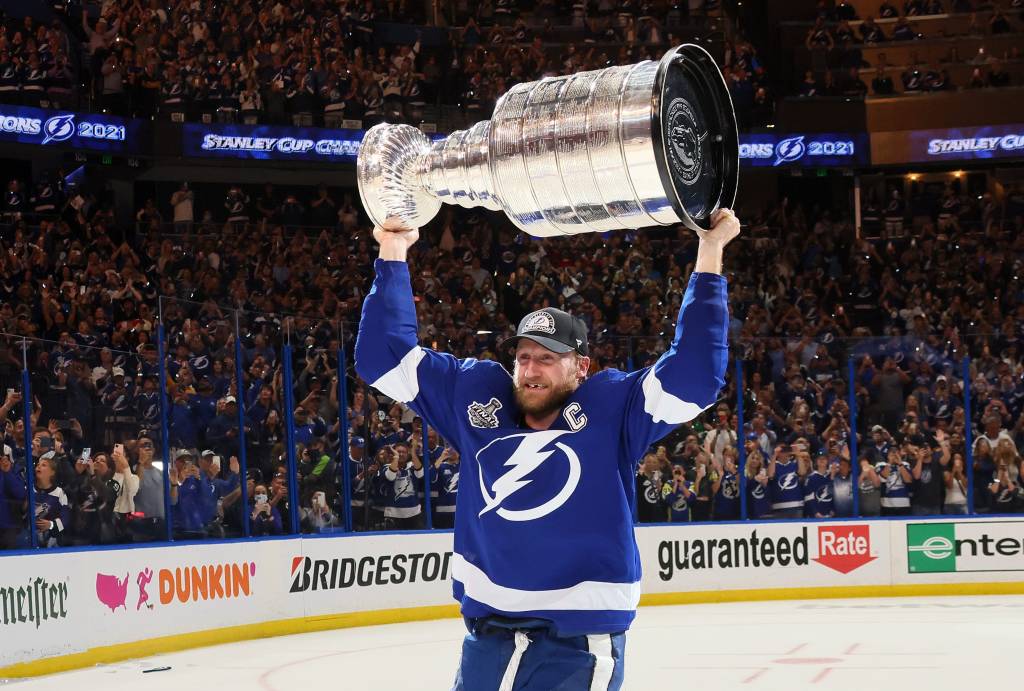
The skinny: The champion has retained their title. After five games, the Tampa Bay Lightning defeated the Montreal Canadiens and shared their moment in the sun with the delighted fans. It was a tale of two teams: one was the defending champion who had to overcome the hungry young foes in their division, the other the classic underdog story that toppled heavy favorites. Ultimately, however, this rendition of the story would see Goliath defeat David, as the Lightning repeat for the first time since the Penguins in 2016-17.

Now, as it pertains to time and with other projects on the way, I decided that, for the Lightning and Canadiens postmortems, to combine the two to explain not only how this series went, but how the Lightning were able to remain on top of the food chain in the NHL. The crystal ball section will go into what both teams do next, and that will serve as a wrap-up for this series. Thank you so much for all who stuck with it. Now, where were we? Oh yeah, the postmortem…

Early leads: If there was one thing you could trust the Lightning and Canadiens to do, it was get out to an early lead and stifle the opposition from getting back into the game. For example, in the series where Montreal upset the Vegas Golden Knights, Montreal scored first in four of the six games, with their average time per game with the lead being double that of Vegas. Seems like a stark difference, right? It was nothing compared to the dominance that Tampa Bay showed, scoring first in all four of its wins this series and leading for an average of 32:28 per game. The Canadiens, meanwhile, only held the lead for an average of 5:20 per game. That’s pure domination of a team.

Nikita Kucherov: It felt strange calling a bona fide star in the league an X-factor coming into the postseason, but that was exactly the situation that Nikita Kucherov found himself in. An offensive dynamo who played a key part in Tampa Bay’s cup run last season, he ended up needing hip surgery that would keep him on the shelf for the entire regular season. When he came back for the postseason, it was unclear whether he would be one hundred percent. He didn’t do too bad…he just happened to lead the Lightning with 32 points in the postseason. It’s the second straight postseason that Kucherov has scored 30+ points (the other two guys to reach that are some guys named Wayne Gretzky and Mario Lemieux.) The fact Kucherov was not only able to produce, but light up the playoffs despite missing the entire season, is a testament to just how good Kucherov is. He’s set to replace Alex Ovechkin as the NHL’s next big Russian superstar…

Andrei Vasilevskiy: …unless his goaltender and compatriot has anything to say about it. This year’s winner of the Conn Smythe Trophy for playoff MVP, Vasilevskiy was dominant throughout the postseason. He was one of two goaltenders to have a GAA under two (for context, the other was Toronto’s Jack Campbell, and we know what happened to the Maple Leafs), but the dominance extends far beyond that. He scored a shutout in every series-clinching game, and he is the first goaltender to get shutouts in two straight Cup-clinching games since Bernie Parent in 1974-75. For further context, the only other goaltender to have five series-clinching shutouts is Chris Osgood; Vasilevskiy managed that total in five straight games. He was also dominant in terms of save percentage as well, as his .937 mark is good to tie for 15th all-time in a single postseason. There is no more debate: Andrei Vasilevskiy is the best goaltender in the world.

The crystal ball: So now on to the obvious question: can Tampa be the first team to three-peat since the New York Islanders won four straight Cups between 1980 and 1983? It’s possible, but they’ll have an uphill climb. The flat cap means that the Lightning are starting a few million dollars over the salary cap, and they’ll have young players like Cal Foote and Cup-winning goal scorer Ross Colton looking for extensions. It’s likely that the Lightning will push the Seattle Kraken to take Spokane native Tyler Johnson, but it will take a decent package to do so (a young NHL-caliber player like Mathieu Joseph should help move things along there). Even then, the Lightning will be pressed right against the cap, so a contract will have to be moved for relief. Whether it’s Ondrej Palat, Ryan McDonagh, Anthony Cirelli, or Alex Killorn that gets moved between now and the start of next season, this summer is shaping up to be one of bloodletting for the Lightning.

As for the Canadiens, they now face the challenge of handling the weight of expectation. Marc Bergevin and Dominique Ducharme have earned some goodwill back with the Montreal fans, but now they’ll be tasked to keep the faith. It’ll start with a relatively interesting offseason. Jesperi Kotkaniemi will be looking for a decent extension as a restricted free agent, and the Canadiens should look into resigning two-way forwards Phillip Danault and Joel Armia. They don’t have to think too much about planning for extensions, as Nick Suzuki and Alexander Romanov will hit restricted free agency as Paul Byron and Ben Chiarot come off the books. There’s also the possibility of trading Jonathan Drouin, who left the team for personal reasons in April and who fans have soured on after watching Mikhail Sergachev (the player Drouin was traded for) win yet another Cup. He’s becoming more well-rounded in his game, but what kind of price can he be expected to fetch in a market that’s dominated with chatter of Jack Eichel and Vladimir Tarasenko?

Postseason Postmortem: New York Islanders

Credit: Bruce Bennett/Getty Images

The coroner is in. Let us send off Nassau Coliseum and the Islanders.

The skinny: Even now, it’s still ironic to see the Islanders succeed in the set of circumstances they were thrown into. Losing their best player in John Tavares, being thrown into years of mismanagement, and having no real sustainable stretch of success since their dynasty in the late 1980s was a problem. The Islanders should have hit a rough patch that could have very well seen the team relocate out of Long Island (this video provides a great overview of the team’s struggles.)

Instead, something happened. With dedicated leadership and an emerging young core, the Islanders were able to claw their way back to relevance. Unfortunately, this season’s rendition of the Islanders were met with a similar fate: a potential Cinderella run cast aside by the Lightning juggernaut. So how did it happen this time? Let’s take a closer look…

Offense: In hindsight, it felt like a matter of time before the Islanders offense went on a cold spell. While they had performed admirably in the playoffs up to this point, the regular season indicated a regression was coming. In the regular season, the offense finished with 2.71 goals per game, good for only 21st in the league. Unfortunately, that type of inconsistent offense came to play against the Lightning. After scoring 43 goals in the two series prior, the Islanders only managed 11 goals in the seven games against Tampa Bay. Last season’s postseason hero in Jean-Gabriel Pageau and trade deadline acquisition Kyle Palmieri were both held without a point this series, despite combining for ten goals against Pittsburgh and Boston. An admirable showing, but a series like this proves there’s still work that needs to be done here.

Power play: For all the talk about the Golden Knights’ poor power play in the Stanley Cup Semifinals, the Islanders’ struggles in that area tended to get lost in the shuffle. In seventeen power play attempts, the Islanders only managed to score once, including going scoreless in their last twelve. The most damning instance of the power play’s ineffectiveness? Game 7, where the Lightning won on a shorthanded goal from Yanni Gourde. If the only team generating positive momentum from a power play is the opposing team, that’s going to cause trouble quickly.

Young players: For as great of a coach as Barry Trotz is, I have to question his lineup choices to some degree here, particularly in terms of keeping young players in the press box. Sure, Noah Dobson got plenty of reps and did pretty well for himself, but what about Oliver Wahlstrom? Yes, Wahlstrom was injured in the first-round series against Pittsburgh, but he was taking pregame warmups as early as Game 1 against the Lightning. He was one of only seven Islanders to score double-digit goals during the regular season, but he was still kept off the lineup in favor of “stable veterans” like Leo Komarov and Travis Zajac (the two combined for two goals in 46 total games for the Islanders this season). Even someone like Kieffer Bellows, a talented prospect who did alright despite facing a learning curve this season, didn’t see any playoff action. Looking at what the likes of Cole Caufield and Nick Suzuki did for the Canadiens this postseason, it’s hard not to look back on this decision and wonder if relying on the youth could have made a difference.

The crystal ball: The Islanders have cemented a reputation as a team that’s a tough out in the postseason, but they owe it to themselves and their fans to evolve into a legitimate Cup contender. Fortunately, they have the pieces to manage that. Mathew Barzal has proven more than capable as a top-line center, the lineup is loaded with solid veteran players, and Anders Lee should be healthy after tearing his ACL mid-season. The defense is headlined by shutdown pairing Ryan Pulock and Adam Pelech, with Scott Mayfield, Nick Leddy, and Dobson in supporting roles. Goaltending is manned by the Russian duo of Semyon Varlamov and Ilya Sorokin, the latter of which was stellar in the first round against Pittsburgh.

Unfortunately, the cap could be an issue. The Islanders have only $5.79 million in cap space to work with, and they’ll need more for extensions of Anthony Beauvillier, Pelech, and Sorokin. Pulock and Dobson will also be on expiring contracts next season, and money will need to be cleared for Barzal’s extension in two years. Moving Andrew Ladd back onto LTIR should free up some money, but it’s unclear if that would be enough. They might have to explore buyouts of the likes of Komarov or Cal Clutterbuck, or trades on Jordan Eberle and Josh Bailey in the future. They’ve gotten this far already; now it’s time to see what direction they take.

Postseason Postmortem: Vegas Golden Knights

Credit: Paul Chaisson/The Canadian Press

The coroner is in…let’s just get this over with.

The skinny: If there was ever an NHL team that could be described as having a whirlwind existence, the Golden Knights are that team. After a phenomenal inaugural season that saw them demolish several expansion team records and make a spirited run to the Stanley Cup final, the weight of expectation has hung largely on the Knights ever since. Their reaction has been, frankly, a mixed bag of tricks. The second season saw a few key players take a step back, ending with a crushing first-round exit that saw the Knights blow a 3-1 series lead to the San Jose Sharks. Last season, despite a midseason coaching change that brought in Peter DeBoer from that same Sharks team, the Knights rolled to the end of the postseason and won the round robin in the playoff bubble to secure the top seed in the Western Conference. Unfortunately, their run would come to an end at the hands of the Dallas Stars.

This year felt like more of the same. They struggled against Minnesota, but managed to overcome the adversity and pull out the Game 7 victory. They then rolled through the Colorado Avalanche in surprising fashion, winning four straight after dropping the first two in Denver. A series against Montreal was supposed to be a strong chance to visit their second Cup Final in four years. Instead, the Knights fell in a shocking upset for the second straight year. How did it happen this time? Well, history does tend to repeat itself…

Offense: Last season, Vegas went out of the playoffs due to an offense that shut down at the worst possible time and couldn’t get anything going. This year, unfortunately, provided more of the same. They only managed two goals and 13 points from their top-six forwards. For context, that goal output was doubled by the Canadiens’ Cole Caufield and outproduced by the line of Caufield, Tyler Toffoli, and Nick Suzuki (seller’s remorse much?) Captain Mark Stone was held without a point the entire series. The worst performance, however, came on the power play, where the Knights went scoreless in 15 attempts. After two straight postseasons marred by offensive struggles, it’s fair to wonder if it’s time for Vegas to make some changes about how they manage the puck on the opposing end of the ice.

Marc-Andre Fleury: It’s hard to speak ill of Fleury for his performance. The Vezina Trophy winner for the first time in his career, Fleury was a key piece to the deep run the Knights went on this postseason. Unfortunately, Montreal didn’t make life easy for the Flower, finishing the series with a middling .904 save percentage. Most notable in all of this was Game 3, when Fleury made a rare mistake that saw the Canadiens tie the game late and essentially cost Vegas the game. It resulted in the return of the goalie rotation (to be fair, Robin Lehner bounced back nicely in relief) and, when Fleury returned to the ice in Game 5, the mojo that’s defined Fleury’s time in Vegas just wasn’t there. A storybook season brought to an unfortunate end.

Coaching: In the sense that the Knights are a roller coaster kind of team, Peter DeBoer is a roller coaster kind of coach. He’ll have stretches of dominant play throughout the regular season and postseason, but it can be balanced out by, in this instance, being outcoached by an interim to the interim head coach. Sure, part of the Knights’ struggles can be attested to Carey Price channeling the ghost of Ken Dryden past, but the offense for Vegas felt way too predictable far too often. The Canadiens, with their savvy veteran talent and smart coaching, were able to implement a system that frustrated the Knights and left them unable to do anything. It was the same trap that DeBoer caught Colorado’s Jared Bednar in the previous round, and it was also the same trap that he got caught in last postseason against Dallas. DeBoer deserves at least one more go, but he needs to prove that he can make good on these deep playoff runs.

The crystal ball: Remember the “Cup in six” decree handed out by owner Bill Foley when the team was announced? In an ironic twist of fate, Foley might just have been referring to the team’s first Cup window. It puts Vegas at two more years before divisional foes like Los Angeles and Anaheim can start providing threats to their likely divisional supremacy, so they’ll have to act fast to make good on this window. The good news is the roster doesn’t have many holes (outside of the unrestricted free agency of Alec Martinez), so they don’t have to break the bank too badly. Their exemption from the Seattle Expansion Draft also puts them in position to make a move or two, giving them leverage over teams fearful of losing a valuable piece for nothing. It may require an expiring contract or two being moved out for cap purposes (Brayden McNabb and Ryan Reaves stand out as two options), but those will likely be far cries from the last two summers of bloodletting.

The only question now is this: what happens to the goaltending rotation of Fleury and Lehner? Both played incredibly well last season and meshed very well together, but the simple fact is that Vegas has $12 million invested in two players that sees only one play every game. The gamble paid off and it did make sense in order for both to handle the rigors of a condensed schedule, but what happens now with the Knights at a crossroads in their young existence? The asking price for Fleury will likely be much better than it was a season ago, but will fans potentially turn on the team for trading the face of the franchise after a career year? Meanwhile, if the team trades Lehner just one season into a five-year contract extension, what does that say to potential free agents about Vegas’s management? They could also choose to keep both, but doing so would immediately strike Vegas out of many of the top free agents in this class. It’ll be a delicate balancing act this season but, if Vegas can be trusted with one thing, it’s that they know how to put on a show.

Postseason Postmortem: Colorado Avalanche

Credit: Ethan Miller/Getty Images

The coroner is in. Let us run the autopsy on the regular season champion.

The skinny: What. Just. Happened? It was the only words that Avalanche fans could likely muster as their team’s Stanley Cup hopes fell by the wayside against Vegas. They were a team that everybody (myself included) thought had a legitimate chance at the Stanley Cup this season. The regular season and first round only fueled the fire, seeing the Avalanche win the President’s Trophy for the most points in the regular season and sweep the St. Louis Blues. The fantasy matchup against the Golden Knights was supposed to be their magnum opus; a battle against a worthy opponent that would cement them as heavy Cup favorites.

It started that way at the beginning. The Avalanche dominated the Golden Knights 7-1 in Game 1 before stealing Game 2 in overtime. They were looking to cruise past Vegas and lock up another quick playoff win. Not only did that not happen, but the Avalanche did nothing to counteract Vegas adjusting to their gameplan. Four straight losses later, and the Avalanche saw another promising season come to a premature end. So how did things turn out like this? Let’s look at the details…

The MacKinnon line: Nowhere could you see the momentum shift in this series than examining Colorado’s top line’s production. They were stellar in the outlier Game 1, combining for five goals and eight points in the blowout. In the remaining five games, they would score three more goals and nine points between them. Nathan MacKinnon and Gabriel Landeskog would be shut out for the rest of the series and, while Mikko Rantanen did score the game-winner in Game 2, he had multiple opportunities to put games out of reach. Past those three players, the only other skater to score more than once against the Golden Knights was Brandon Saad with four goals. It’s one thing for your top line to struggle in scoring, but when all but two players are struggling to get any offensive production, that’s a recipe for disaster.

Defensive miscues: This one feels strange, as the Avalanche had one of the best defensive corps throughout the season. Norris Trophy finalist Cale Makar was the star attraction, but they got positive production from the likes of Devon Toews, Samuel Girard, and Ryan Graves. It had to be a disconcerting sight, however, for the defense to struggle as mightily as they did in this series. Makar and Toews weren’t bad, but they didn’t play like their usual selves (half of Makar’s total production in this series came in Game 1). The rest of the defense struggled, however, with Girard and Graves suffering most of all. The two didn’t record a single point in the final four games of the series, also recording a combined -14 (Girard, in particular, would record a -9). Both were directly responsible for the Avalanche going down in four straight, most noticeably when Graves was stripped of the puck and allowed Mark Stone to score on a breakaway in overtime in Game 5. Graves is now at risk of being exposed and selected by Seattle in the Expansion Draft, but Girard will have to improve and make up for this difficult series.

Nazem Kadri: Is it safe to just consider Kadri a dirty player and call it a day? It would be one thing if his high hit on Justin Faulk in the first round was an isolated incident, but he doesn’t get suspended eight games if that was the case. This is the third time in the last four years where Kadri has gotten himself suspended in the playoffs, with his team losing during his absence (Toronto traded him at a discount for a reason). Sure, Kadri hasn’t been the same player the last couple of years, but do you really not think that he would be an asset for a series like this? The Knights are very much a physical team, with players like Ryan Reaves, William Carrier, Keegan Kolesar, and Brayden McNabb being unafraid to throw their weight around. In a series like this, Kadri’s own brand of physicality would have forced the Knights to stay honest and potentially open things up for the Avalanche. Instead, Kadri indirectly cost his team a playoff series, and there have to be serious questions about his reliability at this point.

The crystal ball: It isn’t quite panic time for the Avalanche yet. They do have Landeskog and Philipp Grubauer about to hit unrestricted free agency, and Makar preparing for his first major extension, but Colorado has the cap space to make things work without having to shed serious salary. Even MacKinnon has gone on record to say that he’s willing to take a discount if it means helping the Avalanche build a contender, which should provide Colorado fans some relief. Still, Joe Sakic has stayed the course for a long time, and it may be only a matter of time until he’s forced to make a big move to push this team over the top. If Grubauer does walk in free agency to a team that overpays him, it may start with finding a new franchise netminder.

The real question, however, is what does this recent disappointment do for Jared Bednar’s job security? This is the third straight season that Bednar and the Avalanche have fallen in the second round and, this time, there’s no excuse for coming up short. The Avalanche are a team that have their Cup window open, so they need to find a way to produce results. Should they come up short next season in another year where the Avalanche are legitimate contenders, Colorado may have to look at shaking things up behind the bench and replace Bednar with a coach that would mesh with their current stars.

Postseason Postmortem: Boston Bruins

Credit: Rich Gagnon/Getty Images

The coroner is in. Let us pay respects to the fallen Boston Bruins.

The skinny: It hasn’t been a fun few years for the Bruins. Two years ago, Boston fans had to witness the Blues claim their revenge almost 50 years later and win their first-ever Stanley Cup on their home ice. In the playoff bubble last year, the Bruins fell in convincing fashion to the eventual champion Tampa Bay Lightning. This year, however, was supposed to be different for Boston, who was dedicated to making good on their current window.

Taylor Hall was a big-ticket trade acquisition that clicked almost immediately. Curtis Lazar provided penalty-killing ability and sandpaper to the bottom six. Mike Reilly provided defensive depth and offensive ability from the back end. These three additions in the trade deadline were supposed to push the Bruins over the top, and they did for at least a little while. Unfortunately, it did little to assist them against a well-oiled machine in the New York Islanders. So what caused the Bruins to enter hibernation this time around? There’s a few aspects to point to…

Bottom six: The good news for the Bruins is that they weren’t just a one-line team this postseason. The perfection line of Brad Marchand, Patrice Bergeron, and David Pastrnak worked their magic with 11 goals in the six games. The second line of Hall, David Krejci, and Craig Smith also pitched in with eleven points, and defenseman Charlie McAvoy was also helpful at driving the offense with seven points. After that, however? Nothing of note. The only Bruin outside of the players mentioned to score a goal was Charlie Coyle. The Bruins only managed three points from their bottom six forward group, whereas the Islanders landed 18 (eight of those being goals). Even more infuriating was the fact that top prospects like Trent Frederic and Jack Studnicka didn’t even see a game in these playoffs, especially when coach Bruce Cassidy had every reason to shake up the lines. It’s been a common thread for the Bruins to be let down by their scoring depth in recent years, and it happened again this time around.

Defensive depth: This has been a sticking point all year with the Bruins. They lost Zdeno Chara and Torey Krug in the offseason, and injuries to the defensive corps played a key part in the Bruins acquiring Reilly at the deadline. The injury bug reared its ugly head again in this series, with Brandon Carlo and Kevan Miller missing half the series. Connor Clifton made sense, considering he played a role in the Bruins’ run to the Cup Final two years ago. A baffling lineup decision, however, was playing a mid-season waiver claim in Jarred Tinordi over former first-round picks Jakub Zboril and Urho Vaakanainen. Tinordi was outproduced by both players in the regular season, but he would end up seeing four games of postseason action while the prospects got nothing. It was a roster decision that didn’t add up in this series, and it will be unknown whether Zboril or Vaakanainen over Tinordi would push the Bruins over the top.

Tuukka Rask: I know there are Bruins fans that would volunteer to drive Rask to the airport if he signs elsewhere in free agency, and that’s simply not right. Rask had an overall solid regular season with a .913 save percentage and 2.28 GAA. In the first round against Washington, he was lights out with a .941 save percentage and 1.81 GAA. This round, however, was a different story. Rask had a .897 save percentage and 2.98 GAA in this series, laboring in the series at points. Eventually, it was revealed that Rask played through a torn labrum that would require surgery, explaining the struggles a bit. While Rask’s detractors will punish him for staying around, the blame for that decision should fall on Cassidy. If Cassidy knew his star goaltender was dealing with a serious injury, why not go with rookie Jeremy Swayman with the season on the line? It’s another roster decision that came back to bite the Bruins in the end.

The crystal ball: The window is closing for the Bruins, and they have to know it. Patrice Bergeron and Brad Marchand are 35 and 32, respectively. Nine of the regular Bruins players at the end of the season were 28 or older. They’ve been starting to get contributions from younger players, but they’ll need to prepare for a moment when those players will have to step up and produce in higher roles. The only issue is that the Bruins still see themselves as Cup contenders; the Taylor Hall trade to Boston does not happen if they thought otherwise. It could be a problem keeping that up this offseason, however.

Key players like Rask, Krejci, Hall, and Reilly, as well as depth pieces like Miller, Sean Kuraly, and Jaroslav Halak are all unrestricted free agents. Carlo, Nick Ritchie, and Ondrej Kase are also restricted free agents. They do have $30 million in cap space, but that can get eaten up quickly with extensions or a trade for a major asset like Jack Eichel. Jake DeBrusk is someone who could end up being dangled in a trade for somebody, but he is coming off of a rough season that has likely damaged his trade value. It’s unclear what the Bruins will do this offseason, but it could expose some desperation within the organization as the Cup window closes.

Postseason Postmortem: Carolina Hurricanes

Credit: NHL.com

The coroner is in. Let us examine the aftermath of the Carolina Hurricanes.

The skinny: It wasn’t supposed to end like this for the Hurricanes. A roster loaded with young talent and the revivals of several players was set to accomplish great things. The defense continued to be one of the deepest in the entire NHL. An amazing rookie campaign from Alex Nedeljkovic turned goaltending from a weakness to a strength practically overnight. Weathering an early challenge from the Nashville Predators should have been a precursor for playoff success. However, the defending champion Tampa Bay Lightning showed the young team how difficult of a grind the playoffs truly are.

It was another season of learning for the Hurricanes, who always appear to be on the right track but come up just short in the postseason. Two years ago, the Bruins put an end to a magical run to the Conference Finals. The Bruins would do the same the following year, dominating their younger rivals in the first round. This year, it was the Lightning’s turn to humble the Central Division winner. Where did it go wrong for the Hurricanes this time? Let’s present the evidence…

Injuries: The second line of the Hurricanes was ravaged by injuries during this series, as Nino Niederreiter and Vincent Trocheck all missed games. Warren Foegele was also injured in Game 3 and missed Game 5 after gutting out Game 4. The three forwards combined for 47 goals and 97 points during the regular season, as well as four goals during these playoffs. Their contributions were sorely missed, as the Hurricanes struggled to get anything going consistently on offense against an all-world goaltender in Andrei Vasilevskiy. While it’s unclear if the trio would have reversed Carolina’s fortunes, they would have likely made the series closer than it was.

Penalty kill: Similar to their victory over the Florida Panthers, the Lightning were able to capitalize on mistakes that put the Hurricanes in the penalty box. Out of 16 Carolina penalties, they were only able to succeed at killing nine of them. The power play was responsible for half of Tampa Bay’s goals in this series. Nikita Kucherov, in particular, was dominant with the man advantage, scoring six of his seven points in the series on the power play. A team with elite offensive talent and gameplanning is absolutely deadly if given the opportunity, and the Hurricanes gave away far too many to find success.

Game 4: This was the moment the Hurricanes’ season ended. With a chance to steal two games in Tampa Bay and go back to Raleigh with an even series, the Hurricanes went in firing on all cylinders. In a span of eight minutes in the second period, the Hurricanes outscored the Lightning 4-1 and seemed like they were heading back into the series. Unfortunately, the Lightning broke through and scored three times in five minutes to close out the period, including two power-play tallies. Facing a 5-4 deficit in such a fashion, the Hurricanes looked gassed in the third and let go of a second Nikita Kucherov goal that would effectively push the game out of reach. A great opportunity for the Hurricanes was effectively squandered, and it spelled the end for them in this series.

The crystal ball: The Hurricanes still have a good core intact, and they enter the offseason with the fifth-most cap space in the league. Even after they resign key restricted free agents like Nedeljkovic and Andrei Svechnikov, that will still leave the Hurricanes with plenty of money to play around with. They can add to that if the Seattle Kraken select Brady Skjei in the expansion draft, which wouldn’t be too bad of a loss for the Hurricanes, given their depth on defense. They also cleared another question by extending Jack Adams Award-winning coach Rod Brind’Amour, ensuring that most of Carolina’s key contributors this season are still here.

The real question is going to be regarding unrestricted free agent Dougie Hamilton. His offensive contributions among defensemen are unmatched, and he will likely command a deal very similar to the one Alex Pietrangelo signed just this past offseason. However, it’s unlikely that contract will come from the Hurricanes, who have given Hamilton permission to speak to other teams to open up sign-and-trade possibilities. The idea of it is good on the Hurricanes: it allows them to let their big-ticket free agent leave on their terms instead of leaving for nothing. Defensive-needy teams like Winnipeg, Chicago, and Philadelphia would be wise to at least get some feelers out and see what it would take to bring Hamilton over to their teams.

Postseason Postmortem: Winnipeg Jets

Credit: Ryan Remiorz/The Canadian Press

The coroner is in. Let us sift through the unsalvageable wreck of the Winnipeg Jets.

The skinny: In the North Division second round matchup that nobody saw coming, the Jets were soundly swept out of the playoffs by the Montreal Canadiens. There really isn’t much else to say other than that about this series, as it played out in dominating fashion with the Jets unable to do anything.

It was a strange sight to see a team that had played so well against the two top point-scorers in the entire NHL suddenly fall apart against a team they were expected to handle. Instead, the Canadiens were a riddle that Paul Maurice and company were unable to crack, as the Canadiens advanced to the semifinals. So what grounded the Jets this time around? It’s pretty simple to figure out…

Mark Scheifele: It was a bad hit that didn’t need to happen. With a minute remaining in Game 1 and Montreal’s Jake Evans barreling down the ice for an empty-net goal, Scheifele laid out Evans with a massive hit as he put the puck in the net. While the dirtiness of the hit was debated among fans, the Department of Player Safety ultimately punished Scheifele with a five-game suspension. It was a massive blow to the Jets, as Scheifele led the team with 63 points in the regular season and was a key contributor in Winnipeg’s first-round victory over Edmonton. What happened afterwards…

Offensive struggles: …was a complete disaster. The Jets struggled without their top point-producer, and the new line combinations were never able to build any chemistry. The Jets managed to land three goals on Carey Price and the Canadiens’ defense in Game 1; they scored the same number of goals in the last three games. Two of the Jets’ last three goals came from defenseman Logan Stanley, who had scored only once in 37 regular-season games. Leading goal-scorer Kyle Connor only landed one against the Canadiens. Big trade acquisition and playoff bubble star Pierre-Luc Dubois notched only one point. Nikolaj Ehlers and captain Blake Wheeler were held off the scoresheet entirely. Carey Price and the Canadiens stifled the Jets at nearly every turn, taking advantage of a Winnipeg squad that was thrown completely out of sync.

Defensive issues: In hindsight, it was never a matter of if the Jets’ blueline would let them down, but when. The answer was in this series, as the Canadiens repeatedly exploited the Jets where they were weakest. Tyler Toffoli, Nick Suzuki, and Artturi Lehkonen led the charge for the Habs, posting two goals apiece and combining for twelve points. The only two Jets defensemen that posted a plus +/- rating were Stanley and Jordie Benn; all other defensemen combined for a -12. It proved that the Jets need more on the back end and Connor Hellebuyck, as talented as he may be, can’t serve as the team’s only reliable line of defense.

The crystal ball: It’s become clear that the Jets have been caught relying on Hellebuyck to bail them out for far too long, and it’s now also clear that such a strategy fails at building a contender and, even if it works, the success is unsustainable. The team still hasn’t recovered since from the mass exodus of 2019, when Dustin Byfuglien, Jacob Trouba, and Tyler Myers all left in varying fashions. They still had Josh Morrissey and landed Neal Pionk in the Trouba trade, but two reliable defensemen out of six is not going to work in the NHL. If Paul Maurice and Kevin Cheveldayoff want to stick around, landing another impact defenseman has to be THE top priority this offseason.

Stanley had an overall solid rookie season, and the likes of Ville Heinola and Dylan Samberg are rising through the farm system, so it’s not as if the Jets have to throw all caution in the wind on this. The 17th overall pick the Jets have in this year’s draft could also be used to add another quality defensive prospect. With $20 million in cap space for next season, they could also afford to look into free agency or the trade market. Impact free agents like Dougie Hamilton, Adam Larsson, and David Savard would all make sense for the Jets. For trades, look for the Jets to be connected to the likes of Seth Jones, Matt Dumba, and Rasmus Ristolainen. Regardless of what approach the Jets take, landing at least one quality defenseman to join their ranks is a must if they hope to take the next step.