The Nerd’s Board: Middle Rounds

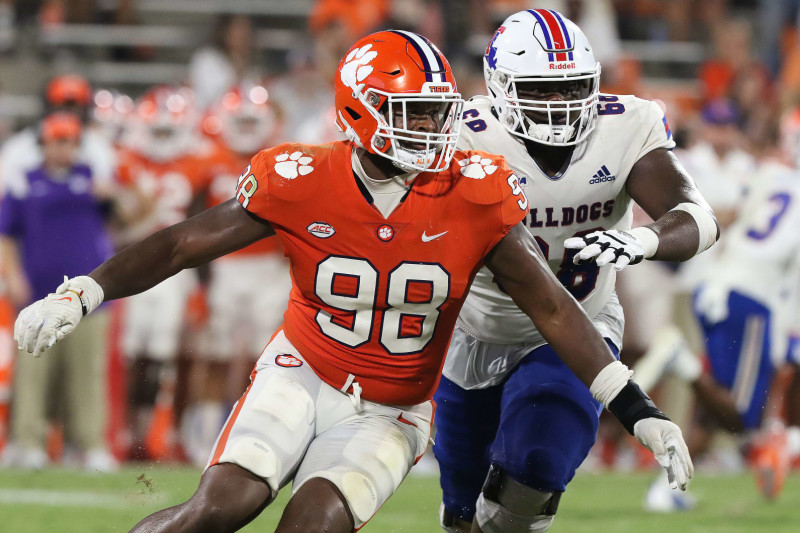
Image Credit: Parker Waters/Crescent City Sports

While the early rounds of the NFL Draft are where teams can expect to find their next big superstars, the middle rounds have also boasted some impressive gems throughout history.

Round 3 only happens to boast one of the all-time great players in Joe Montana, who went to San Francisco in 1979 before turning the 49ers into the NFL’s next great dynasty. Other great players to come out of Round 3 range from all-time greats like Terrell Owens (1996), John Lynch (1993) and Jason Taylor (1997), to future Hall of Famers like Frank Gore (2005), Russell Wilson (2012) and Travis Kelce (2013). Meanwhile, the fourth round was the landing spot for all-time great receivers (John Stallworth (1974) and Steve Largent (1976)), quality pass rushers (Charles Haley (1986) and Jared Allen (2004)) and current starting quarterbacks (Kirk Cousins (2012) and Dak Prescott (2016)). All of these names should indicate that, even though players at this range don’t necessarily project such an outcome, there is still serious potential in the middle of the draft.

While the list of prospects worth taking here increase, choosing the right ones still makes a world of difference. There are plenty more options to sort through, but the players listed here would be the ones I would want to highlight. Whether they boast elite athletic traits or play a style that the modern NFL is trending towards, I would have no problem selecting these prospects in the middle of the draft. While there won’t be as much in-depth analysis in order to prevent turning this article into the blog’s version of The Odyssey, there will still be enough information to justify their placements.

Also, if you’re looking for a specific prospect and don’t see them here, check out my board in the early rounds to see who I would take at the beginning of the draft.

So who should your team be looking for to find the next great hidden gem? Let’s find out.

Kendre Miller (RB, TCU) and Israel Abanikanda (RB, Pittsburgh)

There are a lot of quality running backs that can be found in the middle of the draft. Auburn’s Tank Bigsby, Illinois’s Chase Brown, Texas’s Roschon Johnson, and even Northwestern’s Evan Hull would all be fine additions for any running back room. In this article, though, I want to highlight an early favorite and someone who grew on me throughout the pre-draft process.

While an injury prevented Miller from playing in the National Championship against Georgia and prevented him from showcasing at the Combine or TCU’s Pro Day, his game reminds me of one of my favorite runners from last year’s class in Kenneth Walker III. Outperforming a five-star recruit in Zach Evans at TCU, Miller is a decisive runner who is able to see the entire field, come up with a creative plan of attack, and burst through any holes with a combination of explosion and agility. While the versatility in his game isn’t yet there, he has the traits necessary to hold down a third-down back role, and the fact that he’ll only be 21 when the season starts means there will be plenty of time to build that part of his game.

Since torching Virginia Tech for 320 yards and six touchdowns, Abanikanda has seen his stock rise throughout the last several months. Abanikanda is the rare runner that not only has the speed and explosiveness to be a home run threat with each touch, but the patience to diagnose plays and creativity to make each carry efficient. Similar to Miller, there are some questions about versatility, but the tools are there to warrant a three-down role. He’ll also be only 20 when his rookie season begins, so there will be plenty of time for development.

Miller and Abanikanda both stand as bets on potential, but three-down workhorses are becoming a rare breed in the NFL. Securing one with a third-round pick would be tremendous value for a high-ceiling player with minimal tread on the tires.

Tyler Scott (WR, Cincinnati) and Jayden Reed (WR, Michigan State)

Next, let’s take a look at a couple of slot receivers with the potential to become big-play threats with every target.

Scott has been on my radar for the last few months now, and I’m glad to see pundits and NFL scouts coming around on him. While there will be inevitable questions about play strength due to his lean frame (five-foot-eleven, 185 pounds), Scott is more than capable enough to track the ball and make the tough catch against tight coverage. Combined with his natural speed and route running ability, Scott can easily maneuver his way past opposing defensive backs before accelerating downfield. With how much the modern NFL values speed, Scott should be able to fit into most offensive schemes and carve out a role for himself early.

While Scott will likely be gone early in Round 3, Reed could be a quality Plan B in Round 4. Another smaller receiver, Reed also plays bigger than his size suggests with his sure hands and ball tracking. He can also use his route running to achieve separation before running downfield to pick up several yards after the catch. What will attract teams to Reed more than that, however, is his ability to play special teams. Reed has served as Michigan State’s primary return man for the past two seasons, including averaging 21.6 yards per return and two touchdowns on punt returns. If a team wants a receiver who can function on both offense and in the return game, Reed will be a name worth circling on the board.

Zack Kuntz (TE, Old Dominion)

Past the top six or so tight ends in this class, there aren’t really many reliable options out there. If you’re waiting on a tight end in the middle rounds and hoping to hit on a dart throw, Kuntz stands out as a primary target.

While Kuntz is coming off on an injury-shortened 2022, he’s already showcased his dominance the previous year before lighting up the Combine. Between his size (six-foot-six, 255 pounds), speed (4.55 forty-yard dash time) and elite agility, Kuntz was the only tight end this year to earn a perfect 10 Relative Athletic Score. That and having a massive catch radius should be more than enough for a team to take a flier on him, possibly as early as the tail end of Round 3. He may stand out as more of an athletic small-school project, but giving him time to learn the nuances of the position will help Kuntz out dramatically.

Matthew Bergeron (OT, Syracuse)

Maybe calling Bergeron a mid-round sleeper isn’t doing him enough justice, but I wanted to highlight one of my favorite prospects throughout the pre-draft process.

Boasting elite physical traits as well as experience on both sides of the offensive line and facing quality competition, Bergeron already comes equipped with one of the highest floors out of all of the offensive tackles in the class. His explosiveness and fluidity should certainly come in handy in pass protection sets, while Bergeron also has the physicality needed to open up holes in the run game. Bergeron can reasonably play at either offensive tackle spot or even kick over to guard, and his skill set should make him scheme-versatile. While Bergeron will most likely be a solid decade-long starter in the NFL, he has the potential for more. If he slides into the early part of Round 3, the decision on who to draft should take all of ten seconds.

Chandler Zavala (G, NC State) and Anthony Bradford (G, LSU)

Neither Zavala or Bradford really stood out to me prior to the pre-draft process, but strong showings from both had me rethinking where each of their ceilings truly were.

Zavala was a prospect that no one heard about until this past season, but his big draft year breakout has people like myself now convinced he’s worth a Day 2 investment. While Zavala is more known as a run blocker, he improved dramatically in pass protection throughout the past year and, according to PFF, only allowed four pressures on 422 pass-blocking snaps. His amazing performance at NC State’s pro day only helped the Zavala hype train pick up speed, landing in at least the 90th percentile in many drills. That combination of athleticism and production is going to draw attention, and Zavala will possibly hear his name called at the end of Round 3 because of it.

Another athletic marvel that boosted his stock during his pro day is Bradford. While Zavala’s production is impressive, Bradford would have the edge in terms of versatility, having experience at both guard and tackle on both sides of the line. That could remind people of Jamaree Salyer, a sixth-round pick last year drafted at guard only to be the starting left tackle for the Chargers late into the season. Bradford’s mix of explosion, strength, and agility earned him a 9.81 RAS, indicating an elite athlete that can hold his own in the NFL. The expectation for Bradford should be a Round 4 selection, with any lower being an immense value pick.

Olusegun Oluwatimi (C, Michigan)

In an interior offensive line class that doesn’t really have a standout elite talent at the top, the middle rounds would be a place to look. You won’t do much better than the reigning Rimington Award winner Oluwatimi.

On a Wolverines line that was one of the best in the country, Oluwatimi emerged as a quality piece in his lone year at Ann Arbor. A natural center that also has the potential to play guard, Oluwatimi projects as a strong run blocker that can open up space and has adequate explosiveness to change assignments on the fly and reach the second level of the defense. He’s more than powerful enough to stand up to some NFL nose tackles, and can be at least serviceable in pass protection. Expect a team to start looking into him at Round 3 before deciding to take the plunge in Round 4.

Keeanu Benton (DT, Wisconsin) and Moro Ojomo (DT, Texas)

As mentioned in the early board, I’m not a fan of many of the defensive tackles found early in the draft. As such, a quality interior defensive linemen in the middle rounds may be worth reaching for.

A former wrestler, Benton enjoyed a breakout 2022 for the Badgers. His blend of burst and power allows him to dominate one on one matchups against offensive linemen, and Benton was able to showcase his talent both on the field this season and at the Senior Bowl. While he best fits in a 4-3 defensive front instead of being on the nose, Benton should be a force in clogging run lanes and shooting the gap to get into the backfield. A locked-in Day 2 selection, Benton projects as a mid-Round 3 selection that can easily rise up the board.

Another 2022 breakout, Ojomo is an interesting project player. Despite being a fifth-year senior, Ojomo will only be 21 on draft night, so there’s plenty of opportunity for development. Ojomo already stands out as an NFL-ready run defender, and he has the athleticism required for a decent foundation as a pass rusher. The first year or two of his professional career will likely be dedicated to rounding out his game, but a team that unlocks Ojomo’s potential will be rewarded immensely. Well worth a selection in Round 3 or 4.

Isaiah McGuire (EDGE, Missouri)

With as deep an edge rusher class as this year has, prospects need something to help them stand out from the crowd. Throughout this past season and the pre-draft process, McGuire was able to accomplish exactly that.

A toolsy prospect, McGuire has the combination of power and explosiveness that NFL teams covet in their pass rushers. It also helps that McGuire is one of the most refined edge rushers you’ll find in this portion of the draft, coming with an array of pass-rushing moves and the discipline necessary to stop runners from reaching the edge. The Senior Bowl was also a great opportunity for McGuire to stand out, and he could be rewarded with a Round 3 selection because of his efforts. He has some of the best upside in the middle rounds, so keep an eye out for where he lands.

Ivan Pace Jr. (LB, Cincinnati) and Dorian Williams (LB, Tulane)

With linebackers already being good values, it’s time to discuss two of my favorite Group of Five prospects at the position.

If Witherspoon from the first list comes off as a smaller Sauce Gardner, Pace comes off to me as a smaller Micah Parsons. While Pace’s size might put some teams off of him, he has some of the best playmaking instincts of any linebacker in the class. He’s functional enough in coverage, but Pace is at his best when he’s allowed to fly around the field and hunt down the ball carrier. He’ll be a dream for blitz-heavy teams as a run stopper and secondary pass rusher, and his playmaking prowess could net him a spot on special teams units early on. The size could knock him to the fourth round, but that would be a steal for someone who can get to the ball like Pace can.

If you’re looking for a more athletic and versatile prospect, however, Williams will be a better target. The Cotton Bowl Defensive MVP, Williams played a central part in Tulane’s rise as this year’s best Group of Five team. Williams is one of the surest tacklers in the draft, and he also has the prerequisite athleticism to cover running backs and tight ends in the passing game. The consistent progress Williams has shown in the past few seasons indicates plenty of room for growth still, and he should be a quality depth piece with starting potential as a rookie. Much like Pace, the fourth round will be his likely, albeit far too low, landing spot.

DJ Turner II (CB, Michigan) and Riley Moss (CB, Iowa)

While a lot of hype in Ann Arbor in the secondary belongs to future first-round selection Will Johnson, Turner has made some eye-popping displays before. What stands out most about Turner is his 4.26 40-yard dash time, which gives him excellent makeup speed. Turner’s more than just testing numbers, however; he has also shown the potential to be scheme-versatile and efficient in a variety of coverages. His small size will likely mean he’s never going to be a factor in run support, but Turner’s ability in coverage is more than enough to warrant a high selection. Expect to hear his name called early in Round 3.

While Moss has some areas for improvement, there’s also plenty of positives to his game that can offset that. Moss has the versatility to be effective on the outside, in the slot, or even at safety if the team that drafts him sees him as a better fit there. Moss stands out as an effective zone corner with his football IQ and field vision, and that will also help with special teams as he rounds out his game. He’s a comfortable fourth-round prospect.

Anthony Johnson Jr. (S, Iowa State)

It’s rare that a player who picks up a position during their draft year takes to it swimmingly. However, that turned out to be the case with Johnson.

A four-year starter at cornerback for the Cyclones, Johnson transitioned to safety and did so near-seamlessly. While his technique in coverage is a work in progress, the move to safety has allowed Johnson to better embrace his physicality, which shows in his ability to come down from up high and make a big hit on the ball carrier. Johnson’s versatility is also impressive, as he can be used as a deep safety, in the slot, or in the box as a blitzer. Very few safeties can make such a claim, but a sure tackler like Johnson can make his living as a third safety early on while he improves in coverage. Expect him to be a fourth-round selection, but the weakness of the safety class could push him up to the third.
The Nerd’s Board: Early Rounds

Image Credit: John Byrum/Getty Images

We are less than a week away from my personal favorite time of the NFL offseason: the Draft.

While free agency is used to supplement the current roster, nothing can make or break a team quite like a draft class can. Think of the 1974 Steelers class including Hall of Fame talent such as Jack Lambert, John Stallworth, and Mike Webster, or the 1986 49ers drafting seven starters during their dynasty years, or the 1996 Ravens drafting two franchise cornerstones in Ray Lewis and Jonathan Ogden to connect the team with their then-new city. More recent examples would include the 2012 Seahawks (Bruce Irvin, Bobby Wagner, Russell Wilson), the 2016 Jaguars (Jalen Ramsey, Myles Jack. Yannick Ngakoue), and the 2017 New Orleans Saints (Marshon Lattimore, Ryan Ramczyk, Alvin Kamara). The NFL Draft stands as arguably the most important three days of the offseason, as they can help teams build a core that can open and sustain a championship window.

The first two rounds of the draft are where you’re expected to find the stars of tomorrow. Whether it’s translating a player’s college production to the NFL level or building an elite athlete into a superstar, GMs and coaches will face some of their hardest decisions early on. With the pre-draft process all but finished, these are the players that, if I were a GM or scout for an NFL team, I would have on my board for the early rounds.

That said, it wouldn’t be fun to wax poetic about a prospect that you’ve probably read up on a hundred times. So, for the sake of avoiding redundancy, these are some popular players that I won’t mention that I would still draft without hesitation: Bryce Young (QB, Alabama), C.J. Stroud (QB, Ohio State), Bijan Robinson (RB, Texas), Peter Skoronski (OT/OG, Northwestern), Will Anderson Jr. (EDGE, Alabama), Christian Gonzalez (CB, Oregon), and Brian Branch (S/CB, Alabama).

With that out of the way, who stands out as the Nerd-approved prospects for the first couple of rounds? Let’s find out.

Zach Charbonnet (RB, UCLA)

Bijan Robinson is the top running back in this year’s class, and I have no intention of disputing that claim. While running backs have lost most of their value over the past few years, it wouldn’t be surprising to see at least a few go in the early rounds. After Robinson, Charbonnet stands out as an option for who could be the best back in this class in retrospect.

The frame (6 feet, 214 pounds) and 4.53 40-yard dash time would lead some teams to believe Charbonnet’s a power back only. However, he’s shown that he can be explosive and make tacklers miss, combining toughness with underrated elusiveness. Charbonnet also stands out as one of the better third-down backs in the class, functioning well as both a passing option and an extra blocker in the backfield. Combine all of this with the fact that he didn’t lose a fumble in his four years of play with UCLA and Michigan. and you have the makings of a reliable three-down workhorse.

Charbonnet’s floor is already pretty high among his fellow running back prospects, but the fact that his ceiling may be even higher than anticipated should draw a team towards the back half of Round 2.

Jalin Hyatt (WR, Tennessee)

While the receiver class this year looks pretty deep, there are very few options that stand out as a “home run” threat quite like Hyatt does.

The immediate comparison for Hyatt is Philadelphia WR DeVonta Smith, who was a top-10 pick in 2021. Both are slender receivers who may not necessarily have the play strength to be consistent against traffic, but that’s not why a team drafts such a player. Hyatt possesses 4.4-second speed, allowing him to torch opposing defensive backs and force defenses to remain honest. Tennessee’s unique offense did mean that Hyatt primarily had to focus on running out into open space, but he’s shown the instincts necessary to find soft spots in coverage and exploit them for big plays, so I don’t expect learning an NFL route tree to be too problematic for him.

The expectation of Hyatt should be as an impact receiver and deep threat, which is critical in the age of the big-armed quarterback. I would draft him over similar players like Zay Flowers, which would put him squarely in the Round 1 conversation.

Josh Downs (WR, North Carolina)

While North Carolina has seen some quality quarterbacks over the years with Sam Howell and Drake Maye, Downs has been a consistent part of the Tar Heel offense that has allowed both to thrive.

While Downs’s slight build (five-foot-nine, 179 pounds) is likely going to keep him in the slot at the NFL level, his ability to compete and win contested catch situations has him playing much bigger than his size suggests. His athleticism allows him to reach top speed quickly, while his route running and subtleties let him separate from defensive backs and find the open spaces in coverage. There are favorable comparisons to Doug Baldwin and Tyler Lockett being thrown out for him, suggesting that the ceiling for him is a consistent thousand-yard threat and potential Pro Bowler.

If Downs measured as his play style suggests, he’d probably be targeted in the middle of the first round. That said, there’s still a chance his name gets called at the tail end of Round 1, lest he turn into a nice value pick in Round 2.

Darnell Washington (TE, Georgia)

The tight end class this year is loaded with top-end talent, and the position could very well see three names get called in Round 1. Michael Mayer and Dalton Kincaid both possess tremendous upside but, if you’re hunting for Mayer’s blocking acumen with Kincaid’s receiving ability, Washington will be where you ultimately land.

While fellow Bulldog Brock Bowers received much of the attention in Georgia’s offense, Washington made a fair share of contributions to the back-to-back national champs. While he’s never gotten much of an opportunity to show his receiving chops, Washington was able to serve as a sixth offensive lineman in both the running and passing games. Helping Washington’s case is that he possesses one of the best size-speed combinations of anyone in the draft; his Combine performance was amongst the best at the position, clocking a 4.64 40-yard dash time and a 4.08 shuttle time at six-foot-seven and 264 pounds. All of the tools are there to create offensive mismatches and become near-unstoppable in the red zone, and a savvy offensive coordinator will be more than happy to work with Washington to achieve that as he begins his career as a blocker.

While Mayer and Kincaid could count as “safer” picks, Washington possesses much more intrigue than either of them, in my opinion. Whether it’s the end of Round 1 or the beginning of Round 2, the team that drafts and develops Washington properly could have a star on their hands.

Sam LaPorta (TE, Iowa)

Iowa has earned its reputation as “Tight End University” with the likes of George Kittle, Dallas Clark, and T.J. Hockenson translating their time as Hawkeyes to NFL success. LaPorta has a good chance of following in the footsteps of his predecessors.

Despite being the only consistent threat in an anemic Iowa offense, LaPorta was still able to get things done this season. Much like the names mentioned that came before him, LaPorta stands out as a combination of toughness and underrated agility. Not only can LaPorta fight his way through traffic and come through with the catch in contested situations, but he can just as easily turn up the field and pick up substantial yards after the catch. While he isn’t particularly known as a blocking specialist, his toughness and leadership ability should help him be able to learn and develop into at least a serviceable player on that front.

If you aren’t sold on the top tight ends or just want to spend a first-round pick at a higher-value position, LaPorta should be available around the middle of Round 2. That would be a fair value on someone who’s been a little under-the-radar compared to the rest of the prospects at his position.

Dawand Jones (OT, Ohio State)

While a lot of the hype at offensive tackle will go to fellow Buckeye Paris Johnson Jr., Jones has built a resume worthy of a high pick in his own right.

The first thing that will immediately stand out about Jones is his size. Six-foot-eight, 370-pound athletes are difficult to come by, but Jones ensured that the Buckeyes always had the largest man on the field. While that comes with some drawbacks in terms of quickness, Jones has showcased surprisingly good mobility at Ohio State and during his brief stint at the Senior Bowl. He projects as an absolute mauler in the running game with some underrated pass protection skills, which will be perfect for teams that like to run balanced offenses. While his status as a natural right tackle will serve as a limitation, he should see the field early on in his career.

The first round is where teams look for the left tackles of the future, and Jones probably doesn’t qualify for that just yet. However, teams in need of offensive line help should look for him in the middle of Round 2 and watch him swallow up opposing defensive linemen.

Myles Murphy (EDGE, Clemson)

There was once a time when Murphy was up with Will Anderson Jr. as not only the best edge rusher, but the best prospect in the entire draft class. While that narrative has long since faded away, Murphy still possesses some great value.

If you want to look at a good comparison for Murphy, take last year’s top overall pick in Travon Walker; both were more tools than production when they were drafted, but the talent has flashed enough to warrant such a high choice. Very few edge rushers in the class have Murphy’s blend of freakish athleticism and positional versatility. He’ll most likely serve as a traditional defensive end in 4-3 sets, but he has the potential to work on the inside from 3-technique to 5-technique. While Murphy will need to work in developing a pass rushing plan to reach his potential, he has a decent array of moves to choose from already, so a defensive coordinator will only need to figure out how to string those moves together.

Murphy is largely projected to go in the middle of Round 1, with an outside shot of going in the top 10. Teams looking for edge rushing help at that stage of the draft would be wise to look at Murphy and give him a chance to showcase his abilities.

Derick Hall (EDGE, Auburn)

There hasn’t been much for Auburn to be happy about over the past few years, but the development of Hall as an edge rusher and defensive leader has certainly been a highlight.

Hall mostly stands as a 3-4 outside linebacker that can be a force in stopping the run and rushing the passer. His ability to quickly get leverage on opposing offensive tackles and tight ends is one thing, but being able to convert speed to power and use his long reach to explode into the backfield. Beyond that, he’s emerged as a leader both on and off the field for Auburn, so that will certainly appeal to teams looking at character as well as on-field ability. While Hall does come across as a little underdeveloped as a pass rusher at this point, it’s fair to wonder if the instability at Auburn contributed to that; getting to work with an NFL coaching staff should make some serious difference for his game.

Hall has all of the tools to be an every-down starting outside linebacker and edge rusher at the NFL level. For a prospect who has his stock currently in the back half of the second round, that has the chance to be one of the highest-value picks in the draft.

Adetomiwa Adebawore (DT/EDGE, Northwestern)

I’ll be honest with you all here: I’m not a big fan on many of the top defensive tackles in this class. Combining that positional weakness with an amazing pre-draft process, it’s no surprise why Adebawore has shot up draft boards over the last few months.

While his tweener frame (six-foot-two, 282 pounds) is a little too large for the outside and too light for regular snaps on the interior, it’s large enough to warrant being a defensive end and kicking inside to three-technique on pass-rushing sets. Adebawore has led Northwestern in sacks and forced fumbles in each of the past two years, and even showed flashes of brilliance during the Senior Bowl. There’s the need to show more consistency and recognize plays better, but his explosive first step combined with his length should make him a natural disruptor early.

While Adebawore is a little raw and would typically warrant a selection at the end of Round 2, the eye-popping Combine results will likely mean he goes off the board closer to Round 1. If a team pairs Adebawore’s raw athleticism and traits with a defensive coordinator that can place him in the right position, they may have a devastating pass rusher on their hands.

Jack Campbell (LB, Iowa)

With the de-valuation of traditional linebackers in recent years, that should give teams the chance to land some value picks at the position. While arguments for Trenton Simpson and Drew Sanders can be made, my pick for the top linebacker in this class would be Campbell.

Standing out in the middle of the defense at six-foot-five and 250 pounds, Campbell has been able to turn into one of the most productive linebackers in college football. His work has mostly come from plugging up running lanes and joining in on the pass rush occasionally, but he’s also shown flashes of ability in coverage. Increasing Campbell’s stock further was his impressive showing at the Combine, showing scouts that he had legitimate athleticism to back up his production. There are a few technical aspects that need work, but the issues surrounding Campbell are less alarming than some of the other top prospects at the position.

Five to ten years ago, players like Campbell could have easily warranted a first-round selection. Instead, Campbell and players like him will probably go around the middle of Round 2, which stands out as some solid value.

Devon Witherspoon (CB, Illinois)

Last year, Sauce Gardner won the hearts of scouts with his combination of ball skills, superior instincts, and swagger beyond his years. Given that Gardner proceeded to win Defensive Rookie of the Year, it should be no surprise that a similar prospect in Witherspoon has picked up a serious amount of hype.

While Witherspoon may be considered too small (five-foot-eleven, 181 pounds) to play on the perimeter, his experience playing both on the outside and inside should give defensive coordinators options on where to place him. Everything about Witherspoon’s game speaks volumes about his versatility: man or zone, pass or run, outside or inside, he has the skills to make a huge play at any time. Not only can Witherspoon make the big tackle or break up the pass, but he has the confidence in his own ability to go for it. That ability to set the tone on defense will be huge for a team that has seen fair shares of struggles stopping opposing offenses.

Out of every prospect on this list, Witherspoon will likely go the highest, possibly in the top 10. While that value ultimately hinges on how teams view Witherspoon as an NFL player, plenty of teams will be excited to add a player of his competitive nature and pedigree.

Jartavius Martin (S, Illinois)

What is it with Illinois defensive backs this year? While Witherspoon and Sydney Brown (an honorable mention for this list) are plenty deserving of the high praise being given to them, I’m surprised that the hype train hasn’t focused on Martin as much as it should.

While teams might be uncertain about whether he fits as a corner or a safety, that can also play into Martin’s strengths. Versatile defensive backs are always going to have some value in the NFL, so a safety like Martin that can play in a number of alignments, as well as in the nickel, is going to have some eyes on him. Being one of the better tacklers out of the defensive backs means Martin is a safe choice for blitz packages, and better ball production this season suggests he’s turned the corner in coverage as well. A strong Combine has also helped his chances, showing he has the athleticism to address any issues in his game.

Martin’s name is probably the least likely to be called in Round 2, and some outlets have him in Round 3. However, should a team decide to go for him in the second round, they’ll be getting a versatile skillset with more than enough room to blossom into a quality player.

WrestleMania 39 Predictions

Image Credit: WWE

I couldn’t resist. I’ve been a professional wrestling fan for about sixteen years now, so deciding to make this is a personal project more than anything.

This year’s WrestleMania certainly has genuine excitement attached to it, especially in the form of the potential culmination of the best storyline WWE has put out in recent memory. The Bloodline saga involving Roman Reigns, the Usos, Sami Zayn and many others has dominated the professional wrestling landscape for the last year and a half, and it will feel somewhat disheartening to see it come to a conclusion this weekend. That said, it’s hard to come up with a more fitting end than the prodigal son Cody Rhodes fulfilling his destiny and claiming the WWE Championship that has eluded his family for decades.

Outside of the Bloodline, however, the build-up for some of the matches has been hit-or-miss. While it’s been easy to invest in some, others don’t really have that great of a story to tell. Sure, I come in with the expectation that at least most of these matches are going to be good, but it feels like WWE’s creative team is looking beyond the Showcase of the Immortals for better or worse.

So which WWE Superstars are on the verge of their WrestleMania moment? Let’s find out.

Roman Reigns vs Cody Rhodes (Undisputed WWE Universal Championship)

In a way, this feels like destiny. The crown jewels from two of wrestling’s most revered families. The dominant Tribal Chief hoping to continue his years-long run at the top of the mountain taking on the American Nightmare hellbent on building a legacy of his own. Sometimes, storytelling really is this simple.

The main fear I have coming into this is the possibility of overbooking. It’s expected that the rest of the Bloodline will come down in some capacity to support Reigns, while Cody could be getting some surprise backup (Randy Orton? Jay White? The Rock?!?). The main focus shouldn’t be who interfered or what happens to the championship after WrestleMania; it should be about Rhodes finally reaching the peak of his profession and bringing an end to the most dominant title run in years.

Winner: Cody Rhodes

Charlotte Flair vs Rhea Ripley (SmackDown Women’s Championship)

There’s a difference between a wrestler that SHOULD win a championship, and one that NEEDS to win a championship. Given the circumstances of this match, Ripley firmly belongs in the latter camp.

While there’s no denying Flair’s in-ring talents and importance to women’s wrestling, she’s also earned a few undeserved Mania victories (Asuka and her first match with Ripley immediately come to mind). If Flair wins this rematch as well, WWE runs the risk of permanently locking out an ascending young star in Ripley outside of wrestling’s elite, not to mention having the audience turn on Flair and the match itself. Since this is the expected main event of Night One, it’s the perfect time for Ripley to gain redemption and finally have her moment in the sun.

Winner: Rhea Ripley

Bianca Belair vs Asuka (RAW Women’s Championship)

While SmackDown’s top women’s match has a clear-cut favorite, the RAW side is a bit more conflicting. Asuka has shown a new persona in 2023 complete with face paint and mist, suggesting a complete turn is on the horizon. The issue is that the timeline of said turn isn’t really clear yet, and the build for this match hasn’t helped clarify things up at all.

Is this the story that feels like the end of a feud? I doubt it. Belair’s run may have gone on long enough to the point it’s starting to get a little stale, but she is undefeated in singles matchups at WrestleMania. Triple H has already established himself as a fan of historic performances in his booking, and he’d love nothing more than to catapult one of his own homegrown talents to superstardom with a streak at the Grandest Stage of Them All. I’m leaning Belair to win this match, leading Asuka down a dark road before turning full heel and getting the championship at Backlash.

Winner: Bianca Belair

Brock Lesnar vs Omos

Does this buildup make any sense at all? Forget that this feels like a Plan B for Lesnar for a minute; the Beast Incarnate has taken on and defeated some of WWE’s biggest stars, both literally and figuratively speaking, but Omos is the one superstar he’s struggling to take on? I understand that WWE is trying to build up the rising Omos, but there comes a point where the suspension of disbelief is too much to handle.

There are reports coming out that Lesnar’s contract is up after WrestleMania and, if this is truly the last time we see Lesnar in a WWE ring for a while, doing the job to Omos would boost the latter’s stock overnight. If the rumors are unfounded, which I’m currently leaning towards at the moment, this will be the Nigerian Giant biting off more than he can chew. Lesnar will finally be able to suplex and F5 Omos to a good pop from the crowd, and that will be that. This isn’t hitting double digits in minutes, everyone; be prepared.

Winner: Brock Lesnar

Austin Theory vs John Cena (United States Championship)

It would be easy to say that Cena wins this matchup handily, shows up on the RAW after WrestleMania for an open challenge, drops the United States Championship to an ascending young talent (a debuting Bron Breakker, perhaps?) and go back to Hollywood. In fact, perhaps that’s the likeliest outcome in all of this. Still, with how busy Cena is, it’s hard to imagine WWE will want to take up too much of his schedule just for a short championship run. Besides, doing that would damage Theory again, possibly for good.

2022 wasn’t too kind to Theory, in retrospect. He went from being one of the brightest young stars WWE had to offer to losing his top supporter in Vince McMahon, having one of the worst Money in the Bank runs imaginable, and now using the United States Championship as a way to claw back to that same point. It’s clear that Triple H might not value Theory as much as McMahon did, but it also appears that the former understands what Theory brings to the table. A massive win over Cena at WrestleMania would certainly help his heel persona get more heat from fans, which is always a good thing to have as a villain.

Winner: Austin Theory

Becky Lynch, Lita, and Trish Stratus vs Damage CTRL (Bayley, Dakota Kai, and Iyo Sky)

The Lynch vs Damage CTRL storyline has dragged on enough, and it’s good to see that it will finally come to a conclusion here and allow the competitors to move on to bigger and better things. Lita and Trish should also draw some attention to the match, as well, which is perfectly set up to give them some good spots without overexposing them. On a side note, I love seeing Kai and Sky in this position, going from being essentially out the door in WWE this time last year to sharing a ring with two of the greatest female wrestlers of all time.

The question I have here is how do the Women’s Tag Team Championships come into play? Lynch and Lita won the titles from Kai and Sky on the buildup to this match, but it’s unclear if WWE wants to keep the belts on the two for a prolonged period of time. Lynch and Lita could do double-duty and defend the titles against the winners of a match we’ll discuss later, but expect the two and Trish to come out on top here.

Winners: Becky Lynch, Lita, and Trish Stratus

Logan Paul vs Seth Rollins

If you’re a wrestling fan looking for a match of the night candidate, look no further than this. Rollins has established himself as one of WWE’s best in-ring competitors for a long time, but Logan Paul is earning more respect with each appearance. While Paul has revealed that his contract is up after WrestleMania, it’s hard to see the sides not agreeing to an extension. Oddly enough, if Paul ever does decide to give wrestling a shot full-time, he has potential to become a top star and world champion. He’s that good.

That makes a match like this hard to call, but I think Paul would be more likely to bounce back from a loss here than Rollins can. Besides, between his yeoman’s work with Cody Rhodes last year and helping to restore the United States Championship, Rollins deserves a reward. Besides, revisiting the Rhodes vs Rollins feud with the WWE Championship on the line is a pretty nice idea, especially with the allusion we got at the Royal Rumble when the two faced off in the ring. Paul’s time will come; Rollins’s time is now.

Winner: Seth Rollins

Edge vs Finn Balor (Hell in a Cell)

The fact that WWE is having a Hell in a Cell match at WrestleMania hopefully means that the gimmick-based PLEs are dead and their matches can actually mean something for feuds again, but I digress. Edge vs Judgement Day and their new leader Finn Balor has been going on for a year, and it’s high time it comes to an end before Edge’s designated retirement show in Toronto this summer. It will also be nice to see the return of Balor’s Demon King persona for the first time since the infamous showing at Extreme Rules 2021, and the idea of what he’ll look like for the first time as a heel is also worth noting.

Again, with this being Edge’s last WrestleMania and the match ending the feud with the Judgement Day, the Rated-R Superstar getting the win here makes sense. A WrestleMania moment with former allies like Gangrel would be a nice way to send Edge off to his final feuds. Meanwhile, Balor can take a loss with fellow stablemate Ripley landing a win, and the Judgement Day can set their sights on a new story.

Winner: Edge

Ronda Rousey and Shayna Baszler vs Liv Morgan and Raquel Rodriguez vs Natalya and Shotzi vs Sonya Deville and Chelsea Green

If this isn’t for a shot at the Women’s Tag Team Championship on Night Two, what’s the point? I’m a fan of several of the talents in this match, and it feels odd to see them being used in a match that has zero real buildup that may or may not have any real meaning. Expect to see this cleared up, hopefully before the match starts to give us at least some stakes.

The good news is that deciding the winner feels easy. Natalya and Shotzi is the thrown-together cannon fodder team, while the Karen-manager dynamic of Green and Deville is for comedy and not championships. I’d love to see Morgan and Rodriguez pick up the win here, but logic would dictate that Rousey and Baszler are currently the bigger draw. Rousey vs Becky Lynch in a one-on-one match was rejected, however, so keep that in mind before comfortably placing your bets on a tag match being met with a warmer reception.

Winners: Ronda Rousey and Shayna Baszler

Braun Strowman and Ricochet vs Alpha Academy (Chad Gable and Otis) vs The Street Profits (Montez Ford and Angelo Dawkins) vs The Viking Raiders (Erik and Ivar)

The real throwaway match. At least the women’s tag match has an easy path to relevance, but this match would be for what? A title shot at the tag team belts at Backlash? The RAW after Mania? Sometime at all in the future? If there’s no point for this, why not just plug all eight of these guys in the Andre the Giant Memorial Battle Royal and be done with it? I get that not every match has to have the same level of gravitas and importance, but all of these guys deserve to be in better spots than the designated bathroom break.

At least the winner and the team taking the fall is somewhat easy. WWE has been high on Montez Ford for a while now, so expect the Street Profits to pick up the win here to keep the momentum rolling. Meanwhile, Chad Gable appears set to split from Otis due to the latter’s recruitment for Maximum Male Models (oh yeah, that’s still around). Expect Otis to be lured away during the match, leaving Gable to unsuccessfully fend for himself. An underrated performer in Gable and a fun comedy act in Otis returning back to their old roles wouldn’t be the worst takeaway here.

Winners: The Street Profits

Gunther vs Sheamus vs Drew McIntyre (Intercontinental Championship)

Here’s the proof that you don’t need a thrilling story sometimes to know that you’re in for a great match. Gunther and Sheamus put on a match of the year candidate at Clash of the Castle, and adding a fellow hard-hitting competitor in McIntyre to the mix is sure to add a layer of intensity to the affair. It goes to show how much Gunther has elevated the Intercontinental Championship, taking the belt from not even being featured at last year’s WrestleMania to a prominent spot on the card this time around.

While Gunther will be rewarded for his efforts, this is the rare opportunity to take the belt off of him without halting his momentum. Sheamus needs the Intercontinental Championship to lock himself in as a Grand Slam champion for WWE, and McIntyre will be fine taking a loss here and congratulating his friend. Gunther, meanwhile, will have his eyes set on bigger and better things, and I suspect we will see him get a world championship match before the calendar turns to 2024.

Winner: Sheamus

The Usos vs Kevin Owens and Sami Zayn (Undisputed WWE Tag Team Championship)

Outside of the main event, there’s no match I’m more invested in than this one. Zayn was arguably the MVP for WWE in 2022, with his brand of humor and mannerisms adding an unexpectedly welcome level of nuance to the Bloodline. Seeing the Bloodline turn on Zayn after he refused to let them attack Owens at the Royal Rumble is already the most emotionally charged moment in all of wrestling in 2023, and seeing longtime best friends Owens and Zayn on the same side once again is great to see.

I am curious to see how the match plays out. While Jimmy Uso has proven loyal to the Bloodline after Sami’s departure, Jey has been much more conflicted. Expect there to be some level of communication between Sami and Jey during the match, which could play a role in the outcome of the main event as well. While Flair vs Ripley is a worthy main event for Night One, seeing Owens and Zayn celebrate their tag title win would be a moment worth closing the show out for.

Winners: Kevin Owens and Sami Zayn

Rey Mysterio vs Dominik Mysterio

Give credit where credit is due: Dominik Mysterio is here to stay. Since turning heel on his father at Clash in the Castle and aligning with the Judgement Day, Dom has arguably become the most hated man in all of WWE. He’s the smarmy, entitled brat that people would pay money to see get smacked around, and Dom has played such a role to near-perfection. Expect there to be more of the same behavior at Rey’s Hall of Fame speech, possibly involving the guest inductor Konnan.

I don’t expect this feud to really end between the two yet, at least until Rey formally retires and hands the mantle to Dominik. While it’s unclear for now how such a story will play out, expect Dom to win this one through some mask-stealing shenanigans and get one over on his father, at least until Backlash.

Winner: Dominik Mysterio

Extra Credit: Andre the Giant Memorial Battle Royal

I feel bad for Bobby Lashley. He went from a hot program with Brock Lesnar, to being dragged into a strange and sudden feud with Bray Wyatt, to now running the risk of being out of WrestleMania entirely. While that makes him the immediate favorite to win this Battle Royal, that doesn’t really do anything for him in my eyes. It would be better to set up a match for him by being eliminated, potentially by a fellow hot act in LA Knight, who’s been getting a fair amount of positive reactions as of late.

So who does that leave to win this Battle Royal on SmackDown in a couple of days? The answer is honestly simple. I’ll openly admit that Karrion Kross is a guilty pleasure of mine from having watched the guy evolve as a wrestler in Future Stars of Wrestling out of Vegas, and it sucks to see that he’s stalled out on the main roster. If Triple H wants to give his once-prized returnee a lifeline, this would be a good start. Kross gets some much-needed momentum back on his side, and it would open up some new feuds for him to run through on a return to relevance. Personal bias be damned.

Winner: Karrion Kross

The Sports Nerd’s March Madness Notes and Predictions

The Madness is here, everyone.

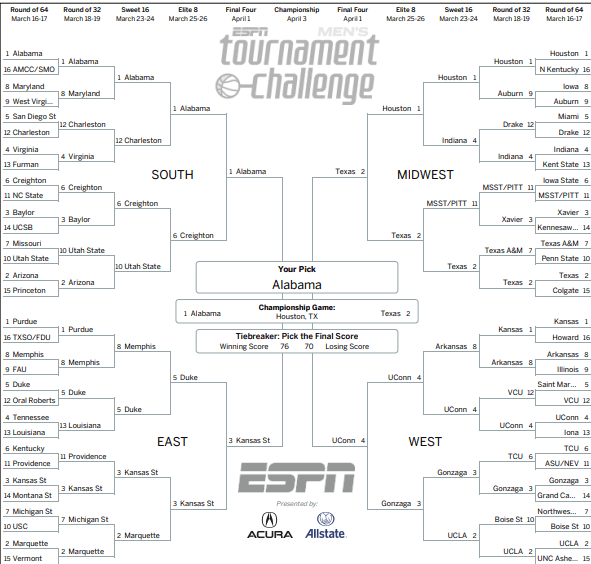
With Selection Sunday now behind us, we now have the official bracket of the 68 teams hoping to cut down the nets in Houston. While college basketball is already enjoyable as is, the eyes of the nation will be on the tournament for the next few weeks. Outside of the obvious stress of hoping for your team’s championship run, just about everyone is going to be building a bracket to list their predictions.

While your bracket (and countless others, including this one) is probably going to go up in smoke by the time the first weekend is up, it’s still fun to figure out how to go about building it up. Do you go full analytics and immerse yourself into the world of KenPom ratings, adjusted efficiencies, and upset tendencies? Maybe going off of name recognition and prior tournament success is more of your speed? Or just embrace the chaos and go off of which mascot would win in a fight? There’s no real wrong answer to how to build a bracket; that’s just how unpredictable the tournament is.

However, there’s nothing wrong with doing a little bit of research to help you make the best decision possible. It helped me out in 2018, when I predicted the Villanova-Michigan final and guessed correctly on Loyola-Chicago making a deep run in the tournament. Doing well in your bracket doesn’t have to be complicated; you just need to know who are the right horses to bet on and who might bust your bracket. Whether that means going based off of the chalk or hoping Cinderella wreaks havoc in one corner of the bracket, these predictions should hopefully shed some light on the bigger decisions.

So who’s going to Houston? Let’s find out.

South Region

Did Alabama choose who was seeded with them? Arizona needed a healthy dose of luck to beat a banged-up UCLA squad in the PAC-12 championship, and they have a recent history of struggling in the tournament. I’d typically like Scott Drew’s Baylor team, but they’re coming in as losers of four of their last six games. Tony Bennett’s always fielded some great defenses at Virginia, but one bad offensive night leads to…well, this. It’s rare to safely say a team’s going to at least the Elite Eight, but Alabama feels like an exception.

If you’re looking for one of the middle seeds to do some damage and make a surprise run to the Final Four, look no further than Creighton. KenPom rankings aren’t a direct indicator of a team’s tournament success, but they’ve typically been reliable in determining who has the potential to go far. Sitting at number 13 in the rankings, Creighton has the analytics on their side. Outside of a mid-season slump while star center Ryan Kalkbrenner was hurt, they’ve been one of the best and most consistent teams all season long. I’m confident they can beat Baylor in the Round of 32 or Arizona in the Sweet 16…assuming the higher seed make it that far.

Missouri vs Utah State has all the makings of the best matchup in the first round. Both have offensive figures in the high-70s, so the points shouldn’t be too hard to come by. Missouri may have the best player in that matchup in Kobe Brown, but Utah State has the more reliable defense out of the two and has the 18th ranking in KenPom to bolster their resume. This is a game that could go either way, but I’m confident either one has what it takes to beat Arizona in the Round of 32.

If you’re looking for a first-round upset, the reliable 12-5 bid is a great option here. Charleston is one of the mid-major teams to watch in the tournament this year, highlighted by being one of the deepest and fastest teams in the field. They push the pace on both sides of the court, which is a direct contrast to their first two opponents in San Diego State and Virginia. Coach Pat Kelsey will need to develop a gameplan that allows Charleston to dictate the pace and stay efficient; if the team can manage that, they have a great chance to hit the Sweet 16.

In the end, however, this feels like Alabama’s region to lose. Nate Oats has built a monster in Tuscaloosa, guiding it to pure domination over a loaded SEC. It helps that they have the best player in the region, if not the entire field, in Brandon Miller, a projected top-5 pick in this year’s NBA Draft. Yes, the Crimson Tide are dealing with a massive wave of controversy, and the ensuing off-court drama could threaten to derail a promising season. That said, if it hasn’t happened yet, when will it? Someone can play that game, but it won’t be me.

Region Winner: Alabama

Upset Watch: Charleston vs San Diego State/Virginia, Missouri/Utah State vs Arizona

Bracket Buster: Creighton

East Region

Unlike the other regions, there isn’t a single dominant team in the East, which poses some serious intrigue about who’s going to make it out. Don’t assume that team is top-seed Purdue, though. Sure, having the Player of the Year in Zach Edey is nice, but I fear Purdue is using him as a crutch. The rest of team has experienced some inconsistency as of late, showcased in the Big Ten tournament when the Boilermakers let the likes of Rutgers, Ohio State, and Penn State stick around for far too long. It doesn’t help that the committee gave them arguably the toughest 8-9 matchup of all. Edey’s size might help Purdue gut out a win over a tenacious FAU team, but they’re in deep trouble if they draw Memphis in the Round of 32. Kendric Davis is the kind of player who can take over a game, and he has a capable running mate in Deandre Williams to help him pile on the points. Again, Edey will make it difficult to win the rebounding battle, but Memphis can pull off an 8-1 upset if the shots fall regularly; such an upset has happened at least once in the past two tournaments, so there’s precedent to lean on if you’re feeling gutsy.

Realistically, I can see three teams with convincing arguments to come out of this region: second-seeded Marquette, third-seeded Kansas State, and fifth-seeded Duke. Marquette’s fast-paced offense has them averaging almost 80 points per game, and having one of the best point guards in the country in Tyler Kolek certainly helps matters. Kansas State, picked to finish dead last in the preseason Big 12 polls, has roared to the third seed behind first-year coach Jerome Tang and the dynamic duo of Markquis Nowell and Keyontae Johnson. The Wildcats will need to maintain possession to go far, but they have the defense and efficiency rates to propel them. Whereas Marquette and Kansas State win off of efficiency and tempo, Duke wins on sheer size. With two seven-footers in Kyle Filipowski and Dereck Lively II, good luck trying to get anything going inside on the Blue Devils. These contrasts in styles should create some fun matchups late in the tournament, and whoever makes it out will have to earn it.

It breaks my heart to see Oral Roberts paired with Duke. In any other region, the Golden Eagles would have been a favorite to push for their second Sweet 16 spot in three years behind Max Abmas and Connor Vanover. Alas, they get the toughest five seed of the year, so I’m looking elsewhere for first-round upsets. Eleventh-seeded Providence and thirteenth-seeded Louisiana are both good bets to shake things up. Providence taking on Kentucky is arguably the juiciest matchup in the first round, with the Friars being led by Kentucky transfer Bryce Hopkins. The inconsistencies of the Wildcats have been well-documented this season. and it’s too hard to ignore those when going against a team like Providence that will come with major fire in their bellies. Looking at Louisiana, Jordan Brown is a double-double threat backed up by some solid shooters. That will help against an overseeded Tennessee team who has plummeted in the eyes of college basketball fans and pundits alike. Tennessee’s concerns are identical to another vulnerable fourth seed in Virginia: the defense is great, but the offense is going to get this team bounced early, especially with Zakai Zeigler out with a torn ACL. Is it also a bad time to say Rick Barnes has only been to the Sweet 16 once in the past ten times he’s made the tournament?

Marquette and Kansas State is the best potential matchup in the Sweet 16, but I’m choosing the Wildcats to continue their dream run to the Elite 8. In the battle of first-year coaches between Kansas State’s Tang and Duke’s Jon Scheyer, Nowell’s playmaking becomes the X-factor that the Wildcats need to advance to the Final Four and knock out the Blue Devils in Madison Square Garden.

Region Winner: Kansas State

Upset Watch: Providence vs Kentucky, Louisiana vs Tennessee, Memphis vs Purdue

Bracket Buster: Memphis

Midwest Region

With the chaos that the other regions can easily fall into, the Midwest stands out as a beacon of sanity. The top two seeds feel like the clear-cut best teams in the region, and there’s a few other standouts ranked pretty highly here as well. This isn’t to say to bring out the chalk for this one; Houston’s Marcus Sasser won’t be at one hundred percent, and both Xavier and Indiana have dealt with bouts of inconsistency this season. There’s not as much upset potential here as the other regions, but it still exists if you know where to look.

Houston and Texas feel like the favorites to set up a home-state advantage in the Final Four. Despite Sasser’s injury, Houston has a lot going for itself to justify a Final Four berth. Jamal Shead is the focal point of an amazing defense, while Jacare Walker and J’Wan Roberts have emerged as key pieces. If Sasser comes back and finds his form early, the Cougars will be difficult to stop. Meanwhile, while Texas has had a rough go in the tournament in years past, this iteration of the Longhorns feels different. Coming off a Big 12 title that saw them smoke Kansas in the championship game, Texas has all the makings of a championship contender. A three-headed monster in Marcus Carr, Sir Jabari Rice, and Timmy Allen should ensure that the Longhorns have enough firepower to stay competitive.

Keep an eye on the First Four game between Mississippi State and Pittsburgh. Mississippi State plays some of the stingiest defense in the field, while Jeff Capel has pushed Pittsburgh from last-place prediction to a bubble team. Either one could give an inconsistent Iowa State team fits, but I’m more concerned about Xavier. Sure, the Musketeers earned the three seed, but they’ve been much more difficult to trust since Zach Freemantle went down with injury. Sure, the offense is still in good hands with Colby Jones and Souley Boum, but they’re a cold streak from either one or a hot streak from the opposing offense from danger. Even more difficult to trust if fifth-seeded Miami, where an injury to Norchard Omier compounds their current problems. Isaiah Wong can still take over a game if need be, but defense is going to be a massive issue. Even worse is that they pair up with Drake, a defensive-first team that can fire the ball from long range rather well. Put both of those teams on upset alert, with at least one not making it past the first weekend.

While Indiana could make a good run behind Trayce Jackson-Davis or the 7-10 matchup between Texas A&M and Penn State producing a bracket buster, Houston and Texas both feel pretty safe. While Houston should play pretty well, give me Texas in a nail-biter to fly back into the Lone Star State as the Midwest’s Final Four representative.

Region Winner: Texas

Upset Alert: Mississippi State/Pittsburgh over Xavier, Drake over Miami

Bracket Buster: Mississippi State/Pittsburgh

West Region

You know how the World Cup always has a Group of Death featuring plenty of stacked teams? Say hello to the college basketball equivalent. Outside of the defending champion Kansas Jayhawks, the West is loaded with two additional powerhouses in UCLA and Gonzaga, plenty of middle seeds hoping to secure a run, and a fair share of upset candidates. Make no mistake, this is the region that is going to ultimately decide how well your bracket goes.

Let’s start with the top three teams in Kansas, UCLA, and Gonzaga. Bill Self will be back behind the bench for the repeat, and the Jayhawks will ride a strong trio of Jalen Wilson, Gradey Dick, and Dajuan Harris. While the Jayhawks aren’t necessarily elite in any particular category, they make up for it by being one of the most well-balanced teams in the country. A team that plays with equally fast pace could give them fits, but no one will hold it against you if you choose Kansas to run it back. UCLA can safely rely on Jaime Jaquez and its incredible defense to carry them through, but there are question marks. Jaylen Clark is out for the tournament, center Adem Bona might not be one hundred percent. and UCLA’s offense can let them down just as easily as the defense can lift them up. The first-round matchup against UNC Asheville could be worth monitoring to see how the Bruins cope with such a loss. Gonzaga is the virtual opposite of UCLA, coming it with a fantastic offense and plenty of playoff experience to try and end Drew Timme’s tenure with a championship victory. That said, defense has been a sticking point for the Bulldogs and they haven’t performed particularly well against elite teams. Gonzaga will either make a spirited run deep in the tournament, or get crushed before the first weekend is done.

Outside of those three, there’s still a lot of intrigue that needs to be discussed. Fourth-seeded UConn is a stronger version of Creighton: a serious championship contender that no one talks about due to a rough stretch in the middle of the season. With Adama Sanogo down low and Jordan Hawkins leading a balanced offense, they have serious potential to cut down the nets. Unfortunately for the Huskies, they got paired with some dangerous low seeds. Sixth-seeded TCU may not be a dangerous offensive team, but Mike Miles can carry a game to go with some impressive defense. Expect them to beat their bubble team handily and give Gonzaga all they can handle. Eighth-seeded Arkansas took a hit when Trevon Brazile went down, but Nick Smith and Anthony Black have stepped up in his absence, and Eric Musselman is one of the best coaches in the nation. Don’t be surprised if they end Kansas’s repeat bid in the Round of 32. Even 12th seeded VCU’s stout defense and a Rick Pitino-coached Iona are real first-round upset threats.

In this unpredictable region, it’s fair to go with an unpredictable winner. Despite having the fortune of having higher-seeded opponents bow out, UConn will have to earn every victory. Iona and VCU are prime Cinderella material, Arkansas has great talent and coaching, and UCLA or Gonzaga would make for worthy Elite Eight opponents. In the end, UConn has the right amount of talent, versatility, and analytical support I’m looking for.

Region Winner: UConn

Upset Alert: VCU over Saint Mary’s, Arkansas over Kansas

Bracket Buster: Arkansas

Final Four

In this Final Four, we have Alabama squaring off against Kansas State, while Texas gets home-field advantage over UConn. Alabama should put an end to Kansas State’s storybook season behind a big game from Brandon Miller, but the Wildcats should do enough to stay in it until the end. Even more unpredictable is Texas vs UConn: Texas has the better talent between the two, but UConn would be the favorite in terms of depth and analytics. The home crowd does just enough to push Texas to the championship in a nail-biter. Overtime, perhaps?

Winners: Alabama, Texas

National Champion: Alabama

With the controversy surrounding the Crimson Tide and the home crowd supporting the Longhorns, Nate Oats cutting down the nets could be met with a barrage of jeers and boos. However, it just makes too much sense in the end. Brandon Miller is elite, but the Crimson Tide also have players like Jahvon Quinerly, Charles Bediako, and Noah Clowney that are essential towards winning a championship. They were the best team in the nation, won arguably the best conference in the nation, and have the best player in the nation at their disposal. Why does this championship game sound like it belongs in football?

Ranking the NFL Coaching Hires

Photo Credit: Sports Illustrated

The 2023 NFL coaching cycle, barring any surprises, has come to an end.

While Black Monday had its fair share of bloodletting, the head coaching scene has barely changed too much. After 10 teams changed head coaches last year, only five made the change this time around, with three moving on before the regular season ended. The bloodbath this year seemed to focus more on coordinators, headlined by half of the league changing offensive coordinators alone.

This could make for an interesting 2024 coaching cycle, but we still have five coaching hires that need to be analyzed. They come from all across the coaching spectrum, ranging from hot prospects to a recent fire looking for a second chance to a legend stepping back on the sideline from the broadcast booth. While there are valid reasons to justify each hire, there are questions that need to be answered, Was the hire each team made the best possible fit at this point in time? What plan does the team have in mind? Was a better option available? All these questions will be answered in these rankings.

So did each team hire the right man for the job, or have they made a potentially costly mistake? Let’s find out.

5. Jonathan Gannon, Arizona Cardinals

In a vacuum, hiring Gannon made a ton of sense for the Cardinals. The Eagles defense was one of the most dominant units in the NFL this season, headlined by a league-leading 70 sacks and one of the best cornerback duos in Darius Slay and James Bradberry. He’s transformed the Eagles into a playmaking unit on defense, which was instrumental in getting the ball back to a high-octane offense (more on that side of the ball in a minute). His experience with defensive backs is fantastic for a team that has no bankable stars in the secondary outside of Budda Baker, and the sack number is music to the ears of a defense that will have a new-look pass rush, likely headlined by a top prospect in either Alabama edge rusher Will Anderson Jr. or Georgia defensive tackle Jalen Carter.

So why is Gannon in last? For starters, the Super Bowl left a lot to be desired for Gannon’s defense, which failed to record a single defensive stop on Kansas City in the second half. If the Cardinals were looking to fix the defense, someone like Brian Flores (the new Minnesota Vikings defensive coordinator) or Lou Anarumo (Cincinnati Bengals defensive coordinator) would have made an equal amount of sense. Also, the offense might be worse than advertised for the Cardinals next season. Kyler Murray is expected to miss a good chunk of next season, DeAndre Hopkins’ PED suspension canceled out his no-trade clause and gives a rebuilding Arizona team a free chance to trade his contract, and recent acquisitions like Hollywood Brown and Rondale Moore are better receivers in Madden than in real life. This looks like a team that new GM Monti Ossenfort is already looking to hit the reset button on; is Gannon the best fit for this transition period?

I wanted to like this hire, but the Super Bowl performance has me thinking Gannon got taken on a year too soon. How the team looks in his first year could be crucial.

4. Frank Reich, Carolina Panthers

This feels like the Panthers copying the Jaguars’ strategy last season: hire a retread to serve as the antithesis to a college coach that failed to make the transition. To be fair, it worked for Doug Pederson and the Jaguars, who went on a tear late in the season that culminated in a massive comeback win over the Los Angeles Chargers (a team that should have also made a new coaching hire, but that’s for another time.) Reich finds himself in a similar position, leading a team in a weak division after his previous stint with Indianapolis ended on harsh terms. Reich should be instrumental in working with a young quarterback, whether the Panthers elect to take a flier on Matt Corral or choose to draft one in April. Despite not having a franchise quarterback in Indy after Andrew Luck’s shocking retirement, Reich still managed to put together a respectable 40-33-1 record in five years.

The issue I have most with Reich is is that he finds himself in a similar situation to last year, where he had the Colts in position to take advantage of a weak division, only to falter and lose his job before the season was done. What makes new owner David Tepper think this would be any different? Would hiring someone like Shane Steichen, who has experience working with young quarterbacks and drum up more excitement, have made more sense? Rather, what was wrong with Steve Wilks? The Carolina interim coach and new San Francisco 49ers defensive coordinator went 6-6 in the role and kept the Panthers in the playoff race, despite the team trading Christian McCaffrey to the 49ers at the trade deadline. Wilks clearly had the support of the players, so would it have made more sense to promote Wilks and bring in a brilliant offensive coordinator (Eric Bieniemy, perhaps)?

Reich shouldn’t deal with nearly as much chaos as he did in Indianapolis, which is fine. I just don’t know if this was the right hire yet.

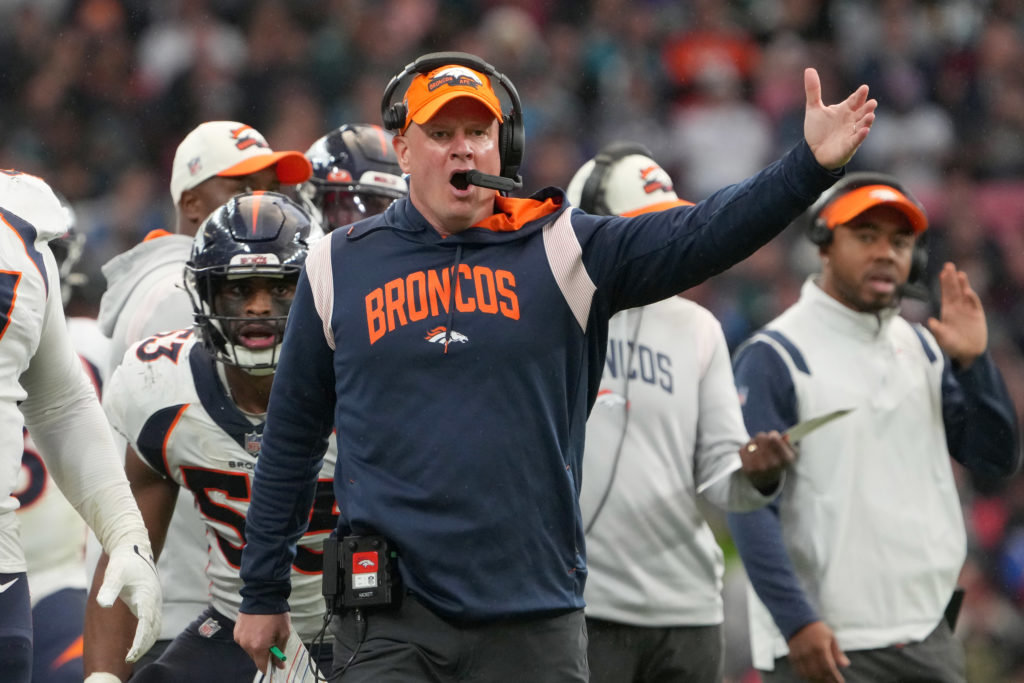
3. Sean Payton, Denver Broncos

There’s no denying Payton’s credentials at this point. While the Broncos courted the likes of Jim Harbaugh and DeMeco Ryans, it’s arguable that they made the right decision to bring Payton along. What Payton specializes in is creative offense and a winning culture, both of which were severely lacking in Denver last season. A healthy offense should work wonders for Denver, but Payton’s most important undertaking will be the reclamation of Russell Wilson. Wilson looked lost at times last season, so Payton will need to be sure he and his franchise quarterback are on the same page. Losing Ejiro Evero to Carolina hurts, and Payton’s preferred choice for defensive coordinator in Vic Fangio already took a job in Miami prior to the hire, but it’s currently expected that the Broncos will bring in Rex Ryan to fill the position.

The thing with Payton is that he’s appropriate for the middle of the pack for a simple reason: he is the ultimate boom-or-bust proposition. Just a year after the Broncos landed Wilson in a massive deal, they put together another big package to acquire Payton from New Orleans. It’s hard to not come away from this thinking the Broncos are mortgaging their entire future on the idea that Payton can fix Wilson and bring the Broncos back to relevancy in a competitive AFC West. Kansas City isn’t going anywhere until either Patrick Mahomes or Andy Reid decline, the Chargers still have Justin Herbert and an impressive array of talent, and who knows what the Raiders will look like when they get their new quarterback? If the Payton-Wilson era fizzles out, the Broncos may have chained themselves to the divisional basement for a long time.

If Payton is exactly who the Broncos hope they are getting, that will go a long way toward re-establishing themselves as a threat. If not, the new era in Denver may be one Broncos fans hope to forget.

2. Shane Steichen, Indianapolis Colts

This hire almost belongs in first simply for the fact that Jim Irsay went against bringing on interim coach Jeff Saturday, despite him looking overmatched most games. Instead, they make arguably the most sensible hire for themselves and land one of the hottest coaching prospects in Steichen. Steichen’s track record goes back to the Chargers, where he played an instrumental role in Justin Herbert winning Offensive Rookie of the Year. However, his stock has only increased since going to the Eagles, where he took Jalen Hurts from a project at quarterback to a legitimate MVP candidate this season. In Indianapolis, he’ll get to work with a top running back in Jonathan Taylor, as well as a decent receiving corps with young targets like Michael Pittman Jr., Alec Pierce, and Jelani Woods.

The most important reason why the Steichen hire was huge for the Colts was their position at quarterback. After years of instability at the game’s most important position, the Colts have the chance to make a big move to land a top quarterback prospect in this year’s draft. Whether the Colts trade up or not, they will likely be starting fresh with either Alabama’s Bryce Young, Ohio State’s C.J. Stroud, or even Kentucky’s Will Levis. While all three prospects have their share of questions, placing them under Steichen’s stewardship gives either one a capable guiding hand to start their careers with.

For a team that needs a reset in many aspects, Steichen makes a lot of sense for the Colts. If they pair him with the right quarterback come Draft time, they have the potential to make some serious noise in the near future.

1. DeMeco Ryans, Houston Texans

There aren’t too many good things you can say about Texans management right now. They have looked like a haven for chaos and instability, earning some well-deserved heat for bringing in David Culley and Lovie Smith only to cut them like bait after just one season each. This alone made me think that a candidate like Ryans was out of reach, despite the close ties he has with the organization. Instead, the former player signed a six-year deal with the team, hopefully giving him the time he needs to implement his vision. It worked with his former employers in San Francisco, so the strategy itself is certainly worth a try.

While the argument could be made that the Texans should have complemented a rookie quarterback with an offensive-minded coach, it’s hard to think Houston made the wrong decision here. While Ryans started with Nick Bosa and Fred Warner as established stars, he was able to get the best out of many players. Talanoa Hufanga went from unheralded safety to a Pro Bowler this season under Ryans’ watch. Azeez Al-Shaair will get a huge payday in free agency thanks to Ryans, possibly even reuniting with him in Houston. Charvarius Ward outperformed more ballyhooed free agent cornerbacks such as J.C. Jackson this season. All of that, in at least some capacity, was due to the work of Ryans, who should work wonders with a Houston team that has potential, but needs someone to help them take the next step.

Ryans was a near-perfect hire for Houston in a cycle where they had arguably the lowest expectations. That alone is worthy of the top spot.

Nerd Rage: A War-Torn Broncos Country

Image Credit: Kirby Lee/USA TODAY Sports

Just two weeks away from Black Monday, the Denver Broncos decided to no longer delay the inevitable.

Just a day after being shelled 51-14 by an injured Los Angeles Rams team, the Broncos decided they had seen enough and fired first-year coach Nathaniel Hackett. It’s the fifth time in NFL history (and the first time in back-to-back seasons) that a head coach has failed to make it out of their first season with the team. For context, the recent names on that list include Urban Meyer’s reign of chaos with the Jaguars and Bobby Petrino bailing out of a terrible year with the Falcons for a return to college football. This time, there was no scandal or cushy college job that forced a coach out, just prolonged and infuriating ineptitude.

The optimism that had so clearly defined the Broncos’ offseason has long but given way to despair and anger. A team once viewed as a playoff contender is now staring down the barrel of potential long-term futility. But what happened to cause this?

All we have to do here is rewind back to a simpler time: 2015. The Broncos were riding high, with Gary Kubiak and Wade Phillips masterminding a near-perfect squad. Sure, Peyton Manning was well past his prime and his understudy in Brock Osweiler was inconsistent, but the offense had enough skill players like the late Demaryius Thomas, Emmanuel Sanders, C.J. Anderson, and Ronnie Hillman to compensate. It was a good complement to the main source of Denver’s success: the defense. There’s a reason why the 2015 Broncos defense is hailed as one of the greatest the sport has ever seen. It’s pass rush was near unstoppable, led by an All-Pro in Von Miller and a quality veteran in DeMarcus Ware. Young players like Shaquille Barrett, Derek Wolfe, Malik Jackson, and Shane Ray would all get their pound of flesh as well. The linebacker duo of Brandon Marshall and Danny Trevathan were quality options, while the secondary was loaded with a mix of veterans (Aqib Talib, T.J. Ward, Darian Stewart) and youngsters (Chris Harris Jr., Bradley Roby). A 12-4 season that culminated with the ultimate prize: a Super Bowl humiliation of the 15-1 Carolina Panthers. MVP Cam Newton was powerless to stop the onslaught, and the Broncos became champions.

Since then, however, the Broncos have had to deal with instability. Peyton Manning rode off from the mountaintop into the Colorado sunset, while Brock Osweiler elected to go to greener pastures with the Texans. After a disappointing 2016 where they failed to make the playoffs, Kubiak and Phillips would also depart the organization. With the architects gone, the Broncos had to make do with what they had, but nothing seemed to work. Young draft picks like Trevor Siemian and Paxton Lynch failed to become franchise quarterbacks, while established options like Case Keenum and Teddy Bridgewater were little more than stopgaps. Coaches like Vance Joseph and Vic Fangio failed to replicate the success of Kubiak and Phillips. While the Broncos had talent at the time, fans always had to wonder how far they could go if they only had a franchise quarterback and coach.

Fast forward to this past offseason, and the Broncos began to ask the same questions. Fangio was gone, there was no QB in the pipeline, and rumors of a sale were starting to swirl. With talks of a nice quarterback trade market forming, this was the time to strike. Their first target would be none other than the biggest fish of all: Aaron Rodgers. The Packers had already drafted his heir apparent in Jordan Love, and it felt like the Packers were ready for a transition. The Broncos quickly pounced by signing Courtland Sutton and Tim Patrick to extensions, investing serious money in pass-catchers. They even hired Packers offensive coordinator Hackett, whom Rodgers had spoken highly of, to be their new head coach. Everything was lining up perfectly…until the Packers thought twice and locked Rodgers into an extension.

However, shortly after Broncos fans’ hopes of seeing Rodgers in the orange and blue were dashed, a new potential savior became available: Russell Wilson. Wilson had reportedly become frustrated with Seattle and Pete Carroll’s playcalling, and he decided it was time for a change. Denver fans were pleased and bragged about how they had fleeced Seattle, but that never seemed like the right take. The Broncos had to give up a fair share of pieces to make the deal happen, such as a developmental quarterback in Drew Lock, emerging pass-catcher Noah Fant, and two years’ worth of first and second-round picks. The massive extension the Broncos signed Wilson to before a game was even played meant they had even less margin for error. This was no longer a trade that would decide the Broncos’ short-term fortunes, but one that would directly change the franchise for the foreseeable future. The more accurate catchphrase would have been “Broncos Country, let’s ride or die.”

It took about one game for us to find the answers to our questions. It was the perfect scenario: Wilson returning to his old stomping grounds in Seattle. Pete Carroll had apparently chosen journeyman backup Geno Smith as his quarterback over Lock, and all of Denver was licking their chops to see the fruits of arguably the biggest trade in franchise history. With under a minute left and with all three timeouts still left, Hackett had a choice on 4th-and-5: does he trust his new nine-figure quarterback to make a throw to keep the drive alive, or have Brandon McManus try to kick a 64-yard field goal to win? As the clock ticked (much to the chagrin of Peyton Manning), Hackett oddly decided to go for the latter. He helplessly watched his kicker miss, and only used his remaining timeouts to delay the inevitable soul-crushing loss.

It was an inauspicious start…and it would only proceed to get worse. It felt like the Broncos were completely unprepared most games. Their red-zone playcalling was predictable and easily diagnosed by NFL defenses. The offensive line took a collective step back and allowed Wilson to get hit multiple times a game. Their top two running backs were either injured early or released due to ineptitude. Receivers either got injured or never developed as expected. Even worse, Wilson has shown serious signs of regression. Perhaps it’s learning a new offense, but that was never the problem for the likes of Brady or Manning. His twelve touchdown passes have him at a career low, while also on pace for a career-high in sacks. All of this has combined for the Broncos to score a paltry 15.5 points per game, the lowest mark in the league.

If the on-field problems weren’t enough of an issue, the Broncos on the sidelines were even worse. It started with a somewhat passive-aggressive stare from backup running back Melvin Gordon III at Wilson during a Thursday night loss to the Indianapolis Colts. It eventually devolved into defensive lineman Mike Purcell openly yelling at Wilson before the offense took the field, sparking concerns of a divided locker room. Those concerns would rear their ugly head during the Christmas blowout to the Rams, when backup quarterback Brett Rypien would get into a shoving match with offensive lineman Dalton Risner and the rest of the O-line after a sack. When things devolve this bad within your organization, that’s the sign that Wilson and Hackett have shown a tremendous lack of leadership and, consequently, have lost the locker room amidst the team’s season-long struggles.

While Hackett may sound like a convenient fall guy due to Wilson’s immovable contract, he’s been arguably the biggest piece of the Broncos’ shortcomings. The Hackett era will be defined by many things, but none of them will be flattering. The failure to devise an effective offensive scheme, the inability to get the best out of his personnel, and turning a blind eye to the obviously decaying team culture? The blame for all of that has to fall at Hackett’s feet to some extent.

The oddest part about all of this is the interim coach replacing Hackett is an odd choice. Instead of making the logical decision (in my opinion) and promoting defensive coordinator Ejiro Evero to see what he’s capable of as a head coach, the Broncos elected to go with *checks notes* Jerry Rosburg. Let me get this straight: the Broncos came to a conscious decision that a 66-year-old who came out of a four-year retirement midseason to help Hackett manage a game clock is suddenly an answer? I get that the Broncos have nothing to play for, but when a tank only helps Seattle increase their pick, why not at least see what you have in Evero before he potentially takes a job elsewhere?

Oh yeah, that reminds me. Seattle came away with Charles Cross and Boye Mafe with Denver’s picks in 2022, both of whom have emerged as solid players with the chance to become major parts of the Seahawks’ future. Now, there’s a good chance the 2023 first-round pick is a top-three selection. That means the pick could be used to draft a new franchise quarterback (likely whoever isn’t selected at first overall between Alabama’s Bryce Young and Ohio State’s C.J. Stroud) or potentially traded to a team much more desperate for one in order to acquire more pieces. If Seattle becomes a consistent contender within the next few years, the Russell Wilson trade will be attributed as being a direct catalyst of such success.

I won’t go as far as saying the Wilson trade and extension are the worst in NFL history, if only because what the Seahawks do with the remaining picks is uncertain and there’s a chance Wilson has struggled to get acclimated due to extenuating circumstances. However, what if the problems bleed into next year and beyond? What if Wilson’s off year is a sign of decline? What if the Broncos make another Hackett-sized whiff at the head coaching position? What if players want to avoid going to Denver for fear of locker room toxicity? At that point, we would have to discuss this trade and extension to be arguably the worst decision in NFL history, right up there with the Herschel Walker and Ricky Williams trades. If that ends up being the case, Hackett will be just the first casualty of Denver’s colossal mistake.

It felt like only months ago we felt the Wilson-Hackett pairing was going to take Denver to another Super Bowl. Now, they may have locked themselves into a painful stretch of mediocrity…and that may be the ceiling.

Five Realistic NHL Trade Deadline Blockbuster Scenarios

Image Credit: NHL.com

First of all, Merry Christmas and Happy Holidays to everyone!

The NHL season is nearing the halfway point and, as we approach the new year, the landscape has become quite clear. Some teams are emerging as clear contenders, others are firmly entrenching themselves in the Connor Bedard sweepstakes, and the rest stand on shaky ground where one slip-up could end their season in the spring. With every team’s strengths and weaknesses now apparent, the Trade Deadline is already shaping up to be one of the best in recent memory.

Obvious non-competitors like Arizona, Chicago, and San Jose boast some of this year’s premium trade assets that can fetch them a decent price on the market. Vancouver and St. Louis have experienced massive bouts of inconsistency, leading both to the brink of a blowup. Meanwhile, while competitors like Boston, New Jersey, and Vegas have all had moments of brilliance, there are still holes that can be patched up in their lineups. This is exactly the point of the Deadline: sellers put up a quality player and initiate bidding wars between the buyers, whom consist of potential contenders hoping to land a final piece and fringe teams looking for a sparkplug to kickstart a journey into the playoffs and beyond.

Here, I want to discuss five potential scenarios that could occur at the deadline involving some of the biggest names on the market. While future ramifications could make these ideas a bit murky, the players going to new teams have the skillset that contenders need right now. This isn’t to say that all of these players are guaranteed to be moved at the Deadline either, given the high prices teams will have to pay to acquire them; consider these more as sales pitches to specific teams to convince them that a certain player is what they need to get over the hill.

So how does this Deadline play out in Nerd World? Let’s find out.

Scenario #1: A Legend Gets Closer to Home

New York Islanders acquire: F Patrick Kane (25% salary retained), 2023 5th Round Pick

Chicago Blackhawks acquire: F Oliver Wahlstrom, 2023 1st Round Pick, 2024 3rd Round Pick

It was clear from the offseason the Blackhawks had that they weren’t interested in being competitive. Trading Alex DeBrincat to Ottawa, letting Dominik Kubalik and Dylan Strome walk in free agency, and signing mid-tier free agents like Max Domi and Andreas Athanasiou to use as trade assets later made that philosophy clear. Once that happened, the focus shifted on franchise legends Patrick Kane and Jonathan Toews, both of whom have expiring contracts and no longer fit with the Blackhawks’ timeline. While neither of them have had memorable seasons thus far, this can largely be equated to the fact that there is practically no one around them for support. While the argument could be made for Toews’s decline, Kane’s history of production still warrants a high price for his services. Pairing him with a true top center like Mathew Barzal can allow him to do more than he’s been able to in Chicago, potentially setting him up for a strong final quarter of the year. Also, while he has a no-move clause attached to his contract, he’d likely be willing to waive it for a chance to return at least close to home (Kane is a Buffalo native) and compete in the playoffs once again.

While Kane would fetch a high price, the Islanders would still come in relatively cautious. The idea of Kane being an expensive rental is a valid cause for concern, and the Islanders don’t have a farm system that can easily replace anything they might lose. Still, a team as historically offense-starved as the Isles should know that they need to change something, and Kane represents a piece that can turn them from inconsistent fringe team to a tough out in the playoffs. Kane would replace Wahlstrom in the lineup, while Chicago would have a solid young NHL player to build a new core around. Adding an extra first would give the Blackhawks potentially three first-round picks in a stacked 2023 draft, giving them the opportunity to kickstart a rebuild with elite talent. The extra third is a sweetener that can have a condition attached to it, but the Hawks retaining salary and adding an extra pick would likely remove any ideas of protection.

The Islanders have needed an elite offensive option for a long time, while the Blackhawks are firmly in a transition period.

Scenario #2: The Hockey Trade

Minnesota Wild acquire: C Bo Horvat, Conditional 2024 4th Round Pick

Vancouver Canucks acquire: D Matt Dumba, F Caedan Bankier, 2023 1st Round Pick, Conditional 2024 2nd Round Pick

The Canucks seem ready to blow it all up. Extension talks with Horvat seem to have been unsuccessful. Brock Boeser has struggled to mesh with Bruce Boudreau’s system and has been allowed to seek a trade. Thatcher Demko pre-injury was seen as a potential buy-low opportunity. Now, rumors have even begun to circulate that Quinn Hughes can be had if a team is willing to pay the massive price needed. While the Canucks have plenty of pieces that can make a rebuild easier, they also need to build a team with capable players to stay competitive. They have the opportunity to accomplish both goals with this trade to Minnesota. The Wild have needed a top-flight center for a little while, and those flaws have been exposed in their two most recent playoff series with Vegas and St. Louis. The idea of gaining Horvat on a career year should be appealing to them, and it is likely he would be on a line with Kirill Kaprizov and Mats Zuccarello to form a terrifying top line.

Helping Minnesota’s case is the fact that they can offer Vancouver something they desperately need. Dumba has been a name floating around the trade mill for a little while, and the emergence of a defenseman on the right side in Calen Addison may finally give Minnesota the excuse they need to ship him out. While Dumba does have a 10-team no-trade list, I would doubt the Regina native has any team from Western Canada on that list, especially a team like Vancouver who would pair him with Hughes and give him top-pairing minutes out of the box if the latter stays. Bankier has been impressive enough to be on a stacked Team Canada for the upcoming World Junior Championships. Being able to play center should make him even more appealing for the Canucks to add him to the trade. The 2023 1st is a given for a trade of this magnitude, but the conditional picks added would only be if Horvat or Dumba re-sign with their new teams. Otherwise, the picks will not be added in order to keep the value even.

Vancouver and Minnesota certainly have something the other side wants, and it’s become apparent neither player is returning next season. Not only would this give both teams something for their impending free agent, but put them both in a position where they can be successful.

Scenario #3: Hello, Old Friend

New Jersey Devils acquire: F Timo Meier (25% salary retained)

San Jose Sharks acquire: D Damon Severson, F Alexander Holtz, 2023 1st Round Pick

While the Sharks would be more eager to get Erik Karlsson’s contract off of their books, they are more likely to get what they want out of trading Meier. After a slow start to the year, Meier has broken out offensively and looks sets to complete his third 30-goal campaign. While the Sharks would prefer to keep him, he’s also due a $10 million qualifying offer next year that, if accepted, would push him into unrestricted free agency. The risk of losing arguably their best player for nothing is a risk that the Sharks should be unwilling to take. While a lot of teams will want to acquire Meier, the Devils have arguably the best case for him. He’s the piece that the Devils need for them to take the next step up and be a credible threat, while also being young enough (26 years old) to fit with the timeline New Jersey has. Even better for Meier is that he would likely be on a line with Nico Hischier, his real-life friend and linemate on Team Switzerland. While we know what Meier is capable of at this juncture, Hischier is still an ascending talent. Adding Meier can only make him better as a player, and the 1-2 punch of Hischier and Jack Hughes has the potential to become the best in the league at the center position.

While New Jersey would have to make the financials work between a Meier extension and those of the likes of Jesper Bratt and Fabian Zetterlund, they do have some expiring contracts that can be dangled to make the money work. Severson would be a logical choice, as the Devils have emerging young options like Luke Hughes and Simon Nemec who can slide in on the right side. While the Sharks would have an option for an NHL player that can fit in their lineup, the real prize for them here is Holtz. Holtz was expected to cement a top-six role for the Devils this season, but the success the team has experienced this season and the emergence of guys like Zetterlund have clouded his future with the team a bit. Grabbing Holtz would mean the Sharks can pair him with a friend and former teammate as well in William Eklund. Having two top prospects who know what the other is capable of can assist their development dramatically, and I could see both of them being on a top-six line with either Tomas Hertl or Logan Couture. Again, a first-round pick would be necessary, especially if the Sharks are retaining salary.

One player reunites with a friend to push for a Stanley Cup, the other reunites to help push a team back to relevance. This is as realistic and logical a trade option as it gets for the Sharks to move a top talent.

Scenario #4: The Shoe Finally Drops

Edmonton Oilers acquire: D Jakob Chychrun

Arizona Coyotes acquire: F Jesse Puljujarvi, D Philip Broberg, 2023 1st Round Pick, 2024 2nd Round Pick, 2025 3rd Round Pick

Chychrun has been one of the big names on the trade block for a while, but a combination of injuries and struggling to do everything on a poor Coyotes team has kept conversations from truly getting off the ground. However, a strong return to form this year could change that. While the Kings and Senators have been linked to Chychrun in the past, both teams are struggling to keep pace in the playoff hunt right now. If Chychrun wants to go to a team that can compete and the Coyotes want to find a team willing to give them the assets they want, Edmonton would be a good place to look. The defense has struggled to gain much traction this year, forcing Connor McDavid and Leon Draisaitl to try and bail the Oilers out of trouble too many times. That needs to change if the Oilers want to build off of last season’s successful run to the Conference Finals, and Chychrun can be a piece that helps with that. Chychrun has already flashed great potential and still has some term left on his deal, making him an affordable “final piece” option.

The main question with Chychrun is the package that would come back, which the Coyotes described as similar to the deal last deadline that sent Hampus Lindholm to Boston. That means we’re looking at an NHL player, a quality prospect, and multiple high picks. While the Oilers have some options to choose from, Puljujarvi stands out as a player in desperate need of a change of scenery. He’s struggled to do much with either McDavid or Draisaitl, and his lack of confidence has started to show in recent times. Moving him to a place like Arizona where the pressure is drastically reduced and more opportunities to be a consistent top-six presence can only help him out. Broberg could also benefit to a move to the desert, as Arizona has had some success with defenseman like him. Shayne Gostisbehere and Juuso Valimaki have looked like solid reclamation projects, and the development of Janis Moser has been promising. Another gem in Broberg can help create an underrated unit for Arizona to work with. The picks are roughly the same as the Lindholm deal, except one of the second round picks is turned into a third for Arizona to compensate for a higher-ceiling player in Puljujarvi. Regardless, this deal gives the Coyotes a potential 21(!) picks in the first three rounds of the next three drafts. That’s a rebuild trending in the right direction.

Arizona is hoping to get some franchise talent in their system as they try and finally find a combination that works on the ice. Trading away Chychrun for this type of return would help in achieving their ultimate goal.

Scenario #5: Blowing Up the Blues

Toronto Maple Leafs acquire: C Ryan O’Reilly (50% salary retained)

New York Rangers acquire: F Vladimir Tarasenko (25% salary retained)

St. Louis Blues acquire: (from Toronto: F Calle Jarnkrok, F Nick Robertson, 2023 1st Round Pick) (from NYR: F Vitali Kravstov, D Matthew Robertson, 2023 1st Round Pick)

The Blues have had a nightmare season thus far, at least according to their own expectations. Not only have they been insanely inconsistent on the ice, but the team has started to see multiple cracks on the surface. While the dominating headline has been Jordan Binnington trying to become the next Ron Hextall, Ryan O’Reilly and Vladimir Tarasenko’s expiring contracts have also come to the hockey world’s attention. Tarasenko has been pushing for a trade out of St. Louis for the past couple of years, while O’Reilly’s up-and-down year has cast doubt over him staying. Toronto has been scouting the Ontario native O’Reilly lately, and a need has arisen for them. A center lineup of Auston Matthews, John Tavares, and O’Reilly would be among the league’s best, and adding the veteran would certainly help their penalty kill. Meanwhile, Tarasenko would give the Rangers a quality option on the right side, instantly elevating him to the top line with Chris Kreider and Mika Zibanejad, as well as working on the power play with Artemi Panarin. Both would be great options for teams hoping to go far in the postseason.

Meanwhile, what would the Blues gain from trading away two quality forwards. With Toronto needing to shed a little salary outside of the 50% salary retention, the Leafs will look to see who can go the other way. Alexander Kerfoot and Justin Holl would stand as choices, but my first decision would be Jarnkrok. He’s a versatile forward with term left, giving the Blues some options in their middle-six as they rebuild their lineup. Nick Robertson would also be helpful as the prospect going back. While adding him would feel like a punishment to the Leafs for the salary retention, it’s also hard to see where he fits in Toronto’s lineup, especially if they try and re-sign Michael Bunting. He’d get the chance for top-six minutes in a rebuilding St. Louis, likely being paired with Robert Thomas or Jordan Kyrou. Meanwhile, the Tarasenko trade would net the Blues a new power forward and reclamation project in Kravtsov. Kravtsov hasn’t developed as planned in New York, and Gerard Gallant hasn’t been particularly high on him. With a team like St. Louis, Kravtsov would get an opportunity to gain a spot in the middle six. The Rangers also sent Nils Lundkvist off to Dallas due to the glut of young defensemen in their system, and Matthew Robertson would likely also fall victim to the numbers game. With options like Torey Krug and Marco Scandella also on the trade block, a move to St. Louis would give Robertson a path to the NHL. Both teams would have to give their first-round picks in this deal, giving the Blues three picks in the 2023 draft to work with and kickstart a rebuild.

It’s been a tough season for the Blues, but that doesn’t mean it has to end in failure. Getting such returns for their stars would make their transition period easier to swallow.

Ten Cities For the Next NHL Expansion

Image Credit: Bruce Bennett/Getty Images

Another period of NHL expansion so soon? It’s entirely possible.

It’s no secret that the NHL struggled during the pandemic. Despite landing nice new TV contracts with ESPN and Turner Sports, the NHL continues to be a gate-driven league. When fans were no longer permitted to attend games, owners didn’t just lose out on sales from tickets, but also from merchandise, food and beverage, and parking. According to The Athletic, the NHL lost $3.6 billion as a result of having limited or no attendance at games. This was a massive financial blow to owners across the league, and some have undoubtedly spent the last year or so wondering how they can make money in a post-pandemic world.

That’s where expansion comes in. NHL insider Chris Johnston pitched the idea that continuing the league’s expansion would be a good way to recoup some financial capital, and the idea could be pitched as early as next year. While the idea of expansion might be strange due to the recent additions of the Vegas Golden Knights and Seattle Kraken, it does come with some merit. The expansion fees paid by Vegas and Seattle topped a combined $1 billion, and the early successes of both teams could allow potential owners to see the value in bringing a team to different cities. With the odds of relocation from teams like the Arizona Coyotes and Ottawa Senators looking slim, expansion may be the best bet for some cities to gain an NHL team for the foreseeable future.

Obviously, there are some logistical questions the NHL would have to work through if they decide to go forward with further expansion. The NHL and NFL are the only two major North American sports leagues that have 32 teams, and none have ever gone beyond that number. The typical scheduling format would also have to be adjusted to support more teams, meaning there is the possibility of having to add games or have some teams not play each other during certain seasons. On top of that, the playoff structure and divisions may have to be reworked, but those at least have some historical solutions (a return to a 1-8 seeding format for each conference and potentially six divisions with six teams each in a 36-team league sounds exciting, in my opinion.) Regardless, the NHL will have to come up with some answers to support more teams.

While there’s no confirmation of expansion, Johnston’s mention of it got me thinking on where a new NHL team would make sense. With any expansion plan likely going to include two or four teams, I wanted to compile a list of ten cities that could conceivably make reasonable claims about how they can support an NHL franchise. Obviously, every city is going to have some level of risk that has to be taken into consideration, but these ten have the means to make an NHL franchise thrive.

So which cities could we see land an NHL team in a few years? Let’s find out.

10. Salt Lake City, Utah

In theory, Salt Lake City would be a quality place to include an NHL team. The city has hosted a few “Frozen Fury” preseason games, including this year between the Los Angeles Kings and Vegas Golden Knights. There appears to be a dedicated ownership group in place to bring another sports team to Utah. Utah is one of America’s best locales for winter sports. Combine this with a growing population and a strong business environment, and Salt Lake City would be able to make a strong argument for themselves to support an NHL franchise.

That said, there are two major problems that have to be addressed. First off, while the Salt Lake City metro area is growing, its current population of an estimated 1.2 million people would make it the third-smallest NHL market behind Winnipeg and Buffalo. This problem can at least be addressed with having no competition in the area, but the second issue is far more severe. The Frozen Fury game this year had me take away one thing: Vivint Arena is simply not viable for an NHL team. Similar to the New York Islanders’ ill-fated tenure at the Barclays Center, Vivint Arena showed the problems with hockey in an arena designed near-exclusively for basketball. These problems include, but are not limited to, the larger ice surface reducing the number of available seats, terrible sight lines that block off portions of the rink, and poor lighting. Even worse, a Vegas goal that should have been disallowed still counted due to the arena not being fitted to have the equipment necessary to make the call. Salt Lake City could make do with the Maverik Center (home of the ECHL’s Utah Grizzlies), but a seating capacity of a little over 10,000 people limits it to being a short-term option. If Utah wants to make a serious bid for an NHL team, it would have to come with plans for a new NHL-caliber arena.

Salt Lake City could make an NHL team work, but I have a feeling that other cities will have the edge on them. However, if the NHL is looking for more traditional markets out west, they could do a lot worse than landing in Utah.

9. Saskatoon, Saskatchewan, Canada

If you’re looking for an outside-of-the-box Canadian option to place an NHL franchise, Saskatoon will likely be your destination of choice. Saskatchewan has a history of angling for an NHL team, with the most recent attempt coming from an ownership group to move the then-Phoenix Coyotes to the province in 2009. Saskatoon’s SaskTel Centre has been home to NHL preseason games in the past and, while the city is currently planning to replace it with a similar arena, the process should likely mean a new arena is developed by the time an NHL team arrives. On top of this, Saskatchewan has a proud tradition of having one of the most passionate fanbases in all of Canada. Between Saskatoon hosting the Saskatchewan Rattlers (Canadian Elite Basketball League) and Regina’s Saskatchewan Roughriders (CFL), both teams have been able to build a loyal following throughout the province.

While there’s little reason to suggest an NHL team won’t be able to capture that same loyalty, there’s no denying that Saskatoon has a serious issue attached to it. Even if you were to combine the population of Saskatoon and Regina together, it would still amount to roughly 460,000 people. Needless to say, that would be the smallest market in the NHL by a healthy margin (the next-smallest would be Winnipeg at a little under 835,000 people, nearly double the count of Saskatoon and Regina). While the Jets were able to build a solid foundation almost immediately and avoid financial issues, the NHL might not be eager to try their luck with an even-smaller market. The last thing the NHL wants or needs is another franchise struggling financially and causing the league to bleed money (insert a casual jab at the Coyotes here).

There were a few ideas for a Canadian team outside of the obvious choices, such as Halifax or suburban Toronto. However, Saskatchewan’s rabid sports culture and ideas for an NHL-caliber arena make it the ideal choice for this regard.

8. San Diego, California

One of the most underrated options on this list, San Diego would be a solid landing spot for an NHL team. While the idea of another non-traditional hockey market might cause some eyerolls, San Diego does have a favorable comparison to Las Vegas when it comes to gaining an NHL franchise. Similar to Vegas, San Diego has a long history of minor league hockey to compensate for never having a major league team. This includes a connection to Willie O’Ree, who played for the original version of the San Diego Gulls in the old Western Hockey League. As for the modern version of the Gulls, their attendance numbers are typically high amongst AHL clubs, and their current home in Pechanga Arena has a capacity of just under 13,000, making it a viable short-term option until a new arena can be built.

Even though San Diego hockey fans might not be so bummed out about the Gulls leaving if an NHL team is on the horizon, there are still a couple of kinks a proposal will have to address. First of all, San Diego is within two hours of both Anaheim and Los Angeles, so they will be wary of a new competitor for the Southern California market. Secondly, San Diego has had bad luck in terms of keeping sports teams in the past, with both the Clippers and Chargers leaving the city due to greedy ownership. If the NHL is going to dedicate themselves to a San Diego team, they will want the city and any prospective owners to share that dedication.

With all due respect to the Padres, San Diego deserves to be more than just a one-sport city. With a viable hockey market already in place, the NHL can take advantage of this and build another potentially successful franchise in a non-traditional locale.

7. Hamilton, Ontario, Canada

It feels like Hamilton has always been brought up in the discussion for an NHL team, and any new expansion will likely see them in the mix again. At some point or another, there were rumors of teams such as the Pittsburgh Penguins, Nashville Predators, and Phoenix Coyotes moving to Hamilton, but all attempts at a deal were blocked. When potential expansion was discussed in 1991, Hamilton was considered for a team before being passed over in favor of Tampa Bay and Ottawa. While this history will be brought up again, Hamilton does have a few things going for it. While it’s population of 776,000 is small by NHL standards, that number can add up quickly due to the surrounding area. An NHL-ready arena in FirstOntario Centre will be renovated next summer, which should hopefully create a more modernized arena experience.

Geography, however, is more of a double-edged sword for any hope of an NHL team in Hamilton. While its close proximity to multiple NHL teams would reduce travel costs, being within 100 miles of Toronto and Buffalo could cause serious issues. While Toronto might be less opposed to the idea (there wouldn’t have been an arena plan in nearby Markham otherwise), a smaller market like Buffalo is more likely to block the move outright. On top of that, who’s going to step up and become an owner of a Hamilton club? BlackBerry founder Jim Balsillie was the architect of the deals to try and bring an NHL team to Hamilton, but he was blocked every single time. Chances are an ownership group would be involved, but will they be able to convince the NHL of Hamilton’s financial sustainability?

While Hamilton’s best chances of an NHL franchise may have passed them already, they will likely continue to be in the discussion. If the right ownership and concessions are in place, however, there may be a chance after all.

6. Hartford, Connecticut

For my justification on Hartford getting an NHL team, I could just type out “Hartford Whalers” and that would be more than enough. Alas, that explanation is a cop out, so here we go. Outside of the obvious return of the NHL to the city for the first time in what would likely be 30 years, there’s substance behind the argument to give Hartford a second crack at an NHL team. Hartford still has a deep connection to the Whalers, so a return to the NHL would certainly be met with open arms from a rabid fanbase. Even better for Hartford is, despite having a combined population of just over 250,000, the Hartford-New Haven area is just outside the top 30 media markets in the US. The return of the Whalers would also reignite some rivalries with teams like the Boston Bruins, New Jersey Devils, and New York Rangers, as well as start a new rivalry with the Carolina Hurricanes (the rebranding of the original Whalers).

As perfect as a Whalers return would be, there are some factors to go against it. While Connecticut would almost certainly embrace the team, its top four cities (Bridgeport, Stamford, New Haven, Hartford) would combine for just over 540,000 people, making it the smallest market in the NHL. Another thing is that the XL Center, the current home of the AHL’s Hartford Wolf Pack, is outdated by NHL standards. While a capacity of about 14,750 is nice, the arena was also built in 1975 for the original Whalers. Needless to say, the arena will either have to be renovated to provide a more modern fan experience or replaced outright by a newer arena.

Putting a team in Hartford would be a risk-reward proposition, banking on the Connecticut market and fanbase to carry the team to success. With trends in the positive direction at the moment, consider Hartford a sleeper if expansion is indeed confirmed.

5. Portland, Oregon

If the NHL is looking to continue its expansion out west, there won’t be a better or more logical option than Portland. Portland also has a deep hockey history, with the former Portland Rosebuds being one of the first non-Canadian teams to ever compete for the Stanley Cup. Currently, the city plays host to the Winterhawks in the WHL, a team that typically does well in terms of attendance. A Portland team would also continue to build a strong connection between the NHL and Pacific Northwest, and rivalries with the Seattle Kraken and Vancouver Canucks would begin almost immediately. The best part for Portland is that they are also one of the few cities that can boast an NHL-ready arena. The Winterhawks shared the Moda Center with the NBA’s Trail Blazers until 2021, and a capacity of around 18,300 and its easy accessibility from public transit make it an ideal location.

With all of this going for Portland, why is it ranked so low? First of all, I’m not sure how keen the NHL would be on putting a team in the exact same region as one of their latest expansion teams. The last thing they’d want is for the Kraken and the Portland team to cannibalize each other and cause damage to both franchises. Secondly, unlike the higher locations on this list, any push for an NHL team in Portland has been relatively muted. As great of an idea as bringing a team to Portland is, it’s all a moot point if no one’s willing to lead the charge and create support.

Portland is the right city at the right time for the NHL to continue its westward expansion. All it needs is the right person or group at the helm, and their chances of landing a team will skyrocket.

4. Milwaukee, Wisconsin

With hockey doing well in the Great Lakes region, it’s a little surprising to see one of the more hockey-oriented states in Wisconsin not represented at the NHL level. Milwaukee already has two successful sports franchises in the MLB’s Brewers and NBA’s Bucks, not to mention the Packers in nearby Green Bay. Wisconsin is also home to some of the NHL’s most recognizable stars, ranging from potential Hall of Famers Joe Pavelski and Phil Kessel to one of the league’s brightest young players in Cole Caufield. Similar to Portland, Milwaukee’s Fiserv Forum would make sense as a hockey arena, and the quick sellout of a preseason game between the Chicago Blackhawks and Minnesota Wild highlight that there is a clear market here.

While the Blackhawks and Wild are fine with preseason games in Milwaukee, would either organization be all that eager to accept another competitor? Milwaukee would already be relocating an AHL team in the Admirals and, while I imagine the Nashville Predators may prefer their affiliate closer to home, why would the NHL go through the hassle if they don’t have to? Also, similar to Portland, a push for an NHL team in Milwaukee has been nowhere close to as strong as the teams higher on the list. Milwaukee would be a nice traditional market for the NHL to slide into, but they need someone willing to make a deal happen.

The idea of creating another hockey mecca in America should be appealing to the NHL. They have the chance to create that with a team in Milwaukee.

3. Kansas City, Missouri

The idea of an NHL team in Kansas City already has the Wayne Gretzky stamp of approval, so that alone gives the city some clout. The success and passionate fanbases of the Kansas City Chiefs and Royals, as well as the Kansas Jayhawks in nearby Lawrence, indicate that their is a good market for another sports team. Even better is that a team in Kansas City would go roughly unopposed due to being on the opposite side of the state from the Blues, which would allow them to branch out to nearby states like Kansas and Nebraska. Similar to the teams higher up on this list, Kansas City also has an NHL-ready arena in the T-Mobile Center (not to be confused with Vegas’s T-Mobile Arena). The arena sold out a preseason game between the Los Angeles Kings and Pittsburgh Penguins in 2011, and a capacity of just over 17,500 people and a convenient location in the city center makes it ideal.

However, outside of Kansas City being a smaller market, the city struggled to build support for its first foray into the NHL. The Kansas City Scouts only lasted for two years before moving to Denver and being rebranded the Colorado Rockies, so that will be a factor that works against the city if it tries to enter the NHL again. Also, in what appears to be a trend at this range, Kansas City doesn’t have an active corporate or private interest in landing an NHL team. There has been at least some effort, but support has not been as substantial as the top two teams on this list.

Kansas City has the advantages of Milwaukee and Portland, but not the drawbacks of a competitor in close proximity. If the NHL chooses to expand, Kansas City would almost certainly be one of the favorites.

2. Quebec City, Quebec, Canada

There is no fanbase more passionate about wanting a return to the NHL than Quebec City is, and they stand out as the best possible chance for Canada to gain another team. Almost everything that has been made public so far has suggested that Quebec wants the return of the Nordiques, from the diehard fanbase to local politicians. There’s no doubt support would come from nearly every facet, including the corporate support that the NHL needs to see when considering expansion. Also working in Quebec City’s favor is the VideoTron Centre, a state-of-the-art arena that would seat approximately 18,250 people.

The only thing that may be working against Quebec City, outside of the obvious American-to-Canadian economic disparity, is the NHL’s interest in going back. While Winnipeg was able to make good on its second chance in the league, the NHL will need to see a similar support system in Quebec to know that a second team in the province is a good idea. It’s also telling that NHL commissioner Gary Bettman has fought to keep struggling franchises such as the Atlanta Thrashers and Phoenix/Arizona Coyotes in the fold, denying reports of the Thrashers moving to Winnipeg weeks before the team was sold. While Bettman’s expansion into non-traditional markets have been successful at points, it’s also come at the expense of more sensible locations such as Quebec City.

The Winnipeg Jets’ revival has shown the hockey world that a successful small-market team in Canada can be successful in the NHL. With the lack of options out east and a seemingly endless assortment of opportunities to make money, the NHL would be foolish to deny Quebec City again if another round of expansion occurs.

1. Houston, Texas

Houston was my betting favorite to be where the Arizona Coyotes relocated to, but a team that they can call their own would work just as well. Every box the NHL is looking for in an expansion spot, Houston has checked. Largest city in America that doesn’t have an NHL team yet? Check. A potential owner who is dedicated to bringing the NHL to Houston? Check. An NHL-ready arena that can support a team from day one? Check.

The only real knock against Houston is the fact that it is more of a non-traditional market than the cities just behind them. Outside of the Houston Aeros in the WHA, there hasn’t been a major professional hockey team in the area, so there’s no real connection between sport and city. That said, three non-traditional markets (Carolina, Dallas, Vegas) rank in the top ten of average attendance so far this season, and four such markets (Vegas, Nashville, Tampa Bay, Dallas) are in the top ten of arena capacity. While there are some markets that have struggled to gain traction (hi, Arizona and Florida), the teams listed have shown that a market like Houston can and will embrace a team.

There’s no REASON for why the struggling franchises of the NHL haven’t put relocation to Houston on the table. There would be no EXCUSE if another round of expansion passes and Houston doesn’t have a new NHL franchise.

NFL Hot Seat Predictions

Image Credit: Chuck Cook

The NFL is approaching the final month of the regular season, and it culminates with arguably one of the most exciting days of the year: Black Monday.

Black Monday is usually the day after the conclusion of the season where underperforming head coaches and general managers are given the axe. From there, teams will begin the search to fill the job openings, which could take months as most candidates would be in the playoffs. While teams like the Carolina Panthers and Indianapolis Colts have already fired their coaches, they will not be the last.

Here, I will discuss some potential openings that either have already opened up or could be up for grabs this offseason. There will be one candidate that I expect each team will hire, and another logical choice that would make sense. There will be some overlap between the two categories, but this is to show that there are multiple approaches to how a team can find their new coaches.

So which jobs are going to open come Black Monday? Who will be taking those positions? Let’s find out.

Arizona Cardinals

Who they will hire: Sean Payton, former New Orleans Saints head coach

Who they should hire: Shane Waldron, Seattle Seahawks offensive coordinator

While every team will do their due diligence when it comes to Payton, the Cardinals are one of the very few teams that have a reasonable pitch. The Cardinals are one of the few teams on this list who have a set franchise quarterback in Kyler Murray, as well as have the necessary compensation to give the Saints what they want for the rights to bring Payton into their organization. For a team that’s been struggling to sustain any sort of long-term relevance, landing Payton would give the Cardinals some level of menace again.

If the Cardinals swing and miss on Payton, however, they aren’t completely out of options. Waldron would be an underrated option for many teams this offseason, and this season with Seattle has boosted his stock dramatically. While Waldron does have two great receiver in Tyler Lockett and D.K. Metcalf at his disposal, his scheme has been responsible for resurrecting the career of Geno Smith, as well as allow for strong performances from a rookie running back and two rookie offensive tackles. The running game and offensive line are two problems for Arizona’s offense, so having someone like Waldron would be helpful in helping those areas grow. If the Cardinals also fire GM Steve Keim, they could do a lot worse than going for a candidate from a mode of organizational stability like Seattle. It’s an interesting organizational fit, but it could be just what Arizona’s looking for.

Carolina Panthers

Who they will hire: Leslie Frazier, Buffalo Bills defensive coordinator

Who they should hire: Eric Bieniemy, Kansas City Chiefs offensive coordinator

While Steve Wilks has done fine in the interim for new Nebraska coach Matt Rhule, I find it hard to believe David Tepper won’t use any resources he has to find a capable head coach. I don’t think Carolina’s current situation will warrant an elite option, so Tepper will have to do his homework. With the Panthers keeping Brian Burns and other defensive pieces at the trade deadline, that could indicate the Panthers look for a rebuild centered around a strong defense. There wouldn’t be many stronger options than Frazier, who has taken the Bills defense and turned it into the top-5 unit over the past couple of seasons. While his first coaching run in Minnesota was forgettable, Frazier has learned plenty of lessons in the past decade. He’s ready to be back in the mix.

However, an interesting part of the Panthers’ coaching search will be Matt Corral, a third-round rookie who would likely be starting if he hadn’t suffered a season-ending foot injury in the preseason. I think he’s solid enough to warrant the Panthers holding off until 2024 to start a quarterback search, so an offensive-minded head coach would make sense. Why not place Corral’s development in the care of someone who’s watched the best quarterback in the league? Bieniemy has helped Andy Reid steer the ship in Kansas City for the past few seasons, but he’s never been able to land a coaching job for a supposed multitude of reasons. After this season, however, with Bieniemy’s offense leading the league in passing yards despite losing Tyreek Hill, the excuses are starting to wear thin. Bieniemy will get more interviews this time around, and Carolina could do much worse than being the team that finally gives him his chance.

Denver Broncos

Who they will hire: Ejiro Evero, Denver Broncos defensive coordinator

Who they should hire: Evero

The Broncos have easily been the NFL’s biggest disappointment this season. The Russell Wilson-Nathaniel Hackett duo that was supposed to guide Denver to the postseason has been an objective disaster. There have been multiple games this season that the Broncos have let slip through their fingers as a result of offensive ineptitude, and that result should be completely unacceptable. Hackett will almost certainly be one-and-done, but Wilson’s new extension means the Broncos will be stuck to him for the foreseeable future. If reports are to be believed and Denver’s situation will scare top candidates away, that leaves them in an unenviable position.

The good news for the Broncos is that their best option might already be in the building. While the offense has been putrid, Evero’s defense has been superb, headlined by a passing defense that has allowed the fewest touchdowns in the NFL. The defensive success will see Evero get some calls for interviews and, with Denver likely missing the postseason, other teams can begin the process with him immediately. With that said, it would be smart for the Broncos to promote Evero and give him the chance to rebuild the team. Whether his new coordinators comes from within (Broncos running back coach Tyrone Wheatley and defensive backs coach Christian Parker would be good choices) or outside of the organization (Evero is part of the Sean McVay coaching tree), he deserves the chance to get this team off the ground.

Houston Texans

Who they will hire: Jonathan Gannon, Philadelphia Eagles defensive coordinator

Who they should hire: Gannon

The Texans have been an outright disaster up to this point, and there’s a strong chance they will have the first overall pick in the 2023 Draft. While that pick will be used on a quarterback (most likely Ohio State’s C.J. Stroud), the problems in the organization extend far beyond that. With the Texans firing Jack Easterby earlier this season, they have the chance to free themselves entirely of the Patriots influence and start fresh. That would likely spell the end of GM Nick Caserio and coach Lovie Smith, both of whom have frankly done little to justify keeping their jobs.

Meanwhile, a finalist for the Texans’ job last season is shining in Philadelphia. Gannon’s defense has been lights out for the 11-1 Eagles this season, and they are at or near the top of the league in many different areas. They are second to only San Francisco in yards per game, seventh in points per game, and first in both passing yards per game and QBR. For a team that invested heavily on defense in the draft last season, especially in the secondary with Derek Stingley Jr. and Jalen Pitre, those are numbers worth paying attention to. There may not be much in Houston at the moment, but Gannon and whoever Houston hires at GM will have at least some time to work with to turn things around.

Indianapolis Colts

Who they will hire: DeMeco Ryans, San Francisco 49ers defensive coordinator

Who they should hire: Ryans

Another opening with a clearly logical candidate! Firing Frank Reich was a fair choice for the Colts, but hiring Jeff Saturday came completely out of left field. The past few weeks have proven the confusion was correct, especially the blowout loss the Colts suffered against the Cowboys on Sunday Night Football. The experiment seemed destined to struggle from the start, and Saturday will likely be headed back to the ESPN booth in the offseason. While GM Chris Ballard’s job is certainly in danger, he has to know that he needs a clear plan to stick around. That not only includes at quarterback, which has been a revolving door since the retirement of Andrew Luck, but he needs a home run hire at coach.

While some Colts fans would clamor for a bright offensive coordinator to help their new quarterback, the defense has shown that they miss linebacker Shaquille Leonard and former defensive coordinator Matt Eberflus. Ryans would instantly bring back the fire on the defensive side of the ball, and the success of former 49ers defensive coordinator Robert Saleh in New York should only help his successor’s case. Ryans’s defense is leading the league in yards per game, rushing yards per game, and points per game. With the Niners now on third-string quarterback Brock Purdy, the impetus for a deep playoff run rests on the defense. If they can succeed, Ryans will vault to the top of many teams’ lists, which is exactly why Ballard (or whoever replaces him as GM) should target him.

Los Angeles Chargers

Who they will hire: Dan Quinn, Dallas Cowboys defensive coordinator

Who they should hire: Sean Payton, former New Orleans Saints head coach

Brandon Staley’s defense has once again completely struggled to stop opposing offenses, and the Chargers have once again completely fallen below expectations. With far and away the most apathetic fanbase in the league and needing to make good on the window of Justin Herbert’s rookie deal, the Chargers have no choice but to be aggressive if they start a coaching search. Payton stands out as the obvious choice, between his Southern California roots, desire to work with a franchise quarterback, and his long track record of success. It’s been widely reported that Payton and the Chargers would be a perfect marriage, and continued struggles will only give the team even more reason to pursue it.

Still, there’s a chance that the Chargers don’t want to pay the asking price the Saints will be asking, but multiple failures with first-time head coaches should have them looking for experience. Look no further than Quinn in that case, as the former Atlanta Falcons coach has turned the Cowboys defense from a turnstile to one of the league’s most fearsome units. Quinn’s watch has turned Micah Parsons and Trevon Diggs into household names, while also getting the best out other players. While Quinn will have to show an offensive plan to maximize Herbert’s abilities, the idea of a quick turnaround on defense should be more than appealing to the Chargers.

New Orleans Saints

Who they will hire: Shane Steichen, Philadelphia Eagles offensive coordinator

Who they should hire: Steichen

When Sean Payton moved on from the Saints, Dennis Allen justified taking his place with a strong season. Unfortunately, that result has not taken place this season, as the Saints have struggled to gain any sort of traction. A large part of this problem has been at the quarterback position, where neither Jameis Winston or Andy Dalton has done anything of note. It hasn’t been helped by Michael Thomas’s foot injury and movement on the offensive line, but first-round pick Chris Olave has been enjoying a quality rookie season. If the Saints do have a new franchise receiver on their hands, they need to make good on this, and neither Winston or Dalton have proven they can accomplish that.

What the Saints need is a proven quarterback whisperer who can work with younger players. Steichen should immediately jump to the top of the list in that regard. He worked wonders with Justin Herbert during his rookie season in 2020, and he’s now enjoying similar success with a potential MVP candidate in Jalen Hurts this season. The Saints don’t have their first-round pick this season, so they will have to work with somebody like a Hendon Hooker or Anthony Richardson who will be a project. The good news is that Herbert and Hurts were both projected similarly, and both are amongst the top young quarterbacks in the league. That’s good news for a potential pairing between the Saints and Steichen.

NHL Mock Draft: Early Season Edition

Image Credit: NHL

The 2023 NHL Draft is shaping up to be a special one.

After an odd draft last season that saw two Slovakian prospects (Juraj Slafkovsky and Simon Nemec) go with the first two picks over projected top choice Shane Wright, the 2023 draft will present a choice of three elite talents at the top, with projected number one selection Connor Bedard already being hailed as a generational talent. There are plenty of other projectable NHL stars in this group, and how they continue throughout the season could make teams gun-shy about trading premium selections this year.

While this class isn’t perfect and shouldn’t be expected to match 2003’s overall quality, this still has the potential to be the best rookie crop since 2015 (the McDavid-Eichel year, for the curious). There is still plenty of season to go through, but I’ve decided to project a mock draft in order to give out a general lay of the land and introduce some prospects that are worth a mention.

With that said, the Columbus Blue Jackets are on the clock.

1. Columbus Blue Jackets-Connor Bedard, C, Regina (WHL): We spent all season wondering who Columbus’s top center would be, but their struggles could lead to their answer being Bedard. While he isn’t the perfect prospect like McDavid was considered to be, very few players are as offensively gifted as Bedard is. Legit 50-goal potential right here.

2. Anaheim Ducks-Adam Fantilli, C, University of Michigan (NCAA): Fantilli is playing the Jack Eichel role: an elite talent that certain teams could favor. Not only is Fantilli leading the NCAA with 23 points so far, but his combination of size, skating, and offensive ability is going to make him a bona fide top center in the NHL. Look for him to be stapled to a line with Trevor Zegras and Troy Terry next year.

3. San Jose Sharks-Matvei Michkov, F, SKA St. Petersburg (KHL): While Russian prospects continue to struggle due to political issues and Michkov’s contract will mean the earliest he can arrive in North America is 2026, San Jose strikes me as a team willing to wait on him while they sort themselves out. Michkov is easily the most talented Russian prospect since the days of Ovechkin and Malkin, combining highlight-reel plays with a consistency you rarely see from draft-age players.

4. Arizona Coyotes-Leo Carlsson, C, Orebro HK (SHL): Carlsson is nowhere close to as flashy as the three players above him, but the fact he’s mentioned in the same breath as them speaks to his ability. Consider him a polished version of a top-five pick from this year in Cutter Gauthier: a big forward who has the skill, strength, and hockey IQ to play anywhere in the lineup.

5. Detroit Red Wings-Dalibor Dvorsky, C, AIK (HockeyAllsvenskan): Detroit has been the go-to destination for Sweden-playing prospects, so why change that now? Detroit has started to pick up some scorers, so picking up a strong two-way pivot who can make plays in Dvorsky to distribute the puck makes a lot of sense for Steve Yzerman. He’s lost a bit of ground on the top prospects of this class, but Dvorsky should still be a comfortable top-10 selection.

6. Chicago Blackhawks-Brayden Yager, C, Moose Jaw (WHL): The Blackhawks haven’t been bad enough to enter Connor Bedard territory, but they’ll be in good position to pick up arguably the next best prospect from western Canada. Combining quality offensive production with the defensive awareness you would hope to find in a center, Yager has the makings of a top-six center for the next decade.

7. Montreal Canadiens-Zach Benson, F, Winnipeg (WHL): With how much of a difference Martin St. Louis has made with Cole Caufield since arriving in Montreal, the prospect of a similar player in Benson joining the ranks is enticing. While not blessed with Caufield’s goal-scoring acumen, Benson’s playmaking and hockey IQ should make him a natural fit.

8. Philadelphia Flyers-Calum Ritchie, C, Oshawa (OHL): John Tortorella’s system requires players to be willing to make plays in their own zone, which is why Ritchie would be a great fit. Not only does he have the defensive awareness and faceoff skill that will make him a coaching favorite, but his playmaking and offensive productivity should make him a fan favorite as well.

9. Vancouver Canucks-Will Smith, C, U.S. NTDP: Smith has been a steady riser on draft boards all season long, with his most recent performance being a tournament-leading nine points at the Five Nations Tournament. With Vancouver potentially losing Bo Horvat in the near future, Smith will make for a reliable plan for a top-six center.

10. Ottawa Senators-Matthew Wood, F, University of Connecticut (NCAA): Another riser up draft boards, Wood’s combination of size and skill should make him a convincing target for an Ottawa team that has had no problem combing the NCAA for prospects. While he can use his six-foot-three frame better, that’s something that can be coached with time and experience; what can’t be taught is his devastating offensive skill that makes him a threat to score every time he hits the ice.

11. Buffalo Sabres-Eduard Sale, F, HC Kometa Brno (Czech): This feels a little too low for Sale, which speaks to the quality of this draft class at the forward positions. Sale’s skating and passing are among the best the class has to offer, which should make him a natural fit on a Buffalo team that looks to have some quality goal-scorers.

12. Nashville Predators-Oliver Moore, C, U.S. NTDP: The NTDP is very well-represented in this first round, as their gold-winning performance at the Five Nations Tournament opened some eyes on them. While Moore may not have the elite talent that some of his contemporaries may have, he stands out as one of the safer selections in that group. Draft him and enjoy landing a middle-six forward in two or three years.

13. St. Louis Blues-Colby Barlow, F, Owen Sound (OHL): Another relatively safe NHL projection, Barlow plays the two-way style that the Blues like to see out of their players. He’s a middle-six forward, but has the potential for more if his speed, shot, and penalty-killing acumen at least mostly translate well at the NHL level.

14. Seattle Kraken-Ryan Leonard, F, U.S. NTDP: I was debating giving the Kraken the first defenseman in this draft, but all of Leonard’s reports have me thinking they go with the energy player instead. Leonard is yet another safe bet for the NHL (notice a pattern yet?) due to his shot and competitive style of play.

15. New York Islanders-Ethan Gauthier, F, Sherbrooke (QMJHL): The Islanders can still use all of the scoring they can get, so why not get someone who can do that AND play the defensive-minded style the team is known for? Gauthier plays hard in all three zones and can impact the game in a variety of ways, regardless of whether the puck is on his stick or not.

16. Washington Capitals-Andrew Cristall, F, Kelowna (OHL): The Capitals have to presume that the player they select here will be for the post-Ovechkin era, so any skill they can get here will be a worthwhile investment. Despite his small stature (five-foot-ten), Cristall can make numerous plays on and off the puck, making him a perfect linemate for someone like Evgeny Kuznetsov in a few years.

17. Edmonton Oilers-Mikhail Gulyayev, D, Omskie Yasterby (MHL): It took until the second half of the first round for the first defenseman to come off the board, which should tell you how tepid this class is on the back end. While Gulyayev isn’t the rugged stay-at-home defenseman Edmonton needs right now, his Quinn Hughes-esque offensive game from the point should make him a good choice to replace Tyson Barrie in a few years.

18. New York Rangers-Kasper Halttunen, F, HIFK (Liiga): The Rangers have built themselves a quality team, but they are a little lacking on the right side. Halttunen has been inconsistent so far this season, but he has the makings of an NHL-caliber power forward.

19. Chicago Blackhawks (from Tampa Bay)-Gabe Perreault, F, U.S. NTDP: While he doesn’t get the recognition of linemates Smith and Leonard, Perreault’s game is more than enough to stand out on its own. His patience and intelligence make him a quality playmaker from the wing, and he would be a great fit with Yager if Chicago ties the two together.

20. Los Angeles Kings-Quentin Musty, F, Sudbury (OHL): Musty may not have turned out as the elite prospect everyone was hoping he’d turn out to be, but his game is more than worthy of a first-round selection. He’s a power forward with some skill to his game, which is something LA needs with Dustin Brown now retired.

21. New Jersey Devils-Cameron Allen, D, Guelph (OHL): With the Devils already being blessed with a cavalcade of impressive young forwards, they can continue to build on the defensive side. While Allen doesn’t have the game-to-game consistency down yet, he’s a strong two-way defenseman who can control play in the attacking and defensive zones.

22. Pittsburgh Penguins-Riley Heidt, C, Prince George (WHL): Heidt may seem like a forgotten man amongst a stacked WHL crop, but he’s already got plenty of NHL-ready tools at his disposal. His skills at the faceoff dot, skating ability, and playmaking should excite the Penguins, who traditionally have a good sense on how to develop talent.

23. Minnesota Wild-Gavin Brindley, C, University of Michigan (NCAA): The Wild have needed center depth for some time now, so adding a dominant freshman in Brindley makes sense for them. His skating and approach to the game should outweigh his five-foot-nine stature, but where he ends up on draft night will depend on whether teams see him as a center or a wing.

24. Winnipeg Jets-Jayden Perron, F, Chicago (USHL): If I were creating my 2023 draft sleepers list already, Perron would absolutely be the marquee name there. While some scouts are worried about his size (five-foot-nine) and low floor, Perron possesses all the high-end skill needed to make an impact. His time at the University of North Dakota next season will be interesting to watch.

25. Calgary Flames-Koehn Ziemmer, F, Prince George (WHL): Not only is Ziemmer leading Prince George with 16 goals and 33 points, but he’s only second in the entire WHL to Connor Bedard in both categories. While he certainly doesn’t have Bedard’s superstar potential, those are the kinds of numbers you’d like to see in a potential second-like winger.

26. Toronto Maple Leafs-Caden Price, D, Kelowna (OHL): Price’s scouting reports read similarly to Kevin Korchinski’s, and the latter’s rise up draft boards last year bodes very well for the former’s chances to land here. His two-way game and playmaking ability from the point certainly help his NHL projection, and he can easily slide into an NHL team’s top four within the next few years.

27. Montreal Canadiens (from Florida)-Michael Hrabal, G, Omaha (USHL): With Carey Price’s future still in question, Montreal’s lack of a future franchise goaltender in their system, and with a high draft pick already in their pocket, the Canadiens decide to take the plunge on a goalie here. Hrabal’s six-foot-six frame and athleticism make him a prototype goalie to today’s game, and his calm and confident approach should help his development.

28. Colorado Avalanche-Danny Nelson, C, U.S. NTDP: Make it five for the NTDP, as the Avalanche decide to go for another power forward to replace Nazem Kadri in the near future. He’s probably a step behind his teammates in terms of quality and potential, but his ceiling is as a Brock Nelson-type second-line center. Teams could certainly use that in their lineups.

29. New York Rangers (from Dallas)-Etienne Morin, D, Moncton (QMJHL): Just like Perron, Morin would absolutely be on my sleepers list if I made it today. Morin has absolutely burst onto the scene in his draft year, leading all QMJHL defensemen with seven goals and third with 20 points. He’ll be a fringe first-round contender with this current trajectory.

30. Boston Bruins-Hunter Brzustewicz, D, Kitchener (OHL): One of the more intelligent two-way defensemen available, Brzustewicz can help his team as a playmaker from the point and defending the rush at his own end. He has some skills similar to Charlie McAvoy, and the Bruins would love to turn Brzustewicz into a similar player at the NHL level.

31. Vegas Golden Knights-Nate Danielson, C, Brandon (WHL): There are very few prospect-team fits that make more sense than Danielson to Vegas. Outside of the obvious Brandon connection to GM Kelly McCrimmon, Danielson effectively plays the two-way style that Vegas has always looked for in their players.

32. Carolina Hurricanes-Otto Stenberg, C, Frolunda HC (SHL): While Stenberg’s projection as a center isn’t a lock, Carolina should have no issues with taking him here. Another dynamic forward that always looks to get involved with the play, Stenberg is as dynamic with the puck on his stick as it gets.