The Nerd’s NHL Draft 2024 Grades

Image Credit: Jeff Vinnick/NHLI

The 2024 NHL Draft has concluded, and the offseason has officially kicked into high gear.

The past two days at Sphere in Las Vegas saw a flurry of activity. Players and picks were moved around throughout, causing the landscape of the NHL to change dramatically within the last 48 hours. Above all else, however, 225 young men got the chance to see their dreams become reality and their hard work be rewarded with a draft selection. Now, it’s time to give immediate reactions to all 32 draft classes.

Let’s start with the obvious: yes, these, and really any, immediate draft grades are an exercise in futility. Most of the prospects drafted won’t see the NHL for at least the next two or three years, and the true impact of the class won’t be made clear until the next five. So, what’s the point of doing something like this? The answer is mostly to analyze which scouting departments are doing their due diligence. General managers could get some great value on certain prospects, or filled certain needs in their organizational depth chart. While it’s impossible to say with certainty that a class will succeed or fail, these grades provide a look at what each class offers their respective organization.

Which NHL teams came out of Vegas with brighter futures? And whose gambles are looking shaky? Let’s find out.

1. San Jose Sharks (A+): Mike Grier’s tenure as Sharks GM has seen some lows, but this draft was a masterclass at first glance. Macklin Celebrini was the no-brainer first pick, but trading up and having arguably the best defenseman not named Levshunov in Sam Dickinson fall into their laps at 11? The Sharks could have stopped there and won the draft already, but they landed serious contributors with just about every pick. Igor Chernyshov and Leo Sahlin Wallenius were excellent values as second-round picks, Carson Wetsch projects as a fourth-line monster, and later picks like goalie Christian Kirsch and defensemen Colton Roberts and Nate Misskey have NHL tools at their disposal. If the Sharks find themselves back amongst the league’s elite in the next few years, this draft class will almost certainly serve as the catalyst.

2. Chicago Blackhawks (A): Artyom Levshunov effectively gives the Blackhawks their top defensive pair of the future alongside Kevin Korchinski, which should take the pressure off Connor Bedard. Moving up twice in the first round netted Chicago two strong forwards in Sacha Boisvert and Marek Vanacker, and it wouldn’t surprise me at all if they serve as two-thirds of the Blackhawks’ future third line. Kyle Davidson then proceeded to emphasize speed in the third round, taking three of the class’s best skaters in John Mustard, A.J. Spellacy, and Jack Pridham; Spellacy, in particular, has the makings of an excellent fourth-liner in the NHL. Similar to San Jose, the Blackhawks got several potential contributors in a single class, and their rebuild is coming together nicely.

3. Montreal Canadiens (A-): The craziness in the early goings led Ivan Demidov to fall directly into Montreal’s laps, and his addition feels like a “final piece” to their top six. The dynamic Russian forward has game-breaking offensive ability, which the Canadiens have sorely needed for a while now. Michael Hage was an excellent value in the first round, and he will likely have a spot in the middle six within the next few years. Montreal’s Day 2 may not have had the projectable contributors of the classes above them, but there’s still excellent value to be found here. Aatos Koivu, son of longtime Canadiens captain Saku Koivu, is a legitimate prospect in his own right, and Logan Sawyer showed promise in the lower leagues this season. Even later picks like fourth-rounder Owen Protz and fifth-rounder Tyler Thorpe have some qualities that could get them some games. The Canadiens deserved a high grade on the back of an excellent first day alone, but give them some credit for continuing to stock the cupboards the right way.

4. Columbus Blue Jackets (A-): Thought the Columbus lineup was lacking snarl last year? New GM Don Waddell apparently agreed. Cayden Lindstrom has serious top-six potential, regardless of if his future position is center or wing. I somehow ended up liking the Charlie Elick pick in the second round more, though, due to his skillset. The Blue Jackets didn’t have anybody with Elick’s physicality in their defensive corps, and pairing him with a prospect like Denton Mateychuk could be devastating for teams to deal with. Evan Gardner had an excellent first year in the WHL, and the Blue Jackets must feel comfortable tabbing him as a potential goaltender of the future by slightly overpaying for him. Luca Marelli, Tanner Henricks, and Luke Ashton are all big defensemen with some good tools to go along with it. For the first time in a while, the Blue Jackets felt like they were trying to establish a clear identity with their moves, which is a victory in and of itself.

5. Calgary Flames (A-): The Flames drafted easily the smartest player in the class in Zayne Parekh, and he is a near-lock to quarterback Calgary’s power play in the next year or two. I’m not one hundred percent sure he would have been my first choice (Dickinson’s comparison to Noah Hanifin made me think he would go to Calgary), but that’s more nitpicking than an actual complaint. Matvei Gridin, Andrew Basha, and Jacob Battaglia are all talented wing players with NHL futures, but Calgary might not have room for them all with the players currently in their system. The same can be said for third-round defenseman Henry Mews, who will have to compete with prospects of similar styles. Keep tabs on centers Luke Misa (fifth round) and Hunter Laing (sixth round), who won over some draft pundits with their skillsets during the process. While I do question if the Flames got a bit redundant at times, it’s better than having to reach for needs, so an A- is a fair grade.

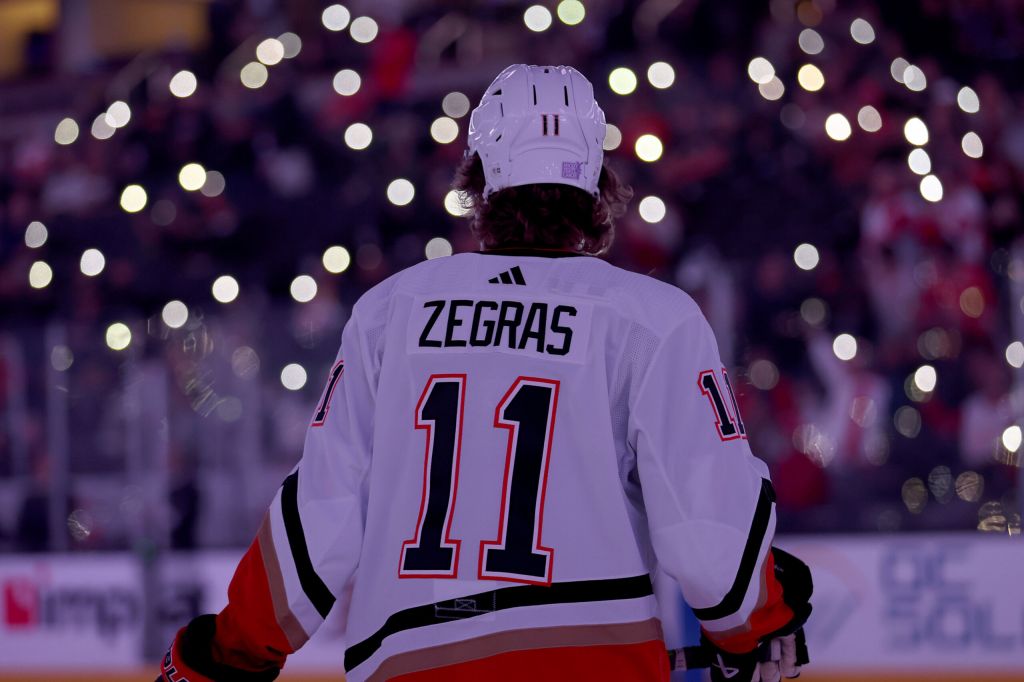
6. Anaheim Ducks (B+): It was no wonder why Beckett Sennecke had the best reaction of anyone who was drafted; his rise to third overall shocked just about everybody. The Ducks definitely needed a right wing of the future, so the fast-rising Sennecke slots in that role well. Stian Solberg is going to be a fan favorite in Anaheim with his physical, hard-hitting style. He can be safely penciled into a top-four role beside either Pavel Mintyukov or Olen Zellweger. After securing two high-end talents in the first, Anaheim focused on the worker-bee type of players in the next three rounds (Lucas Pettersson, Maxim Masse, Ethan Procyszyn, Alexandre Blais). Tarin Smith was also a nice third-round development option, and he has an opportunity to secure a third-pairing role if all turns out well. The Ducks left Vegas with a Trevor Zegras-sized question left to answer, but they’ve been building well enough to prepare for when the other shoe finally drops.

7. Minnesota Wild (B+): Trading up one pick with Philadelphia may have seemed a bit confusing at first, but Zeev Buium was the perfect player for them. Minnesota lacks dynamic players on the back end outside of Brock Faber, so why not draft an electric playmaker who just broke the NCAA scoring record for draft-eligible defensemen? What the Wild’s draft will ultimately hinge on, however, is their next two selections: second-rounder Ryder Ritchie and fourth-rounder Aron Kiviharju. Both have been on scouting radars for a while, and their ability to put points up in bunches was something Minnesota sorely needs. That said, both saw their draft years wrecked by injury, and red flags popped up in the times they were on the ice. Minnesota fans are already crossing their fingers that last year’s first round selection Charlie Stramel can get it together, and they now have two more instances of praying for luck. Buium alone should make the class a good one, but it has the potential to be great if at least one of Ritchie or Kiviharju cleans up their game.

8. Utah Hockey Club (B+): Arizona fans got an extra twist of the knife here, seeing the new Utah Hockey Club finally making moves to get them to competitive status. They had to give up some key assets to land Mikhail Sergachev from Tampa Bay, but he and John Marino from New Jersey instantly made Utah a more difficult team to play against. The first round saw them stay true to their identity of getting tougher and more competitive, with Tij Iginla and Cole Beaudoin being great selections. Will Skahan and Tomas Lavoie continue GM Bill Armstrong’s desire to get bigger on the back end, while Veeti Vaisanen’s well-rounded game can see him paired with just about anybody. The rest of their picks weren’t particularly fantastic, but fifth-rounder Owen Allard’s skating and compete level could net him a fourth-line spot down the line. Utah is willing to build off the excitement of the team they have, and they got better both next season and long-term in the two days of the draft.

9. New York Islanders (B+): I’ve raised some questions about Lou Lamoriello’s decisions as of late, but it’s hard to criticize what the Islanders did in the draft. Cole Eiserman was a surprise to see slip down to 20, but he’s a perfect fit for the Isles. His defensive game is definitely a work in progress, but a defensive-minded team in desperate need of goal-scoring just got arguably the best shot in the draft. Jesse Pulkkinen and Kamil Bednarik strike me as prospects in the Islanders’ mold: good at just about everything with some traits being better than average. Marcus Gidlof is a towering goalie with good traits to find in the fifth round, while sixth-round defenseman and Harvard commit Xavier Veilleux earned some love in the scouting community throughout the year. For a team that was in desperate need of new blood in the farm system, the Islanders came away with plenty of good prospects worth keeping an eye on.

10. Carolina Hurricanes (B): Even with Don Waddell now in Columbus, Eric Tulsky is keeping the Hurricanes’ drafting tradition of swinging for the fences alive. Dominik Badinka had first-round value on him, so the Hurricanes’ decision to trade down still landed them a quality prospect early in the second. Nikita Artamonov lacks the dynamic ability of some of his countrymen drafted before him, but he played well against grown men in the KHL this past year, and Carolina is arguably the team most undeterred by the Russian factor. Noel Fransen, Oskar Vuollet, Justin Poirier, and Timur Kol all had profiles that screamed Hurricanes prospects, and the team didn’t have to reach for any of them. Waddell has tried to build a sustainable contender throughout his time in Raleigh, and it’s good seeing Tulsky aiming to continue that work now.

11. Seattle Kraken (B): I disagreed a bit with the Kraken’s first pick; don’t get me wrong, Berkly Catton was a good choice at 8, but they had plenty of great defensemen like Dickinson, Parekh, and Buium all still on the board for a system that lacks an elite prospect on the back end. Julius Miettinen and Nathan Villenueve may have been slight reaches, but they play hard enough to comfortably slot in to Seattle’s bottom six in a few years. Alexis Bernier was my favorite pick the Kraken made this draft, due to his size-athleticism package and strong finish to the QMJHL campaign. I could see him landing a spot on Seattle’s third pairing within three years. Ollie Josephson, Clarke Caswell, and Jakub Fibigr were also worthy mid to late-round fliers with some NHL-level tools to their games. The Kraken could have gotten a little better value out of their selections, but it’s hard to knock them too much for sticking with their gameplan.

12. Washington Capitals (B): The Capitals are the classic case of a team where a confusing first day of the draft gave way to a more positive Day Two. 17 was too high for Terik Parascak for me. He was a strong two-way player in the WHL this past season, but his heavy skating and below-average foot speed would get exposed instantly at the NHL level. There’s plenty of hit potential, but there’s just as much of a chance Parascak doesn’t develop further. Cole Hutson was a bit more reasonable as a second-round choice due to his offensive skill level, but he’ll need to earn a coaching staff’s trust defensively if he wants to land a full-time role in the NHL. After that, however, I had no real issues with what Washington did. Leon Muggli held his own against grown men in Switzerland’s top league and could emerge as a solid third-pairing option. Ilya Protas and Eriks Mateiko also have skating issues, but they play the heavy game that Washington typically likes to play on the bottom-six, so the stylistic fit is there. Nicholas Kempf, Petr Sikora, and Miroslav Satan are all long-term projects, but the upside is there for them to get some games. Washington was also active in the trade department, getting the Hutson choice out of Buffalo for Beck Malenstyn and flipping a pair of third-rounders to Vegas for a potential starting goaltender in Logan Thompson. While maybe not to the same degree as Utah, it was good of Washington to not rest on their laurels and continue building for both the present and future.

13. Nashville Predators (B): Barry Trotz has traditionally loved two-way players who can make an impact on both ends of the ice, and his first two selections in Yegor Surin and Teddy Stiga exemplify that. Surin is a nice blend of skill and physicality, and Stiga would have likely been a surefire first-round selection if he was three inches taller. The Predators also added a pair of high-end skill players in the middle rounds with Miguel Marques and Hiroki Gojsic, the latter of whom quickly became a favorite of mine during the process. Jakub Milota will be the next to enter Nashville’s solid goaltending development program, while Erik Pahlsson transitioned nicely to the North American game after coming over from Sweden this past season. This draft class is similar to the Predators as a team: greater than the sum of its parts.

14. New Jersey Devils (B): In hindsight, the decision of the Devils to hang on to their top selection proved fruitful with Anton Silayev falling into their laps at 10. The Devils lacked a true shutdown defenseman to pair with more dynamic option like Luke Hughes and Simon Nemec, but Silayev is a monstrous presence who should slot in nicely beside either one. The John Marino trade to Utah gave New Jersey a potential goaltender of the future in Mikhail Yegorov. Yegorov’s stats certainly aren’t pretty, but he played on a bad team in the USHL and he earned a lot of starts, so the hope is that he’ll continue to improve and land on his feet at Boston University after next season. After securing their two top needs, the Devils emphasized size with the rest of their selections. Kasper Pikkarainen, Herman Traff, and Matyas Melosky, in particular, have plenty of skills that go beyond their large frames, so bottom six spots could be theirs to earn. The Devils made plenty of interesting moves to suggest that there’s a clear plan going forward, which is admirable. They even got Paul Cotter and a third next year out of Vegas…and overpaid massively for it.

15. New York Rangers (B-): The next two teams on this list didn’t have a lot of picks coming in to the draft, but they still came away with value. Starting with the Rangers, they selected a rearguard in EJ Emery with their first-round selection. Emery won’t light the world on fire offensively, but the Rangers have had success with athletic stay-at-home defenders like K’Andre Miller and Braden Schneider before. Emery feels like an ideal fit to keep the Rangers’ defensive identity intact. I also liked their fourth-round pick in Raoul Boilard, who put together a nice campaign in the QMJHL. I have questions on if the offense can translate to the higher levels, but he provides a safe floor as a bottom-six center. Nathan Aspinall’s size should give him a shot, but there will be some aspects to clean up for him to make it further. Emery and possibly Boilard look to have NHL futures, and that’s enough for a team with current Cup aspirations.

16. Vegas Golden Knights (B-): Vegas belongs firmly in the middle of the pack because their draft was arguably the biggest mixed bag of all. Trevor Connelly has all the makings of an excellent middle-six wing for Vegas, but the character issues that have followed him around could threaten to derail his NHL chances. Pavel Moysevich’s KHL contracts runs until 2027, but his continued development could give Vegas a top goalie in a few years. Even seventh-rounder Lucas Van Vliet has potential as a fourth-line center. Where Vegas won was in the trade department. Losing Logan Thompson to Washington stung a little, but swapping Paul Cotter and a third to New Jersey for former top-10 pick Alexander Holtz and 2023 playoff hero Akira Schmid was a massive win for Kelly McCrimmon at first blush. While Vegas hasn’t held on to a lot of young talent, moves like these lead me to believe that there could be a minor shift in that philosophy.

17, St. Louis Blues (B-): The Blues seem on the verge of a defensive turnover, as their top three picks were all defensemen. Adam Jiricek endured a lost draft year due to injury, but he is a prototypical NHL defenseman in terms of physical makeup and playstyle who already has pro experience in the Czech leagues. Colin Ralph is more of a work in progress at this point of his development, but he has the size and physicality necessary to be a shutdown presence in the NHL. Lukas Fischer rounds out the trio, and he combines Jiricek’s well-rounded play with Ralph’s size. All three could very well take spots in St. Louis’s defense in a few years. The rest of their draft was okay; Adam Jecho and Tomas Mrsic are both mid-round swings on tools, and even seventh-round Matvei Korotky had a nice run in the MHL playoffs in Russia. The defenders will be what this class is focused on, but any of the forwards emerging as solid contributors would be a nice bonus.

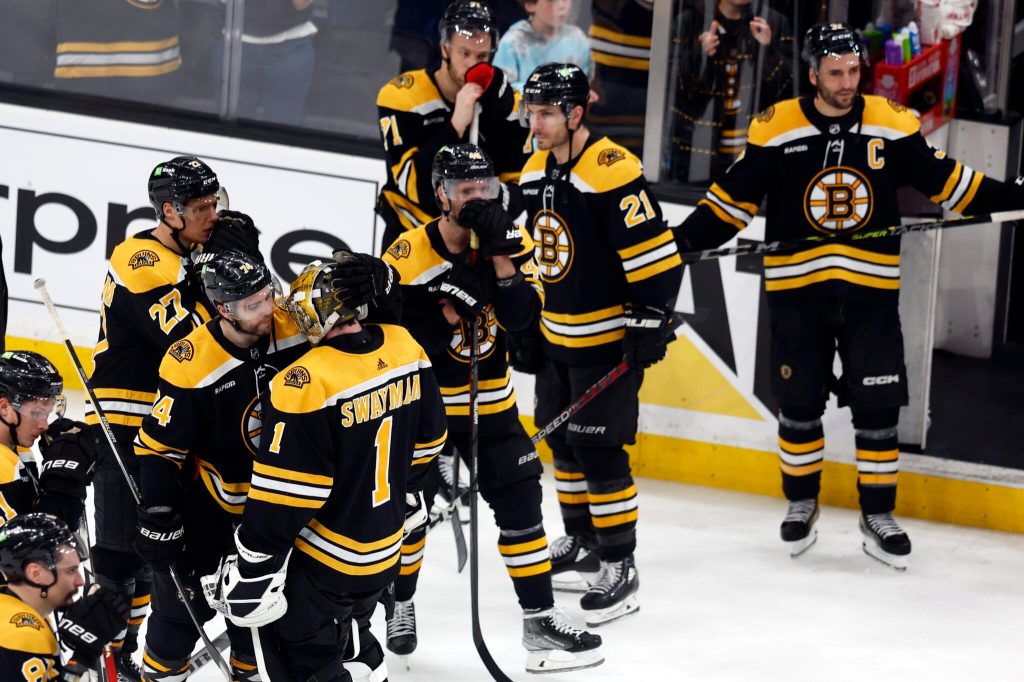
18. Boston Bruins (C+): The Bruins did relatively well with a limited number of picks, but they get a lower grade than the likes of the Rangers and Golden Knights due to the risk factor of their first rounder. Dean Letourneau offers a rare package of size, skating, and skill, but he also played at a lower level than most of the other early-round prospects. There’s risk that his domination was more a reflection of his competition than his own skillset, but the Bruins could have also landed an excellent middle-six component if all checks out. Elliot Groenewold wasn’t bad in the fourth round, but he lacks a given trait that jumps off the page. I preferred their selection of Jonathan Morello, whose speed and aggression are great traits to build off of. Similar to other contenders, Boston came out of this class with at least one possible contributor, even if it’s no guarantee who it ends up being.

19. Los Angeles Kings (C+): Similar to the Bruins, I have some questions about the Kings’ class. Liam Greentree possesses an intriguing size/skill combination, but there are times where that size could be used better. His skating is also below NHL-level, and he was not at noticeable at the World Junior Championships as some people would have liked him to be. There’s obvious things to like, but the risk potential may be a bit higher than initially expected. Carter George has had great success in the OHL and internationally for Canada, but 6-foot-1 is definitely on the smaller side for a modern NHL goaltender. I am intrigued by Jared Woolley, however, who came up from the lower leagues to join the powerhouse London Knights in the OHL this past season. His development curve is certainly on the ascent right now, and the Kings made a good bet on upside late. Similar to the Bruins, I have questions about the early picks, but a good late-round dart throw could make a difference.

20. Detroit Red Wings (C+): The Red Wings didn’t come out of this draft with a game-changing prospect, but they focused on building the middle and lower parts of their future lineup. Michael Brandsegg-Nygard, Max Plante, and Ondrej Becher are all players with middle-six potential going forward, with MBN and Becher being my personal favorites out of the group. Their other picks all have some question marks, though. Landon Miller has the size of an NHL goalie, but he was rough at time for the Soo Greyhounds this season. John Whipple and Austin Baker both come from the U.S. NTDP, but I question if both have the skill to make it beyond organizational depth. Even if just the top three picks emerge as NHL contributors, Steve Yzerman would be alright with that.

21. Winnipeg Jets (C+): The Jets spent their first pick on Alfons Freij, who may be the most polarizing prospect in the class. Depending on which scout you ask, they either believe Winnipeg got a good deal on a potential power-play quarterback, or swung too early on a defenseman who struggles in his own zone. Freij’s ceiling would be in a sheltered role until proven otherwise. I did like later selections of Kevin He in the fourth round and Kieron Walton in the sixth. He came alive in the second half of the season, showcasing a wicked shot to go with some great skating. He’s got a chance to emerge as a secondary scorer. Meanwhile, Walton has some great size to go with improved skating and deceptive puck handling ability. A bottom-six fixture in the sixth round would be a good deal. Freij’s variance as a prospect leaves some room for concern, but that can quickly be erased if He and/or Walton continue their trajectories.

22. Ottawa Senators (C+): I was fine with Carter Yakemchuk as a high first-round selection, but at 7? That was a little rich for my blood and, even if they coveted a right-shot defenseman, Parekh would have been my selection there. Their second round choice in Gabriel Eliasson has two outcomes: he either becomes a fan favorite for his all gas, no brakes approach and propensity to deliver bone-crushing hits, or his alarming lack of discipline makes him a constant source of frustration for coaches and fans alike. Lucas Ellinas only popped up on radars recently, but he has good speed and is still early on his development. Javon Moore and Blake Montgomery are also intriguing projects, with both having good size-speed combinations that Ottawa has seemed to covet recently. What worries me about Ottawa’s draft is that the floor is as low as the ceiling; Yakemchuk, Eliasson, and the trio of forwards all have good potential attached to them, but there’s the risk that Yakemchuk is outperformed by the defensemen taken below him and the others don’t take the next step up in their development. The epitome of a “wait-and-see” class.

23. Edmonton Oilers (C): The Oilers finally broke through to the Stanley Cup Final and are officially pushing their chips to the center of the table. They traded to get the final pick of Round 1 and used it on Sam O’Reilly, which might have been a bit of a reach to me. That said, O’Reilly’s a smart two-way forward developing with a top program in the London Knights, so it’s something I would be able to live with. Eemil Vinni was another slight reach, but he’s also one of the best European goalies in the class, and Edmonton was looking at a goalie run going on in the draft. Once again, context makes the pick look a lot better. Their later picks did little to move the needle, but I did like their pick of Dalyn Wakely in the sixth round. While he isn’t the most dynamic player, Wakely has the defensive capabilities and penalty-killing ability that could make him a fourth-line fixture if he makes it to the NHL. Edmonton likely didn’t land a star with their draft class, but two or three solid contributors should help the cause.

24. Colorado Avalanche (C): The Avalanche used their first selection on goaltender Ilya Nabokov, and it’s certainly an intriguing fit. Nabokov’s 6-foot-1 frame and advanced age (21 years old) were slight knocks, but his athleticism makes up for his lack of height. More importantly, he dominated the KHL and the postseason, winning the Gagarin Cup and being named MVP of the playoffs. Should that continue, Colorado may have a long-term option to answer their goaltending woes as early as next season. Will Zellers was arguably the top high school prospect in the class, and it’s not difficult to see why after watching him play. A North Dakota commit, Zellers plays with a good combination of skill, skating, and toughness. A few years in the college ranks will do Zellers good before he aims at a middle-six role. Jake Fisher, Maximilian Curran, and Christian Humphreys are an interesting trio of centers to keep tabs on, Louka Cloutier is an interesting development goalie option at Nebraska-Omaha, and defenseman Tory Pitner has the defensive chops to be a steal. Similar to Edmonton, I’m not one hundred percent sure if Colorado got a superstar, but they likely ended up with some solid contributors (don’t be surprised if Nabokov shoots this class much higher up, though).

25. Pittsburgh Penguins (C): The Penguins didn’t start their draft until the middle of the second round, but their two selections in that round in Harrison Brunicke and Tanner Howe are both at least somewhat interesting. Both prospects are more jack-of-all-trades players with high compete levels, so there’s NHL potential with both. Brunicke could slide into Pittsburgh’s third pairing, while Howe strikes me as a third-line option. Their later picks were a bit more questionable, but the C grade comes from Joona Vaisanen and Mac Swanson. Sixth-round pick Vaisanen was one of the best defenseman at the USHL level last season, while Swanson is a small forward whose skill set is reminiscent of Jonathan Marchessault. If their development continues positively, Pittsburgh may have found two steals late. The Penguins follow the pattern of teams this late in the ranking: not a stellar class, but they still came away with things to like.

26. Florida Panthers (C): The defending Stanley Cup champions didn’t have to light the world on fire during the draft, but they did alright with the limited capital they had. They traded up in the second round to grab Swedish center Linus Eriksson, who performed well in the second-tier Allsvenskan. A modern playmaking center, Eriksson emerged as a leader internationally for Sweden, which can help his chances of carving out a role. A third-line spot is certainly a possibility. Matvei Shuravin lacks a signature skill, but the defenseman also performed well against men this past season. He has prototypical NHL size and does well enough on both ends of the ice to warrant at least some NHL games. I could see him on a third pairing in a few years. Simon Zether is another big center with surprising puck skills, but his below-average skating might have exposed some issues in his game last season. It’s something that will have to improve, but his compete level and ability to get points could net him a bottom-six role if all breaks right. There’s definitely no game-breaking prospect here, but Florida’s barren farm system will gladly accept any NHL potential that it can be given right now.

27. Buffalo Sabres (C-): Similar to some other selections in the early-to-middle part of the first round, Buffalo’s first pick may not have been the best fit. Konsta Helenius is a good choice in a vacuum, but Buffalo’s system is loaded with young, smaller forwards already. Helenius’s defensive chops should ensure he’s fine, however, even if he’s looking at a third-line role. I preferred their next two selections of Adam Kleber in the second round and Brodie Ziemer in the third. Kleber is a huge presence that should bolster Buffalo’s third pairing behind a potentially elite top-four group, while Ziemer is a hard-nosed player whose skillset is tailor-made for an NHL bottom six. I wasn’t crazy about the rest of Buffalo’s draft, but they took some interesting fliers on Michigan State defenseman Patrick Geary and OHL goaltender Ryerson Leenders. At some point, things have to start turning around in Buffalo, but this class might not have anybody who helps push the timeline along.

28. Vancouver Canucks (C-): With a limited number of picks and not selecting until the end of the third round, the Canucks were always going to be up against it to come up with a good class. Their top three picks of Melvin Fernstrom, Riley Patterson, and Anthony Romani are the main choices with NHL potential, and all have roughly the same scouting reports attached to them. All three performed exceptionally this season in showcasing their offensive creativity, but all of them are also questionable skaters, at best. This lack of speed in their games draws some questions about how translatable their success at their current levels will be later on, and that has to be a concern. Odds are at least one of them gets a chance at a few NHL games, but there’s plenty of work to be done before that even becomes a consideration. Consider this the turning point of the classes, where the criticisms become a bit more apparent and the chances of meaningful contributions start to dwindle.

29. Dallas Stars (C-): With an NHL-low three selections, the Stars didn’t have much of a presence in this draft. Continuing with their tradition of Finnish players, the Stars used their first-round pick on Emil Hemming. Granted, that was a good selection for them, as Hemming’s offensive skillset suggests a future middle-six role as a secondary scorer. The only other two picks were nothing to write home about, although fifth-round Niilopekka Muhonen has some nice size and defensive chops that could make him worthwhile. Other than that, Dallas did nothing except hand Chris Tanev’s signing rights off to Toronto for table scraps. All in all, it was an expectedly dull period for Dallas. Speaking of Toronto…

30. Toronto Maple Leafs (D+): The Leafs are in a precarious position right now, and this draft did virtually nothing to quell those fears. Moving back in the first was fine, but Ben Danford may have been a reach at 31. He is a defensively stout player on the back end, though, and his offensive game showed positive development this past season. He should be a third pairing guy at some point. Outside of that, though, there was little from the Leafs class that really stood out. The one pick I did like was fifth-rounder Miroslav Holinka, who played well above his age level in the Czech leagues and has the potential at a bottom-six role. Getting Chris Tanev’s rights was fine, but there’s still a lot left to be answered for Toronto’s offseason; specifically, are they trading Mitch Marner, or do they plan to go the Last Dance route with the Core Four?

31. Philadelphia Flyers (D+): Flyers fans will be forced to question yet another rebuilding effort if they had Zeev Buium in their hands only to let him go elsewhere. Meanwhile, their own first-round pick in Jett Luchanko wasn’t a bad choice due to his rising stock, but the next selection in Konsta Helenius felt like the higher-upside play. Luchanko’s high compete level and playmaking ability should make him a favorite of John Tortorella, but he needs to get on the scoresheet more often to live up to his draft slot. A middle-six role is likely, but I can’t help but feel he’s more likely going to get pushed to the wing. Second-round picks Jack Berglund and Spencer Gill are both big bodies, but neither are great skaters. Berglund stands out as a bottom-six forward, while the defenseman Gill is a bit more confusing due to his wiry 6-foot-4 frame and contributing more offensively than at his own end. Heikki Ruohonen has some nice defensive chops, and Noah Powell looked great at the USHL at points (not to mention he’d be only the second deaf player in league history if he made it), but they both have long odds to reach the NHL level. Between leaving upside on the board and potentially not getting a lot out of their later choices, the Flyers run the risk of not getting much out of a draft class at a pivotal time. At least Matvei Michkov arriving earlier than expected can cushion a possible blow?

32. Tampa Bay Lightning (D): The Lightning didn’t start their draft until the fourth round, so it’s hard to criticize them too much for how things turned out. Still, trading away Sergachev to Utah and Tanner Jeannot to Los Angeles while also likely leading Steven Stamkos to the open market was not a good pretext. Jan Golicic is big, but his size really is the only thing I’ve seen most people point to to justify his selection. The better choice ended up being Hagen Burrows, who has some NHL traits to his game that could be amplified with better skating. After that, I have questions about just about everyone the Lightning drafted. Seventh-round choices in forward Joe Connor and goaltender Harrison Meneghin both enjoyed good seasons, but what are their ceilings exactly? The Lightning seem like a team bound to hit a wall sooner than later, and this class does little to change that opinion. At least they likely got Jake Guentzel?

Nerd Rage: WWE Has Changed the Game with Trio of Debuts

Image Credit: WWE

It’s rare to be surprised by much in the professional wrestling world nowadays. Between journalists and dirt sheet writers providing daily blurbs of information to theories floating around on social media, the unprecedented access of fans to the behind-the-scenes aspects of sports entertainment has been both a blessing and a curse. While it’s always nice to hear of the debut or return of a performer, knowing about it ahead of time runs the risk of creating inauthentic or, worse, deadened reactions at times.

Leave it to the world’s leader in sports entertainment to flip the industry completely on its head.

On all three of WWE’s weekly programs this past week, three game-changing debuts occurred: fans witnessed the jarring debut of the Wyatt Sicks faction on Monday Night Raw, the surprise appearance of TNA star Joe Hendry on NXT, and former Major League Wrestling champion Jacob Fatu adding a new twist to the Bloodline saga on SmackDown.

So what is there to make about all of this? What are the short and long-term ramifications of these moves?

Let’s start with the Wyatt Sicks, whose debut has been about a year in the making. The brainchild of the late, great Windham Rotunda (aka Bray Wyatt), the groundwork for the faction was laid out during his Firefly Funhouse segments and built upon as time went on. Rotunda’s meticulous storytelling highlighted a true love for his craft, making for compelling television whenever he appeared on screen. Unfortunately, health problems would derail the storyline and, tragically, lead to Rotunda’s passing last August due to complications brought on by COVID-19.

However, a good story doesn’t die so soon. Rotunda’s real-life sibling Bo Dallas, making his return to WWE, took the mantle of Uncle Howdy in 2022 and has now been tasked to spearhead the latest act of this story. That act was revealed to be the Wyatt Sicks faction, a group donning real-life depictions of Firefly Funhouse characters. Alongside Dallas as Uncle Howdy, the faction sees the return of Erick Rowan as Ramblin’ Rabbit and the repackages of Nikki Cross, Dexter Lumis, and Joe Gacy as Abby the Witch, Mercy the Buzzard, and Huskus the Pig Boy, respectively.

On the June 17 edition of RAW, the group orchestrated arguably the most bone-chilling debut in WWE history, beginning with the lights going out in the arena and showing the Firefly Funhouse door, similar to how Wyatt would come out on stage. This time, however, Nikki Cross in a Kayako from The Grudge-esque portrayal of Abby the Witch crawling towards Wyatt’s signature lantern before standing and pointing backstage. The audience saw the backstage area in disarray, complete with the members of the Wyatt Sicks amidst the carnage, until the sight of a bloodied Chad Gable gave way to the appearance of Uncle Howdy. Howdy would then lead the faction to the entrance ramp before shouting “We’re here!” and blowing out the lantern, also akin to Wyatt’s entrances.

The debut was as emotionally charged for the participants as it was for the audience, as Dallas finally has the opportunity to bring Rotunda’s storyline to reality. He won’t be the only one with personal investment in this endeavor, however; Rowan also possesses a deep connection with Rotunda. Rowan debuted alongside Wyatt in the Wyatt Family in 2012 and has been closely associated with ever since. Another wrestler who debuted alongside the two was Luke Harper, who also went by Mr. Brodie Lee in All Elite Wrestling. Tragically, Harper (real name Jonathan Huber) would pass away in December 2020 due to pulmonary fibrosis. With Rowan being the remaining member of the Wyatt Family, he will certainly have an emotional stake in this story. Cross, Lumis, and Gacy all have experience playing unhinged characters in the past, and there is the possibility that another member could be added as the story progresses. Whatever the case may be, the Wyatt Sicks’ debut has certainly put the RAW brand on notice.

However, the debut was not the most-watched clip on WWE’s social media channels this week. That honor would go to Joe Hendry, whose debut on NXT has hit over six million views and counting on WWE’s YouTube channel. While his appearance was brief, the notable crowd reaction and backstage segment with Shawn Michaels indicated that it will certainly not be the last time Hendry pops up on WWE programming.

To those unaware of Hendry’s work, this clip is the perfect example of what the Scottish star brings to the table. A former musician and fixture of the United Kingdom wrestling circuit, Hendry has seamlessly bridged the gap between music and professional wrestling. His popularity has reached the point where his current theme song, “I Believe In Joe Hendry,” topped the music charts in the United Kingdom. Hendry doesn’t just apply his musical chops to his entrance music, however, as he has also covered popular songs in his promos. He can also perform well in the ring, winning championships in several United Kingdom-based promotions and reaching the top 100 in the 2023 PWI 500, Pro Wrestling Illustrated’s list of the top 500 wrestlers in the world.

Hendry is just the latest TNA star to cross over into WWE programming since the two companies began their working relationship. TNA Knockouts Champion Jordynne Grace appeared at the Royal Rumble and challenged NXT Women’s Champion Roxanne Perez at NXT Battleground, and Frankie Kazarian also appeared in a battle royal alongside Hendry. The early results have likely surpassed even the most optimistic of expectations, and has likely opened the door for an expansion of the partnership between the two companies. Hendry will almost certainly be one of the major players of this crossover, and his already astonishing popularity should only increase from continued exposure on WWE.

The hits would only keep on coming, as SmackDown would see Jacob Fatu emerge as the latest member of the Bloodline. The story of the Bloodline faction has continued to be a focal point of SmackDown after WrestleMania XL, when Roman Reigns’s 1,316 day-long reign as WWE Universal Champion came to an end at the hands of Cody Rhodes. Since then, Reigns has been absent from WWE, while his cousin (and son of WWE Hall of Famer Rikishi) Solo Sikoa has emerged to take control of the faction. Since then, Sikoa has almost entirely rebuilt the Bloodline in his own image, removing Jimmy Uso and adding Tama Tonga and Tonga Loa from New Japan Pro Wrestling to the fold. The addition of Fatu, however, has the ability to provide added legitimacy to the group, especially while Reigns remains off television.

Son of the Tonga Kid and nephew of Umaga and Rikishi, Fatu is most known for his time in Major League Wrestling. In his six-year tenure with the promotion, Fatu held the MLW World Heavyweight Championship for a company-record 819 days. A free agent in February, Fatu was arguably the most coveted name on the market, with every major promotion vying for his signature. His debut on SmackDown put an exclamation point on his decision, and he will likely get to compete against some of WWE’s top stars as part of the Bloodline.

Fatu’s debut also comes with long-term ramifications, especially due to his involvement in a long-existing storyline. Umaga’s son Zilla Fatu sent a message on Instagram saying “See you soon,” indicating that the Bloodline may be gaining another member soon. Eventually, however, things will unravel, especially when Reigns makes his return to television. Both Jimmy and Jey Uso will likely re-enter the storyline at some point, and even The Rock could pop up again at any time. A program between Reigns and the Rock for control of the Bloodline is certainly one that needs no added stakes or hype, and it would be a penciled-in main event for one night of WrestleMania XLI if the stars align.

It’s rare that fans get to witness a debut that changes the complexion of WWE. This past week, the WWE Universe was treated to not just one, but three such occurrences. The Wyatt Sicks adds a new chapter to Bray Wyatt’s legacy and can create plenty of new stars in the process. Joe Hendry has the potential to be the face of the collaboration between WWE and TNA. Jacob Fatu can establish himself as a major player in WWE with his work in the Bloodline, and there is every reason to believe he can be their next Samoan superstar. Where these storylines ultimately end up is still very much a mystery, but this has been the most excited I’ve personally been for WWE’s content in a while. It’s a saying that’s been used frequently in the past few years, but it rings truer now than it has in most cases: it’s a great time to be a professional wrestling fan.

Filling Out Potential NFL Coaching Openings

Image Credit: David Butler II/USA Today Sports

Black Monday 2024 is officially upon us.

While this rendition may feel relatively anticlimactic, many teams have already chosen to cut their losses before the season came to an end. The Las Vegas Raiders, Carolina Panthers, and Los Angeles Chargers all elected to make coaching changes prior to the end of the season, and it appears that the head coaching landscape will be in for seismic changes.

The fates of many different coaches have varied throughout the last month or so, with names like New England’s Bill Belichick and Pittsburgh’s Mike Tomlin having their feet held to the proverbial fire at different points. While seeing anyone else donning the headset on either team’s sideline would feel like something ripped from The Twilight Zone, the fact of the matter is that sports is a cutthroat business, and failure to get the necessary results will lead to termination at some point.

This Black Monday will see quite the shakeup in the coaching ranks. The jobs of legends will be put into question. An interim coach could shed the label and take the full-time position. Returns to the professional coaching ranks could once again turn the NFL on its head. Finally, could a coach that loses their position find a new home elsewhere just a few months later?

Will your favorite team be looking for a new coach this offseason, and who will they decide can take them to the next level? Let’s find out.

Update: Due to Tennessee and Seattle opening their head coaching positions since the publishing of this article, the article has been updated to include both positions. Other prospective openings have also been kept in or added, and some entries have been changed to reflect the new candidates available.

Las Vegas Raiders: Antonio Pierce, Raiders Interim Head Coach

The Raiders aren’t going to make the same mistake again, are they?

When Rich Bisaccia landed the interim coaching gig in place of Jon Gruden two years ago and guided a drama-laden Raiders team to the postseason, many thought that would be enough to land the full-time gig. Instead, the Raiders chose to invoke the Patriots and land Josh McDaniels and Dave Ziegler. Two years later, the Raiders realized they made an expensive mistake and moved on from both and offensive coordinator Mick Lombardi.

Interestingly enough, the Raiders now find themselves in a similar situation. While Vegas won’t see the playoffs until Allegiant Stadium hosts this year’s Super Bowl, Pierce did everything in his power to right the ship. Pierce and defensive coordinator Patrick Graham have headlined one of the NFL’s best defenses since Pierce was hired on Halloween. He has overseen some of the Raiders’s best triumphs, from a dominant Thursday Night Football showing against the Chargers to an incredible Christmas Day upset of the Chiefs. He has earned the respect of the locker room that McDaniels never could, with Davante Adams and Maxx Crosby both giving Pierce their stamps of approval going forward.

While their have certainly been teachable moments (the 3-0 loss to Minnesota comes to mind), the fact that Pierce was able to motivate this group has the future looking bright. The Raiders face some questions (particularly on offense), but Pierce can bring in the proper offensive coordinator and let them work while he and Graham keep the defense intact. The Raiders could also be a candidate to trade up for a quarterback in this year’s draft, which could make Las Vegas an appealing destination for top candidates.

The Raiders have been down this road and made the wrong decision once before. Despite the good list of quality candidates, there’s no need to make this any more complicated.

Carolina Panthers: Dave Canales, Tampa Bay Buccaneers Offensive Coordinator

What kind of candidate are the Panthers truly expecting to get?

Only six years into his tenure as owner of the franchise, David Tepper has already garnered the reputation of being volatile and impatient. He has already gone through three coaches, and has fired them all mid-season; this includes recently deposed Frank Reich, who Tepper chose to unceremoniously fire just eleven games into a four-year deal. The team was shut out in its final two games of the season, including an embarrassing affair against Jacksonville that saw Tepper pour a drink on a Jaguars fan from his suite. The Panthers were the worst team in the NFL, but they won’t even have the first overall pick due to the trade they made last season to acquire Bryce Young. Needless to say, there’s a lot of red flags for this job, which might scare off many top candidates.

While the situation could force the Panthers to hope for the best on a mid-tier candidate (think someone like Los Angeles Chargers offensive coordinator Kellen Moore or New York Giants offensive coordinator Mike Kafka), there are some underrated options that could match up nicely here. Carolina would most likely prefer to lean offensive in order to keep heralded defensive coordinator Ejiro Evero around, and Canales stands out as a choice that makes sense. Canales has had a penchant for turning the careers of quarterbacks around, with Geno Smith and Baker Mayfield both enjoying success under his watch. Young’s shorter build also wouldn’t be of concern to Canales, as he has experience with the likes of Mayfield and Russell Wilson who are also shorter than the average quarterback. If GM Scott Fitterer is also gone, Canales could also be packaged with promising candidates from Tampa Bay (John Spytek or Mike Greenberg) or Seattle (Nolan Teasley or Matthew Berry). In a pivotal offseason that sees many of Carolina’s top defensive options set to hit the open market, having a shared vision could be imperative towards deciding the next moves.

Choosing a candidate outside of the top tier or two doesn’t make anyone any less viable. Canales likely won’t be the most exciting candidate that interviews for the Panthers, but he could represent the best fit.

Los Angeles Chargers: Jim Harbaugh, University of Michigan Head Coach

While the Chargers declined to make a coaching change after last year’s shocking Wild Card collapse against the Jaguars, they soon found out what the rest of the football world already knew: Brandon Staley, at least at this stage, was a horrible head coach.

The defense failed in far too many aspects, which was shocking from someone who was hired for their supposed brilliance on that side of the ball. The struggles in clock management and in-game adjustments led to too many heartbreaking defeats. Reports soon came in about how Staley was a divisive figure within the locker room, and it felt like a matter of time. After being humiliated by the Raiders to the point where analysts were calling for Staley’s job during halftime, the Chargers were left with no alternative and made a mid-season firing for the first time since 1998. While having the likes of Justin Herbert on the roster should make this an appealing job, having one of the league’s worst cap situations and the general feeling of apathy from L.A. fans to the Chargers could make this a more difficult job than it appears at first blush.

That said, the Chargers may be ready to shed their notorious reputation for being cheap, as president John Spanos has already said there would be no financial or experience limitations for their next coach. While Detroit Lions offensive coordinator Ben Johnson or Dallas Cowboys defensive coordinator Dan Quinn would both have their merits, the organizational desperation to make good on Herbert’s window will point them to Harbaugh. While there is controversy surrounding Harbaugh’s tenure at Ann Arbor, that doesn’t take away from his success with the Wolverines. Harbaugh mentored Andrew Luck at Stanford, turned Colin Kaepernick into a Super Bowl quarterback, and has recently lifted J.J. McCarthy to a potential first round selection in this year’s draft. His background for strong running games can also coexist nicely with offensive coordinator Kellen Moore, allowing for a much more cohesive unit than what was shown this season. While hiring Harbaugh could mean the Spanos family has to cede at least a little control over the team’s operations, that should be considered a small price to pay to get an ideal coaching candidate.

It appears that the patience of Chargers ownership has finally worn thin, and they will be more willing to pull out all the stops to make good on their potential. It may take some work, but Harbaugh has the chops to make this operation work.

New England Patriots: Mike Vrabel, Former Tennessee Titans Head Coach

What was once seen as an impossibility even five years ago now feels like a reality: the Patriots may be moving on from the legendary Bill Belichick.

Ever since Tom Brady’s departure from the Patriots, the flaws of the Patriot Way seemed to find their way up to the surface. Mac Jones started promising enough, but Belichick’s decision to bring in former assistants Matt Patricia and Joe Judge to call the offense last year may have irreversibly damaged his development. The offense is devoid of playmakers, largely due to Belichick’s construction of the roster. While the defense wasn’t bad, losing playmakers like Matt Judon and rookie Christian Gonzalez early didn’t help matters. There will be some debate on how New England can handle the situation, but it’s becoming more accepted that there are few solutions that see Belichick on the sideline next season.

That said, just because Belichick would be gone does not necessarily mean his influence will not be felt. Vrabel, a former Patriots linebacker who played under Belichick for eight seasons, would be the best candidate to ensure Belichick’s philosophies remain in place. It’s difficult to imagine that Robert Kraft will be wanting to go into a full-scale rebuild, and Vrabel would allow the Patriots to continue building their roster while remaining competitive. Seeing his work with the Titans was exemplary of what the Patriots should want, where Vrabel was able to take a Ryan Tannehill-led squad beyond what was expected of them for most of his tenure. The Patriots should have an upgrade at quarterback by virtue of the number three pick in this year’s draft, and there are at least a few pieces on defense that can be built around. There could even be a chance of the Patriots bringing in Derrick Henry to bolster the offense by virtue of Vrabel coming in.

It’s never easy to replace such a legendary figure as Bill Belichick, but Vrabel would provide the perfect combination of organizational stability and proven success. That said, don’t be too sure Belichick is ready to ride off into the sunset…

Washington Commanders: Mike MacDonald, Baltimore Ravens Defensive Coordinator

A new era in Washington is beginning, and a new coach will likely be tasked with overseeing it all.

Ron Rivera was always going to have an uphill battle to retain his spot under new ownership, and the results of this season have not painted a pretty picture. Sam Howell has done his best under offensive coordinator Eric Bieniemy, but issues from inconsistencies in the running games and the general horrors of the offensive line kept the offense from really living up to his potential. Rivera’s defense did not fare much better, as trading Chase Young and Montez Sweat while failing to develop the likes of Jamin Davis and Emmanuel Forbes have been the tip of the iceberg. While Rivera earned a strong reputation from his Super Bowl run with the Panthers a decade ago, there has not been nearly enough since to suggest he is still deserving of that same reputation.

Meanwhile, on the other side of the Beltway, MacDonald has turned the Ravens’ defense into a unit capable of guiding them to a Super Bowl. MacDonald has been responsible for the development of many of Baltimore’s top defensive players, from first-rounders Patrick Queen and Kyle Hamilton to less-heralded options like Justin Madubuike, Brandon Stephens, and Geno Stone. Being able to lead a defense that has few elite players should be appealing to the Commanders, and new owner Josh Harris is gearing towards emulating the Ravens. This could also mean pairing MacDonald with top GM candidates like Joe Hortiz or Ian Cunningham, both of whom are either currently with or have connections to Baltimore.

There are very few organizations that are better to copy off of than a beacon of organizational structure and stability like the Ravens. MacDonald could finally give the Commanders that same stability that they have lacked for far too long.

Atlanta Falcons: Ben Johnson, Detroit Lions Offensive Coordinator

While Arthur Blank may not want to fire head coach Arthur Smith, can he really afford not to?

Ever since being given a vote of confidence barring a late-season collapse, Smith has proceeded to undergo said collapse. There was losing to a Minnesota Vikings team that was forced to start Josh Dobbs on short notice. There was losing to lowly squads like the Cardinals and Panthers. Finally, to end the season, the Saints put up nearly fifty points on the Falcons to bring the season to an emphatic end. Blank can stress the importance of progress all he wants, but Smith’s three straight 7-10 finishes exemplify a team that’s stuck in place.

For a team that has all the pieces necessary to be great, staying the course of mediocrity will be nothing short of frustrating. This is where Johnson comes into play, and he could fit seamlessly into what Atlanta wants to do. Johnson has emerged as arguably the best candidate of this cycle, and for good reason. He has transformed a Jared Goff-led offense in Detroit and turned it into an efficient unit that plays up to its strengths. Johnson would pair well with promising defensive coordinator Ryan Nielsen, and there’s also the possibility that he can bring in a top lieutenant like passing game coordinator Tanner Engstrand as his new offensive coordinator. The success of rookies Jahmyr Gibbs and Sam LaPorta should both be music to the ears of Bijan Robinson and Kyle Pitts, who have endured criminal underuse in Smith’s tenure. Finally, Atlanta drafting eighth overall puts them in shouting distance of some of the draft’s top quarterbacks, and either one of North Carolina’s Drake Maye, USC’s Caleb Williams, or LSU’s Jayden Daniels could push this team far in a new era.

A promising roster deserves a promising coach staff, and Smith has no longer been able to provide a viable answer. Johnson would be a home run hire for a team that needs to find the right man at the helm as they prepare to face pivotal decisions.

UPDATE: In the making of this article, Arthur Smith was fired from his post as Atlanta Falcons head coach.

New Orleans Saints: Bill Belichick, New England Patriots Head Coach

When a candidate like Belichick is potentially on the market, any team leaning towards a move might consider making that push. This year, that team would be New Orleans.

A year after making the trade that sent Sean Payton to the Broncos, Dennis Allen has struggled to fill the void. He has not learned many lessons from his failed stint in Oakland, and the team has stagnated as a result. Even worse, the Saints find themselves with easily the worst cap situation in the NFL, as years of pushing back a rebuild now has the team finding themselves on the brink of being forced to go through with it. If the Saints decide now is the time to make big decisions on the roster, it would make sense to move on from Allen and possibly GM Mickey Loomis and find a coach who would push the Saints back on track.

Belichick would provide a similar defensive-centered approach to Allen, but with major improvements in terms of game management and development. Bringing in Belichick would also give the Saints free reign to cut down on the financial stress, while giving the future Hall of Famer the autonomy necessary to make the proper moves. The question would be if the Saints would have to give any assets in order to acquire Belichick, but they do have Denver’s second-round pick this year due to the Payton trade. This also is dependent on the moves New Orleans makes, as they could choose to sell off assets to recoup any they would have to surrender in a Belichick trade. For a Patriots team that would almost certainly be on a rebuilding path without Belichick, they would be more than happy to gain any premium assets they can.

In a division where one big move can completely shift the balance of power, New Orleans must not be afraid to be the team that makes that move. Bringing in Belichick would prove the Saints are invested in winning, and the aggressiveness would be a nice change of pace.

Tennessee Titans: Bobby Slowik, Houston Texans Offensive Coordinator

Well, this was unexpected.

Even now, it’s hard to pinpoint what exactly was the reason for Vrabel’s exit. Vrabel started out strong with four straight winning seasons, with his highlights being going to the AFC Championship Game in 2019 and getting Tennessee to the number one seed in 2021. That said, the last two seasons have seen the luck take a turn for the worse, but it’s still curious regardless. Perhaps new GM Ran Carthon wanted his own choice for a head coach, and the recent string of bad luck was the catalyst for change? Maybe it was wanting an offensive-minded coach to help Will Levis in his development? Whatever the case may be, Vrabel should bounce back on his feet and have his choice of suitors as one of the top candidates on the coaching market, with a return to New England being a logical option.

While I’ll preface this by saying Slowik might be getting this job a year too early, his connections within the Titans organization and the similarities between them and the Texans are too difficult to ignore. Slowik’s time in San Francisco overlapped with Carthon, and Slowik’s analytical background from his time with Pro Football Focus should get the most out of the roster he’s given. What he’s done with C.J. Stroud has been nothing short of incredible, with the Texans not having a great cast of weapons or offensive line on paper. Instead, Slowik’s offense turned Stroud into the likely Offensive Rookie of the Year, building connections with the likes of Tank Dell and Dalton Schultz en route to the first 4,000-yard rookie campaign since Justin Herbert (2020). With Tennessee having a similar roster construction, it’s not difficult to see Slowik building a system where Levis is allowed to thrive despite the limitations of the cast around him.

Carthon will almost certainly be looking to maximize Levis’s talents with his first coaching hire. Him being a witness to Slowik’s rise can only help the young offensive coordinator prove he’s ready for his first head coaching gig.

Seattle Seahawks: Dan Quinn, Dallas Cowboys Defensive Coordinator

This felt bound to happen sooner or later.

Being the oldest coach in the NFL at 72, Seattle knew that they were running on borrowed time with Carroll at the helm. He exits as easily the best head coach in franchise history, being responsible for Seattle’s only Super Bowl victory. Now shifting into an advisor role for the franchise, it will be interesting to see whether Carroll will have any input on who his successor will be. With the front office also remaining the same, it’s fair to wonder if that favors candidates with ties to the organization.

In that case, it’s hard to imagine Carroll not vouching for arguably his best-ever assistant coach in Quinn. Quinn has had two prior coaching stints with Seattle, including serving as defensive coordinator in 2013-14. That two-year stint is notable for Seattle making the Super Bowl in both years, splitting the results in both games. That would propel Quinn to the head coaching job in Atlanta, where he would go 43-42 in five and a half seasons and take the Falcons to Super Bowl 51 in 2016. After being fired in 2020, Quinn would go to Dallas and turn a then-underachieving defense into a top-ten unit in all three of his seasons. While the stagnation in Atlanta could be of concern to some teams, it’s also important to note that Seattle was Carroll’s third try as a head coach at the NFL level. He knows the importance of a second chance, and it makes sense that Carroll would be the one to throw that lifeline towards Quinn.

Seattle will be looking to regain some of their dominance in the NFC with their next hire. Carroll and Seattle’s front office can easily convince themselves that Quinn is the coach to help them take the next step.

Pittsburgh Steelers: Jerod Mayo, New England Patriots Inside Linebackers Coach

This really does feel like the end of an era in coaching, doesn’t it?

With the news of Tomlin potentially taking a break after Pittsburgh’s postseason comes to an end, the Steelers could find themselves in an unfamiliar position. Since 1969, the Steelers have only had three head coaches in Chuck Noll, Bill Cowher, and Tomlin in that span. They have been a model of coaching consistency, so going through a hiring process would be a bit on the stranger side. That said, there is at least some valid reason for why moving on would be for the best. Since 2018, the Steelers have only won double-digit games twice. The playoff success has also dried up, as Tomlin has gone 5-8 since the Steelers won the Super Bowl in 2008, including going winless in the postseason since 2017. Pittsburgh has also been prone to soap opera-esque distractions within the locker room recently, from Le’Veon Bell and Antonio Brown to Diontae Johnson and George Pickens. With all of these things happening, the need for a new voice becomes at least somewhat clearer; the only question is who could provide said voice and reboot the culture of one of the NFL’s proudest teams?

While a name like Washington’s offensive coordinator Eric Bieniemy should draw some attention, Mayo seems to be the closest to Tomlin in terms of on-field philosophy. Working under Bill Belichick for his entire coaching tenure and recently becoming a key part of decision making for the Patriots, Mayo would likely adopt a similar style of serving as a genera overseer of the team instead of a play caller on one side of the ball or the other. He has impressed teams in coaching interviews with his leadership and communication, which bodes well both on the field and in the locker room. The challenge for Mayo would be to develop a proper connection to a new locker room in his first stint outside of New England, as well as finding an offensive coordinator he could jell with (would fellow former Patriot and current Miami Dolphins receivers coach Wes Welker be interested?) That aside, with culture likely playing a role in the Steelers’ potential search, a former player like Mayo would have significant appeal.

There’s no guarantee the Steelers will be looking for a head coach, as Tomlin has certainly earned the job for as long as he wants it. Should he decide to step away, however, Mayo has the tools to be a worthy successor.

Nerd Rage: Sharks on the Ocean Floor

Image Credit: Stan Szeto/USA Today Sports

During the 1992-93 season, the San Jose Sharks were in just their second season as an NHL team. While the roster did have some familiar names (future playoff hero Arturs Irbe, young Sandis Ozolinsh and Ray Whitney, and current NHL coaches Dean Evason and Mike Sullivan), they were dreadful in nearly every aspect. They were at or near the bottom of the league in every metric, competing with their expansion mate in the Ottawa Senators for the dubious last-place distinction. The team is often thrown into consideration with the 1974-75 Washington Capitals and the 1989-90 Quebec Nordiques for the “honor” of the worst team in NHL history.

Dear reader, the 2023-24 iteration of those Sharks is taking that as a challenge.

Typically, when a team gets shredded by their opponent in the previous game, they come in to the next one more focused and prepared to prove they aren’t a doormat for the rest of the league. When the Sharks got blown out 10-1 by the Vancouver Canucks on November 2nd, how did they respond? Getting punched in the mouth again by the Pittsburgh Penguins 10-2. The same Penguins team that had lost five of their previous six games, sat at the bottom of the Eastern Conference, and hadn’t played in five days prior to the game. A five-goal second period later, and whatever fight the Sharks came in to the game with had all but evaporated.

Those two games have represented the nadir for what has been an already dismal season for the Sharks. The loss has knocked the team down to 0-11-1 on the season, and their eleven-game losing streak ties the 1943-44 New York Rangers and the 2017-18 and 2021-22 renditions of the Arizona Coyotes for the longest to start the season. The Sharks have become the first team to let go of ten goals in back-to-back games since the Boston Bruins in 1965.

Those historical lows are bad enough on their own, but some of their other statistics paint a more disturbing picture. The Sharks’ -43 goal differential is the worst mark put up by any team in their first eleven games; for added context, their goal differential of -17 in the last two games would still be the worst of this season. Their 1.09 goals per game isn’t just the lowest mark in the league by a full goal (the Washington Capitals have 1.9), but it also would be the third-lowest in league history; the Sharks are performing worse on offense than teams from almost a full century ago. Their defense, while not on the same historic level of ineptitude, is still nearly a full goal lower than the Edmonton Oilers and Minnesota Wild for worst in the league.

It’s obviously too soon to say for certain that this version of the Sharks is vying for the title of the worst team in NHL history, but most teams at this point have at least something to show for themselves. The only thing the Sharks have is Mackenzie Blackwood single-handedly getting them a point against Colorado. After that, there’s been no positives to latch on to.

David Quinn can say all he wants that he’s tired of asking questions about job security, but can he honestly say he’s surprised? Sure, everyone was expecting San Jose to be in the running for the top overall selection in next year’s draft, but in this fashion? There has been nothing to indicate this team has any viable foundation for its future, and Quinn has been around the sport long enough to know that that falls on his shoulders. When he calls his team a “fragile group” after the third goal that ultimately blew the doors off, hockey fans can already see the translation: the Sharks gave up, and that mentality has extended in nearly every aspect of the organization. If that is truly the case, then there’s no reason for Quinn to be behind the bench any further.

While Quinn is invariably part of the problem, the bigger issue revolves around GM Mike Grier. In the sixteen months that he’s been at the helm of the Sharks, I have personally seen very little encouraging signs that he’s the answer. Sure, predecessor Doug Wilson handcuffed the team with several terrible contracts before his departure, but Grier hasn’t necessarily done himself any favors. It was under his watch that the Sharks traded away franchise defenseman Brent Burns for nothing to Carolina. It was his decision to “fix” the goaltending logjam by flipping Adin Hill to Vegas for a mid-round pick; it turned out to be the second coming of the Miikka Kiprusoff trade, except likely without getting a Marc-Edouard Vlasic back. It was on his authority that the Timo Meier trade turned into a convoluted mess and the Sharks got nowhere close to the value they could have gotten out of who was then their best trade asset.

Then came Grier’s piece de resistance of mismanagement: the Erik Karlsson trade. This offseason, Grier and the Sharks had the rare opportunity to get out of the star defenseman’s contract after a Norris Trophy-winning season. However, Grier showed an aversion to retaining salary during the deal, expecting teams to just be willing to eat the brunt of Karlsson’s $11.5 million AAV for the next four years. Unsurprisingly, most teams balked at the decision, and it was looking like Grier would waste a golden opportunity. Eventually, a deal would take place to move Karlsson to Pittsburgh with San Jose only retaining $1.5 million in salary, but the package coming back was well short on value. San Jose would get no prospects, a conditional first-round pick from Pittsburgh with top-ten protections, and some trade chips in Mikael Granlund, Jan Rutta, and Mike Hoffman from Montreal. The most hyped trade all offseason, and Grier had little to nothing to show for himself. San Jose’s two best trade chips were now gone, and there’s little in terms of bankable assets that the Sharks got from either. Even if the likes of Hoffman and Granlund are flipped at the deadline, the combined value of the package likely won’t add up to anything if the Sharks were willing to just absorb more salary.

The team San Jose is forced to bear witness to is reflective of the process. Tomas Hertl is the only banakble player they have, and his contract doesn’t expire until 2030, sapping his trade value. Vlasic is only here because his decline has made his contract all but immovable. Logan Couture hasn’t played a game yet all season due to an injury that still has no timetable for his return, and he turns 35 in March. Kevin LaBanc has regressed to the point Quinn would play an extra defenseman over him. The Shark have seven of the bottom ten players in plus/minus rating. None of the Sharks’ expiring contracts have shown anything to suggest they’re worth more than late-round picks at the deadline. Outside of the occasional flashes by the likes of Fabian Zetterlund, William Eklund, and Thomas Bordeleau, there is no reason to remotely watch this team outside of satiating one’s masochistic tendencies.

The sad part is that there’s no real way to tell when things will get any better. Even if Will Smith is who the Sharks hope he is and the Sharks land the top overall pick for likely Macklin Celebrini, those are just two players on a team that needs everything. They’re not going to do much to fix the shoddy defense and awful goaltending, or make the team better by themselves single-handedly. This is reaching the point of rebuilding a rebuild, burning everything to the ground and trading remotely anything of value when any substantial deal comes along.

In a season where the Edmonton Oilers are running the risk of wasting two of the best players in the world again and the Ottawa Senators are witnessing a fanbase in the early stages of a revolt, it’s crazy that both can look at San Jose and say that things could always be worse. The Sharks now have to take a look in the mirror and do what they can to avoid a permanent rebuild like teams like Buffalo and Arizona have had to endure. Unfortunately for them, a season like this could mean that process is going to take a while.

32 Bold NHL Predictions for Each Team

Image Credit: Sean M. Haffey/Getty Images

The NHL season is almost upon us, and with it comes a new chapter for the league.

After just four short months since the Vegas Golden Knights skated around T-Mobile Arena with the Stanley Cup, they will have to prepare themselves for their first title defense against many hungry contenders. Major free agents have changed teams this summer, blockbuster trades have shaken the league to its core, and a phenom is hoping to make his mark in his rookie year. With plenty of new storylines to dissect as the season begins, teams will hope to get the answers they seek to help them be competitive.

Every team is looking for something to go their way this season. Sure, not every team is a realistic bet to win the Stanley Cup, but even the league’s rebuilding squads are hoping to get something to work with this season. From players enjoying successful campaigns, to jockeying for playoff position, to shocking blockbuster trades mid-season, this is shaping up to be yet another exciting season of hockey.

So what’s going to happen to your favorite team this year? Let’s find out.

Anaheim Ducks: Let’s start with a shock: Trevor Zegras get traded. The Ducks are playing a dangerous game with their star center, lowballing him on his contract despite plenty of cap space to get a deal done. The longer Zegras misses training camp, the more the Ducks run the risk of creating unnecessary drama and restlessness within the team and fanbase. If Anaheim isn’t willing to pay Zegras what he desires, there are plenty of teams that will jump at the opportunity to add him. As for who the lucky team will be that lands him? Read on, dear viewer.

Arizona Coyotes: It’s easy to assume Chicago’s Connor Bedard will run away with the Calder Trophy this year, but moves like this should tell you that Logan Cooley won’t make that easy. Remember that Connor McDavid finished third in the Calder Trophy in his rookie season, and Bedard could struggle to make magic happen on his lonesome. Meanwhile, Cooley will get to play with the likes of Jason Zucker, Dylan Guenther, and Matias Maccelli for at least most of the season, as well as be a fixture on Arizona’s top power-play unit. Cooley will make the race for the NHL’s top rookie at least uncomfortably close, and that result will give the Coyotes some confidence to advance to the next stage of their rebuild.

Boston Bruins: The Bruins followed up their nightmare postseason with an expectedly rough offseason, as their cap crunch forced an exodus of talent out of Beantown. Losing Patrice Bergeron and David Krejci should also negatively impact Boston’s center depth and on-ice leadership. Between potential regression of Brad Marchand and the goaltending and serious questions about depth beyond the top stars, Boston now runs the risk of falling behind in an Atlantic Division in a state of flux. Expect the Bruins to be the first domino to fall, missing the playoffs after winning the Presidents’ Trophy the previous year.

Buffalo Sabres: Speaking of the Bruins missing the playoffs, say hello to the team replacing them. The Sabres have built themselves the right way, and they’ve been rewarded with a plethora of young talent to work with this season. The next step towards their rise should be a playoff berth, but that’s a little too common of a take. Let’s go a step further and say the Sabres are this year’s Kraken: not only do they break their playoff drought, but they stun a division winner and advance to the second round.

Calgary Flames: It’s far too easy to predict bounce-back years from Jonathan Huberdeau and Nazem Kadri, so let’s look more at potential rookies. New coach Ryan Huska should be more open to giving rookies some ice time, but the one that stands out is goaltender (and Sports Nerd favorite) Dustin Wolf. Wolf has nothing left to prove at the AHL level and, should the goaltending struggle like it did this past season, Huska shouldn’t hesitate to pull the trigger with his young netminder. Not only does Wolf secure the starting job by midseason, but he shakes off the notion of Calgary blowing it up and helps guide the Flames to a top-three finish in the Pacific.

Carolina Hurricanes: The Hurricanes have been victims to some hard luck in recent seasons, but they’ve continued to stay right in the hunt. Getting Andrei Svechnikov back should help, but Carolina’s also done a good job keeping their core intact while also adding valuable pieces like Michael Bunting and Dmitry Orlov. The Hurrcianes are as deep a team as it gets this season, and they should only be looking to get better. Despite the Metro being competitive at the top this year, the Hurricanes have the makings of a team to win the Presidents’ Trophy this season.

Chicago Blackhawks: All eyes will be on Connor Bedard this season, but it’s telling that the Blackhawks didn’t make any moves to work on their goaltending this year. While prospects like Drew Commesso and Adam Gajan are still developing, the Blackhawks will be focused on Arvid Soderblom this season. While his 3.45 GAA and .894 save percentage are nothing to write home about, the Blackhawks liked what they saw enough to keep him behind Petr Mrazek. With Mrazek’s proneness to injury, Soderblom is a candidate to see the lion’s share of work in net this year for Chicago. Expect some improvement this year as the Swede secures his spot as Chicago’s top goaltender, at least for the near future.

Colorado Avalanche: Needless to say, Colorado represents the last opportunity for Jonathan Drouin to stick at the NHL level. The talented-but-mercurial former third overall pick, Drouin was never able to establish consistency in Tampa Bay or Montreal. A prove-it deal in Colorado gives him the chance to reunite with former junior teammate Nathan MacKinnon, and being able to play with him and Mikko Rantanen should give Drouin no more excuses. Drouin hasn’t hit the double-digit goal or thirty-point plateaus in five years; he now has a prime opportunity to reach his career-highs of 21 goals and 53 points with his new elite linemates.

Columbus Blue Jackets: The Mike Babcock era didn’t even make it to training camp, as the maligned head coach resigned after asking players to share personal photos. While that’s an ominous way to start the season, such adversity has a way of bonding a team. The healthy defense should be a boost, and additions like Adam Fantilli and Dmitri Voronkov gives this group some serious upside. With the Islanders and Capitals not doing a whole lot worth getting excited about this offseason, the door is wide open for Pascal Vincent to make his mark and get the Blue Jackets farther than expected. Playoffs will be a tough ask, but Columbus makes a spirited effort and comes closer than anticipated.

Dallas Stars: Wyatt Johnston was a revelation for the Stars last season, and he pulled through in key moments to become a core piece. If the Stars want to ensure their success last year is sustainable, they could use more young stars like Johnston to step up. Most notably, Dallas needs young defensemen like Thomas Harley and Nils Lundkvist to emerge into everyday options in order to push out declining options like Ryan Suter. Depth free agents might make the forward group a little tougher to crack, but Logan Stankoven and Mavrik Bourque are both approaching the big club. Expect two or three of these names to make the Stars’ opening night roster and stick throughout the year.

Detroit Red Wings: Steve Yzerman will always be Red Wings royalty, and his return to Hockeytown as GM was met with much excitement. Five years later, the Red Wings haven’t really gone anywhere, and last year’s step back has led to serious questions. Yzerman has spent big both last and this offseason, and last season’s free agent crop produced mixed results. If the Red Wings are still well behind the rest of the division, how long can the Yzerplan be trusted without yielding any positive results? If the Red Wings miss the playoffs once again, what seemed impossible years ago could become reality: Steve Yzerman is given his pink slip.

Edmonton Oilers: The Oilers are one of the teams hoping to prevent Vegas repeating in the Pacific Division and Western Conference, but they didn’t really make any moves to change things up. Any improvement will have to come internally, and that starts with defenseman Evan Bouchard. He’s emerged as a reliable power play quarterback and 40-point scorer from the back end, but his 17 points in 12 playoff games suggests there’s potential for more. Now firmly entrenched in his role, Bouchard should shatter his current career highs with 15 goals and 60 points, at minimum.

Florida Panthers: The Panthers paid the price for their miraculous Finals run last season, as Aaron Ekblad and Brandon Montour will both miss time with injuries. The good news is that Matthew Tkachuk is healthy and ready for an encore after a career-high 109 points last season. In just his first year, Tkachuk has already emerged as the heart and soul of this Panthers team, and he will need to be at his peak if they want to return to the heights they now know they can reach. If the Panthers are anywhere close to the top of the Atlantic Division, Tkachuk deserves to be firmly entrenched in the conversation for the Hart Trophy. He’ll be a finalist for the award, at the very least.

Los Angeles Kings: The Kings got Pierre-Luc Dubois out of Winnipeg when they should have acquired Connor Hellebuyck. While the Kings have a good forward group and a defense that should still be solid, their goaltending is shaping up to be one of the worst units in the league. Cam Talbot, Phoenix Copley, and David Rittich are all interchangeable veterans with low ceilings and even lower floors, and there isn’t a ready option in the farm system to turn to yet. With the Western Conference having a mushy middle, the Kings could find themselves having to fight for their spot to return to the postseason. Expect them to make a big trade for a goaltender at the deadline, with Hellebuyck and Juuse Saros likely being their best bets.

Minnesota Wild: Am I the only one who’s legitimately concerned about the Wild coming into this season? They limped into the playoffs, were dispatched with relative ease by Dallas in the first round, and could do nothing as teams behind them like St. Louis and Nashville sought to get better. There’s certainly pieces to work with but, even if the Wild are in playoff contention, why lose some pieces for nothing? Players like Mats Zuccarello, Marcus Foligno, Ryan Hartman, Brandon Duhaime, Patrick Maroon, and Marc-Andre Fleury are all impact players on expiring deals, which could appeal to teams with Cup ambitions. In a cap situation where young players are needed more than ever, the Wild stand out as a rare team that sells at the deadline, no matter the circumstance.

Montreal Canadiens: Remember when I said Trevor Zegras was getting traded? Montreal will be the lucky team to land him. While they’re still at least a year or so away from threatening anyone in the East, Zegras represents a rare opportunity for a still-rebuiliding team in Montreal to land a top player who fits their timeline. Zegras is already friends with Cole Caufield and coach Martin St. Louis, so the on-ice fit would also be seamless. With more than enough draft capital and prospect depth to go through, Kent Hughes can look like a genius if the Zegras situation in Anaheim reaches critical mass.

Nashville Predators: The Predators have enjoyed a solid offseason, and it would not surprise me at all if the first year of the Barry Trotz-Andrew Brunette era has the team in the playoffs. That said, Juuse Saros was a name that made its way throughout the rumor mill this offseason, and the conversations could pick up steam at the trade deadline. If a team like Los Angeles is desperate for a franchise goaltender and highlights Saros as an option, Nashville could be presented with a unique opportunity to land a massive haul. They also have Yaroslav Askarov biding his time in the AHL, so the succession plan is already in place. Moving Saros for a haul can allow Trotz to leave his stamp on the team, which makes a big deadline trade a tantalizing proposition.

New Jersey Devils: The Devils have plenty of reasons for optimism, with one of the best top-six forward groups in the NHL and a defense that could boast two promising rookies in Luke Hughes and Simon Nemec. However, New Jersey’s Cup hopes hinge on Akira Schmid, the rookie goaltender that helped the Devils defeat the New York Rangers in the first round. His strong regular season combined with the postseason heroics should give him the inside track for the starting spot over veteran Vitek Vanecek. With Schmid playing on a quality team and having invaluable playoff experience, he takes the next step up and becomes a top-ten goaltender and dark horse Vezina candidate.

New York Islanders: The moves of the last little bit have left me distrusting of Lou Lamoriello, but this offseason took that to a new level. In a postseason where the Islanders’ first round ceiling was made evident, Lamoriello thought it was a good idea to extend many pieces of this team. Sure, Ilya Sorokin is arguably the best goaltender in the league, but Pierre Engvall and Scott Mayfield’s deals confused me. With little in the pipeline and most of this core locked into long-term deals, I fear Lamoriello has locked the Islanders into mediocrity. If the Islanders slip and miss the playoffs as I expect, Lamoriello will have to be held accountable for his actions, and that may mean the Islanders forcing him into retirement.

New York Rangers: Alexis Lafreniere’s career may not have taken off in the same way as other top overall picks, but his analytics suggest that’s more due to a lack of opportunity than anything. While there’s potential for Lafreniere to start on the top line as a right wing, can we be certain that the Rangers won’t bring back Patrick Kane when he’s ready to come back to hockey? If Lafreniere falls back out of the top six, would it be all that strange for him to request a trade out of New York? It’s not as far-fetched a possibility as it sounds, and teams could be willing to pay quite a bit to have Lafreniere at a discounted rate. Could you imagine Lafreniere and Bedard in Chicago together?

Ottawa Senators: The Senators possess one of the more underrated defensive corps in the league, and their top four in among the best the league has to offer. While Thomas Chabot and Jakob Chychrun will get plenty of headlines, Ottawa’s best defenseman this season will end up being Jake Sanderson. The former fifth overall pick hit the ground running with 32 points in his rookie year, and the Senators awarded him with an eight-year extension. With that level of faith, Sanderson will reward Ottawa with a stellar sophomore year.

Philadelphia Flyers: Is it weird to predict luck? Maybe, but it’s still fun. The Flyers will have some competition for the worst record in the NHL, and it’s possible that they have too much talent to completely bottom out. That said, new GM Danny Briere is comfortable running a full rebuild, and his selection of Matvei Michkov gives him at least a little bit of leeway to work with. Ultimately, the Flyers will end up being the lucky team who lands the first overall selection in the 2024 Draft. While there’s no Connor Bedard in this class, a combination of Michkov and one of Macklin Celebrini or Cole Eiserman is certainly one the Flyers can build around.

Pittsburgh Penguins: The addition of Erik Karlsson is a game-changer for the Penguins, giving them another offensive threat to work with. Despite the league having potent power plays such as Edmonton’s and Toronto’s, Pittsburgh now has two legitimate quarterbacks in Karlsson and Kris Letang, with P.O. Joseph also a candidate for that role. With the elite talent on display, don’t be surprised if the Penguins return to the playoffs on the back of the NHL’s best power play.

San Jose Sharks: The Sharks moved on from both Timo Meier and Erik Karlsson, and their current trajectory indicates that those are just the start of their purge. That said, the Sharks need to be on the lookout for building blocks as they remake their core, and one of those players might be a cap casualty. Anthony Duclair was shipped for almost nothing from Florida, and his solid postseason performance should be of intrigue to San Jose. If he develops chemistry with at least one of William Eklund or even Will Smith this season, perhaps the Sharks will find it more in their best interest to keep Duclair long-term and focus instead on moving the likes of Tomas Hertl and Logan Couture.

Seattle Kraken: The Kraken’s high shooting percentage suggests some overachievement last season, but the Kraken at least have some viability. While younger players like Eeli Tolvanen and Tye Kartye are worth paying attention to, the real focus will be on Shane Wright. The former fourth overall pick, Wright started with the Kraken, but was never really used properly during his stint there. He did do well in spurts with their AHL affiliate in Coachella Valley, and chances are that he’ll pop back up with the Kraken at some point this season. This time, with a better idea of where Wright’s skillset is best utilized, the Kraken will find a role that allows him to succeed at the highest level.

St. Louis Blues: While the Blues’ season will hinge on Jordan Binnington’s ability to bounce back from a down year, I find it difficult to believe that the contentious behavior is something that will just go away. He came awfully close to a fight with Minnesota’s Marc-Andre Fleury last season, so let’s run with that idea and say Binnington has two fighting majors on his record this season. Outside of Fleury, Los Angeles’s Cam Talbot and Vegas’s Adin Hill could serve as potential opponents.

Tampa Bay Lightning: The previous season and first round against Toronto showed the Cup fatigue on full display for the Lightning. No player made that more apparent than Andrei Vasilevskiy, who posted his worst numbers since the 2015-16 season. With a full offseason of rest, Vasilevskiy should be able to bounce back to his former self. The Lightning don’t have the depth that made their Cup runs possible, but their goaltender returning to form should balance that out and keep Tampa Bay well in the playoff hunt.

Toronto Maple Leafs: The Leafs have a roster designed for the Cup, but they’ve never been able to turn the corner. Making it out of the first round was a nice start, but why am I just not convinced? Toronto is putting an aging defense in front of an unproven goaltender duo of Ilya Samsonov and Joseph Woll. They didn’t particularly do much to assist in that department, as neither Tyler Bertuzzi, Max Domi, or John Klingberg have the best defensive analytics attached to them. They feel like a team that will score and be scored on a lot, which is a strategy that falls apart during the postseason. Expect the Leafs to fall in the first round once again, casting further doubt on a core that has never been able to sustain success past the regular season.

Vancouver Canucks: It’s hard to believe that Vancouver will put together as poor a start as they did last season, and the team has done its best to prevent such an outcome. The bottom six and defense has seen some much-needed additions, which should be music to the ears of Thatcher Demko. After looking more like a franchise goaltender in 2021-22, Demko took a major step back last season. With the improvements made and Rick Tocchet now having an offseason to implement his system, Demko should be a direct beneficiary of these moves. Expect him to not only bounce back, but put together his best season as the Canucks try to bounce back.

Vegas Golden Knights: Logan Thompson coming back from injury and regaining his starting spot is a good prediction, but let’s go a little bolder. Pavel Dorofeyev was a late addition to the roster due to injuries, but he burst onto the scene with seven goals in ten games. With good chemistry established with William Karlsson, Dorofeyev could have an edge when it comes to who gets a roster spot. Even if he doesn’t start right away, Vegas’s injury troubles could see him get some extended time. A 20-goal season would go a long way towards establishing Dorofeyev as an NHL regular.

Washington Capitals: While Washington as a team will struggle this upcoming year, all eyes will be on them for Alexander Ovechkin alone. With 72 goals separating him and the all-time goal scoring record set by Wayne Gretzky, Ovechkin will have the rest of his storied career to chase history. Even as Ovechkin continues to age and the team declines in quality, he has yet to show any signs of slowing down. 40 goals is still well within reach, but Ovechkin goes further and gets within 25 goals of greatness (that’s 47 goals, for those doing the math).

Winnipeg Jets: The Jets were facing a teardown after they struggled in the second half of last season and their first-round series against Vegas. Pierre-Luc Dubois and Blake Wheeler are already gone, and it appears that Connor Hellebuyck and Mark Scheifele are almost out the door themselves. Another season of mediocrity in Manitoba may force the hands of the front office, making both Winnipeg’s franchise goaltender and top center valuable commodities. Hellebuyck has been linked to Buffalo often, and Scheifele could be a good fit in Boston to give the Bruins a legitimate star center. Expect the conversations to pick up at the deadline, and for those two to be the main pieces of a fire sale that kickstarts Winnipeg’s rebuild.

Nerd Rage: The USWNT and The Dangers of Complacency

Image Credit: Brad Smith/USSF/Getty Images

If you didn’t wake up in the middle of the night to watch the USWNT’s final group stage match against Portugal and simply looked up the score before your morning commute, it would be easy to dismiss their scoreless tie as a blip on the radar. After all, the tie meant the USWNT qualified for the knockout stage, keeping their perfect record of making it that far in the World Cup intact since the inaugural tournament in 1991. The USWNT has never finished less than third in the Women’s World Cup either, and they’ve come in to this year’s rendition in Australia and New Zealand hoping to complete the first-ever threepeat. With that hope still remaining, there’s plenty of reason for optimism…right?

Unfortunately, the context for this year is much less kinder for the USWNT. That scoreless tie featured the pitfalls that have plagued the team throughout this tournament: listless offensive play, zero visible structure in play, and easily diagnosed tactics. Despite the USWNT having plenty of shots, they were telegraphed near-perfectly by the Portuguese defense and goaltender Ines Pereira. Even worse, despite Portugal having no shots on target, one got through the defense and even beat goaltender Alyssa Naeher. The USWNT was a wrong bounce off the goalpost away from Ana Capeta becoming the team’s first-ever boogeywoman. To put it bluntly, it was the worst the USWNT has looked arguably in the tournament’s history, and a performance they were lucky to escape from with the qualifying point.

It isn’t the first time the USWNT has faced this type of adversity; they did sneak into the tournament in 2011 and finished second in their group. That team ended up pulling a shock run to the World Cup final before losing to Japan on penalties. This year, however, that ceiling doesn’t appear to exist. Therein lies the true essence of the problem: the USWNT this year simply isn’t that good, and there’s so many people and things to blame, you’d run out of fingers trying to point to them all.

The first problem is relatively easy to spot: USWNT manager Vlatko Andonovski and his tactical mismanagement. The same problems that plagued this team in the Tokyo Olympics in 2020 haven’t just come back with a vengeance; they’ve evolved into a singular maelstrom of catastrophe. Andonovski’s 4-3-3 structure has been painfully easy to diagnose and punish, and the play within it has been even worse. It was exposed horribly against Portugal, where they were able to overwhelm the USWNT’s midfield and force practically every single play to the left side, allowing the Portuguese to comfortably stay on one side of the field and kill offensive set after offensive set. By the time Andonovski finally switched back to the 4-2-3-1 to give the midfield some much-needed relief, it was far too late to do anything significant, and the USWNT remained on their back feet for the rest of the game. The lack of substitutions has also been an indictment of Andonovski, as he only made one substitution against the Netherlands, and only one was made before the final few minutes against Portugal. Speaking of the Portugal game, the choice of substitution was to take out Sophia Smith, the USWNT’s only decent attacker in this entire tournament. Andonovski did his best to defend his team’s lackadaisical effort against the critics, but the Portugal game was ninety-plus minutes of every concern being validated.

The players deserve some of the blame, as well. Defending has been good, even if Julie Ertz is being forced to play out of position due to poor structure. It’s also hard to put all of the blame on Naeher, even if it’s become clear that she’s the beneficiary of the good defending. The rest of the team in front of the five, though, has ranged from average to outright horrific. The midfield was exposed against the Portugal game, which is a combination of poor strategy and execution. Lindsey Horan may have scored the tying goal against the Netherlands, but it was followed up with a mediocre showing against Portugal. Andi Sullivan was victimized as the only defensive midfielder against Portugal, and Andonovski did nothing to help her until it was far too late. Rose Lavelle was their best midfielder throughout the tournament, and she won’t even be available for the Round of 16 due to yellow card accumulation. Becky Sauerbrunn is a good player and captain, sure, but was she truly that integral to the USWNT machine that the operation falls apart without her?

Despite all of this, nothing has been more indicative of the USWNT’s problems than their attacking play. Smith collected two goals against Vietnam and her metrics are somewhat better than her fellow forwards, but that latter point really isn’t saying much. The likes of Trinity Rodman and Lynn Williams have had moments, but they haven’t been immune to the team-wide inability to finish chances. The two biggest culprits, however, have been the USWNT’s most notable stars: Alex Morgan and Megan Rapinoe. Morgan hasn’t just struggled in this World Cup; she’s been an outright play killer. Andonovski’s strategy revolves around Morgan getting the final passes from one of the wings, but Morgan just doesn’t have the physical traits anymore to take advantage. Rapinoe has arguably been even worse. In the half hour she played against Portugal, the creativity that got her the Golden Ball award for best player in 2019 was nowhere to be found. Both are among the elder stateswomen of their team (Rapinoe is the oldest on the team at 38, while Morgan is 34,) and it appears that Father Time has claimed both of them.

The reward for barely squeaking in to the knockout rounds for the USWNT is a date with the winner of Group G. That team is expected to be Sweden, who only has to deal with a winless Argentina squad to lock up the spot. Let’s do a simple comparison: a USWNT that has put together three straight uninspired performances, each one less convincing than the last, and will now be without its best midfielder against a Swedish team that only struggled at the beginning of the tournament and is coming off a dominant 5-0 smackdown of Italy, not to mention one that defeated this same USWNT at the Olympics and could be fully rested? This feels less like a clash of the titans between two of the top three teams in the world, and more like that scene from Black Panther where T’Challa gets bodied by Killmonger. On paper, the USWNT could be booking their flight out of Oceania soon unless something drastic happens.

The sad part about all of this? There are plenty of Americans that seem to relish in the USWNT’s failure, mostly for reasons regarding differences in political values or being put off by what the public considers to be unchecked arrogance. Of course, this leads to the ideas of sexism and people hating on the USWNT’s success but, the more I look at the issues, the more those feel like convenient excuses to dismiss and deflect the criticism.

Perhaps the question to ask is one of introspection: why should Americans care about the USWNT succeeding or failing if it feels like they don’t even care themselves?

Former USWNT captain Carli Lloyd was incensed by her former teammates celebrating their undeserved advancement, and it hasn’t even been her first criticism of the team since her retirement. Despite all of her success with the team, Lloyd mentioned how the USWNT’s culture had grown toxic in their success, with players focused more on their own individual brands than coming together to represent their country. She isn’t the only other former player to take issue with the USWNT either: Hope Solo made an Instagram post decrying the team after claiming victory in the dispute over equal pay after taking a less-than-optimal deal. Of course, it’s also hard to not discuss the USWNT’s left-wing political leanings as a point of contention among Americans, with the outspoken Rapinoe as its poster child. My problem isn’t so much the USWNT’s politics; the right to free speech allows them to feel however they want, and I typically don’t bother about politics unless the system requires violence and/or forceful coercion against people to function. That said, when the statements off the pitch begin to feel louder than the ones being made on it, it’s hard to question the validity of Lloyd’s points.

So what happens if the expected result comes to pass and the USWNT finishes out of the podium for the first time? First off, Andonovski would almost certainly be out the door. He doesn’t have the pedigree of his predecessor Jill Ellis to protect him; she has the two World Cup wins, he only has an Olympic bronze medal and a potential World Cup faceplant. Whether Andonovski and his staff are the only firings or the beginning of an organization-wide purge is to be determined. Another thing that has to be considered is how the USWNT’s roster is built. Morgan, Rapinoe, Naeher, and defender Kelley O’Hara are all ages 34 and above, so this World Cup is likely their last. There’s plenty of young players that could step up, whether they’re already on the roster (Smith, Rodman, Naomi Girma, Ashley Sanchez, and Alyssa Thompson) or could take a spot on the squad in a few years’ time (Jaedyn Shaw, Sam Coffey, Mia Fishel, Taylor Kornieck, and Tierna Davidson). Of course, finding the next wave of USWNT stars could be difficult due to the talent pipeline having its own issues.

Coming up with a plan to save the USWNT isn’t easy, and it’s even harder to determine if change will actually be coming or if the failure will simply be blamed on injuries. Maybe some guy’s opinion on an internet sports blog doesn’t mean much to certain people, but if I didn’t at least care somewhat, I’d join the people laughing at the USWNT from the peanut gallery. So why am I being so cynical about the USWNT? Because I’ve seen this movie play out dozens of times before. A dynastic or potentially dynastic team straying from the course that made it possible to achieve their success, get stuck in their ways for no particularly good reason, and then ultimately collapse under the combined weight of arrogance and expectations. Like with the other examples, there’s a way to fix the USWNT’s systemic problems, but only if the USWNT is willing to acknowledge that such problems exist.

The only thing that awaits at the edge of the forest of decadence is the desert of despair, and the USWNT may be feeling the sands underneath their feet.

The Nerd’s Board: NHL Draft Sleepers

Image Credit: Ryan Molag/Langley Events Centre

The NHL Draft is just two days away, and the excitement has been building up for a long time.

The top of the class has been followed by the scouting community well before this season, and the hockey world will soon know where these elite talents will soon go. Leading the group is the best talent the NHL has seen since Connor McDavid in Connor Bedard, Up close is one of the most dominant college hockey players in recent memory in Adam Fantilli, and the best Russian prospect since the likes of Ovechkin and Malkin in Matvei Michkov. Other players throughout the class like Leo Carlsson, Will Smith, and David Reinbacher all have legitimate top-of-the-lineup upside.

What about the less heralded prospects, however? With as deep a class as the one being drafted from, the difference between a successful class and a dud could be in the middle of the order. Taking the swing on the correct prospects could mean getting multiple quality contributors to an NHL lineup in the future, which is always nice to have. Whether teams are looking for projectable traits, how players can fit certain schemes, or just overall value, this class will undoubtedly see many talents go later than they should.

Who are the prospects that can turn into absolute steals? Let’s find out.

David Edstrom, C, Frolunda Jr. (Sweden-Jr)

One of the biggest risers in the class, Edstrom has earned legitimate first-round consideration from many scouts.

While there have been questions about his skill in the offensive zone, Edstrom has done plenty to prove that’s not necessarily a concern. He featured heavily on Sweden’s top power play unit at the World Juniors, produced at a point-per-game clip in Sweden’s under-20 league, and didn’t look out of place when facing off against grown men in the SHL. Combine that with a six-foot-three frame and having the type of high-motor game that NHL coaches love, and there’s a lot more to work with than meets the eye.

A middle-six two-way center with the potential for more is a tantalizing prospect for any team to acquire. If Edstrom doesn’t hear his name called at the end of the first round, he’ll be a steal in the second.

Dmitri Simashev, D, Lokomotiv Yaroslavl Jr. (Russia-Jr)

Ok, what’s the big idea here? In yesterday’s mock draft, Simashev was a lottery pick, so why does he count as a sleeper? The answer is surprisingly simple: the Russian factor may cause a slide for arguably the best defenseman in the class.

Arguably the smoothest-skating defenseman in the class, Simashev’s a six-foot-four left-shot defenseman who competes in all zones and possesses tremendous hockey IQ. While much of his work was done in Russia’s youth leagues, Simashev was able to get 18 KHL games this season. The stats may not jump off the page, but the fact that Simashev was able to not only gain significant ice time in a league notorious for keeping young players on the bench, but hold his own in the second-best league in the world is a testament to his development. While Simashev’s contract with Yaroslavl will keep him in Russia until 2025, but there is a strong chance he will be NHL-ready by the time he signs his first contract in North America.

The most likely prognosis for Simashev is that he will be selected in the top 20, likely in the lottery range. If he falls, however, a contender might be getting a home run opportunity.

Tanner Molendyk, D, Saskatoon (WHL)

Outside of the top tier of defensemen, the next group consists of blueliners with projectable traits and NHL upside. Molendyk would fit the bill as one such option.

While Molendyk’s scouting reports might indicate a second-round pick, there is a legitimate case to be made for taking him in the first. Similar to Simashev, Molendyk has some of the best skating amongst defensemen in this year’s class, and his compete level is always high. If he was a couple of inches taller, Molendyk would be an established first-round option by now. While size can be somewhat important when it comes to determining traits such as play strength, there’s enough in the toolbox for Molendyk to overcome it.

A second-round steal waiting to happen, I wouldn’t be surprised at all to see a contender draft Molendyk and give him the necessary development time to prosper. I had Vegas taking him at the tail end of the first round in yesterday’s mock; would that be a reasonable fit?

Juraj Pekarcik, F, HK Nitra (Slovakia)

With Juraj Slafkovsky and Simon Nemec going one and two in last year’s draft and Dalibor Dvorsky looking like a locked-in top-ten selection this year, this is an exciting period for Slovakian hockey. Outside of those top talents, however, is a potential diamond in the rough in Pekarcik.

With Pekarcik being born only four days before the cutoff date for eligibility in this year’s draft, he’ll be one of the youngest players in the class. Also working in Pekarcik’s favor is his six-foot-two frame, strong skating ability, and defensive awareness. While the offense didn’t necessarily come in the Slovakian leagues, Pekarcik was the best player on Slovakia not named Dvorsky in this year’s World Juniors, where he showcased great offensive skills to go along with the strong play in his own end. How his offense develops from here will determine if Pekarcik is a potential middle-six forward, but his defense and skating should be enough to secure an NHL spot, making him a lower-risk proposition than some other options.

Pekarcik’s rankings have seen him go anywhere between the second and third rounds. If he slips towards the latter range, a team may have a steal on their hands.

Easton Cowan, F, London (OHL)

Just like the Russian factor, size has always played a role in determining rankings, even if it given a little too much significance at times. Teams who are scared to draft smaller players have resulted in talent coming off the board later than they should have; this year, Cowan stands out as Exhibit A of that theory.

The main knock on Cowan that I’ve seen is his five-foot-ten frame, which makes his NHL projection a little bit harder to nail down. That’s a shame, as Cowan was a consistent bright spot for the London Knights as a two-way catalyst and playmaker. Nowhere was that more evident than in the OHL playoffs, where Cowan and fellow underrated prospect Denver Barkey played pivotal roles in taking London to the championship. Boasting possibly the best compete level in the class, Cowan will endear himself to scouts and coaching staffs early.

If Cowan was about three or four inches taller, we’re discussing him as a prospect who goes no later than the early second round. However, he may slip down into the third, where a team could get someone who can positively contribute in a few years.

Carter Sotheran, D, Portland (WHL)

While the prototypical NHL defenseman is a two-way player that can hold their own in both ends of the ice, landing a shutdown defenseman who can complement any other blueliner on a roster is a nice addition. If a team is looking for such a player, Sotheran is one such prospect that should drum up interest.

Another younger player in the class, Sotheran is one of the rare prospects who knows how to use his frame effectively, boxing out forwards and winning board battles with relative ease. While his offensive game wasn’t showcased as much, he showed flashes of puck skill in transition to suggest that there is something to work with at that end. Should that develop, Sotheran can emerge as more than just a bottom-pair shutdown defenseman; that said, such a projection is still worthy of being drafted at a decent spot.

Expect Sotheran to be a comfortable third-round selection with the hopes that he can develop offensively and show legitimate skill. If he does, some general manager is going to look smart.

Hoyt Stanley, D, Victoria (BCHL)

In leagues like the BCHL, it’s difficult to get much attention from scouts due to the leagues not being considered a major junior league. Prospects here have to rely on their toolboxes, and Stanley has one of the best.

A Cornell commit, Stanley possesses the type of traits that NHL coaches usually covet in their defense. While Stanley could afford to be more physical at times, a six-foot-two frame should give him some time to do that. What teams will know immediately is his ability in the offensive zone, where he serves as a creative threat from the blueline. He can accurately predict where the defensive pressure is coming from and play the puck towards a soft spot, or rip one-timers from the point with a good amount of power. The NCAA has boasted plenty of talent coming from these smaller leagues, with the likes of Adam Fantilli, Matthew Wood, and top 2024 prospect Macklin Celebrini all taking the same route. Scouts will hope for further development in Stanley’s game at the collegiate level, which should decide where his ceiling is.

If your team is still looking for a defenseman in the middle rounds and you’re hoping for a dart throw, Stanley is as nice an option as any.

Felix Unger Sorum, F, Leksands (Sweden-Jr)

As mentioned with Stanley, lower leagues tend to require either great tools or production to warrant attention from scouts. In that case, the Norwegian-born, Sweden-representing Unger Sorum could be of interest in the middle rounds.

Possibly the youngest player in the class (he was born one day before the cutoff point for this year’s draft), FUS has spent the last few years working his way through the Swedish hockey ranks. While his first stint in the SHL was short and not overly notable, he’s performed well in every other league, as well as form a dominant line with Otto Stenberg and David Edstrom at the World Juniors. FUS has emerged as a legitimate playmaker throughout the season, and he even showed some defensive chops in his limited time in the SHL. The fact he was able to do this at just 17 years old is astounding in and of itself, and NHL scouts will be looking for FUS to continue developing further.

With time on his side and an impressive resume to build off of, FUS stands out as a player worth targeting in the third round. I don’t know if I’d call him a sleeper top-six option, but he can certainly shine with an organization that preaches patience.

Luke Mittelstadt, D, Minnesota (NCAA)

The pandemic certainly caused havoc in the hockey world, including several prospects missing out on needed development time. Mittelstadt was one such prospect, but the double-overager is hoping that the third time’s the charm for his draft hopes.

After a COVID-ravaged draft season and a mediocre performance last year, Mittelstadt finally put it all together for the Gophers on their way to the championship game this year with 21 points in 38 games. His skating, hockey sense, and playmaking from the back end all looked like they had improved, which is a promising sign of development. Representing the United States at the World Juniors is a nice touch, as well.

There is debate on who the best overage prospect in the draft is. Mittelstadt’s season has certainly thrown his name into contention, and he will be a name to watch in the fourth or fifth round.

Matt Copponi, C, Merrimack (NCAA)

Much of the talk around college prospects centers around Michigan Wolverines Fantilli and Gavin Brindley, which is understandable. While names like Mittelstadt worked hard on a big-time program like Minnesota, Copponi was improving his game in the northeast.

After a rough freshman year at Merrimack, Copponi was one of their best players in his sophomore season. With 29 points in 38 games, he improved dramatically and showcased what he brings to the table as a player. While Copponi certainly has some skill, what really drew the attention of scouts was his ability to be physical in key situations and emerge as a leader. Perhaps that doesn’t equate to being a star, but there is a future where Copponi becomes a vital part of an NHL bottom-six. On last year’s list, I suggested Connor Kurth as a player who would be scooped up as a college free agent if he wasn’t drafted; Kurth ended up getting his name called, and I can imagine Copponi on a similar trajectory.

Copponi may be waiting until the back end of the draft to hear his name, but a low-risk, medium-reward proposition like him is never a bad bet. The fifth or sixth round would be a good place to draft him.

Paul Fischer, D, U.S. NTDP

With names like Will Smith, Ryan Leonard, and Oliver Moore leading the charge, the NTDP is looking at a strong crop for themselves. Of course, those names aren’t the only ones in the mix and, while Carey Terrance and Ryan Fine both warrant mentions, Fischer has been the one making the rounds as a sleeper hit.

As a top-four defenseman for the NTDP, Fischer was defensively responsible and never seemed to be out of position. He’s fast enough to keep the play in front of him and has the hockey sense needed to make the smart play. While his offensive capabilities are a bit behind, those can be built up with time. If he can add some muscle to his frame, however, he can add some power to an underrated wrist shot that could turn him into a threat. Even if he’s an average offensive option, Fischer should earn his keep as a defensive specialist that can impact the game in a number of ways.

A lot of rankings put Fischer around the third round, which teams may consider a little too rich for a somewhat raw prospect. The fourth round seems more reasonable to me, but a team that need defensive help can certainly take a swing.

Eric Pohlkamp, D, Cedar Rapids (USHL)

It’s good seeing players that struggle in their draft years rise up to the occasion, following a positive development curve that teams are looking for. Pohlkamp has emerged from a forgotten option to one of the best overage prospects in this year’s group.

A Bemidji State commit, Pohlkamp’s production exploded this past season en route to being named the best defenseman in the USHL. While he’s serviceable on the back end, Pohlkamp became a threat with the puck on his stick. Whether he’s starting the transition game with a breakout pass or being aggressive with a slapshot from the point, Pohlkamp impressed scouts with much-improved awareness in possession. That kind of development is what scouts want to see, and the idea of drafting him to monitor his collegiate career is an appealing idea.

It’s hard to imagine Pohlkamp being skipped over again after the tremendous season he had. The fifth round would be a worthwhile time to invest.

Brandon Svoboda, C, Youngstown (USHL)

Playing on a championship team can be a double-edged sword; a prospect can get more exposure, but they may not get the playing time they need to shine. On a Youngstown team that included William Whitelaw and Andrew Strathmann, it was the less-heralded Svoboda that earned fans in the scouting community.

On the surface, Svoboda is exactly what NHL teams are looking for. Six-foot-three frame, quality skating to justify keeping him at the center position, good spurts of offensive ability, and that’s just the tip of the iceberg. Like most prospects playing in leagues like the USHL, Svoboda will be going the college route with Boston University. The hope would be that he can gain some much-needed consistency in his game with that route, and it would start by running through the USHL like his toolbox suggests he can.

Svoboda is the classic late-round sleeper that can tilt a draft class in a team’s favor. Expect someone to take the shot in the fifth or sixth round.

Cole Knuble, C, Fargo (USHL)

Typically, prospects who struggle with their skating can find it difficult to progress in their development; however, players like Mark Stone have proven you can get away with even average skating if you have the tools to compensate. Comparing Knuble to the Cup-winning captain might be questionable, but it gives teams some idea of what they’re looking at here.

Son of longtime NHLer Mike Knuble, Cole’s game is fashioned rather similarly to his father. The skating is obviously a problem, but Knuble proved to be a menace to opposing players in his draft season and this season. His two-way game allows him to be active on the forecheck while also possessing the offensive instincts needed to make the best possible play. His willingness to get in front of the net and be a nuisance is also an added bonus, despite not having the typical size of a net-front player. He has committed to Notre Dame, where he’ll hopefully be able to iron out his skating mechanics and polish what appears to be a well-rounded game.

Knuble was a slight surprise to be passed on last year. It would be a bigger surprise if teams make the same mistake twice, even if it has to wait until the later rounds.

Zaccharya Wisdom, F, Cedar Rapids (USHL)

While the USHL may not be as prevalent a scouting haven as the CHL or European systems, this list has shown that talent can still be found there. Wisdom is another prospect that proves such a point.

Brother of Philadelphia Flyers prospect Zayde Wisdom, Zaccharya has done what he can to ensure he does not get passed over like he was last season. A dominant offensive force for Cedar Rapids, Wisdom showcased the skills that NHL teams are commonly looking for in late-round picks. He possesses a nice combination of size and skating ability, plays strong on the forecheck, and is not afraid to get physical and battle along the boards. A Colorado College commit, Wisdom will hope to refine his game in order to better anticipate plays as they develop instead of relying on instincts alone. That said, there is the potential to carve out a spot as a bottom-six NHL forward.

Once again, Wisdom will have to wait for a little while to hear his name get called in the draft. However, similar to Knuble, it’s hard to envision teams passing on Wisdom after the improvement he’s shown.

Tanner Adams, F, Tri-City (USHL)

Adams is a relatively interesting case for this draft. A player who dropped on the NHL’s own rankings, Adams’s season doesn’t really reflect as somebody who struggled at all.

One of Tri-City’s most consistent players this season, Adams showcased some interesting versatility. Despite playing at the wing to start the year, Adams was trusted enough to switch over center and stay, something that will surely capture the attention of scouts. Adams was also deployed in every situation, playing on both the power play and penalty kill units. There isn’t much flash to his game, and he will hope to improve his skating mechanics at Providence, but Adams is the type of player NHL scouts would be comfortable taking late.

While I’m admittedly less certain about Adams’s chances of getting drafted than the other prospects listed so far, that’s based more on the lack of anything flashy than having a lacking skillset. He’s someone that would be a fine late-round choice.

Larry Keenan, D, Culver Academy (US-High School)

High school prospects are risks in large part due to how raw they are, and prospects like Keenan may have their skillsets look better against less stiff competition. That said, when a prospect like Keenan makes the Combine despite being outside the typical range of invitees, there’s going to be some significant intrigue.

While Keenan likely hasn’t been truly tested defensively yet, there’s a lot to like about his overall game. His six-foot-three frame and mobility are what NHL teams look for in their defensemen nowadays, and he can be a true quarterback in the offensive zone with his wicked point shot and offensive instincts. Even more interesting is that Keenan will be playing collegiately for the University of Massachusetts. Take a look at this list of former UMass defenseman: Cale Makar, Brandon Montour, Justin Braun, Mario Ferraro. Those are defensemen who have all carved out spots in an NHL top-four, and Keenan could very well join that group with proper development.

Keenan embodies the term “raw potential,” and teams will likely be drafting him a round or two early just to be sure no one else gets the jump on him. Expect him to be off the board before the fifth round starts.

Scott Ratzlaff/Thomas Milic, G, Seattle (WHL)

It’s hard to believe that two goaltenders from the same team, let alone the same tandem from the team that won the CHL Memorial Cup, would both be on this list. However, such is the case with Ratzlaff and Milic.

While Ratzlaff served as the understudy to the more experienced Milic, he was still able to put together a remarkable season. His six-foot-one frame may not be ideal, but Ratzlaff makes up for it with his athleticism and technical savvy. Ratzlaff is usually in the right position to make saves, but he has the skating ability to get back on the rare occasions he falls out of position. He never puts himself into a bad spot and always seems calm under pressure, which is something NHL scouts will take notice of.

After two seasons of being passed over, it would be outright shocking if Milic is passed for a third time. He won the WHL’s top goaltender award, was the MVP of the WHL’s playoffs, and looked outright dominant for Canada at the World Juniors. His athleticism and competitiveness are almost unmatched, and there’s reason to believe he’s the most pro-ready goaltender in the class. The only problem is Milic is only six feet tall, which is under what the NHL considers ideal for goaltenders. That said, Dustin Wolf has had a nearly similar path to the pros, and he has dominated the AHL to the point that the Calgary Flames might be forced to move a goaltender to make room for him. Milic can do the exact same on another team’s roster, and he has the tools to do it.

While Milic has the slightly better statistical record, Ratzlaff is considered to be the overall better prospect. The third or fourth round would be an ideal time to nab either one, with the confidence that they can reach “future starter” status sooner rather than later.

Damian Clara, G, Farjestad (Sweden-Jr)

Looking for Ratzlaff and Milic’s athletic package, but want prototypical NHL goaltender size? Clara might be exactly what you’re looking for.

Standing at six-foot-six, Italian international Clara moved from Austria to try his hand at the Swedish system. The move’s gone alright for him so far, and he will be called up the second tier of Swedish hockey in the Allsvenskan this upcoming season. While the lack of exposure against top competition makes Clara more of a project, he’s more than just a run-of-the-mill big goaltender. He has the athleticism to move around much more fluidly than a typical man of his stature, which should come in handy as he navigates through the Swedish ranks.

Clara is a pure upside bid at this stage of his development, but that should not deter teams from taking a late-round swing at him. The fifth round seems like the safe bet for his draft spot.

NHL Mock Draft 2023: Final Edition

Image Credit: Andy Devlin/Getty Images

The 2023 NHL Draft is days away, and we’ll soon know where the top talents are ultimately heading for their professional careers.

I did a mock draft months ago as the season was just beginning, and the two will look somewhat different from that time. My views on prospects have changed dramatically, for better and for worse. Prospects have had the NHL Combine, the World Junior Championships, and their own seasons to showcase their talents to the NHL scouts. Trades are coming in fast and furious, and some major pieces will likely be moving on draft night as well.

One thing hasn’t changed, however; this draft class is shaping up to be one of the deepest in recent memory. Connor Bedard has been hyped as the next big thing for years now, and the Chicago Blackhawks will (theoretically) benefit from his talent. Adam Fantilli and Matvei Michkov are also players who would have been battling for the top overall spot if Bedard wasn’t in the mix this year. Some players have risen through the ranks as the season has gone on, and they could be rewarded with first-round selections for their efforts.

So who is your team drafting in the first round? Let’s find out.

1. Chicago Blackhawks: Connor Bedard, C, Regina (WHL): No need for any long-winded analysis here. Bedard is the next generational talent to hit the NHL, and the Blackhawks will make him the focal point of their current rebuild.

2. Anaheim Ducks: Adam Fantilli, C, Michigan (NCAA): While Leo Carlsson has picked up some traction for this spot, it’s hard to see the Ducks not taking Fantilli here. The Hobey Baker Award winner, Fantilli dominated the college ranks and did a great job justifying the Jack Eichel comparisons he’s gained throughout the year. Fantilli combining with Trevor Zegras, Troy Terry, and Mason McTavish gives the Ducks a forward group to be feared.

3. Columbus Blue Jackets: Leo Carlsson, C, Orebro (SHL): With the hiring of Mike Babcock as head coach and adding Ivan Provorov and Damon Severson to bolster the defense, it’s clear Columbus sees themselves as more competitive than last season alluded. Carlsson is definitely the most pro-ready prospect outside of Bedard and Fantilli at this stage, and his work against grown men in Sweden’s top league and the World Championships suggest he can be the top-line center Columbus has needed for a long time.

4. San Jose Sharks: Will Smith, C, U.S. NTDP: Insert the Fresh Prince references and slap jokes here. All kidding aside, while San Jose would consider taking Michkov here, I’m not certain if Mike Grier has the time or patience to take the risk. Smith showcased his skills at the World Juniors with a tournament-leading 20 points, and the Boston College commit will likely only need a season until the Sharks bring him along and inject some much-needed youth into their roster.

5. Washington Capitals (from Montreal): Matvei Michkov, F, SKA St. Petersburg (KHL): Trade time! Rumors have begun to circulate regarding the Capitals looking to trade up further into the top 10, suggesting Washington is hoping to land an elite prospect to get themselves prepared for a post-Ovechkin world. With Montreal willing to keep adding to their farm system and taking an extra pick or two for their troubles, Washington goes from one elite Russian to another in Michkov. His KHL contract means Michkov won’t make it to the US until 2026 at the earliest, but the league’s premier organization for drafting and developing Russians should have no problem with that.

6. Arizona Coyotes: David Reinbacher, D, EC Kloten (Swiss): While Arizona will take a look at the forwards remaining, a prospect like Reinbacher is exactly what they need right now. Trading away Jakob Chychrun and Shayne Gostisbehere at this year’s trade deadline left the Coyotes without a true top defenseman on their roster. Reinbacher, who already has experience competing against grown men in Switzerland’s top league and World Championships, has the potential to be that player as early as next season.

7. Philadelphia Flyers: Ryan Leonard, F, U.S. NTDP: With Travis Konecny possibly being moved this offseason as Danny Briere begins the rebuilding process, the Flyers will look towards the best player available with this pick. The fit between Leonard and the Flyers is perfect, as Leonard’s blend of offensive production, high compete level, and ability to come through in the clutch will endear himself to the organization and fans almost immediately. It’s not a bad thing he’s going to Boston College to play with Philadelphia’s first-round choice last year in Cutter Gauthier, either.

8. Montreal Canadiens (from Washington): Dalibor Dvorsky, C, AIK (HockeyAllsvenskan): With Washington trading up to get Michkov, Montreal decides to draft their third Slovakian player in the past two seasons (Juraj Slafkovsky and Filip Mesar were selected last season). Dvorsky, who applies his trade in Sweden’s HockeyAllsvenskan, has earned praise for his combination of skill and strength against grown men. Nick Suzuki and Dvorsky should be a nice 1-2 punch up the middle for years.

9. Detroit Red Wings: Samuel Honzek, F, Vancouver (WHL): While this pick could be flipped to Ottawa in exchange for hometown product Alex DeBrincat, I think Detroit would prefer to use their other-first rounder and a couple of extra pieces to get the deal done. Honzek would be somewhat of a reach here, but Steve Yzerman’s commitment to adding size and personally scouting Honzek suggest that there’s heavy interest. Honzek is arguably the best combination of size and athleticism in this class, and his production in the WHL only bolstered his chances of going this high; if he has the ability to play center, Yzerman could look like a genius with this selection.

10. St. Louis Blues: Tom Willander, D, Rogle Jr. (Sweden-Jr): While the Blues currently have three first-round picks, a suspected trade with Philadelphia involving Kevin Hayes leads me to think one pick will be going to the Flyers. Adding a center makes the choice for this pick a little bit easier, and St. Louis uses it to pick one of this class’s biggest risers in Willander. Willander instantly becomes St. Louis’s top defensive prospect with Scott Perunovich looking at a full-time NHL role, possessing plenty of skill at both ends of the ice while having enough size to make his NHL projection easier.

11. Vancouver Canucks: Nate Danielson, C, Brandon (WHL): Shining on what was a mediocre Brandon squad, Danielson showcased his ability to play in all situations; when Connor Bedard says that Danielson was the toughest player he’s skated against, that’s quite the ringing endorsement. With comparisons to Elias Lindholm and Joel Eriksson Ek, Danielson’s two-way style would complement Elias Pettersson perfectly in Vancouver, making this a near-perfect fit.

12. Arizona Coyotes (from Ottawa): Zach Benson, F, Winnipeg (WHL): While the Winnipeg Ice are moving to Washington state, they’ve quietly been churning out quality prospects over the past few years (Matt Savoie, Conor Geekie, Carson Lambos, Peyton Krebs). Benson looks like the latest to join this group, and he’s certainly earned that right. While his size may give teams pause, his speed, compete level, and developing two-way game should let him feature on an NHL team’s top-six group in a year or two. For a team like Arizona that needs help everywhere, they won’t turn down that high of a ceiling.

13. Buffalo Sabres: Dmitri Simashev, D, Lokomotiv Yaroslavl Jr. (Russia-Jr): While adding a Tage Thompson clone in Matthew Wood would be appropriate, the Sabres are actually deep enough on the wing that they don’t need to make such a move. Instead, the Sabres take a flier on Simashev, who has quickly turned into one of my personal favorite players in the class. A six-foot-four defenseman, Simashev has all the tools to make him a prototypical modern NHL blueliner. Like Michkov, Simashev has a KHL contract that will keep in Russia for a couple of years, but Buffalo won’t mind the extra time to build their roster and add him when he’s developed.

14. Pittsburgh Penguins: Matthew Wood, F, Connecticut (NCAA): Having one of the league’s worst prospect pools, new GM Kyle Dubas will have the challenge of making the Penguins competitive both in the present and future. A talented offensive forward like Wood would be a great start, giving the Penguins a potential top-six power forward in their system. His skating needs some work, but that issue can be corrected and is likely more a sign of rawness than anything.

15. Nashville Predators: Oliver Moore, C, U.S. NTDP: With the recent trade of Ryan Johansen to Colorado and Barry Trotz directing his scouts to take some swings on high-end talent, Moore fits what the Predators are looking for near-perfectly. Drawing comparisons to Dylan Larkin, Moore is arguably the fastest and smoothest-skating player this class has to offer. He’ll give the Predators a play driver in the middle-six with the potential to move up in the lineup.

16. Calgary Flames: Brayden Yager, C, Moose Jaw (WHL): With the news that Elias Lindholm and Mikael Backlund will likely not be extending their stay in Calgary, Craig Conroy will be tasked with replenishing the center depth quickly. Yager may have fallen a bit due to an uneven draft year, but his shot, skating, and improving two-way game will still get him looked at. It may be a risk, but it’s one the Flames will have to take.

17. Ottawa Senators (from New York Islanders via Vancouver and Detroit): Gabriel Perreault, F, U.S. NTDP: With Ottawa trading DeBrincat and acquiring this pick as part of the package, they will need to find some way to get back some level of offensive production. Perreault stands out as the best player available at this point of the draft, being one of the leaders of the NTDP and having not only the smarts to know where to put himself or the puck in the right areas of the ice, but the skills needed to pull those moves off successfully.

18. Winnipeg Jets: Colby Barlow, F, Owen Sound (OHL): The league’s leading blowup candidate, the Jets will almost certainly be looking to get some high-end talent wherever they can to eventually fill some spots. While Barlow has a few things in his scouting profile that are concerning, he does have some aspects to his game that can make him a nice complementary piece in the middle six. His shot and strength are good things to build off of, at least.

19. Chicago Blackhawks (from Tampa Bay): Quentin Musty, F, Sudbury (OHL): With the Blackhawks drafting Bedard, they can afford to gamble a bit with their second first-round choice. Musty hasn’t been the most consistent forward in this class, but his size is a nice complement to the smaller players they’ve drafted lately. He and Bedard will be a great combination on Chicago’s power play in the near future.

20. Seattle Kraken: Axel Sandin-Pellikka, D, Skelleftea Jr. (Sweden-Jr): The Kraken already boast two top-flight forward prospects in Matty Beniers and Shane Wright, so they can afford to boost their defensive ranks a bit. ASP needs some work in his own zone, but there’s no denying his offensive prowess from the back end. The Kraken net their potential future power play quarterback.

21. Minnesota Wild: Eduard Sale, F, Kometa Brno (Czech): While the Wild could be in the market for a center and trade this pick in exchange for someone like Elias Lindholm, some more high-end talent to add to a fantastic prospect pool is never a bad idea. Sale’s blend of size and offensive ability could see him go much higher than this, and the Wild will also need to consider the fact that they’ll have to replace Mats Zuccarello soon. It’s certainly worth a serious look.

22. Philadelphia Flyers (from Los Angeles via Columbus): Calum Ritchie, C, Oshawa (OHL): With Hayes potentially out of the picture, the Flyers will need to find someone who can take his spot in the future. Ritchie stands out as someone who will also be a favorite of Flyers fans, showcasing his toughness by starring for Canada in the World Juniors despite a serious shoulder injury. He and Cutter Gauthier should be a fun center duo.

23. New York Rangers: Otto Stenberg, C, Frolunda-Jr. (Sweden-Jr): While the Rangers have the NHL talent needed to make a deep run, they’ve had some bad luck with forwards lately. With Mika Zibanejad and Vincent Trocheck either at or approaching 30, they’ll need to keep that in mind going forward. Stenberg gives the Rangers a versatile forward who brings offensive prowess, hockey IQ, and leadership capabilities to the farm system.

24. Nashville Predators (from Edmonton): Daniil But, F, Lokomotiv Yarosavl Jr. (Russia-Jr): The Predators haven’t been afraid to take swings on Russians before, and But’s tantalizing potential will prove that statement true once again. Someone who can be a nice finisher to complement Oliver Moore’s playmaking ability, But’s massive size and skating ability should make him difficult to shake off the puck. Mark him down as Nashville’s power forward of the future.

25. Philadelphia Flyers (from Toronto via St. Louis): Oliver Bonk, D, London (OHL): With this pick being what comes back in the Kevin Hayes trade and two quality forwards already in tow, the Flyers can use this selection to bolster a defense in need of help. The son of former NHL (and Las Vegas Thunder) forward Radek Bonk, it’s no surprise that Oliver has some fantastic hockey IQ. A modern two-way defenseman, Bonk should find his spot in Philadelphia quickly.

26. San Jose Sharks (from New Jersey): Michael Hrabal, G, Omaha (USHL): While the Sharks can look a number of directions with this pick, they need to focus on their poor goaltending situation at some point. With a few goaltender-starved teams between them and their next pick, San Jose decides to take the plunge on Hrabal. A UMass commit, Hrabal’s six-foot-seven frame and insane athleticism make him the class’s most intriguing prospect netminder.

27. Colorado Avalanche: David Edstrom, C, Frolunda Jr. (Sweden-Jr): Colorado needs a long-term option to center the second line, and Edstrom fits the need rather well. A smart two-way center, Edstrom’s breakout at the World Juniors has pushed him from a mid-round pick to a legitimate first-round candidate.

28. Toronto Maple Leafs (from Boston via Washington): Mikhail Gulyayev, D, Avangard Omsk (KHL): The Rasmus Sandin trade left Toronto a little light on skill at the back end, which may need to be rectified sooner rather than later. While Gulyayev’s size is a bit of a concern, he’s one of the best offensive defensemen the class has to offer. A couple of years of development are necessary, but it’s a timeline the Leafs should be willing and able to provide.

29. St. Louis Blues (from Dallas via New York Rangers): Gavin Brindley, F, Michigan (NCAA): Getting Kevin Hayes would give the Blues the center depth needed to make this pick based off of their organizational needs than anything else. Brindley may not have the same impressive physical profile that the Blues have in most of their top forward prospects, but he has the same compete level and smarts that St. Louis is looking for. If he falls this far, it’s hard to imagine the Blues not jumping at the chance to get him.

30. Carolina Hurricanes: Andrew Cristall, F, Kelowna (WHL): The Hurricanes have had no trouble going after prospects with serious upside, and Cristall fits that bill perfectly. While Cristall showed serious flashes of offensive potential, there have been moments where teams have exploited his weaknesses. This is a long-term project for sure, but the Hurricanes will be willing to take that risk.

31. Montreal Canadiens (from Florida): Ethan Gauthier, F, Sherbrooke (QMJHL): While Montreal has gone away from the French-Canadian bias towards their prospects, Gauthier’s skillset is a perfect complement to what the Canadiens have now. While his size may prevent him from being a true power forward, Gauthier has a nice combination of speed and strength to match his nose for the net. A solid middle-six forward is a good value with a selection at the end of the first, even if there’s no guarantee Montreal will have this pick on draft night.

32. Vegas Golden Knights: Tanner Molendyk, D, Saskatoon (WHL): With Adin Hill looking like he’ll stay in Vegas, the champs can afford to go best player available here. To that end, the Knights go back to the WHL well and select Molendyk. While his size may not be in line with what Vegas has currently, Molendyk has plenty of NHL-projectable traits to build around. He’ll be a nice option to bolster a left side that could see departures soon.

Nerd Rage: The Greatest Choke on Earth

Image Credit: Michael Dwyer/AP

I was hoping to get a nice start on my NFL Draft grades today, but the events of last night have completely altered my plans. I could NOT let what I witnessed slide any longer than I already had.

Prior to last night, it was a relatively debatable topic of what the greatest choke job in all of sports was. Some would point to the Tampa Bay Lightning going on a record-breaking season in 2019 only to be swept by the Columbus Blue Jackets. Some fans will talk about the Atlanta Falcons’ infamous 28-3 lead in Super Bowl 51, or the historic 2016 Golden State Warriors blowing a 3-1 lead to the Cleveland Cavaliers. You could even reasonably discuss older moments like Greg Norman’s disastrous final round at the 1996 Masters, or the Houston Oilers blowing a 35-3 lead to a Frank Reich-led Buffalo Bills team. All would have been good options to choose from.

After last night, however, that debate has ended.

Let’s put the Boston Bruins’ regular season in context. 65 wins and 135 points, both marks setting a new NHL record for most in a season. A legitimate MVP candidate in David Pastrnak, who would have won the Hart Trophy had Connor McDavid not blown everyone out of the water. A team that was deep in every aspect, with defense and goaltending being the best in the league. A Jack Adams Award-winning coach in Jim Montgomery. A pair of huge deadline acquisitions for an all-in push in Dmitry Orlov and Tyler Bertuzzi. Locking up their division, conference, and the league by early March and settling in for a quick and painless first round matchup.

All of this…only to blow a 3-1 series lead to a Florida Panthers team that was 43 points behind the Bruins in the standings. That’s another record, by the way; a final sordid cherry on top of an unmitigated disaster. When Jack Edwards, the most unabashedly biased commentator in all of sports, is struggling to comprehend the failure that he was forced to witness, there’s no defense that can be offered.

Even worse is the fact that this series shouldn’t have ended this way. There were multiple times in the last three games where the Bruins should have slammed the door shut on Florida. If Brad Marchand scores on the final breakaway in Game 5, the Bruins complete the gentleman’s sweep. The Bruins even came back from a 2-0 deficit in Game 7 to hold the lead until Florida tied the game in the final minute. Boston fans can give all the conspiracy theories they want about the TNT ticker spoiling Brandon Montour’s tying goal, but that doesn’t excuse the fact that the Panthers were the better team in the final three games.

A lot of the blame does need to fall at Montgomery’s feet, as he was soundly outcoached by Paul Maurice. For context, the Panthers elected to go for a retread instead of then-interim coach Andrew Brunette, who guided Florida past the controversy of Joel Quenneville’s disgraceful exit and to the Presidents’ Trophy last season. Why did it take until the Panthers scored the first goal in Game 5 to put Patrice Bergeron back on Brad Marchand’s line? Why scratch Matt Grzelcyk for no particular reason in Game 6 only to watch his replacement in Connor Clifton turn the puck over ad nauseum? Why keep Linus Ullmark in the net in a pivotal Game 6 when the basic eye test and statistics showed a goalie who was clearly nowhere close to 100%? Jeremy Swayman not only had playoff experience, but he was far and away the superior goalie for the Bruins last postseason. Given the state of Jack Adams Award-winning coaches in the recent past, there’s a debate to be had that the trophy has had its meaning diminished, but that’s a topic for another time.

The sad reality for the Bruins is this: this was it. This was the last great shot they’ve had with this current core. For starters, look at Bergeron embracing Marchand before the two left the ice for the final time. The captain wasn’t a sure thing to be back this season but, after the tragic news of his father’s cancer and the revelation that he played in the Florida series with a herniated disc in his back, it wouldn’t surprise me if that emotional moment was Bergeron’s way of saying goodbye. What about David Krejci, who returned from his native Czechia to fill the second-line center role that the Bruins never properly filled? Does he potentially join Bergeron in retirement, or does he return home to enjoy the twilight of his career? The odds of him returning to Boston aren’t particularly great. Even Marchand is a valid cause for concern at this stage. He’s been a good player for the Bruins for a long time, but he’s coming off a rough season. He scored the fewest goals of his career since 2012-13 (a season that was cut in half due to a lockout), and will be turning 35 next week. The last two years of his contract could very well be his last in the NHL as well, but it’s a question on if he can justify his $6.125 million cap hit.

Speaking of cap hits, the Bruins have locked themselves into a tough cap situation this summer. The expected salary cap of the 2023-24 NHL season is expected to be $83.5 million, only going up by a million over last year’s. The Bruins, however, won’t be enjoying that extra wiggle room; due to Bergeron and Krejci hitting incentives in their contracts, the Boston has been hit with an astounding $4.5 million overage penalty. According to CapFriendly, this would leave the Bruins with a shade over $6 million once the penalty is taken into account. Locking up David Pastrnak this season was a good move, but that’s not nearly enough money for the Bruins to extend Swayman, keep at least one of Bertuzzi or Orlov, or even bring back Bergeron and/or Krejci if they choose to come back. In other words, the Bruins will be forced to cut off a decent piece or two from this unit, but who? Will Jake DeBrusk finally see his trade request saga come to a conclusion? Do the Bruins view Grzelcyk as expendable and ship his expiring contract out (reuniting with former Boston coach Bruce Cassidy in Vegas, perhaps?) Can the Bruins manage to convince someone with a larger salary like Taylor Hall to waive his no-move clause, or convince a team to take the remaining four years of Brandon Carlo’s deal? Boston is going to be in for an offseason of change, whether they want it or not.

Even worse for the Bruins is the fact that this has only been the worst choke in a recent history filled with far too many of them. Counting this season, the Bruins have won three Presidents’ Trophies in the last ten years, and have never gotten past the second round either time. Go back to 2009, when the Bruins were the top overall seed in the playoffs, only to lose to the Carolina Hurricanes in the second round by way of an overtime goal from Scott Walker (that goal is his only one in the playoffs, by the way). How about being reverse swept by the Philadelphia Flyers the following year, capping it off by blowing a 3-0 lead in Game 7? The Bruins missing out on their second Stanley Cup in three years by way of two goals in 17 seconds to the Chicago Blackhawks in Game 6 of the 2013 Final? The collapses in 2015 and 2016 that resulted in the Bruins missing the playoffs? Having a favorable road to the Finals in 2019 only to be bested by the St. Louis Blues? This has become far too much of a repeated occurrence than Boston fans would care to admit.

So who or what’s to blame for all of this? It’s hard to blame it on players due to how quickly a roster can change every few years. Coaching? Can’t say that, with Cassidy being fired in a power move this past offseason only to land on his feet in Vegas and be the voice the top seed in the West needed in the Golden Knights’ locker room. To correct a string of failures, the constants have to be looked at, and they point to a harsh but necessary conclusion.

If the Bruins want to fix this disaster, Don Sweeney and Cam Neely need to be the first sacrifices. End of story.

Neely is turning into the hockey version of Scott Frost; a face of the heyday of their organizations that have tainted their own legacies. Neely has overseen many of these failures, but his most damning moment came from this season. Remember Mitchell Miller? The scumbag who admitted to physically and psychologically abusing a black, disabled classmate at their Ohio school? A month into the record season, Neely and the Bruins organization decided it would be a good idea to sign Miller to a contract. Despite their being no substantiated evidence suggesting Miller felt apologetic about the incidents, the Bruins turned a blind eye to the whole ordeal. The contract was rescinded just a couple days later after massive public backlash, but the ugly truth of Neely, the Bruins organization, and hockey culture as a whole had already been brought to the light. Neely didn’t help his case with a cliched press conference about how they “should’ve done a better job” when the reality of Miller’s situation only needed a bare-minimum amount of digging. This recent failure can reasonably be considered karma for trying to give a second chance to someone who clearly didn’t deserve one, and a Neely ouster would be the final twist of the knife.

As for Sweeney, there were Boston fans who were angry for the team choosing to keep him over Cassidy. With some of the decisions he’s made during his time as general manager, it’s easy to see the reason for the frustration. For every Pastrnak deal, Sweeney has made terrible free agency decisions like David Backes and John Moore. Deadline moves like the one that brought Ondrej Kase to the team backfired tremendously. However, there’s one moment that Bruins fans have held over Sweeney throughout his entire tenure: the 2015 Draft. The Bruins had three first-round picks that year to help restock their farm system. The picks were used to select Jakub Zboril, Jake DeBrusk, and Zach Senyshyn. Out of these three players, DeBrusk is the only player who became a regular on the roster. Zboril is locked as an eighth defenseman, while Senyshyn was forced to sign a PTO with New Jersey this past offseason. The next three picks in the draft? Mathew Barzal, Kyle Connor, and Thomas Chabot: all three turning into prominent players for their teams. The Bruins could have also used one of the picks to select Brock Boeser or Travis Konecny, as well. Somehow, it gets worse; in exchange for a fifth-round pick the next year, the Minnesota Wild used Boston’s fifth-round pick that year to select a Russian forward by the name of Kirill Kaprizov. Wonder where that guy is now?

The fact of the matter is that the Bruins can’t be complacent in the face of this failure. The records of this season are tainted, hollow, and meaningless. With the cap constraints caused by overages and the potential necessity to alter the core, the Bruins need to embrace tradition to make good on Pastrnak’s prime years. If that means a bloody regime change and sacrificing pieces to fill needs and restock the farm system with quality talent, so be it. The real failure of the season will be if Boston pretends that nothing is wrong here. It’s a shame that this era of Bruins hockey will be remembered as one that should have accomplished so much more.

The Nerd’s Board: All-Sleeper Team

Image Credit: Eric Paul Zamora/Fresno Bee

The early rounds are what excites the fans about the draft, but the late rounds are where the scouts make their money.

Where would the Patriots and Bill Belichick be without Tom Brady? Would the Packers have won the first Super Bowl without Bart Starr? How feared would the vaunted 1985 Bears defense have been without Richard Dent? The similarity between these three Hall of Fame-level players? They were all drafted much later than they would be now. Even all-time greats like Kurt Warner and Antonio Gates weren’t even drafted at all. While it’s obviously exciting to hit on a first-round prospect, it feels even better to see that late-round or undrafted rookie pop up out of nowhere to be a major contributor.

However, even more options on Day 3 requires a different format. With players from each position standing out as quality choices, the best way to go about this would be to create a team of sleepers. With that in mind, I’m going to construct an entire offense and defense consisting entirely of my favorite Day 3 sleepers of the class. Including players of all positions, I will also be including a couple of flex players to indicate more versatile prospects worthy of mentioning.

If there’s a prospect you don’t find, be sure to check out my early and middle-round boards to see if I have your favorite rookies on those lists.

So who could potentially be your team’s next great sleeper? Let’s find out

QB: Jake Haener (Fresno State)

While Houston’s Clayton Tune and Georgia’s Stetson Bennett were very close to claiming this spot, I have to give the QB spot to one of my favorites in the entire group.

Haener doesn’t have the elite traits that the top quarterbacks in the class have, but he combines decent athleticism with toughness and one of the best football IQs in the draft. Haener scored just behind Bryce Young to have the second-highest grade on the Wonderlic test, showcasing that his ability to process defenses and let plays develop is legit. Fresno State’s offense looked much worse without him, showing just how much of a leader Haener was for the Bulldogs. Haener will likely be a better version of Taylor Heinicke or Mike White as a high-end backup who can start in spurts, but I think his ceiling is similar to Brock Purdy. Definitely worth taking a stab in Round 5 or 6.

RB: Deneric Prince (Tulsa)

If you asked an NFL general manager what their ideal running back would look and play like, odds are they’d come up with someone like Prince. Prince has the frame of a standard power back (five-foot-eleven, 216 pounds), but combines that with surprising speed (4.41 40-yard dash time) and underrated third-down ability. Last year saw similar players like Dameon Pierce and Isiah Pacheco go from Day 3 picks to the lead backs for Houston and Kansas City, respectively. With teams always on the hunt for cheaper production in the backfield, Prince will make for a fine sleeper option for someone in need of depth at the running back room.

WR: Matt Landers (Arkansas), David Durden (West Florida)

Landers is my football version of Filip Gustavsson: he is the under-the-radar prospect I am absolutely convinced is going to have a successful career. While Landers is on the older side of prospects where he’ll be 24 when the season begins, very few prospects have his combination of size, speed, and athleticism. Six-foot four, 200 pound men typically don’t run a sub-4.4 at the 40 yard dash, but Landers proceeded to do exactly that at the Combine. Along with stringing together a good performance in the pre-draft process, Landers shows that he has the potential to be a force in the league while being drafted a round or two below similarly-freakish athletes at the position.

Meanwhile, if you want to take a chance on an undrafted receiver, there aren’t many better bets than Durden in this class. While Durden faces a steep learning curve between Division II and the NFL, the fact he’s even mentioned shows how dominant he was at that level. Durden also possesses a strong combination of size (six-foot-one, 204 pounds) and speed (4.45 40-yard dash time), and he regularly displayed that against much-weaker competition. Not only does Durden have his receiving chops, but he was also a willing blocker and served as both a returner and gunner on special teams. A team could fall in love with Durden’s traits and draft him with one of the final picks, but he’s also a prime candidate to break onto a 53-man roster as a UDFA.

TE: Griffin Hebert (Louisiana Tech)

I wasn’t sure if I should put Hebert here or in the flex spot due to his non-traditional tight end build, but a prospect who scored a perfect 10 RAS is one that’s near-impossible to ignore.

Hebert would qualify as an H-back, which means he would be tasked with multiple roles on offense, and I feel good about his ability to be successful in almost all of them. Need a fullback who can be an option for carries out of the backfield? Check. Need a receiving option that can be deployed practically anywhere on the field? Check. Need a blocker that will give enough effort to disrupt blitzers and pass rushers? Check. With Hebert able to be successful in these roles, he’d be a perfect fit for teams that like to run creative offenses (or still value the fullback). He’s a fun last-round dart throw.

Flex: Keaton Mitchell (RB, East Carolina)

One of the absolute best sleepers you will find in this draft, hands down.

To sum Mitchell up in one word is easy: speed. The 4.37 40-yard dash time only confirmed what scouts already knew about Mitchell being one of the most explosive backs in the entire class. His small frame might limit him from being a true three-down back, but there are very few players in this class who are deadlier in space. The best thing for Mitchell’s development right now would be to work on his receiving chops. His hands and route running can be helped by an experienced offensive coaching staff, but Mitchell already has the unteachable aspects down pat. Teams that covet speed will want to look at Mitchell around Round 5 or 6.

OT: Warren McClendon (Georgia), Jake Witt (Northern Michigan)

When looking at late-round offensive linemen, versatility is always a plus. With experience playing both sides of the line and the ability to play guard, McClendon has that in spades. Concerns about knee injuries will persist, but McClendon is a hard-working offensive lineman who will do whatever is asked of him in protection. He’s also one of the younger prospects in the class at 22, so there is time for him to grow stronger and develop into a more well-rounded player. Expect him to be a safe Round 5 bet.

Most people never heard of Witt or Northern Michigan until he popped up at Central Michigan’s pro day and outright dominated the drills. Converting from tight end means Witt has a limited sample size of offensive tackle play, but prospects with his level of athleticism don’t come around very often. His 40-yard dash time, broad jump, and vertical jump were better than any offensive tackle at the combine this year, and he did this all at six-foot-seven and 302 pounds. Witt is without question one of the most interesting late-round fliers of this class.

IOL: McClendon Curtis (OG, Chattanooga), Sidy Sow (OG, Eastern Michigan), Ricky Stromberg (C, Arkansas)

Curtis and Sow are similar prospects in the vein of having the versatility to play at guard and tackle, but they will likely be asked to play more of the former in the pros. Curtis is a nasty blocker that combines his size and mean streak with a strong understanding of the fundamentals. He’s already a projectable run blocker, and I imagine pass protection won’t be too much of an issue. Meanwhile, Sow has a nice blend of size and experience to rely on, giving him a good track record of production headed into the draft. His pro day also boasted some good numbers, indicating an athletic base to complement his on-field prowess. Both are comfortable bets to go on Day 3 at some point.

Stromberg also boasts some versatility, playing at center and both guard spots for the Razorbacks. With enough dynamism to pair with his aggression and strong football knowledge, Stromberg can make the block wherever it’s needed. Maybe teams don’t think he’s built like an NFL center, but being able to slide over to guard should give him a fair shot at an NFL future in some capacity. Similar to Curtis and Sow, a fifth or sixth round pick sounds like a fair investment.

DT: Kobie Turner (Wake Forest), Dante Stills (West Virginia)

While Turner only has one year of high-level production due to transferring from FCS program Richmond, he responded well in his one year against Power 5 competition and in Shrine Bowl practices. His size will likely limit him to being an option for 4-3 fronts only, but Turner projects as a quality run defender who can also be adequate in pass rush.

Another Shrine Bowl standout, Stills certainly has the experience edge on Turner. A four-year starter for the Mountaineers, Stills was able to carry his production and translate it to the Combine, where his speed and strength were put on full display. It’s unclear if he’s best suited for a defensive end or defensive tackle spot, but the athleticism and production should warrant Stills a spot on an NFL roster. A last-round selection would be a great value investment.

EDGE: Viliami Fehoko (San Jose State), B.J. Thompson (Stephen F. Austin)

Very few defensive linemen play the position with such tenacity and ferocity as Fehoko. One of the best defensive linemen the Group of 5 has to offer, Fehoko has the strength necessary to bully his was past opposing offensive linemen. He could stand to add more muscle, but an NFL weight room should only help Fehoko hold his own against stronger offensive tackles and make him more versatile. He’s worth a fifth or sixth-round selection.

While Thompson was surprisingly not invited to the Combine, he showed enough at his pro day to warrant being a small-school draft choice. A 3-4 edge rusher, Thompson has a great combination of length, athleticism, and an array of pass-rushing moves. It may be difficult for him to crack a pass-rushing rotation immediately, but Thompson’s freakish athleticism and straight-line speed could make him a worthy project at special teams until his game develops. For a sixth or seventh-round selection, that’s not bad at all.

LB: Ben VanSumeren (Michigan State) Aubrey Miller Jr. (Jackson State)

VanSumeren is an interesting case of tools over production. He only has one year of top-level production, but VanSumeren’s pro day opened questions about high his ceiling can truly be. VanSumeren proved he has a strong combination of speed, explosiveness, and strength to warrant interest from defensive coordinators. The question will be what role VanSumeren is best suited to play, but the team that succeeds in this goal will be pleased by the results. A solid sixth or seventh-round investment.

While Jackson State has a couple of other noteworthy prospects in Dallas Daniels and Isaiah Bolden, I’m willing to say that Miller will be the first draft pick Deion Sanders has ever coached. Wearing the green dot for Coach Prime, Miller was a leader on both defense and special teams for the Tigers. He was also amongst one of the defensive standouts at the Senior Bowl, further boosting his stock in the eyes of scouts. A ready-made tackler with requisite athleticism for coverage, Miller has potential to outperform his draft selection and become a three-down player for whoever selects him.

CB: Kaleb Hayes (BYU), Starling Thomas V (UAB)

Hayes is another pro day performer that is going to stand out as one of the most interesting last-round dart throws. An Oregon State transfer, Hayes has been able to be productive over the last couple of years. While his playmaking needs some work, Hayes has some quality athleticism to pair with his defensive instincts. He offers a versatile project for defensive coordinators, who can mold him into a legitimate cornerback in a year or two’s time.

A prospect who popped up on my radar only a month or so ago, Thomas has emerged as one of my favorite sleepers of the class. He possesses one of the best combinations of athleticism and instincts of the secondary group, and he backed up his success at UAB with promising performances in the Shrine Bowl. He mostly played on the outside at UAB, but Thomas also has the feistiness required to be an effective slot corner, as well. Lock him in as a fifth-round pick.

S: Jason Taylor II (Oklahoma State), Marte Mapu (Sacramento State)

After opening a ton of eyes at the Combine, Taylor is going to be an interesting project for someone after the draft. What Taylor has over similarly-graded safeties is that he’s a torpedo coming down from his safety position to the ball carrier, and that same aggressiveness carries over to special teams as well. Coverage is still a work in progress, but his combination of burst, explosiveness, and instincts gives him a nice foundation to work with. A strong choice for a sixth-round selection.

A safety/linebacker hybrid, Mapu stands as one of the FCS’s better chances at landing a draft pick. Sacramento State has been a force in the FCS ranks over the past couple of seasons, and Mapu’s performance on defense has been instrumental in that endeavor. He has proven to be effective in stopping the run and sticking in coverage, which teams can use to their advantage. A torn pectoral will likely cause a small slide, but Mapu is still a worthy draft candidate.

Flex: Mekhi Blackmon (CB, USC)

A cornerback with plenty of experience, Blackmon was the only cornerback to finish with a top-five grade in man and zone coverage for PFF. While his lean build might put some teams off, he plays much feistier than his size would suggest, so Blackmon has the chance at being a versatile piece on defense. There is some need for improvement in terms of technique, but Blackmon’s strong track record of production make it a worthwhile investment for a defensive coordinator. A fifth-round pick used on a potential contributor early is a sound investment.